


ChatGPT was created by OpenAI, not by one individual. OpenAI introduced ChatGPT on November 30, 2022, as a conversational model built from the GPT‑3.5 series and trained with reinforcement learning from human feedback.[2][3] The company behind it was founded in 2015 by a group that included Sam Altman, Greg Brockman, Ilya Sutskever, Elon Musk, John Schulman, Wojciech Zaremba, and other early research engineers and scientists.[1][7] The practical answer is simple: OpenAI created ChatGPT; the founders created the lab, assembled the research team, and set the direction that made the product possible.
The short answer
OpenAI created ChatGPT. That is the cleanest answer for a reader who wants the company behind the chatbot. OpenAI’s launch post introduced the model as ChatGPT, explained its dialogue format, and listed OpenAI as the author rather than naming a single inventor.[2] OpenAI has not published an official figure for this; the launch page uses an acknowledgment section for contributors instead of a single creator credit.[2]
ChatGPT was not a weekend side project by a lone founder. It was a product interface built on model training, human feedback, infrastructure, and safety work. OpenAI said ChatGPT was a sibling model to InstructGPT, was fine-tuned from the GPT‑3.5 series, and used reinforcement learning from human feedback.[2] For the product basics, start with what ChatGPT is, what GPT means, and what an LLM is.
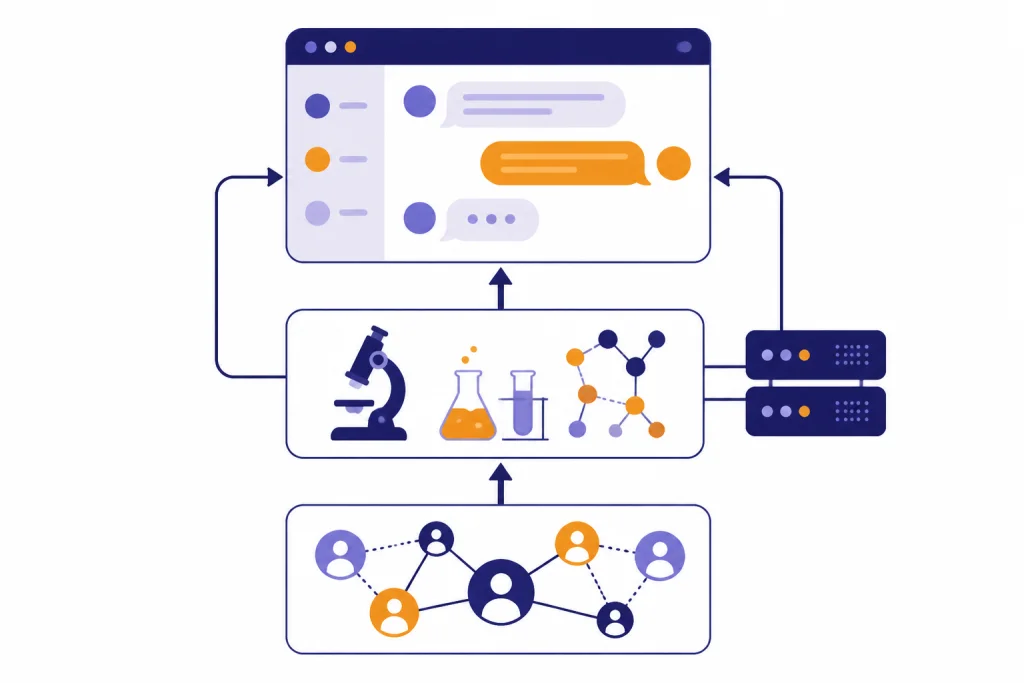
The founding group behind OpenAI
OpenAI came before ChatGPT. It was announced in December 2015 as a nonprofit artificial intelligence research company focused on advancing digital intelligence for broad human benefit.[1][7] OpenAI’s charter later framed the mission as ensuring that artificial general intelligence benefits all of humanity.[6] For a company-level explainer, see what OpenAI is.
The founder story is more nuanced than one fixed roster. OpenAI’s own founding announcement named Ilya Sutskever as research director, Greg Brockman as CTO, several other founding members, and Sam Altman and Elon Musk as co-chairs.[1] TIME later summarized the core co-founder group as Sam Altman, Elon Musk, Ilya Sutskever, Greg Brockman, John Schulman, and Wojciech Zaremba.[7] That is why founder lists vary. Some sources use a tighter co-founder shorthand. OpenAI’s announcement described a broader launch group.
The founders mattered because they created the institution, recruited talent, shaped the mission, and helped obtain the compute and capital needed to train large models. But that does not mean each founder personally built ChatGPT. The public ChatGPT launch page points to a much larger group of contributors, including founders, researchers, engineers, product staff, and safety specialists.[2]

Founder roles and ChatGPT roles compared
The easiest way to avoid confusion is to separate company creation from product creation. The founders created OpenAI. OpenAI’s teams created ChatGPT. The table below shows the practical difference.
| Person or group | Role in the origin story | What not to confuse it with |
|---|---|---|
| OpenAI | Developed and launched ChatGPT on November 30, 2022.[2][3] | The company is the creator of ChatGPT, but it is not one person. |
| Sam Altman | Named as an OpenAI co-chair in the 2015 announcement and listed as CEO in OpenAI’s 2019 structure post.[1][5] | He is a founder and public leader, not the sole inventor of ChatGPT. |
| Greg Brockman | Named as OpenAI’s CTO in the 2015 announcement.[1] | He helped build the organization and technical culture, but ChatGPT was a team release. |
| Ilya Sutskever | Named as OpenAI’s research director in the 2015 announcement.[1] | His research leadership was central to OpenAI, but ChatGPT should not be credited to one researcher. |
| Elon Musk | Named as an OpenAI co-chair in 2015; OpenAI later said he left the nonprofit board in February 2018.[1][5] | He helped found OpenAI, but ChatGPT launched years after his board departure. |
| Founding researchers | OpenAI’s announcement listed founding research engineers and scientists including John Schulman and Wojciech Zaremba.[1] | They were part of the lab’s foundation, not a complete list of every ChatGPT contributor. |
| ChatGPT launch contributors | OpenAI’s ChatGPT page includes a broad acknowledgment list across research, engineering, product, and operations.[2] | This is the best public clue that ChatGPT was an organization-scale effort. |
The research path from OpenAI to ChatGPT
ChatGPT grew out of several research steps. The base capability came from GPT-style language modeling. OpenAI described GPT‑3 models as systems trained to predict the next word from large amounts of internet text, which made them powerful but not automatically aligned with what users wanted.[4]
The next step was instruction following. In January 2022, OpenAI described InstructGPT models trained with human demonstrations and rankings. OpenAI said those models followed instructions better than GPT‑3 and used reinforcement learning from human feedback.[4] If you want the training method in more detail, read our guide to RLHF and our beginner guide to fine-tuning.
ChatGPT then adapted that approach to dialogue. OpenAI said human AI trainers provided conversations, model responses were ranked, reward models were created, and the model was fine-tuned with Proximal Policy Optimization.[2] That process is why ChatGPT could answer follow-up questions, challenge incorrect premises, and refuse some unsafe requests in a chat format.[2]
Compute also mattered. OpenAI said ChatGPT and GPT‑3.5 were trained on Azure AI supercomputing infrastructure.[2] The business relationship around that infrastructure is a separate story; see our guide to OpenAI and Microsoft for that context.
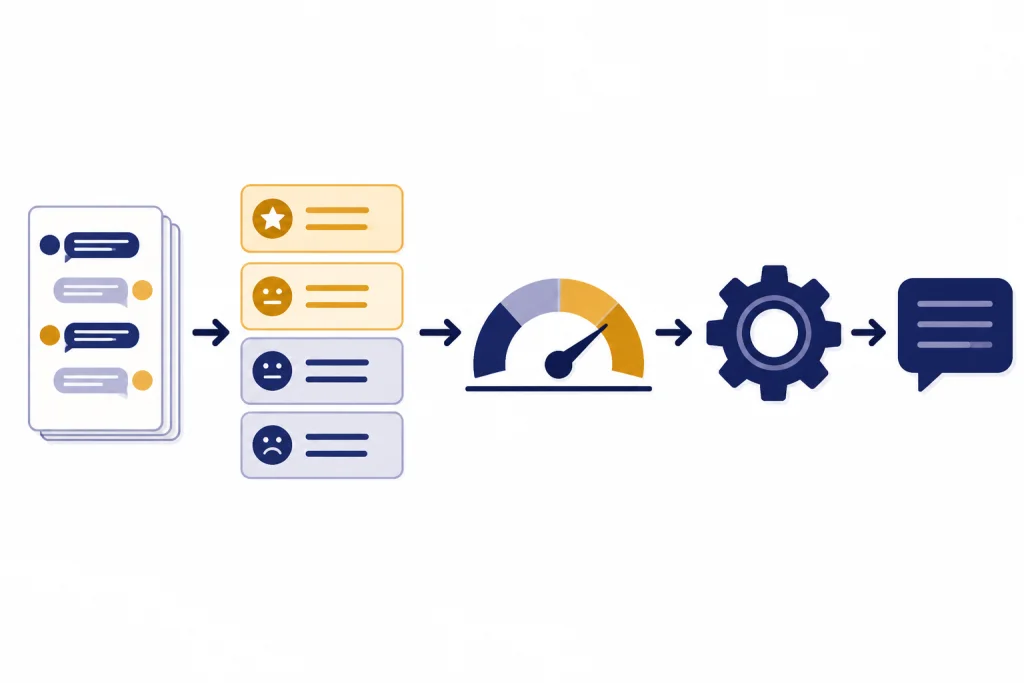
A timeline of the origin story
The creation story starts with OpenAI’s founding, but ChatGPT itself arrived later. If you are comparing dates, the useful distinction is OpenAI’s founding date versus ChatGPT’s public launch date. For a deeper date-focused article, read when ChatGPT was created.
| Period | Milestone | Why it matters |
|---|---|---|
| December 2015 | OpenAI is announced as a nonprofit AI research company.[1][7] | This is the start of the organization that later created ChatGPT. |
| 2019 | OpenAI creates OpenAI LP, a capped-profit company under nonprofit control, to scale research and deployment.[5] | The structure reflected the cost of compute, talent, and large-scale AI training. |
| January 2022 | OpenAI describes InstructGPT and its use of RLHF for instruction-following models.[4] | This work was the direct training lineage behind ChatGPT’s helpful dialogue behavior. |
| November 30, 2022 | OpenAI introduces ChatGPT as a research release for public feedback.[2][3] | This is the public launch date for ChatGPT. |

Creation, ownership, and leadership are different
“Who created ChatGPT?” is not the same question as “who owns ChatGPT?” OpenAI created ChatGPT. Ownership and control depend on OpenAI’s corporate structure. As of this article’s publication date, OpenAI described its updated structure as the OpenAI Foundation controlling OpenAI Group PBC, following changes announced on October 28, 2025.[10] For the structure question, read who owns ChatGPT.
Creation is also different from current leadership. The founding group changed over time. Elon Musk helped launch OpenAI but left the nonprofit board in February 2018, according to OpenAI’s 2019 structure post.[5] Ilya Sutskever left OpenAI in May 2024, according to the Associated Press.[8] John Schulman said in August 2024 that he would leave OpenAI and join Anthropic, according to CNBC.[9] For a current leadership overview, see OpenAI leadership team.
The best wording is precise: OpenAI created ChatGPT. OpenAI’s founders created the lab that made ChatGPT possible. The 2022 product was the result of many contributors, not a single founder’s invention.[2]
Frequently asked questions
Who created ChatGPT?
OpenAI created ChatGPT. OpenAI introduced it on November 30, 2022, and described it as a conversational model trained with RLHF and fine-tuned from the GPT‑3.5 series.[2][3] The company, not one individual founder, is the correct creator credit.
Did Sam Altman create ChatGPT?
Sam Altman helped found OpenAI and later became its CEO, but he did not personally create ChatGPT by himself. OpenAI’s 2015 announcement named him as a co-chair, and OpenAI’s 2019 structure post listed him as CEO.[1][5] ChatGPT was an OpenAI team product.
Did Elon Musk create ChatGPT?
Elon Musk helped launch OpenAI and was named a co-chair in the 2015 announcement.[1] OpenAI later said he left the nonprofit board in February 2018, while ChatGPT launched on November 30, 2022.[5][2] He is part of the OpenAI founding story, not the direct ChatGPT launch team.
Who were the original OpenAI founders?
OpenAI’s own announcement named a broader founding group, including Ilya Sutskever, Greg Brockman, John Schulman, Wojciech Zaremba, and other founding research engineers and scientists, with Sam Altman and Elon Musk as co-chairs.[1] Some later profiles use a tighter co-founder list of Sam Altman, Elon Musk, Ilya Sutskever, Greg Brockman, John Schulman, and Wojciech Zaremba.[7] The difference comes from how sources define founder versus founding member.
Was ChatGPT created in 2015 or 2022?
OpenAI was founded in 2015, but ChatGPT was introduced to the public on November 30, 2022.[1][2][3] So 2015 is the company origin date, and 2022 is the ChatGPT public launch date. Both dates are correct, but they refer to different things.
How is ChatGPT related to GPT‑3.5 and InstructGPT?
OpenAI said ChatGPT was a sibling model to InstructGPT and was fine-tuned from a model in the GPT‑3.5 series.[2] InstructGPT used human demonstrations, rankings, and RLHF to make GPT‑3 models better at following instructions.[4] ChatGPT adapted that work into a dialogue product.
Is ChatGPT the same as OpenAI?
No. ChatGPT is a product created by OpenAI. OpenAI is the organization behind ChatGPT, the model research, and the corporate structure that supports it. OpenAI’s current structure is a separate ownership and governance topic.[10]