
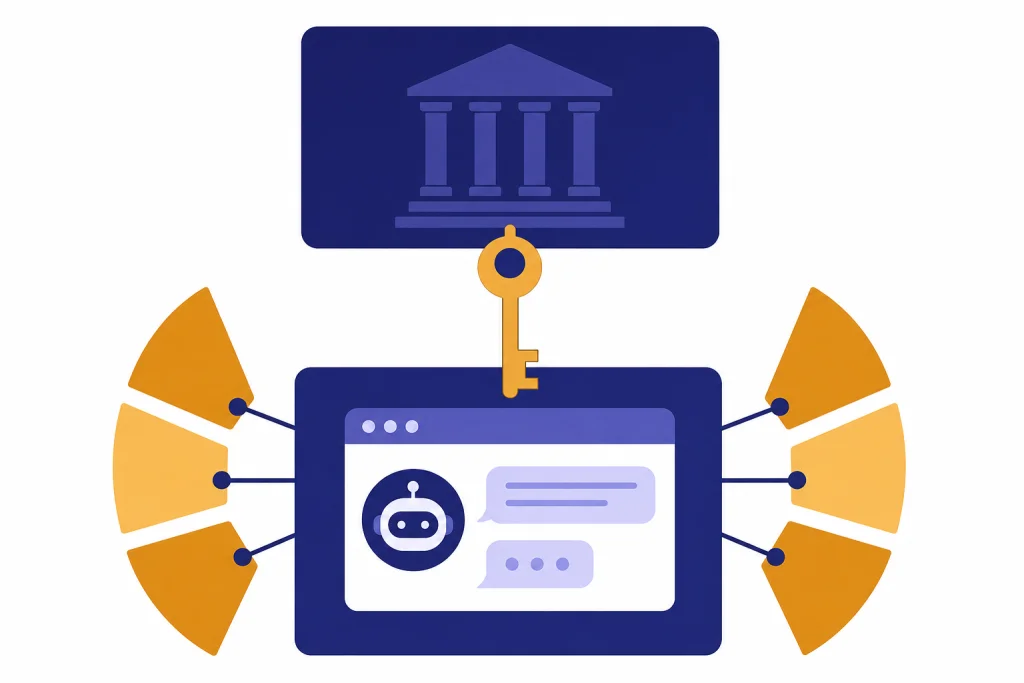
ChatGPT is owned and operated by OpenAI. The current OpenAI structure separates control from economics: the nonprofit OpenAI Foundation controls OpenAI Group PBC, the for-profit public benefit corporation that runs OpenAI’s commercial work.[1] Microsoft is a major investor and partner, but it does not own ChatGPT outright; OpenAI said after its 2025 recapitalization that Microsoft held roughly 27% of OpenAI Group PBC.[4] On February 27, 2026, OpenAI announced a new $110 billion investment round, so the cleanest answer is: OpenAI owns ChatGPT, the Foundation controls OpenAI, and several investors share in the economics.[5]
The short answer
If you mean product ownership, ChatGPT belongs to OpenAI. OpenAI introduced ChatGPT on November 30, 2022, and described it as a conversational model related to the GPT-3.5 series.[2] For a broader product explanation, start with what is ChatGPT, and for the acronym, read what ChatGPT stands for.
If you mean corporate control, the answer is the OpenAI Foundation. OpenAI says the nonprofit Foundation continues to control OpenAI Group PBC, even though the for-profit arm has investors and traditional stock.[1] If you mean economic ownership, the answer is broader: the Foundation, Microsoft, employees, former employees, and investors all hold or have held economic interests under OpenAI’s public disclosures.[1]
| Question | Plain-English answer | Why it matters |
|---|---|---|
| Who owns ChatGPT as a product? | OpenAI owns and operates ChatGPT.[2] | ChatGPT is not a separate company with its own owners. |
| Who controls OpenAI? | The OpenAI Foundation controls OpenAI Group PBC.[1] | Control means governance authority, not just a percentage stake. |
| Does Microsoft own ChatGPT? | No. Microsoft is a major investor and partner, with roughly 27% of OpenAI Group PBC after the 2025 recapitalization.[4] | A large investment does not equal full control. |
| Did the 2026 funding round change the answer? | It added major new capital and investors, but OpenAI did not publish a new full holder-by-holder cap table in that announcement.[5] | The control answer stays clearer than the exact economic split. |
The ownership structure behind ChatGPT
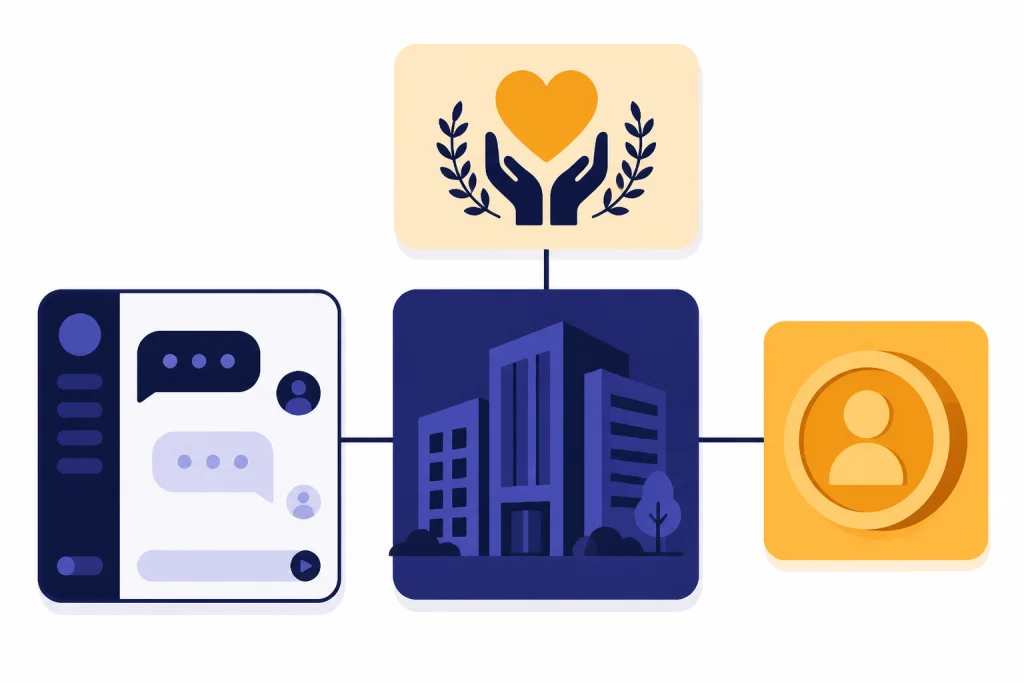
OpenAI’s structure is unusual by design. OpenAI says it was founded in 2015 as a nonprofit, created a for-profit subsidiary in 2019, and announced an updated structure on October 28, 2025.[1] Under that structure, the nonprofit is now the OpenAI Foundation, and the for-profit is OpenAI Group PBC, a public benefit corporation.[1] For a basic company overview, see what is OpenAI.
The important point is that the nonprofit sits above the for-profit for governance purposes. OpenAI says the Foundation continues to control OpenAI Group and holds conventional equity in it.[1] That means the Foundation is both the controlling mission-governance layer and an economic stakeholder.
Regulators also focused on that control. The California Attorney General’s memorandum says that, so long as the nonprofit holds Class N Common Stock, it retains control and oversight over the PBC, including the sole power to appoint and remove PBC board members.[8] The Delaware Attorney General said her review focused on mission primacy, nonprofit control over the PBC, and fair treatment of the nonprofit in the recapitalization.[9]
This is why a simple shareholder list can mislead readers. In a normal startup, the biggest stockholders often explain most of the control story. In OpenAI’s case, the public documents separate mission control from the broader economic ownership stack.
Who owns the economics
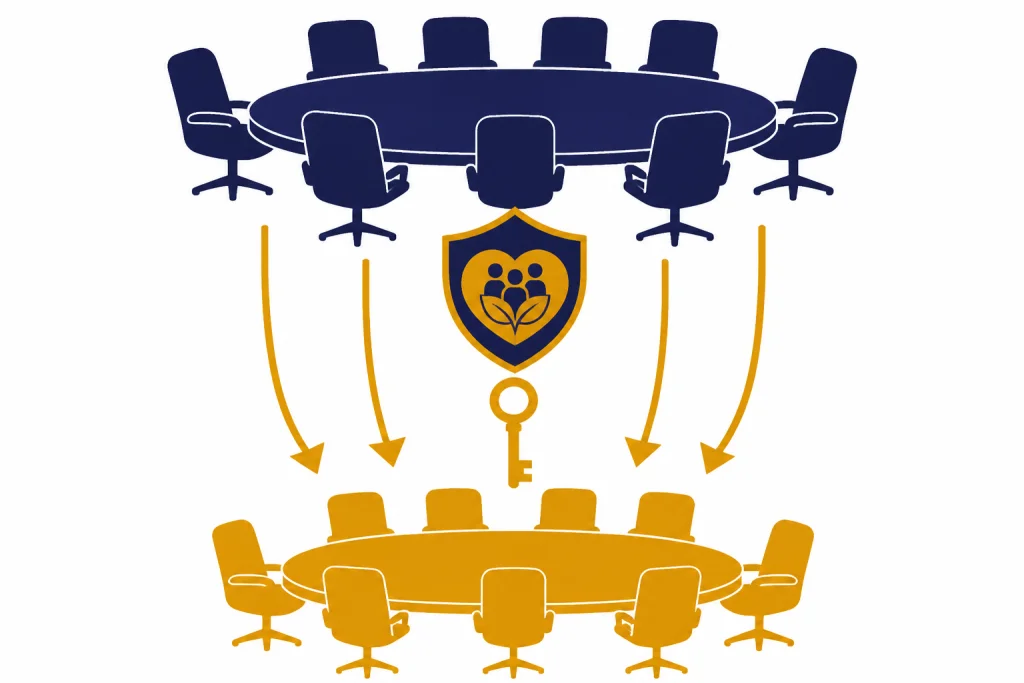
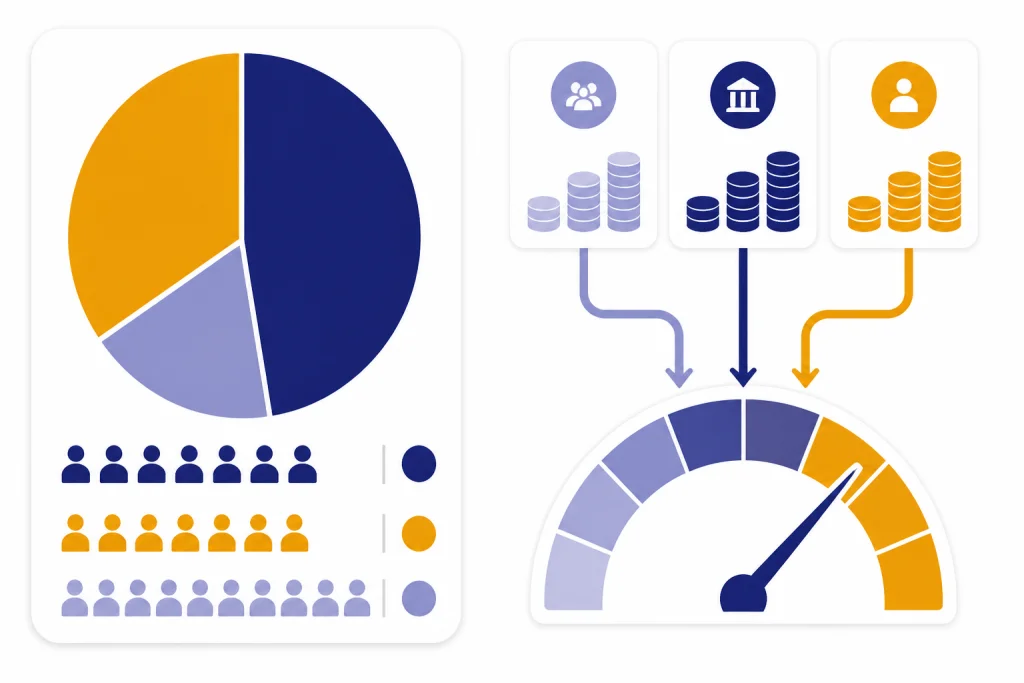
Economic ownership means who participates in the value of the for-profit company. After the 2025 recapitalization closed, OpenAI said Microsoft held roughly 27% of OpenAI Group, while the remaining 47% was held by current and former employees and investors.[1] OpenAI also said the Foundation’s equity stake in the for-profit was valued at approximately $130 billion at that time.[3]
Those figures should not be treated as a permanent cap table. On February 27, 2026, OpenAI announced $110 billion in new investment at a $730 billion pre-money valuation, including $30 billion from SoftBank, $30 billion from NVIDIA, and $50 billion from Amazon.[5] TechCrunch reported the same investor amounts and valuation, corroborating the official figures.[6]
| Holder or group | OpenAI’s 2025 recapitalization disclosure | What was public by March 1, 2026 |
|---|---|---|
| OpenAI Foundation | Controlled OpenAI Group PBC and held equity valued at approximately $130 billion.[3] | OpenAI said the new valuation increased the Foundation’s stake value to over $180 billion.[5] |
| Microsoft | Microsoft said its investment was valued at approximately $135 billion, representing roughly 27% on an as-converted diluted basis.[4] | Microsoft and OpenAI said the February 27, 2026 announcements did not change the terms previously shared in October 2025.[7] |
| Employees, former employees, and other investors | OpenAI said this group held the remaining 47% after the recapitalization closed.[1] | The public funding announcement identified new money and investors but did not publish a new holder-by-holder percentage split.[5] |
| SoftBank, NVIDIA, and Amazon | Not part of the specific 2025 ownership split OpenAI summarized on its structure page. | OpenAI announced $30 billion from SoftBank, $30 billion from NVIDIA, and $50 billion from Amazon in the February 2026 round.[5] |
The practical answer is that OpenAI controls ChatGPT through its own corporate structure, while several investors participate financially. For model-level context, see what is GPT and what is a large language model.
What Microsoft owns, and what it does not
Microsoft owns a large economic stake in OpenAI Group PBC, but Microsoft does not own ChatGPT outright. Microsoft’s October 2025 partnership post said it held an investment in OpenAI Group PBC valued at approximately $135 billion, representing roughly 27% on an as-converted diluted basis.[4] That makes Microsoft a major shareholder, not the controlling parent.
The control documents point back to the OpenAI Foundation. OpenAI says the Foundation continues to control OpenAI Group PBC.[1] The California Attorney General’s MOU describes the nonprofit’s control and oversight rights, including board appointment and removal authority while the nonprofit holds Class N Common Stock.[8]
Microsoft still matters. It has been OpenAI’s most visible commercial partner, and the companies said on February 27, 2026 that their partnership remained strong and central, with no change to the terms previously shared in October 2025.[7] For the partnership details, read our OpenAI and Microsoft breakdown.
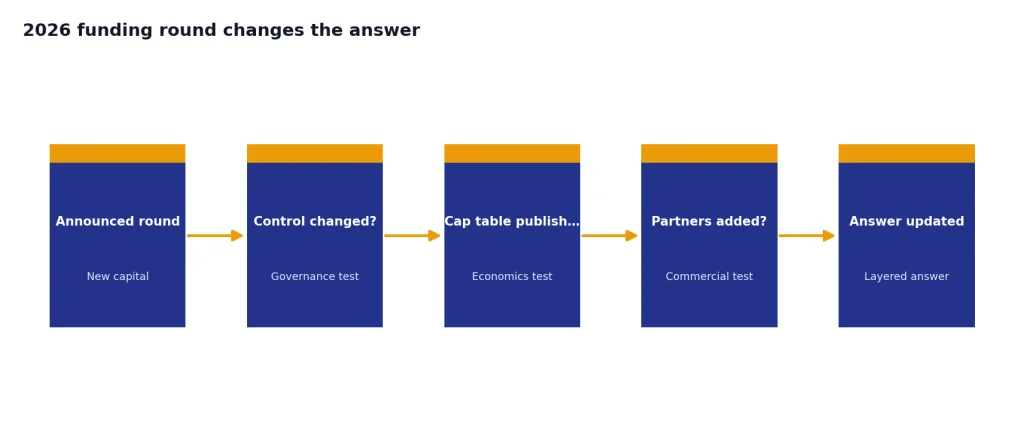
How the 2026 funding round changes the answer
The February 27, 2026 funding round changes the economic context, not the simple product answer. OpenAI announced $110 billion in new investment at a $730 billion pre-money valuation, and said the round included SoftBank, NVIDIA, and Amazon.[5] OpenAI also said additional financial investors were expected to join as the round progressed.[5]
The round also raised the value of the Foundation’s stake. OpenAI said the new valuation increased the value of the OpenAI Foundation’s stake in OpenAI Group to over $180 billion.[5] That supports the nonprofit side financially, but it does not mean the Foundation owns all of the for-profit economics.
When a new OpenAI investment is announced, ask three separate questions. Did it change who controls OpenAI Group PBC? Did OpenAI publish a new percentage split for all holders? Did it add capital, compute, or commercial partners without changing the governance answer? For this round, the official announcement gave investment amounts, valuation, and investor names, but not a new full cap table.[5]
What users own when they use ChatGPT
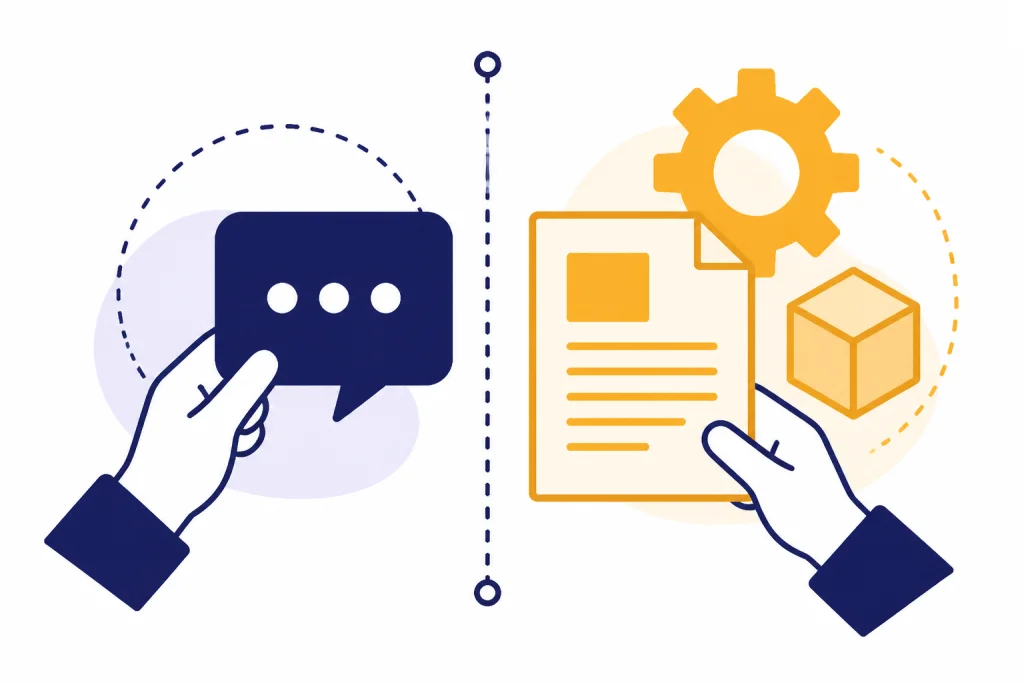
Ownership of ChatGPT is different from ownership of what you create with ChatGPT. OpenAI’s Terms of Use say that, as between you and OpenAI and to the extent permitted by law, you retain ownership rights in input and own output.[10] The same terms say input and output together are content, and that OpenAI may use content to provide, maintain, develop, and improve its services, comply with law, enforce policies, and keep services safe.[10]
In plain English: you can own your prompt and response without owning the ChatGPT service, the model, the app, or OpenAI. If you want to improve how you work with the product, read what is prompt engineering and what is RLHF.
Common misconceptions about who owns ChatGPT
Microsoft owns ChatGPT
Microsoft is a major investor and partner, but the control answer points to OpenAI’s nonprofit-controlled structure. Microsoft’s public figure was roughly 27% after the 2025 recapitalization, not 100% ownership.[4]
The nonprofit owns everything
The nonprofit controls OpenAI Group PBC, but other parties hold economic interests. OpenAI’s structure page says Microsoft held roughly 27% and current and former employees and investors held 47% after the recapitalization closed.[1]
Sam Altman owns ChatGPT
Sam Altman is OpenAI’s CEO, but leadership and ownership are not the same thing. OpenAI has not published an official figure for a personal ownership stake in the sources used for this guide, so it is safer to describe him as the chief executive, not the owner of ChatGPT.
OpenAI is open source because of the name
The word OpenAI does not mean ChatGPT is open source or publicly owned. OpenAI’s Charter says the organization has published much research, but also says safety and security concerns may reduce traditional publishing over time.[11]
Owning ChatGPT output means owning ChatGPT
Output ownership is about your content rights. It does not transfer ownership of OpenAI’s services, models, or systems.[10]
Frequently asked questions
Is ChatGPT owned by OpenAI or Microsoft?
ChatGPT is owned and operated by OpenAI. Microsoft is a major investor and partner, but its disclosed post-recapitalization stake was roughly 27%, not full ownership.[4]
Who controls OpenAI Group PBC?
OpenAI says the OpenAI Foundation controls OpenAI Group PBC.[1] The California Attorney General’s MOU also describes nonprofit control and oversight rights tied to Class N Common Stock.[8]
What did the 2026 funding round change?
It added major new capital and investors. OpenAI announced $110 billion in new investment at a $730 billion pre-money valuation on February 27, 2026, including SoftBank, NVIDIA, and Amazon.[5] It did not publish a new full percentage split for every holder in that announcement.
Does Sam Altman own ChatGPT?
OpenAI has not published an official figure for this in the sources used for this guide. Sam Altman is the CEO, but the public ownership documents describe the Foundation, Microsoft, employees, former employees, and investors rather than a single personal owner.
Is ChatGPT a separate company?
No. ChatGPT is a product from OpenAI, not a separate company with its own cap table. OpenAI introduced ChatGPT as a conversational model in 2022.[2]
Do I own what I create in ChatGPT?
OpenAI’s Terms of Use say that, as between you and OpenAI and to the extent permitted by law, you retain ownership rights in input and own output.[10] That does not mean you own the ChatGPT product, model, or service.