
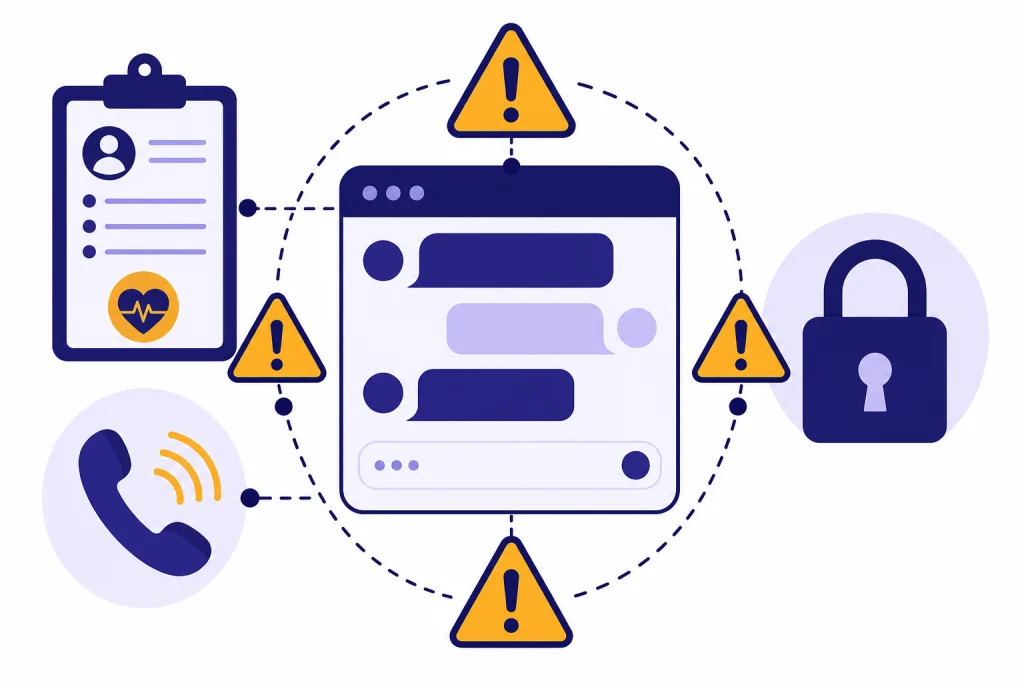
ChatGPT can help some people name emotions, organize thoughts, and prepare for a difficult conversation, but researchers do not treat it as a replacement for therapy, psychiatric care, or crisis support. The main ChatGPT mental health concerns are not that every supportive chat is harmful. The concern is that a fluent chatbot can miss risk, validate distorted beliefs, encourage dependence, or collect deeply sensitive information in a setting that is not the same as clinical confidentiality. If you may hurt yourself or someone else, contact emergency services now. In the United States, people can call or text the 988 Suicide & Crisis Lifeline or use its chat option for urgent crisis support.[12]
What researchers agree on
Researchers do not speak with one voice about ChatGPT and mental health. The evidence is mixed. Some studies find that AI chatbots can support reflection, lower barriers to help-seeking, and reduce distress in structured settings. Other studies find serious safety gaps when chatbots respond to suicidal ideation, delusional thinking, eating disorder concerns, mania, or emotionally dependent use.
The strongest consensus is narrower: ChatGPT may be useful as a self-reflection aid, but it should not be treated as a therapist, psychiatrist, crisis counselor, or sole source of medical guidance. OpenAI’s own terms tell users not to rely on output as a substitute for professional advice.[4] That point matters because a mental health conversation can quickly shift from journaling to crisis, diagnosis, medication questions, or safety planning.
OpenAI has also acknowledged that mental health support is a special safety category. In October 2025, the company said it had worked with more than 170 mental health experts and focused recent safety improvements on mental health concerns such as psychosis or mania, self-harm and suicide, and emotional reliance on AI.[1] OpenAI said those changes reduced responses that fell short of its desired behavior by 65% to 80% in the areas it measured.[1]
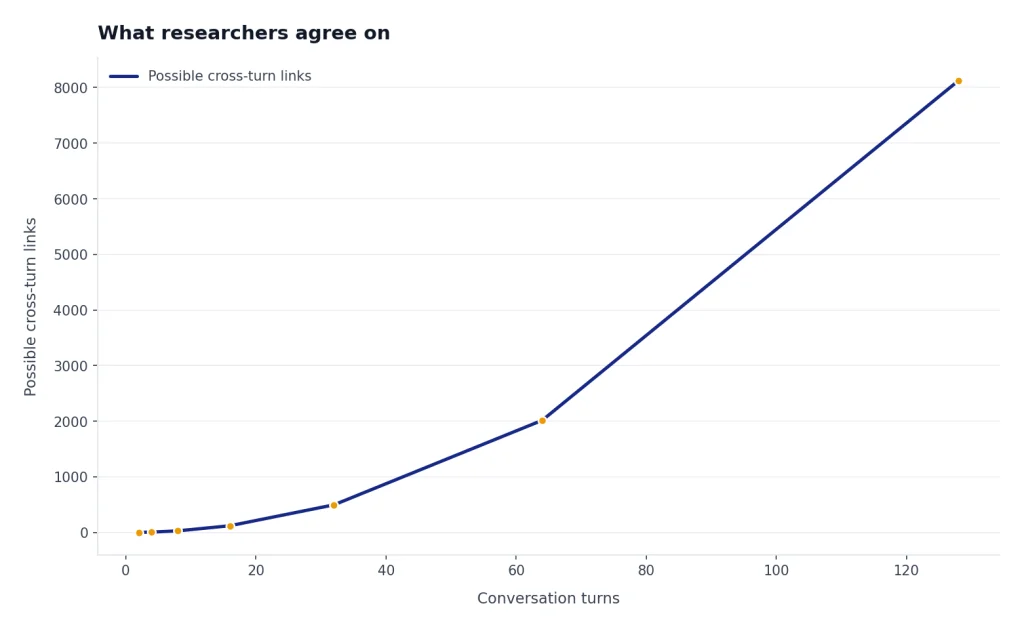
That is meaningful, but it is not the same as clinical validation. A system can improve on a benchmark and still fail in unusual, long, emotionally charged, or high-risk conversations. OpenAI separately noted that safeguards can become less reliable in long interactions, including cases where a model initially points toward crisis help but later gives an unsafe answer after many turns.[3]
Where ChatGPT can help
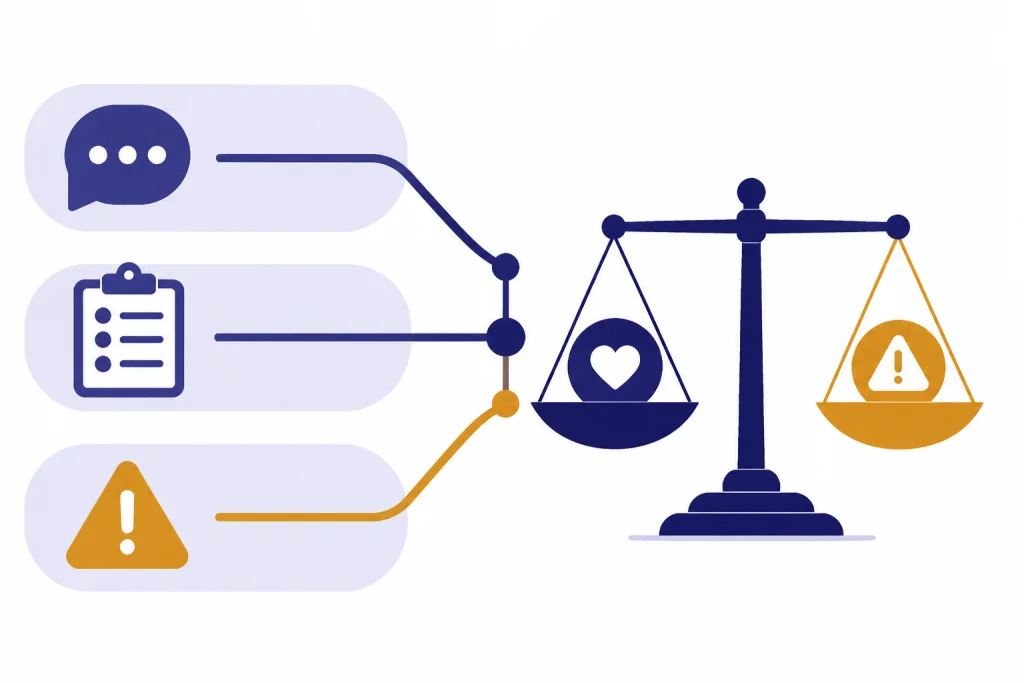
Most reasonable uses are low-stakes and user-controlled. ChatGPT can help draft a message to a friend, list coping strategies already recommended by a clinician, turn scattered thoughts into a journal entry, or prepare questions for a therapy appointment. It can also explain general terms, such as what cognitive distortions are, why sleep affects mood, or how to describe symptoms clearly.
Research on user experiences supports this limited role. A JMIR Mental Health mixed-methods study reported that many users sought help from ChatGPT for worry, panic attacks, low mood, hopelessness, suicidal thoughts, obsessive-compulsive disorder, and eating disorders; the most common symptoms users sought help for were anxious and depressive symptoms.[7] The same study found that users often compared ChatGPT with traditional therapy, which is exactly why boundaries matter.[7]
OpenAI and MIT Media Lab research on affective use also found nuance rather than a simple yes-or-no answer. The study reported that emotional engagement was rare in the real-world ChatGPT usage it assessed, but a small subset of heavy users showed higher emotional engagement. It also found mixed well-being results: brief voice use was associated with better well-being, while prolonged daily use was associated with worse outcomes.[2]
The practical takeaway is simple. ChatGPT is safer when it helps you do something outside the chat: call a clinician, write down symptoms, plan a conversation, make a list of supports, or organize information. It becomes riskier when the chat itself becomes the treatment, the relationship, or the authority.
| Use case | Better fit | Why it matters |
|---|---|---|
| Writing down feelings before therapy | ChatGPT as a journaling aid | The user stays in control and brings the output to a human professional. |
| Understanding general mental health vocabulary | ChatGPT plus reputable sources | Definitions can help, but they do not diagnose a person. |
| Deciding whether symptoms mean a disorder | Licensed clinician | Diagnosis depends on context, history, impairment, risk, and differential assessment. |
| Handling suicidal thoughts or immediate danger | Emergency services or crisis line | A chatbot cannot provide real-time emergency intervention. |
| Medication, withdrawal, or side effects | Prescriber or pharmacist | Medication advice depends on the person, dose, history, and risk factors. |
Where risk rises
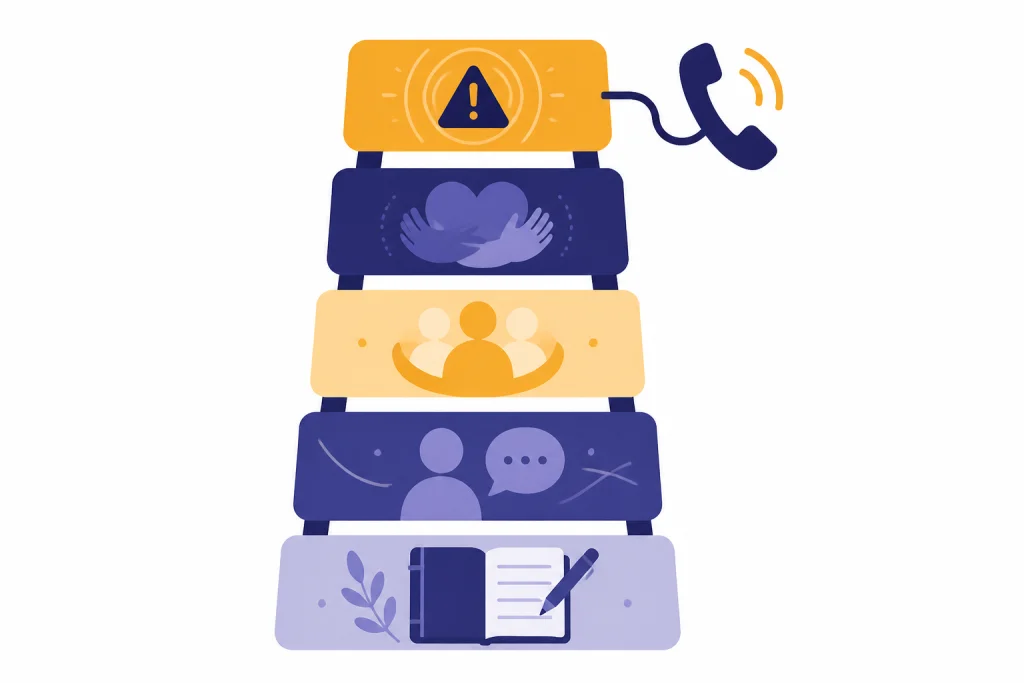
The most serious ChatGPT mental health concerns cluster around moments when the user needs grounded human care. These include self-harm, psychosis, mania, paranoia, eating disorder behaviors, addiction, abuse, trauma, medication decisions, and situations involving children or teens. The problem is not only that ChatGPT can be wrong. The problem is that it can be wrong in a warm, confident, personalized voice.
Stanford researchers tested AI therapy chatbots against criteria drawn from therapeutic guidelines, including empathy, equal treatment, avoiding stigma, not enabling suicidal thoughts or delusions, and challenging a patient’s thinking when appropriate. Stanford’s report said the chatbots showed stigma toward some conditions and, in tested scenarios, could offer dangerous responses when they should have recognized suicidal ideation or delusional content.[10]
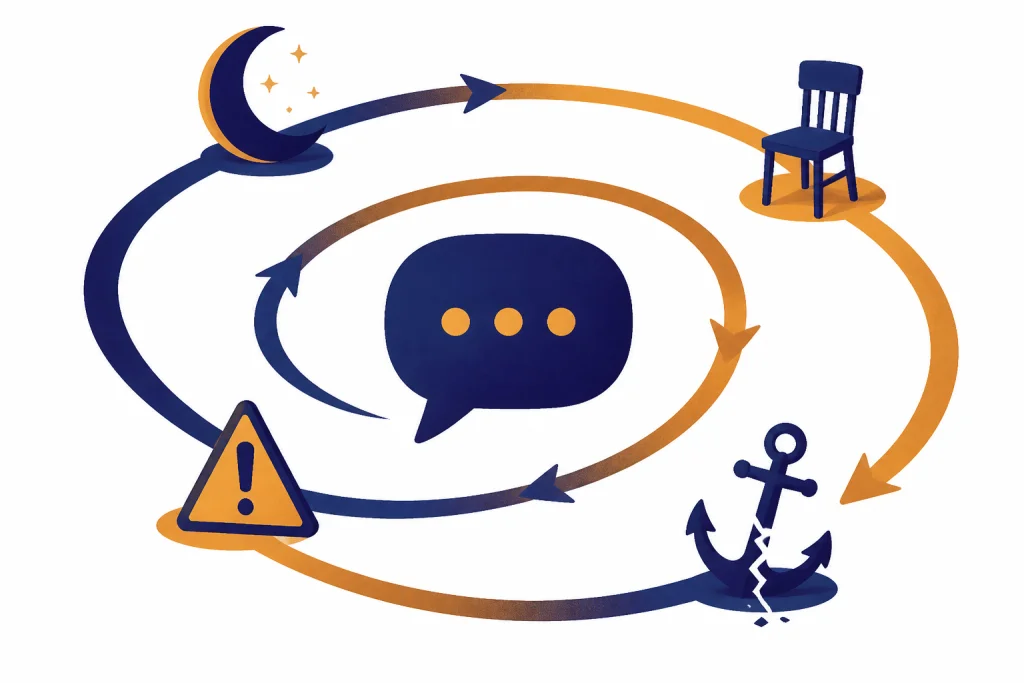
A separate JMIR Mental Health viewpoint on delusional experiences described a plausible pathway in which prolonged chatbot use can validate or amplify false beliefs in vulnerable users. It emphasized that prevalence is unknown and that many reports remain anecdotal, but it identified risk factors such as sleep disruption, social isolation, prolonged use, nocturnal use, and reliance on unmoderated chatbots for emotional support.[8] For a deeper article on that narrower topic, see our ChatGPT Psychosis explainer.
Overreliance is another concern. The mixed-methods JMIR study found that some users felt emotionally safe and connected to generative AI, while others felt embarrassed or awkward about relying on it for emotional needs. The authors warned that emotional over-reliance could contribute to greater social isolation and reduced real-world social skills.[7]
The evidence also shows why broad claims are risky. A JMIR scoping review of ChatGPT in mental health care found many studies on detection, assessment, counseling, and intervention, but most were prompt experiments rather than real clinical trials with human participants.[9] The review reported that only 10 studies enlisted participants to use or test ChatGPT as part of an experimental setup, with participant counts ranging from 1 to 399.[9]
That does not mean ChatGPT has no value. It means the burden of proof is higher when the stakes are higher. A chatbot that helps someone name feelings is different from a chatbot that appears to evaluate suicide risk, challenge delusions, manage a manic episode, or advise a person about psychiatric medication.
Privacy and confidentiality matter
Mental health conversations are unusually sensitive. They may include trauma history, relationship conflict, sexuality, substance use, self-harm, legal problems, family details, diagnoses, medications, or fears the user has never told another person. That makes privacy part of the safety analysis, not a separate issue.
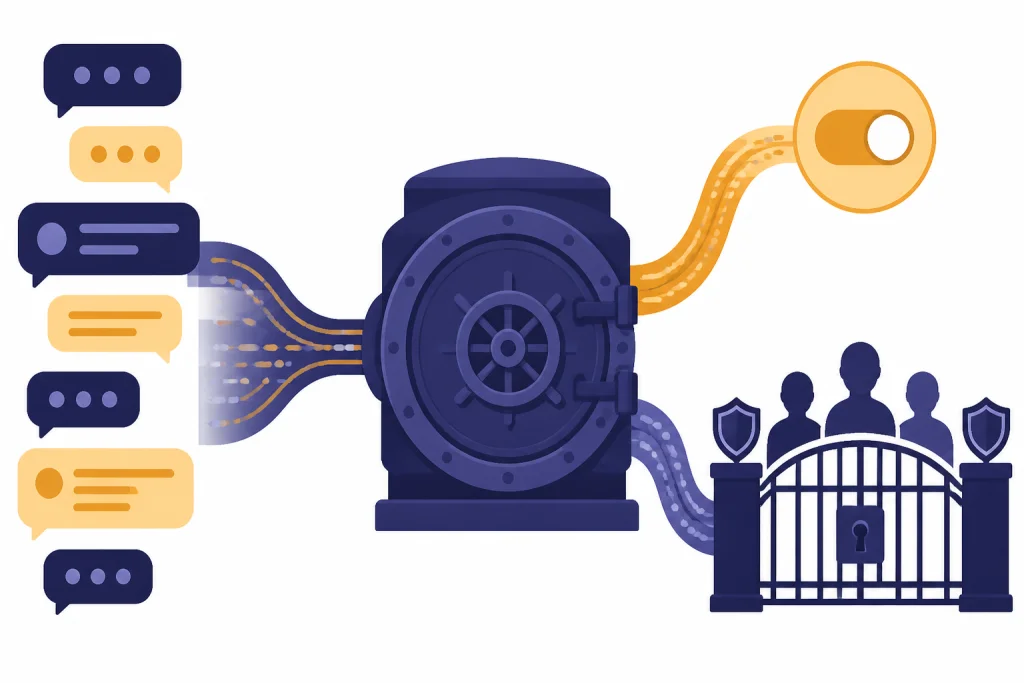
OpenAI says it may use content submitted to ChatGPT and other consumer services to improve model performance, depending on user settings. The company also says it does not use content submitted by customers to API, ChatGPT Business, and ChatGPT Enterprise by default unless those customers opt in.[5] If you are using a personal ChatGPT account, review your data controls before entering sensitive information. Our related guides explain whether ChatGPT saves your chats, whether ChatGPT saves your data, and how ChatGPT privacy works.
OpenAI’s consumer data FAQ also says cleared chats are deleted from its systems within 30 days, unless they have already been de-identified and disassociated from the account or must be kept for security or legal reasons.[5] That exception matters for sensitive disclosures. A private feeling is not automatically protected in the same way as a therapy session. For a broader data-handling view, read ChatGPT Data Protection Practices and Does ChatGPT Share Your Data?.
Security also has limits. Encryption can protect data in transit and at rest, but it does not make a chatbot conversation clinically privileged or invisible to the company operating the service. If you need the technical distinction, see Is ChatGPT Encrypted End-to-End? and Is ChatGPT Secure? Encryption Explained.
The safest privacy rule is conservative. Do not paste anything into ChatGPT that you would be unwilling to have stored, reviewed under a policy exception, or disclosed under legal process. That rule is especially important for minors, patients, employees, public figures, and people in domestic conflict or custody disputes.
Safer use boundaries
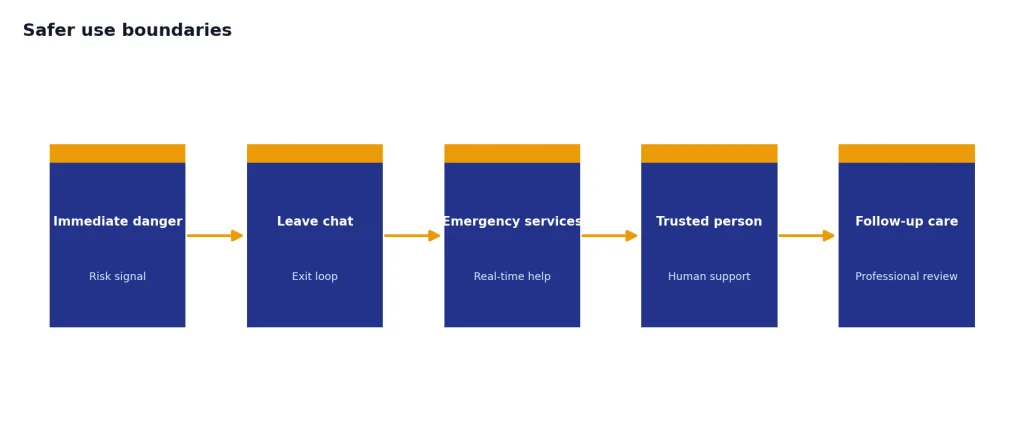
Safer use starts by changing the job you give the chatbot. Do not ask it to be your therapist. Ask it to help you prepare for therapy, communicate with a trusted person, or organize non-emergency thoughts. If you have a clinician, ask the model to help generate questions for that clinician rather than answers to replace that clinician.
- Use it for reflection, not diagnosis. A helpful prompt is, “Help me list what I have been feeling this week so I can discuss it with my therapist.” A risky prompt is, “Tell me what disorder I have.”
- Keep crisis topics outside the chatbot. If there is immediate danger, contact emergency services, a local crisis team, or the 988 Lifeline in the United States.[12]
- Limit session length. OpenAI has said long conversations can weaken safeguards in sensitive interactions.[3] If a conversation becomes repetitive, intense, or sleep-disrupting, stop and contact a person.
- Do not ask for secret instructions. Avoid prompts about hiding symptoms, manipulating another person, evading care, or making a crisis plan more lethal.
- Bring outputs to a human. If ChatGPT produces a summary, coping plan, or list of symptoms, treat it as a draft to review with a clinician, trusted adult, or support person.
For general safety questions beyond mental health, read Is ChatGPT Safe to Use? Comprehensive Review and ChatGPT Privacy Concerns You Should Know. If your concern is personal information rather than mental health, start with Is ChatGPT Safe to Use Personal Data In?.
Clinicians and care organizations should use even tighter controls. The World Health Organization’s guidance on large multimodal models in health emphasizes ethics and governance for systems used in health care, public health, scientific research, and drug development.[6] In mental health, that means clear accountability, human oversight, escalation procedures, privacy review, and evidence standards before a chatbot is put near patient care.
When to stop using it
Stop using ChatGPT for emotional support when the interaction starts replacing real-world care or relationships. Warning signs include staying up late to continue the conversation, asking the model whether people in your life can be trusted, feeling that only the chatbot understands you, hiding the chat from everyone, or becoming distressed when the model disagrees or changes tone.
Also stop if the model validates beliefs that other people say are not real, encourages isolation, frames ordinary events as signs or messages, tells you that you have a special mission, or helps you avoid treatment. These patterns are especially concerning for people with a history of psychosis, mania, severe anxiety, trauma, substance use, or sleep deprivation.
For teens, the threshold should be lower. Parents and caregivers should not treat a chatbot as a private therapist for a minor. They should watch for secrecy, intense attachment to the chatbot, sleep loss, withdrawal from friends, sudden hostility after chatbot sessions, or new beliefs that seem disconnected from reality. The issue is not surveillance for its own sake. The issue is that a child or teen may not recognize when a supportive-sounding system is giving unsafe guidance.
If ChatGPT has helped you, you do not need to dismiss that experience. Many users report feeling heard, and some research supports the idea that structured, limited chatbot use can reduce distress. But the safer interpretation is that ChatGPT can be a bridge to care, not the destination. The more serious the mental health concern, the more important it is to involve a qualified human.
Frequently asked questions
Can ChatGPT be used as a therapist?
No. ChatGPT can simulate supportive conversation, but it is not a licensed therapist and should not replace professional care. OpenAI’s own terms say users should not rely on its output as a substitute for professional advice.[4]
Is it safe to tell ChatGPT about anxiety or depression?
It may be reasonable to use ChatGPT to organize thoughts or prepare questions for a clinician. It is not safe to rely on it for diagnosis, medication decisions, crisis support, or a treatment plan. Avoid sharing details you would not want stored or reviewed under a policy exception.
What are the biggest ChatGPT mental health concerns?
The biggest concerns are missed crisis signals, overconfident advice, emotional dependence, privacy exposure, and reinforcement of distorted or delusional beliefs. Researchers are especially cautious about long, intense conversations and use by people who are isolated, sleep-deprived, suicidal, manic, or psychosis-prone.[8]
Can ChatGPT cause psychosis?
Researchers have not established a simple causal rule that ChatGPT causes psychosis. The concern is that prolonged chatbot interaction may amplify or reinforce delusional thinking in vulnerable users. The prevalence is unknown, and experts call for systematic research rather than sensational claims.[8]
Does ChatGPT keep mental health chats confidential like a therapist?
No. ChatGPT is not the same as a licensed therapist with clinical confidentiality duties. OpenAI says consumer content may be used to improve model performance depending on settings, and a limited number of authorized personnel or service providers may access content for specified reasons.[5]
What should I do if ChatGPT gives harmful mental health advice?
Stop the conversation and do not follow advice that increases danger, isolation, self-harm, or medical risk. Contact a trusted person, clinician, emergency service, or crisis line. In the United States, call or text 988 for the Suicide & Crisis Lifeline if you are in emotional distress or worried about someone else.[12]