

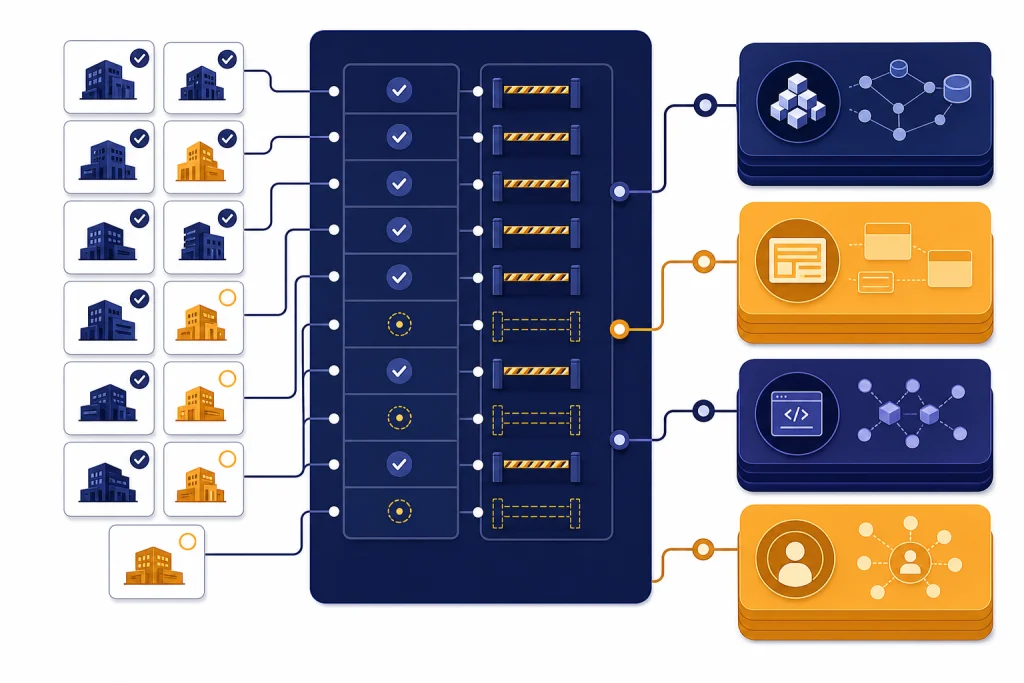
OpenAI acquisitions have shifted from occasional talent buys into a broader strategy for product interfaces, data infrastructure, developer tools, health records, media, and AI agent safety. As of this publication, the most important confirmed or publicly reported deals include Global Illumination, Rockset, Multi, io Products, Statsig, Roi, Software Applications Incorporated, Neptune, Torch, Promptfoo, Astral, TBPN, and Hiro. The pattern is clear. OpenAI is not only buying model talent. It is buying the product layers around ChatGPT, Codex, OpenAI Frontier, health workflows, and future hardware. This tracker separates completed acquisitions from announced deals, reported acqui-hires, and deals where OpenAI has not published financial terms.
The OpenAI acquisitions tracker
This table tracks the major OpenAI acquisitions and publicly confirmed buyouts we could verify from OpenAI announcements or reputable reporting. It includes full company purchases, announced definitive agreements, and acqui-hires where the company or a trusted outlet reported that OpenAI bought the startup or its team.
OpenAI does not disclose terms for most acquisitions. When a value is missing, that is usually because OpenAI has not published an official figure. This matters for anyone following OpenAI Funding History, OpenAI Funding Round, or ChatGPT Stock News, because acquisition pace is now part of the company’s broader capital story.
| Company | Announced | Status in this tracker | What OpenAI gained | Reported or disclosed value |
|---|---|---|---|---|
| Global Illumination | August 16, 2023[1] | Completed team acquisition | Product, creative tools, infrastructure, and digital experience talent for core products including ChatGPT.[1] | OpenAI has not published an official figure. |
| Rockset | June 21, 2024[2] | Completed acquisition | Real-time analytics, indexing, querying, and retrieval infrastructure across OpenAI products.[2] | OpenAI has not published an official figure. |
| Multi | June 24, 2024[3] | Reported acquisition | Remote collaboration and video-first screen-sharing product talent.[3] | Terms were not disclosed in the reporting we found. |
| io Products | May 21, 2025; merger update July 9, 2025[4] | Completed merger | AI hardware and product design team; Jony Ive and LoveFrom remained independent while taking broad design responsibilities across OpenAI.[4] | Reported near $6.5 billion value.[5] |
| Statsig | September 2, 2025[6] | Announced acquisition, subject to closing conditions in OpenAI’s announcement | A/B testing, feature flagging, real-time decisioning, and Applications leadership through Vijaye Raji.[6] | Reported $1.1 billion all-stock deal.[7] |
| Roi | October 3, 2025[8] | Reported acqui-hire | Personalized finance and consumer AI experience; TechCrunch reported that CEO Sujith Vishwajith was the only member of the four-person staff joining OpenAI.[8] | Terms were not disclosed.[8] |
| Software Applications Incorporated, maker of Sky | October 23, 2025[9] | Completed acquisition | Sky, a natural language interface for Mac with deep macOS integration, plus the full team.[9] | OpenAI has not published an official figure. |
| Neptune | December 3, 2025[10] | Definitive agreement announced | Experiment tracking, training monitoring, and model behavior analysis for frontier research.[10] | OpenAI has not published an official figure. |
| Torch | January 12, 2026[11] | Reported acquisition | Health-record unification technology for ChatGPT Health, including lab results, medications, visits, wearables, and portals.[11] | Reported at $100 million in equity by TechCrunch citing The Information; other secondary summaries have reported lower figures, so treat the amount as unconfirmed.[11] |
| Promptfoo | March 9, 2026[12] | Announced acquisition, subject to closing conditions | AI security testing, red-teaming, evaluation workflows, and governance tooling for OpenAI Frontier.[12] | OpenAI has not published an official figure. |
| Astral | March 19, 2026[13] | Announced acquisition, subject to regulatory approval | Open-source Python tools including uv, Ruff, and ty for the Codex ecosystem.[13] | OpenAI has not published an official figure. |
| TBPN | April 2, 2026[14] | Completed acquisition per OpenAI announcement | A daily live tech media property and editorial team focused on AI, business, and technology conversations.[14] | OpenAI has not published an official figure. |
| Hiro Finance | April 13, 2026[15] | Reported acquisition confirmed to TechCrunch | Personal finance AI product experience; Hiro said it would shut down operations on April 20 and delete server data on May 13.[15] | Terms were not disclosed.[15] |
The pattern behind the deals
The first phase of OpenAI acquisitions looked like product and infrastructure hiring. Global Illumination brought in a team with consumer product experience. Rockset brought retrieval and data indexing infrastructure. Multi added collaboration talent. Those deals fit a company trying to make ChatGPT and enterprise AI products more useful, not just more capable.
The second phase is broader. The io deal moved OpenAI toward hardware. Statsig and Sky strengthened the Applications organization. Neptune and Astral deepen research and developer tooling. Promptfoo supports the enterprise agent safety layer. TBPN moves into media and distribution. Torch, Roi, and Hiro point toward personal data workflows in health and finance.
This does not mean every acquired product will survive as a standalone product. In several cases, OpenAI described integration into ChatGPT, Codex, OpenAI Frontier, or internal research systems. That is the real acquisition pattern. OpenAI is buying pieces of a full AI platform: model research, data retrieval, app experimentation, desktop control, coding workflows, agent security, personal context, and public communication.
The pace also connects to OpenAI’s partnerships and capital needs. For the larger business context, see our coverage of OpenAI Microsoft News, OpenAI and Microsoft, and OpenAI News Today.
What each acquisition adds
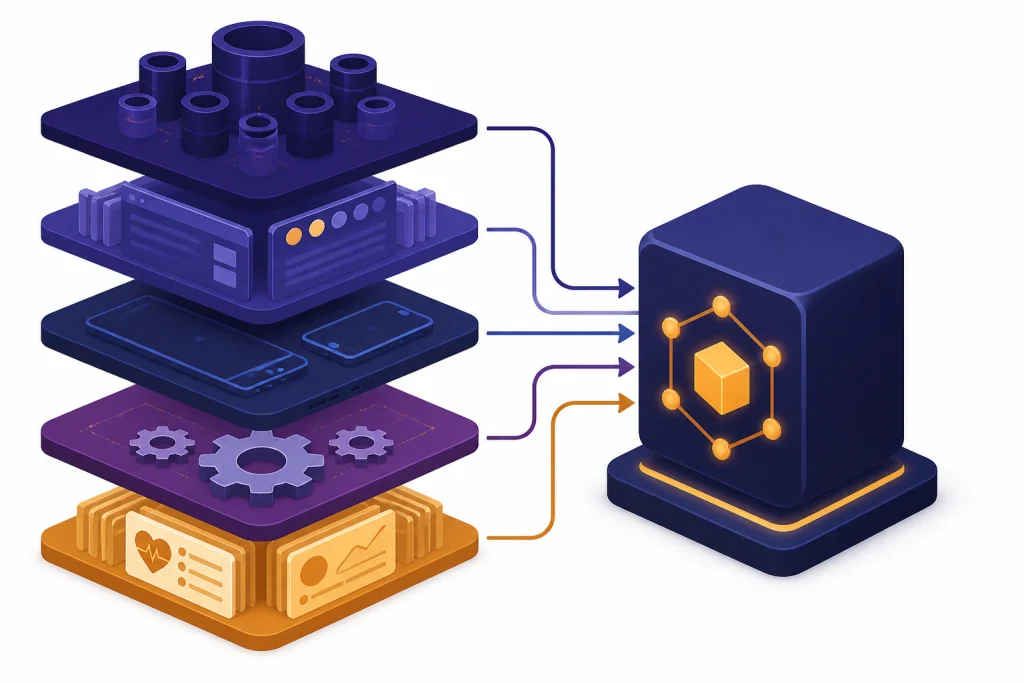
The easiest way to read OpenAI acquisitions is by product layer, not by calendar order. Each deal fills a different gap between frontier models and useful products.
Product interface deals
Global Illumination, Multi, Sky, and io all sit near the user interface. Global Illumination joined to work on core products including ChatGPT.[1] Multi was reported as a remote collaboration acquisition.[3] Sky gives OpenAI a Mac-native interface that can understand what is on screen and act through apps.[9] io gives OpenAI a hardware and product design team, while Jony Ive and LoveFrom remain independent design partners.[4]
Data and research infrastructure deals
Rockset and Neptune sit deeper in the stack. Rockset is about retrieval infrastructure. OpenAI said it would integrate Rockset technology to power retrieval across products.[2] Neptune is about research observability. OpenAI described it as a way to track experiments, monitor training, and understand complex model behavior during model development.[10]
Developer and agent deals
Astral and Promptfoo are both developer-facing, but they solve different problems. Astral brings Python tools such as uv, Ruff, and ty into the Codex orbit.[13] Promptfoo brings evaluation, red-teaming, security testing, and governance capabilities for enterprise agents in OpenAI Frontier.[12] These deals show how OpenAI is building around software teams, not only end users. Related model coverage lives in our GPT models comparison and context window comparison.
Personal context deals
Roi, Hiro, and Torch point to a different frontier: personal context. Roi focused on personal finance and personalization.[8] Hiro also sat in personal finance and was set to shut down after the reported acquisition.[15] Torch focused on unifying health records for AI use and was tied in reporting to ChatGPT Health.[11] These are sensitive categories. They also explain why privacy, security, and compliance will remain central questions in future OpenAI product launches.
Deal prices and disclosure
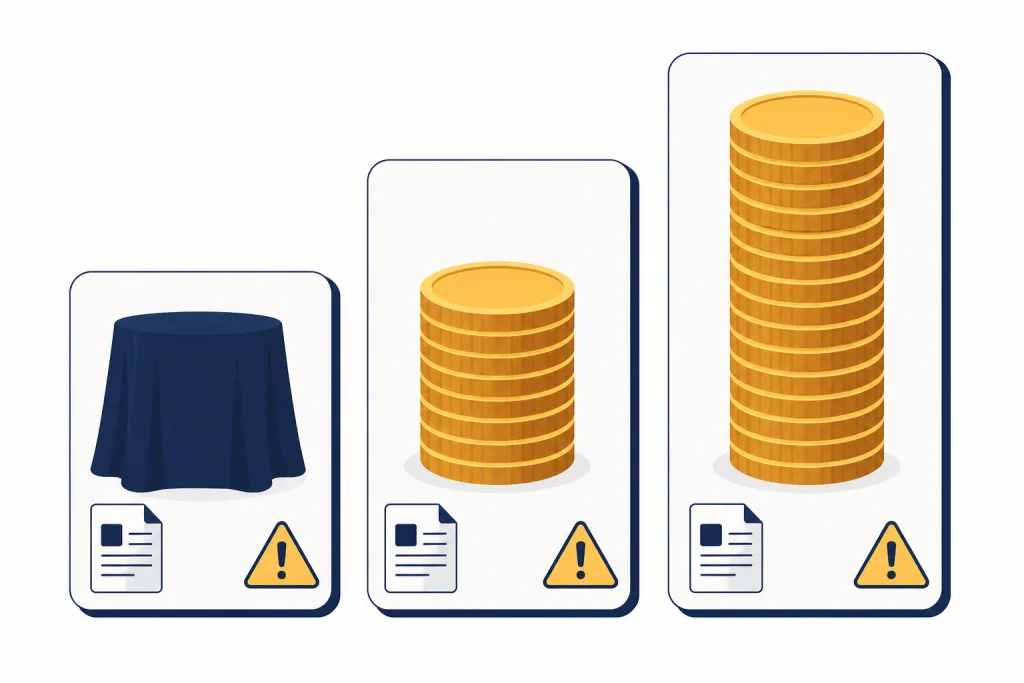
Only a few OpenAI acquisitions have widely reported dollar values. The io Products deal was reported at nearly $6.5 billion by the Associated Press.[5] Statsig was reported at $1.1 billion in an all-stock deal by TechCrunch.[7] Torch was reported by TechCrunch at $100 million in equity, citing The Information, but that amount should be treated as reported rather than officially published by OpenAI.[11]
For most other deals, OpenAI has not published an official figure. That includes Global Illumination, Rockset, Multi, Roi, Sky, Neptune, Promptfoo, Astral, TBPN, and Hiro. When OpenAI only says a team joined, a definitive agreement was signed, or an acquisition is subject to closing conditions, we should not infer the price.
The disclosure pattern matters. OpenAI is private, so acquisition values usually come from company posts, press confirmations, investor reporting, or people familiar with the deal. The larger reported deals often appear in financial outlets because they affect valuation, employee equity, or investor expectations. Smaller acqui-hires may only appear in founder posts and startup press coverage.
Rule of thumb: if OpenAI has not published the number, treat the amount as reported, not official.
This is also why acquisition coverage should be read alongside financing coverage. A private company can make large stock-based acquisitions without the same public filings a public company would produce. That makes ChatGPT Stock News and OpenAI Funding Round relevant even when the acquisition itself is a product story.
Reported team hires and deals not counted here
This tracker focuses on acquisitions and buyouts we could tie to an OpenAI announcement or a strong press report. We do not count every hiring wave, partnership, investment, licensing deal, or rumored transaction as an acquisition.

That distinction matters because OpenAI often works with startups in several ways. It can invest through affiliated funds, hire a team, license technology, sign a partnership, or acquire a company outright. Those are different events. A partnership with a media company is not an acquisition. A reported recruiting package is not an acquisition. A rumored deal that never closes should not be treated as part of the OpenAI acquisition record.
We also separate announced acquisitions from closed acquisitions. Promptfoo was announced on March 9, 2026, and OpenAI said the closing was subject to customary conditions.[12] Astral was announced on March 19, 2026, and OpenAI said closing was subject to customary conditions including regulatory approval.[13] Neptune was announced as a definitive agreement on December 3, 2025.[10] Those entries belong in the tracker, but their status should not be described the same way as the completed io merger or the Sky acquisition.
We will update this tracker when OpenAI or a reliable outlet confirms a new acquisition, a closing, a material price, or a change in status. For weekly coverage, see OpenAI News This Week, ChatGPT Updates 2026, and OpenAI Lawsuits 2026.
What to watch next
The next signal is not just whether OpenAI buys more companies. The more useful signal is where the acquired pieces land. If Astral tools become more tightly connected to Codex, the acquisition will look like a developer workflow move. If Promptfoo becomes native to OpenAI Frontier, the deal will look like an enterprise trust and compliance move. If Sky-like Mac controls arrive in ChatGPT, the desktop assistant strategy becomes clearer.
Hardware is the largest open question. The io Products merger gives OpenAI a hardware design team, but OpenAI has not published a finished consumer device in the sources we reviewed for this article. Until it does, the acquisition is best understood as a strategic bet on AI-native interfaces rather than proof of a new device category.
Personal data is the second open question. Torch, Roi, and Hiro all point toward AI that can reason over private health or financial context. That could make ChatGPT more useful, but it also raises the bar for data controls, consent, retention, security, and clear product boundaries. For background on what the product is and how it works, start with What Is ChatGPT? and What Is OpenAI?.
The third open question is governance. Acquisitions like TBPN are not normal model-lab infrastructure deals. They touch public communication and editorial independence. OpenAI’s own TBPN announcement frames the deal as a way to support a constructive conversation about AI.[14] Readers should watch whether TBPN retains credibility with guests, critics, and viewers now that it is owned by OpenAI.

Frequently asked questions
What was OpenAI’s first major acquisition?
The first major OpenAI acquisition in this tracker is Global Illumination, announced on August 16, 2023.[1] OpenAI said the entire team joined to work on core products including ChatGPT.
What is OpenAI’s biggest reported acquisition?
The biggest reported OpenAI acquisition is io Products, the AI hardware company connected to Jony Ive. The Associated Press reported the deal was valued at nearly $6.5 billion.[5] OpenAI’s own post confirms the io team merged with OpenAI, but it does not publish the deal value.[4]
Did OpenAI acquire Statsig?
OpenAI announced the acquisition of Statsig on September 2, 2025.[6] OpenAI said the closing was subject to customary closing conditions including regulatory approval, so the status should be described carefully unless OpenAI publishes a later closing update.
Why did OpenAI acquire Rockset?
OpenAI said it acquired Rockset to improve retrieval infrastructure across products.[2] Rockset’s technology supports real-time analytics, indexing, and querying, which are useful when AI systems need to work with current or organization-specific data.
Are Promptfoo and Astral completed acquisitions?
OpenAI announced plans to acquire Promptfoo on March 9, 2026, and said closing was subject to customary conditions.[12] OpenAI announced plans to acquire Astral on March 19, 2026, and said closing was subject to customary conditions including regulatory approval.[13] They are included here as announced acquisitions, not as completed acquisitions unless OpenAI later confirms closing.
Does OpenAI disclose acquisition prices?
Usually, no. OpenAI has not published official figures for most acquisitions in this tracker. The widely cited values for io, Statsig, and Torch come from press reporting, not from acquisition prices published directly in OpenAI’s announcements.[5][7][11]