

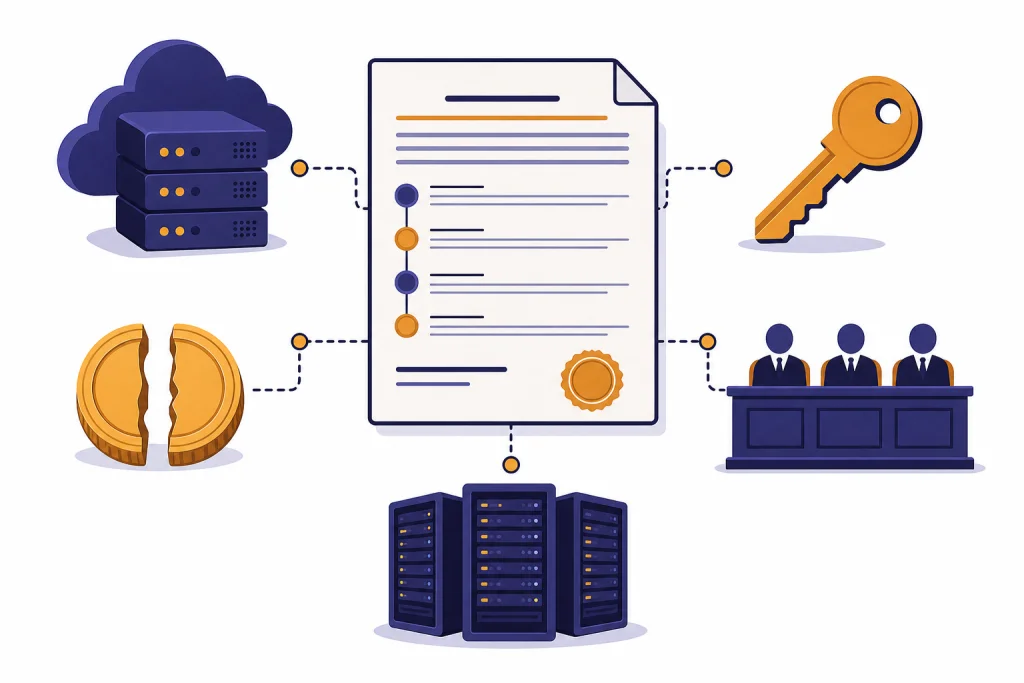
OpenAI and Microsoft remain deeply tied, but the partnership is no longer simple to describe. The latest confirmed picture as of April 25, 2026 is this: Microsoft remains central to OpenAI’s cloud, product, IP, and revenue structure, while OpenAI is also building broader compute and enterprise relationships with Amazon, Oracle, CoreWeave, Google Cloud, NVIDIA, AMD, Broadcom, and others. The October 2025 definitive agreement set the core legal and commercial frame. The February 2026 joint statement said Amazon and other infrastructure moves did not change that frame. The April 2026 news cycle is about tension inside that frame, not a clean breakup.
What changed in the OpenAI Microsoft news cycle
The short answer is that OpenAI’s dependency on Microsoft is becoming more complex, not disappearing. Microsoft and OpenAI described the relationship in October 2025 as a definitive agreement tied to OpenAI’s public benefit corporation structure, Microsoft’s stake, Azure access, IP rights, revenue sharing, and AGI governance.[1][2] A February 27, 2026 Microsoft statement then said new OpenAI funding and Amazon-related announcements did not change the partnership terms shared in October 2025.[3]
That matters because many readers see headlines about Amazon, new cloud capacity, or OpenAI funding and assume Microsoft has been pushed aside. That is not what the official record said as of April 25, 2026. Microsoft still had a privileged role. OpenAI also had more room to buy compute, pursue infrastructure, and form commercial relationships outside Microsoft. Those two facts can both be true.
The April 2026 tension comes from enterprise distribution. CNBC, in a report republished by Investing.com, said OpenAI revenue chief Denise Dresser told employees that the Amazon relationship could help OpenAI reach enterprises where they already buy cloud services, and that Amazon had announced plans to invest up to $50 billion in OpenAI less than two months earlier.[4] That report fits a broader shift: OpenAI wants access to customers and compute wherever they are, while Microsoft wants to preserve the value of its early and expensive bet.
For broader background on how the relationship became so important, see our deeper OpenAI and Microsoft partnership explainer. For the capital side, our OpenAI funding history tracks the financing rounds that made the partnership more strategically sensitive.
Timeline of the partnership
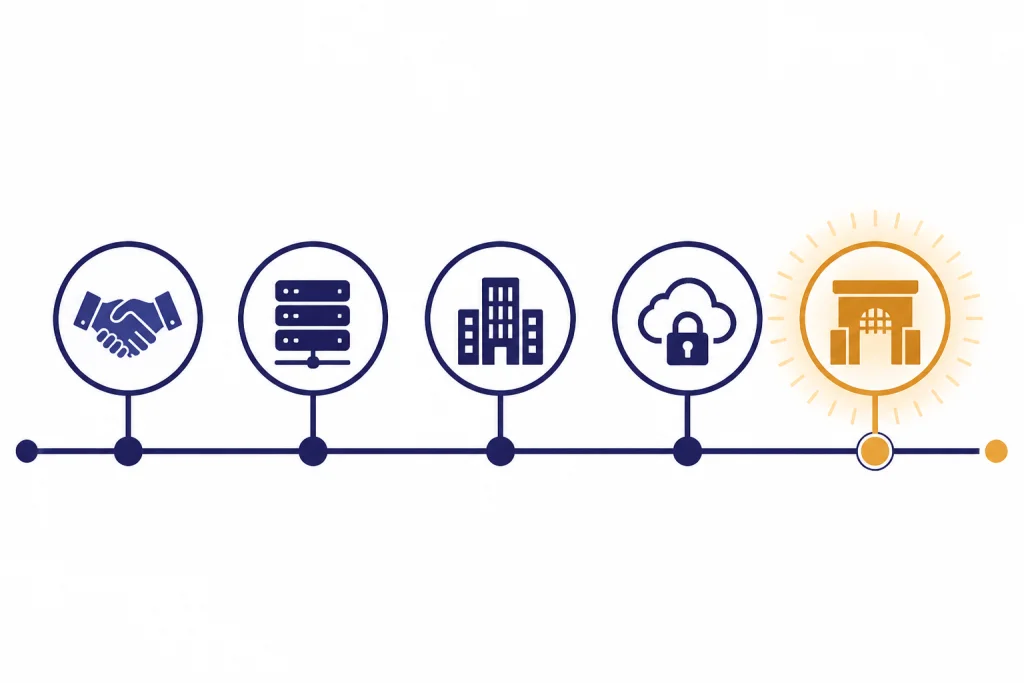
The OpenAI Microsoft partnership began as a research and infrastructure alliance and became one of the most important commercial relationships in AI. Microsoft said in January 2023 that it was entering the third phase of the long-term partnership through a multiyear, multibillion-dollar investment, following earlier investments in 2019 and 2021.[9] That same 2023 announcement said Azure would power OpenAI workloads across research, products, and API services.[9]
The partnership became more complicated after ChatGPT turned OpenAI from a research lab into a major consumer and enterprise platform. Microsoft gained a major technology advantage through Azure OpenAI Service, GitHub Copilot, Microsoft 365 Copilot, Bing, and other products. OpenAI gained the cloud infrastructure needed to train and serve frontier models. The relationship created mutual leverage.
The key reset came on October 28, 2025. Microsoft and OpenAI said they had signed a new definitive agreement. Microsoft’s investment in OpenAI Group PBC was valued at approximately $135 billion, representing roughly 27 percent on a converted diluted basis.[1][2] The same agreement extended Microsoft’s IP rights for models and products through 2032 and said Microsoft’s research IP rights would continue until AGI verification or through 2030, whichever came first.[1][2]
The February 27, 2026 joint statement then clarified how new partners fit inside the older deal. Microsoft said its IP relationship with OpenAI remained unchanged, that Azure remained the exclusive cloud provider for stateless OpenAI APIs, and that Amazon-related collaborations were already contemplated under the agreements.[3]
| Date | Event | Why it matters |
|---|---|---|
| 2019 | Microsoft and OpenAI begin the partnership period referenced in later Microsoft statements.[3] | Microsoft becomes the key infrastructure and commercialization partner. |
| January 23, 2023 | Microsoft announces a multiyear, multibillion-dollar extension of the partnership.[9] | Azure is positioned as the cloud foundation for OpenAI workloads. |
| October 28, 2025 | Microsoft and OpenAI announce a definitive agreement tied to OpenAI’s PBC structure.[1][2] | The deal defines stake, IP, revenue, Azure, AGI, and compute terms. |
| February 27, 2026 | Microsoft says new OpenAI funding and partners do not change the October 2025 terms.[3] | The statement frames Amazon as additive, not a replacement for Microsoft. |
| April 13, 2026 | CNBC reports internal OpenAI comments emphasizing Amazon’s enterprise importance.[4] | The public story shifts from legal terms to customer distribution and cloud choice. |
Current partnership terms to know
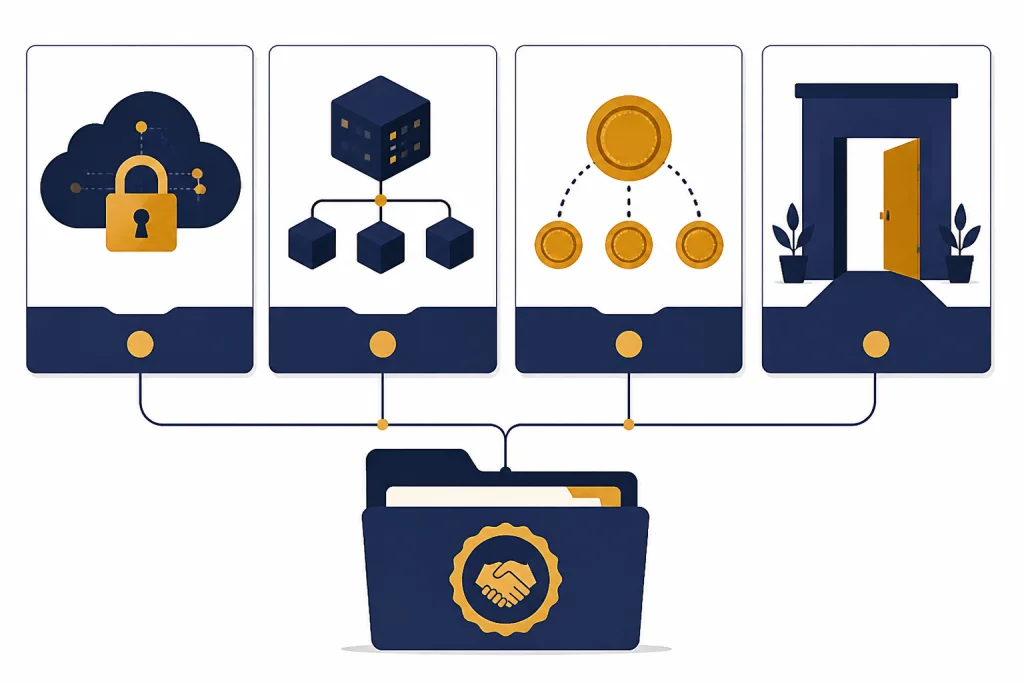
The partnership has several layers. Readers should separate ownership, model rights, cloud hosting, product distribution, revenue sharing, and AGI governance. They are related, but they are not the same thing.
Ownership and economics
After the October 2025 recapitalization, Microsoft said it held an investment in OpenAI Group PBC valued at approximately $135 billion, representing roughly 27 percent on an as-converted diluted basis.[1][2] That made Microsoft more than a cloud vendor. It remained a major economic participant in OpenAI’s growth.
The October 2025 agreement also preserved a revenue-sharing relationship until the expert panel verifies AGI, with payments made over a longer period of time.[1][2] The exact commercial percentages were not published in the official statements we retrieved. OpenAI has not published an official figure for those percentages.
IP rights and model access
Microsoft’s IP rights for OpenAI models and products were extended through 2032 in the October 2025 agreement.[1][2] The agreement also said those rights included post-AGI models with safety guardrails.[1][2] That clause is central because it reduces the chance that a simple AGI declaration automatically cuts Microsoft off from future OpenAI technology.
Azure and compute
The October 2025 agreement said OpenAI contracted to purchase an incremental $250 billion of Azure services, while Microsoft no longer had a right of first refusal to be OpenAI’s compute provider.[1][2] That is the most important practical tension in the partnership. OpenAI still committed huge Azure spending, but it also gained more flexibility to find compute elsewhere.
The February 2026 Microsoft statement narrowed the cloud picture further. It said Azure remained the exclusive cloud provider for stateless OpenAI APIs, and that stateless API calls from collaborations with third parties, including Amazon, would be hosted on Azure.[3] It also said OpenAI’s first-party products, including Frontier, would continue to be hosted on Azure.[3]
AGI process
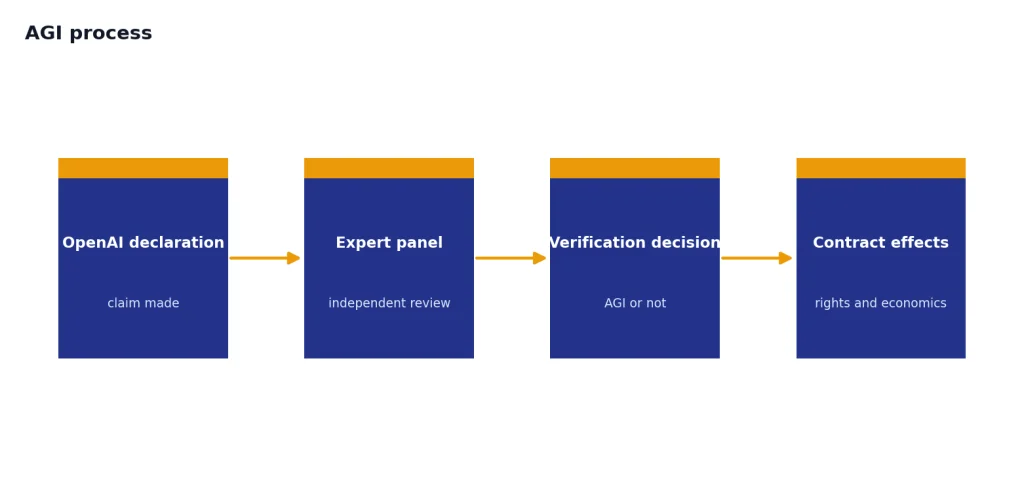
The October 2025 agreement added an independent expert panel to verify any OpenAI AGI declaration.[1][2] Microsoft’s February 2026 statement said the contractual definition of AGI and the process for determining whether it has been achieved remained unchanged.[3] This matters because AGI is not just a technical milestone inside this partnership. It is also a contract trigger.

Why Amazon and cloud partners matter
Amazon matters because enterprise software is often sold where customers already run their workloads. Many large companies standardize on AWS, Azure, Google Cloud, or a mix of platforms. If OpenAI can reach customers through more cloud channels, it can reduce procurement friction. That is the business logic behind the current OpenAI Microsoft news.

The official February 2026 Microsoft statement did not present Amazon as a threat to the partnership. It said collaborations like the OpenAI and Amazon partnership were contemplated under the agreements, and it said revenue sharing already included revenue from OpenAI partnerships with other cloud providers.[3] That is the legal framing.
The enterprise framing sounds different. CNBC reported that Dresser told staff the Microsoft partnership was foundational but had limited OpenAI’s ability to meet enterprises where they were, especially those using Amazon Bedrock.[4] That does not mean Microsoft is out. It means OpenAI sees customer access as a reason to broaden the commercial surface area around the Microsoft relationship.
OpenAI’s March 31, 2026 funding announcement reinforces the broader strategy. OpenAI said its infrastructure strategy spanned cloud through Microsoft, Oracle, AWS, CoreWeave, and Google Cloud; silicon through NVIDIA, AMD, AWS Trainium, Cerebras, and a Broadcom partnership; and data centers through Oracle, SBE, and SoftBank partnerships.[5] Bloomberg separately reported that OpenAI raised $122 billion at an $852 billion valuation, supporting the scale of that infrastructure buildout.[6]
That is why the partnership is best understood as a hub-and-spoke model. Microsoft remains the most important spoke because of IP, Azure, products, and ownership. Other infrastructure partners matter because OpenAI’s compute needs are too large for one relationship to cover easily. For more on the financing pressure behind that model, read our openai funding round analysis and ChatGPT stock news tracker.

What it means for ChatGPT users, developers, and Azure customers
Most ChatGPT users should not expect a visible product change just because the partnership structure is evolving. ChatGPT availability, model names, memory, voice, image generation, browsing, and workspace features are product decisions by OpenAI. Partnership terms affect infrastructure and distribution first. They usually reach consumers indirectly through reliability, capacity, pricing, or new integrations.
Azure customers remain in a strong position. Microsoft’s 2023 announcement tied Azure OpenAI Service to direct access to OpenAI models backed by Azure infrastructure, and the October 2025 agreement preserved Azure API exclusivity until AGI under the terms stated at that time.[9][1] The February 2026 statement said stateless OpenAI APIs remained exclusive to Azure.[3]
Developers should track the difference between OpenAI’s direct API, Azure OpenAI Service, and any future enterprise distribution through other clouds. The same model family can appear in different commercial wrappers, with different procurement rules, compliance controls, regional availability, quotas, and support paths. If you are choosing between endpoints, compare the deployment environment, contract terms, data handling commitments, latency, and feature availability. Our GPT models comparison can help separate model capability from platform packaging.

Enterprise buyers should also watch procurement language carefully. If a vendor says OpenAI is “available through” a cloud, that may mean resale, hosting, private deployment, agent orchestration, or an integration layer. Those are not interchangeable. The February 2026 Microsoft statement drew a specific line around stateless APIs and Azure hosting.[3] That line is more important than a generic “multi-cloud” label.
For readers mainly following product changes, use our ChatGPT updates 2026 changelog. For daily developments beyond this partnership, follow OpenAI News Today and openai news this week.
Regulatory and competitive pressure
The OpenAI Microsoft relationship has drawn regulatory attention because it combines a leading cloud provider, a leading AI lab, major infrastructure commitments, model access, product distribution, and investment economics. The FTC launched an inquiry in January 2024 into generative AI investments and partnerships involving Alphabet, Amazon, Anthropic, Microsoft, and OpenAI.[7] In January 2025, the FTC issued a staff report on partnerships and investments between major cloud service providers and AI developers, including Microsoft and OpenAI.[7]
The U.K. Competition and Markets Authority took a different procedural path. Its Microsoft/OpenAI partnership case page says the CMA decided on March 5, 2025 that the partnership did not qualify for investigation under the merger provisions of the Enterprise Act 2002.[8] That did not remove broader scrutiny from the AI market. It did mean the U.K. agency did not treat that partnership, as it stood then, as a reviewable merger situation.
Competition pressure also comes from Microsoft itself. The October 2025 agreement said Microsoft could independently pursue AGI alone or with third parties.[1][2] That clause is easy to overlook. It shows that the companies are partners, investors, customers, suppliers, and potential long-term competitors at the same time.
Legal risk is not limited to partnership structure. OpenAI faces lawsuits and copyright disputes that could affect its data, training, and product strategy. Those cases are separate from the Microsoft agreement, but they can influence investor expectations and enterprise adoption. We track those issues in OpenAI lawsuits 2026. For a plain-language company overview, see what is OpenAI.
What to watch next
The most important thing to watch is not whether OpenAI and Microsoft remain partners. They do. The better question is how exclusive the partnership remains in practice as OpenAI’s compute and enterprise distribution needs grow.
- Cloud routing. Watch whether new OpenAI products are hosted on Azure, AWS, another provider, or a hybrid arrangement.
- API wording. Track whether OpenAI, Microsoft, or another cloud provider describes access as stateless API, hosted product, managed agent, private deployment, or marketplace resale.
- Revenue-share language. The official statements confirm a revenue-share arrangement, but not all commercial percentages. OpenAI has not published an official figure for those percentages.
- AGI governance. The expert panel process matters because AGI verification can affect contract rights and economics.[1][2]
- Funding and capex. OpenAI’s $122 billion raise and $852 billion valuation reported in March 2026 show why infrastructure partnerships are central to the company’s strategy.[5][6]
- Regulators. The FTC and CMA records show that AI partnerships remain a competition-policy issue even when a specific deal is not treated as a merger.[7][8]
The practical takeaway is simple. Microsoft is still the anchor partner. OpenAI is also building a wider infrastructure and distribution network. The next phase of the OpenAI Microsoft news cycle will likely turn on how much flexibility OpenAI can exercise without weakening the value Microsoft receives from ownership, Azure, IP, and product integration.
Frequently asked questions
Are OpenAI and Microsoft still partners?
Yes. As of this April 25, 2026 update, the official statements show that OpenAI and Microsoft remain deeply connected through Azure, IP rights, ownership economics, product work, and revenue sharing.[1][3] The partnership is changing in complexity, but the official record does not support a simple breakup narrative.
Does Microsoft own OpenAI?
No. Microsoft said its investment in OpenAI Group PBC was valued at approximately $135 billion and represented roughly 27 percent on an as-converted diluted basis after the October 2025 recapitalization.[1][2] That is a major stake, but it is not full ownership.
Is OpenAI moving from Azure to AWS?
Not in a blanket way. Microsoft said in February 2026 that Azure remained the exclusive cloud provider for stateless OpenAI APIs and that OpenAI’s first-party products, including Frontier, would continue to be hosted on Azure.[3] OpenAI is also building broader compute and cloud relationships, including with AWS, but that is not the same as replacing Azure everywhere.
Why is Amazon part of the OpenAI Microsoft story?
Amazon matters because many enterprises buy AI services through AWS and Amazon Bedrock. CNBC reported that OpenAI leadership saw Amazon as a key way to reach enterprise customers where they already operate.[4] Microsoft’s February 2026 statement said Amazon-related collaborations were contemplated under the existing agreements.[3]
What happens if OpenAI declares AGI?
The October 2025 agreement says an OpenAI AGI declaration must be verified by an independent expert panel.[1][2] Microsoft’s February 2026 statement said the contractual AGI definition and process were unchanged.[3] That means the contractual consequences depend on the agreed process, not a public claim alone.
Should developers use OpenAI directly or Azure OpenAI Service?
It depends on your deployment needs. Azure OpenAI Service may fit enterprises that already use Microsoft procurement, compliance, security, and identity tools. Direct OpenAI access may fit teams that want OpenAI’s newest product surface first. Compare model availability, region, data terms, latency, rate limits, and support before choosing.