


ChatGPT stock news is still pre-IPO news. As of April 24, 2026, there is no public ChatGPT stock ticker, no public OpenAI stock price, and no ordinary brokerage route for buying OpenAI shares directly.[7] The biggest confirmed update is OpenAI’s March 31, 2026 funding announcement: $122 billion in committed capital at a $852 billion post-money valuation.[1] Reuters has reported that OpenAI is laying groundwork for an IPO that could value the company at up to $1 trillion and may file as soon as the second half of 2026, but OpenAI has not announced an IPO date.[4]
Latest status as of April 24, 2026
The short answer is simple. ChatGPT is not a listed stock. ChatGPT is a product made by OpenAI, and OpenAI is still private. Investors cannot type a ChatGPT ticker into a standard brokerage account and buy common shares on Nasdaq or the NYSE.[7]
The most important current number is OpenAI’s private valuation. On March 31, 2026, OpenAI said it had closed a funding round with $122 billion in committed capital at a $852 billion post-money valuation.[1] Bloomberg separately reported the same $122 billion raise and $852 billion valuation, which helps corroborate the headline figure.[9] For a longer capital timeline, see our OpenAI funding history and the separate OpenAI funding round breakdown.
The most important IPO update is less firm. Reuters reported that OpenAI is preparing for a possible public listing that could value it at up to $1 trillion and may involve filing with regulators as soon as the second half of 2026.[4] That is not the same as a filed prospectus, a confirmed listing date, or a final IPO price. OpenAI has not published an official IPO date.

| Question | Current answer | Why it matters |
|---|---|---|
| Is there a ChatGPT stock ticker? | No public ticker exists.[7] | Searches for “ChatGPT stock” often point to indirect exposure, not direct ownership. |
| Is there an official OpenAI stock price? | No public market price exists because OpenAI is private.[7] | Private-market prices can differ widely from a future IPO price. |
| What is the latest confirmed private valuation? | $852 billion post-money after a March 31, 2026 funding round.[1] | This is the clearest official valuation reference before any IPO. |
| Has OpenAI announced an IPO date? | No official date has been announced. | Reports about timing remain pre-IPO reporting, not a company filing. |
| Will retail investors get access? | OpenAI’s CFO told CNBC that a portion of IPO shares would be reserved for individual investors, according to Reuters.[4] | The size, eligibility rules, and brokerage route have not been officially published. |
What changed in OpenAI’s pre-IPO story
OpenAI’s path toward a public listing became more plausible after its corporate restructuring. OpenAI says it was founded as a nonprofit in 2015 and created a for-profit subsidiary in 2019.[2] On October 28, 2025, OpenAI announced an updated structure in which the nonprofit became the OpenAI Foundation and the for-profit became OpenAI Group PBC, a public benefit corporation.[2] The Foundation continues to control OpenAI Group and holds conventional equity in it.[2]
That structure matters for stock news because public investors prefer clearer ownership, clearer governance, and a recognizable equity instrument. OpenAI’s official structure page says the recapitalization gives OpenAI Group the structure to raise capital and attract and retain talent.[2] The California and Delaware attorneys general did not oppose the restructuring, according to the Associated Press.[8]
Microsoft is another key part of the ownership picture. OpenAI said Microsoft held an investment in OpenAI Group PBC valued at about $135 billion after the recapitalization, representing roughly 27 percent on an as-converted diluted basis.[3] We track related developments in OpenAI Microsoft News and our deeper guide to the OpenAI and Microsoft partnership.
The March 31, 2026 funding round then raised the stakes. OpenAI said enterprise revenue now makes up more than 40 percent of revenue and is on track to reach parity with consumer revenue by the end of 2026.[1] That mix matters because public-market investors usually want more than viral consumer usage. They want durable revenue, predictable margins, and a path to supporting large infrastructure commitments.
ChatGPT stock versus OpenAI exposure
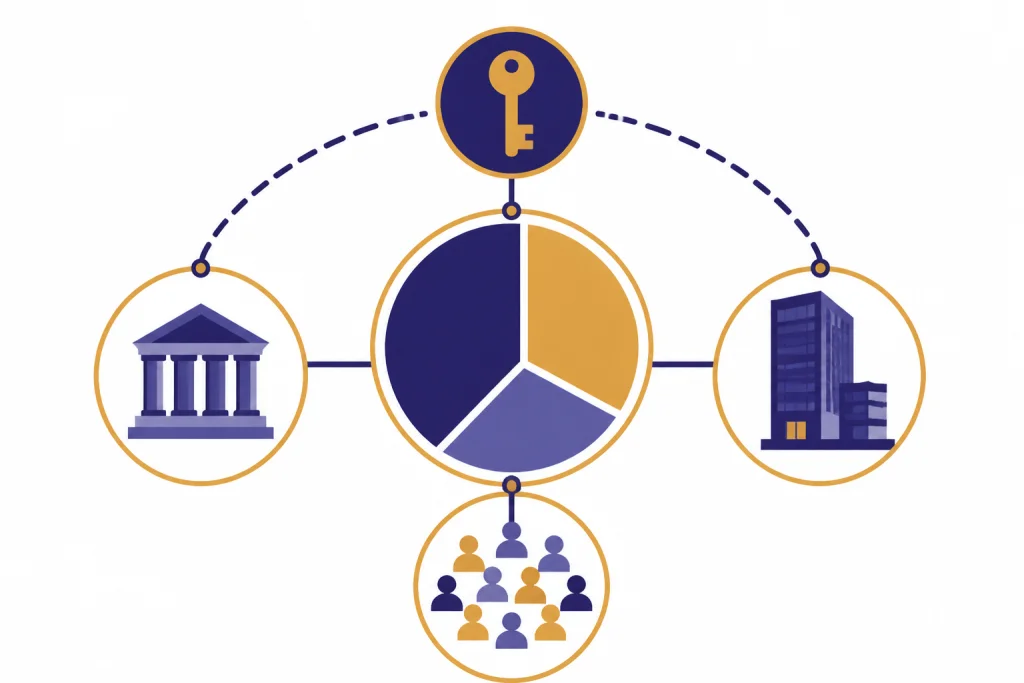
Most confusion around chatgpt stock news comes from a naming problem. ChatGPT is the consumer product. OpenAI is the company behind it. OpenAI Group PBC is the for-profit public benefit corporation inside the broader OpenAI structure.[2] A future listing would likely involve OpenAI’s equity, not a separate stock for ChatGPT itself.
Investors sometimes use public companies with OpenAI relationships as indirect exposure. Microsoft is the clearest example because OpenAI says Microsoft owns about 27 percent of OpenAI Group PBC on an as-converted diluted basis after the recapitalization.[3] That is not the same as owning OpenAI shares directly. Microsoft has its own cloud, software, gaming, security, and enterprise businesses, so its stock price reflects far more than OpenAI.
Private secondary markets are another possible exposure path for accredited or qualified investors, but they are not the same as a public listing. CNBC reported in September 2025 that OpenAI expanded a secondary share sale for eligible current and former employees to roughly $10.3 billion, at a $500 billion valuation, up from an initially targeted $6 billion.[6] CNBC also reported that OpenAI had allowed about $1.5 billion of shares to be sold in a prior tender offer with SoftBank.[6] These transactions can indicate demand, but they do not create a public stock available to everyone.
| Route | Who can usually use it | What you actually own | Main limitation |
|---|---|---|---|
| Public OpenAI IPO | Not available yet | Would depend on the final prospectus | No official IPO date, ticker, or price has been announced. |
| Standard brokerage search for ChatGPT | Retail investors | Nothing direct | There is no public ChatGPT ticker.[7] |
| Microsoft stock | Retail investors | Shares of Microsoft, not OpenAI | OpenAI exposure is indirect and mixed with Microsoft’s broader business. |
| Private secondary transaction | Typically eligible private-market participants | Restricted private shares or exposure | Access, pricing, transfer rights, and fees can be restrictive. |
| Future retail IPO allocation | Unknown until official terms are published | Would depend on allocation rules | Reuters reported a planned retail allocation, but no exact official share amount has been published.[4] |
Signals to watch before an OpenAI IPO
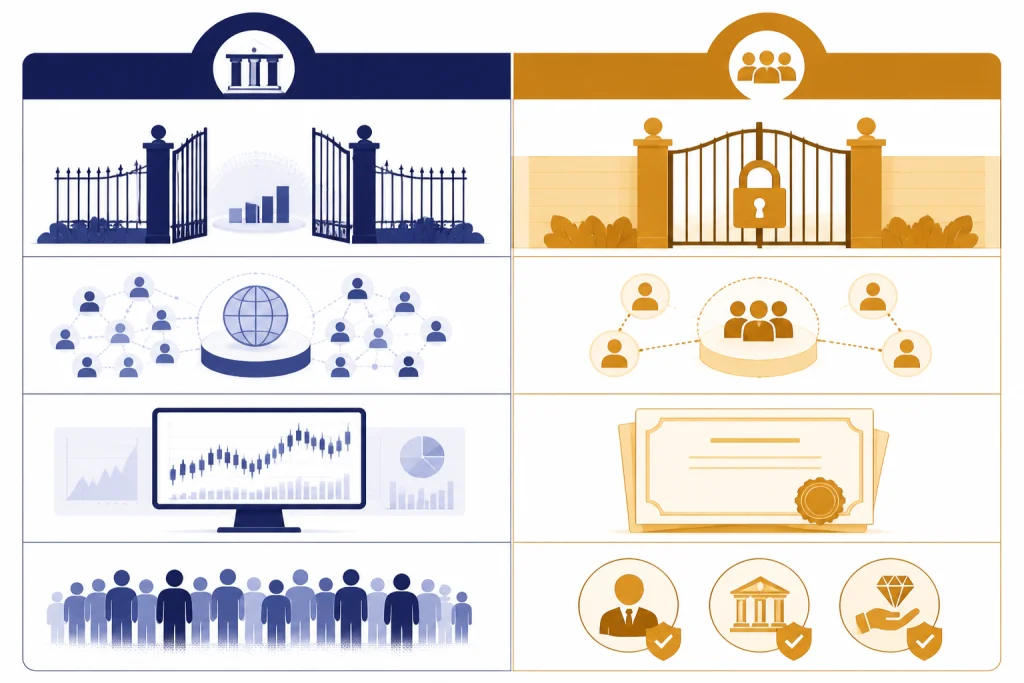
The next meaningful stock-news signal would be an official filing or company announcement, not another rumor. If OpenAI files publicly, investors should look for the registration statement, audited financials, risk factors, share classes, voting rights, related-party transactions, customer concentration, infrastructure commitments, and use of proceeds.
The second signal is the final listing structure. A large private valuation does not automatically become the IPO valuation. Reuters reported that a potential listing could value OpenAI at up to $1 trillion, but that figure is still reported pre-IPO framing rather than a priced offering.[4] A final price would be set only after the company, underwriters, and investors complete the offering process.
The third signal is revenue quality. OpenAI’s own March 2026 update emphasized the combination of consumer adoption, enterprise deployment, developer usage, and compute.[1] Investors should watch whether enterprise revenue continues to grow, whether consumer subscriptions remain durable, and whether API usage supports the cost of running advanced models. Our ChatGPT updates 2026 tracker follows the product changes that can affect usage, while OpenAI API pricing explains the developer economics behind part of the business.
The fourth signal is governance. OpenAI is not a conventional single-purpose public company. It operates under a structure in which the OpenAI Foundation continues to control OpenAI Group.[2] That may be attractive to mission-focused supporters, but public investors will need to understand how control, fiduciary duties, and public-benefit obligations interact with ordinary shareholder expectations.
Risks retail investors should understand
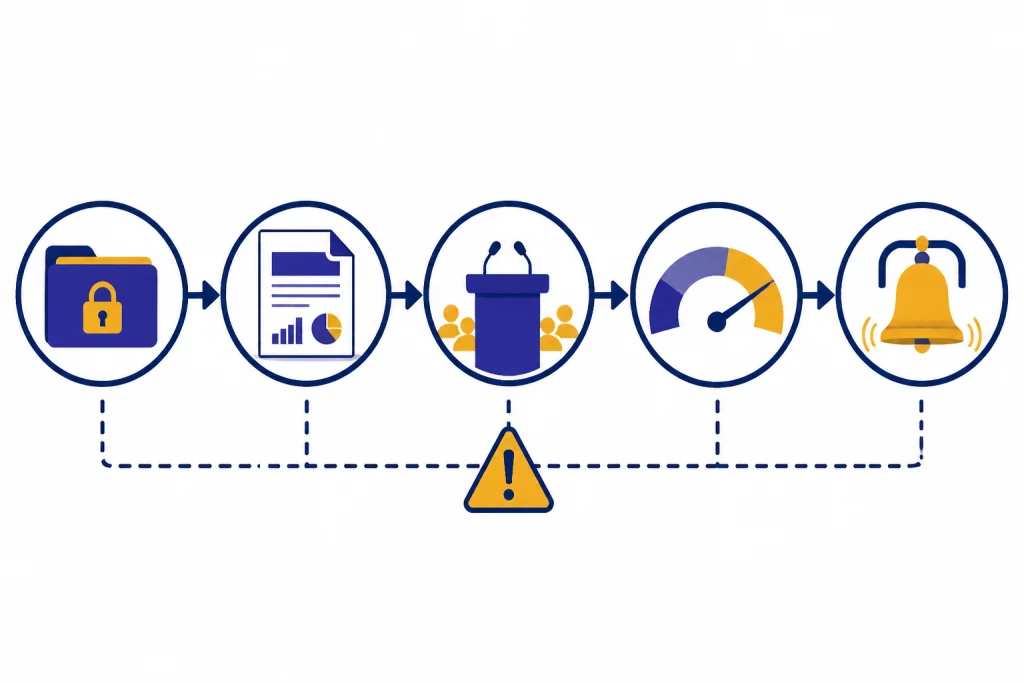
The first risk is valuation risk. A $852 billion private valuation is an official data point, not a guarantee that a future IPO would price higher.[1] Reuters also reported in April 2026 that OpenAI’s $852 billion valuation was drawing scrutiny from some backers as the company shifted focus toward enterprise and competition with Anthropic intensified.[5] Private-market excitement can move faster than business fundamentals.
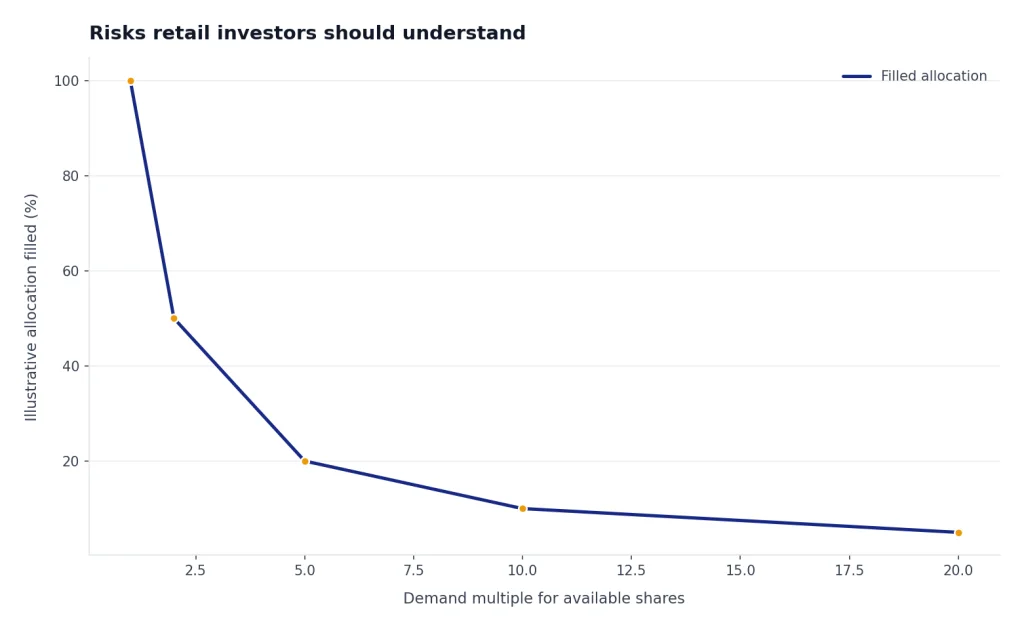
The second risk is access risk. If a retail allocation happens, demand may exceed supply. Reuters reported that OpenAI raised more than $3 billion from individual investors in its latest funding round and that the company plans to reserve part of an IPO for individual investors.[4] OpenAI has not published an official figure for the exact portion of IPO shares that retail investors would receive.
The third risk is business-model risk. OpenAI’s products require expensive compute. Public investors will want to know whether revenue from ChatGPT subscriptions, enterprise deployments, and API usage can cover infrastructure, research, safety, legal, and talent costs. Product news matters here. So do legal and regulatory updates, which we track in OpenAI lawsuits 2026 and OpenAI news today.
The fourth risk is category confusion. A consumer may love ChatGPT and still overpay for OpenAI exposure if the public price bakes in unrealistic growth. A developer may rely on OpenAI models and still need to compare speed, cost, and reliability against alternatives. For broader product context, see What is ChatGPT, What is OpenAI, and our GPT models comparison.
Bottom line for ChatGPT stock watchers
The current chatgpt stock news is best read as pre-IPO positioning. OpenAI has a much clearer corporate structure than it had before the October 2025 recapitalization, a confirmed $852 billion private valuation from March 2026, and press reports pointing to possible IPO preparation.[1][2][4] None of that equals a tradable ChatGPT stock today.
The practical checklist is short. Do not assume a ticker exists. Do not treat private-market valuation as a public stock price. Do not rely on unofficial allocation claims. Watch for an official OpenAI announcement, a regulator filing, and a prospectus that explains share rights, financials, risks, and governance. Until then, ChatGPT stock remains a search term, not a security that most investors can buy directly.
Frequently asked questions
Is ChatGPT stock publicly traded?
No. ChatGPT is not publicly traded, and OpenAI does not have a public ticker that ordinary investors can buy through a standard brokerage account.[7] If OpenAI completes an IPO later, the stock would likely be tied to OpenAI rather than a separate ChatGPT-only company.
What is the latest OpenAI valuation?
OpenAI announced on March 31, 2026 that it had closed a funding round with $122 billion in committed capital at a $852 billion post-money valuation.[1] Bloomberg separately reported the same $122 billion raise and $852 billion valuation.[9] That is a private valuation, not a public stock price.
When will OpenAI IPO?
OpenAI has not announced an official IPO date. Reuters reported that the company may file with regulators as soon as the second half of 2026 and that a potential IPO could value it at up to $1 trillion.[4] Treat that as reported timing, not a confirmed company calendar.
Will retail investors get OpenAI IPO shares?
Reuters reported that OpenAI CFO Sarah Friar told CNBC the company plans to reserve a portion of IPO shares for individual investors.[4] OpenAI has not published an official figure for how many shares would be reserved. Allocation rules would depend on the final offering structure and participating brokerages.
Can I buy OpenAI shares before the IPO?
Most ordinary investors cannot buy OpenAI shares directly before an IPO. Private secondary transactions may exist for eligible participants, but they can involve transfer restrictions, high minimums, limited information, and fees. CNBC reported a large employee secondary sale in 2025, but that did not make OpenAI a public stock.[6]
Is Microsoft the best way to invest in OpenAI?
Microsoft is an indirect exposure route, not a direct OpenAI investment. OpenAI said Microsoft held about 27 percent of OpenAI Group PBC on an as-converted diluted basis after the recapitalization.[3] Microsoft’s public stock also reflects its many other businesses, so it should not be treated as a pure OpenAI proxy.