
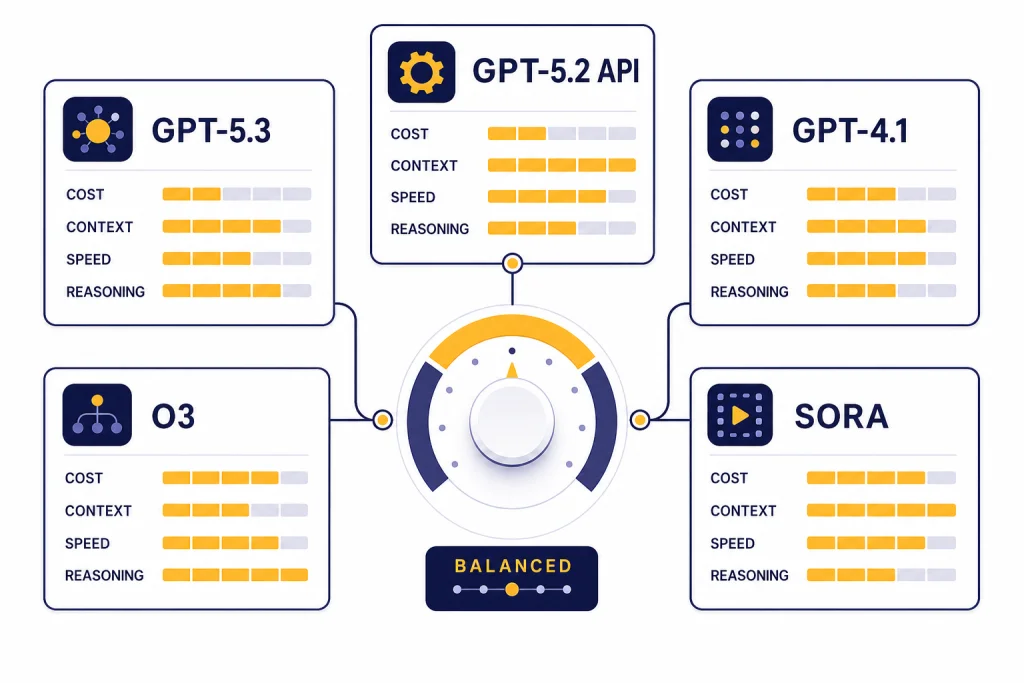
The best GPT model depends on the surface you use and the task you need to solve. As of May 2026, OpenAI’s current top text lineup includes GPT-5.5 and GPT-5.5-pro, with GPT-5.4, GPT-5.3 chat variants, GPT-5.2, GPT-5 mini, GPT-5 nano, and Codex variants still relevant for different workflows. For images, the current GPT Image line is led by GPT Image 2; for video, Sora 2 Pro is the highest-end Sora option. This comparison separates ChatGPT-facing labels from API model IDs, then compares context, output limits, cost tiers, strengths, and practical use cases side by side.
Current OpenAI model map
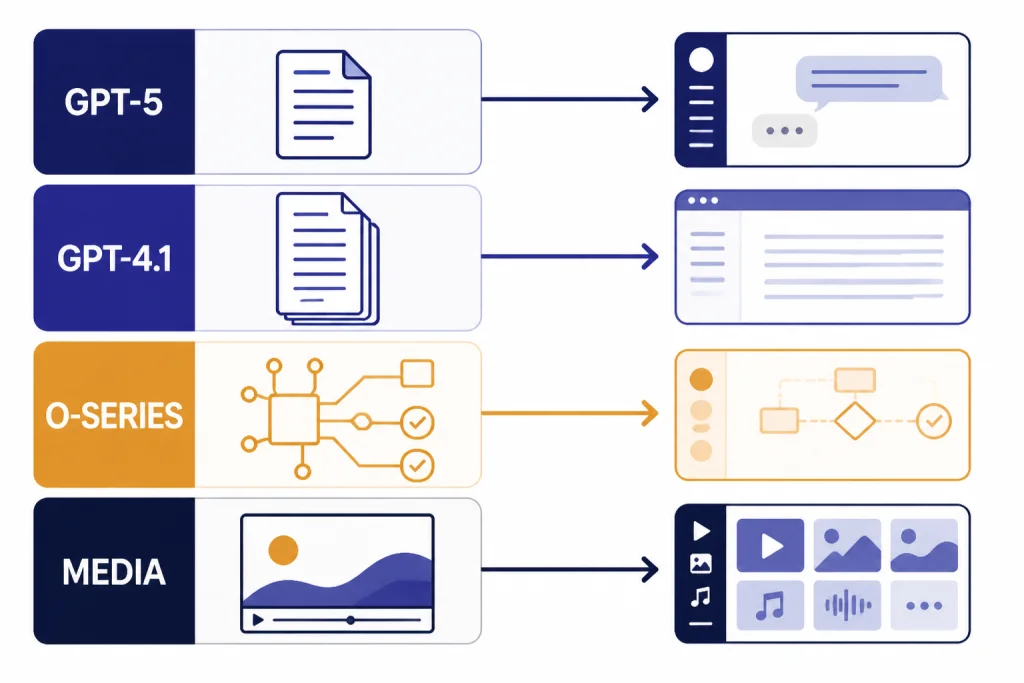
OpenAI’s model lineup is easier to understand if you separate four lanes: ChatGPT app labels, API text model IDs, reasoning-specialized o-series models, and media models. ChatGPT may expose labels such as GPT-5.5 Thinking, GPT-5.3 Instant, Auto, or other product-facing names. The API exposes model IDs such as gpt-5.5, gpt-5.5-pro, gpt-5.4, gpt-5.3-chat-latest, gpt-5.3-codex, gpt-5.2, gpt-5.2-pro, gpt-5-mini, gpt-5-nano, GPT Image models, and Sora models.
That split matters because the same marketing family can behave differently in each product. A ChatGPT user asks, “Which model should I pick in the app?” A developer asks, “Which model ID should I call, how much context can I send, what output limit applies, what endpoints are supported, and what does it cost?” OpenAI’s model catalog and comparison pages publish those API details for many models, while ChatGPT labels do not always have one-to-one public API equivalents.[1][2]
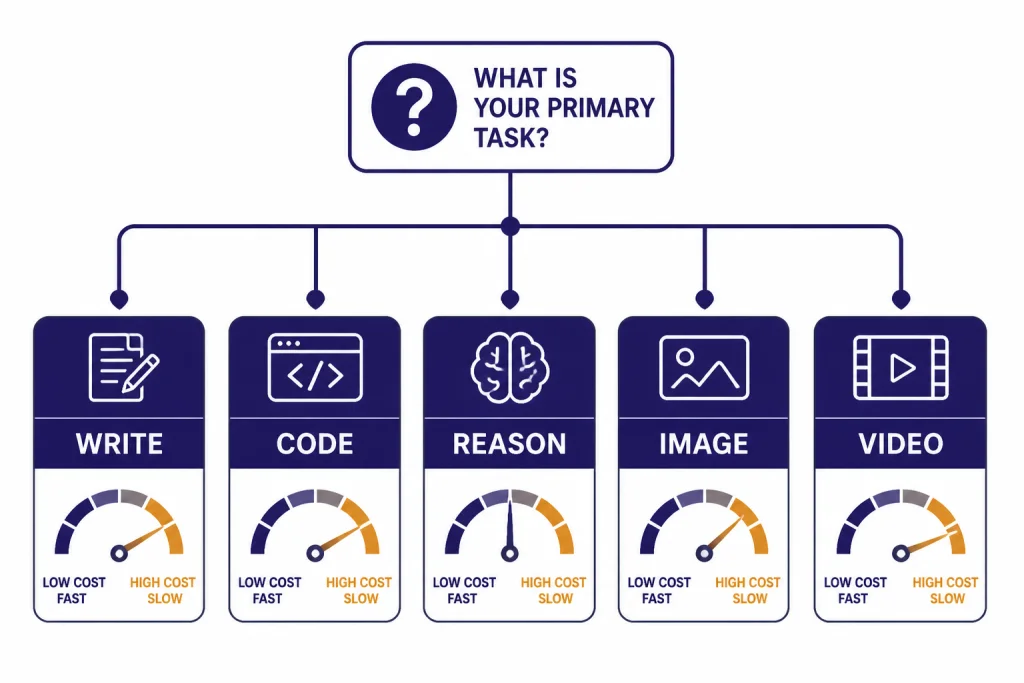
For May 2026, the short version is: use GPT-5.5 or GPT-5.5-pro for the highest current GPT text tier, use GPT-5.4 or GPT-5.3 variants when you need a slightly older stable lane or a ChatGPT-specific experience, use GPT-5 mini or GPT-5 nano for scale, use GPT-4.1 when very large context is the deciding factor, use o-series models when you specifically want deliberate reasoning behavior, and use GPT Image 2 or Sora 2 Pro when the task is image or video generation. For a deeper token-budget view, see our context window sizes for every gpt model guide.
Side-by-side GPT model comparison
The table below is a current model map, not a list of every dated snapshot ever issued. It includes the current top GPT-5.5 tier, recent GPT-5.4 and GPT-5.3 variants, Codex models, major o-series reasoning models, GPT-4.1, GPT-4o, image/video models, and legacy references that readers still encounter. API context and max-output figures are shown where they are published in OpenAI’s model documentation or comparison pages; ChatGPT-only labels and media generators are marked as not directly comparable rather than padded with token numbers.[1][2]
| Model or family | Surface | Best use | Context window | Max output | Cost/status note |
|---|---|---|---|---|---|
| GPT-5.5 | API and ChatGPT family | Best current all-purpose GPT text default for reasoning, writing, coding, tool use, and multimodal input | 400,000 tokens for the current GPT-5 API tier | 128,000 tokens for the current GPT-5 API tier | Current top general GPT tier; check OpenAI pricing for the active rate[1][2][3] |
| GPT-5.5-pro | API and ChatGPT high-compute family | Hard problems where quality matters more than latency or unit cost | 400,000 tokens for the current GPT-5 pro tier | 128,000 tokens for the current GPT-5 pro tier | Highest-end GPT text option in the current lineup; use selectively[1][2][3] |
| GPT-5.4 / GPT-5.4-pro / GPT-5.4-mini / GPT-5.4-nano | API and ChatGPT family | Recent GPT-5 generation for teams standardizing on the March 2026 line | 400,000 tokens for GPT-5.4 text models in the current GPT-5 lane | 128,000 tokens for GPT-5.4 text models in the current GPT-5 lane | Still current enough for many production systems; GPT-5.5 is the newer ceiling |
| GPT-5.3-chat-latest / GPT-5.3 Instant | ChatGPT-facing and chat-latest lane | Everyday conversation, drafting, learning, translation, and smoother ChatGPT interactions | ChatGPT label: not exposed as a fixed public API limit; API chat-latest follows the published model entry | ChatGPT label: not exposed as a fixed public API limit; API chat-latest follows the published model entry | OpenAI described GPT-5.3 Instant as an everyday ChatGPT experience[5][10] |
| GPT-5.3-codex | API/Codex | Agentic coding, repository edits, debugging, test generation, and code review | 400,000-token GPT-5-family coding lane | 128,000-token GPT-5-family coding lane | Use when code quality and tool workflows matter more than generic chat speed |
| GPT-5.2 | API | Stable complex reasoning, coding, agents, image input, and long projects | 400,000 tokens | 128,000 tokens | Former flagship API default in the cited GPT-5.2 docs; now below GPT-5.5 in the May 2026 lineup[4][9] |
| GPT-5.2-pro | API | Older high-compute GPT-5.2 lane for difficult tasks | 400,000 tokens | 128,000 tokens | OpenAI pricing listed it as a much higher-cost pro option[3] |
| GPT-5.2-codex / GPT-5.1-codex / GPT-5-codex | API/Codex | Code agents, pull-request style edits, refactors, and software engineering workflows | 400,000-token GPT-5-family coding lane | 128,000-token GPT-5-family coding lane | Prefer the newest Codex variant unless you need compatibility with an older validated release |
| GPT-5 mini | API | Cost-optimized reasoning, chat, extraction, and routing | 400,000 tokens | 128,000 tokens | Lower-cost GPT-5 family option; older pricing listed $0.25 input / $2.00 output per 1M tokens[3] |
| GPT-5 nano | API | High-throughput classification, tagging, routing, and simple structured outputs | 400,000 tokens | 128,000 tokens | Lowest-cost GPT-5 text tier in the cited pricing snapshot; older pricing listed $0.05 input / $0.40 output per 1M tokens[3] |
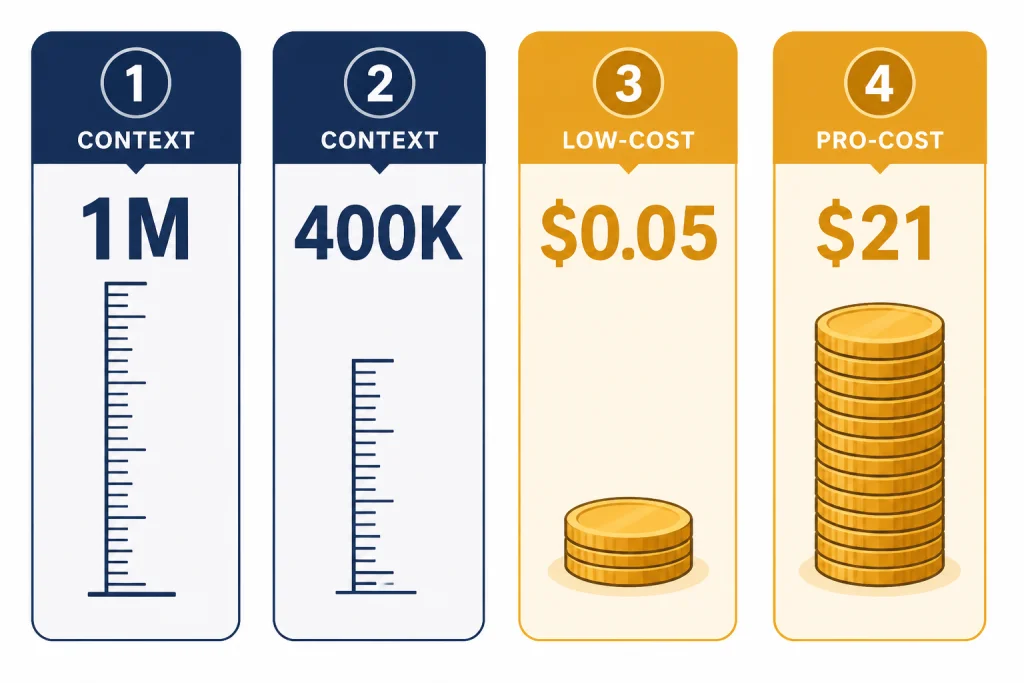
| GPT-4.1 | API | Very long documents, codebases, large specs, and non-reasoning long-context work | 1,047,576 tokens | 32,768 tokens | Strong long-context API model; older pricing listed $2.00 input / $8.00 output per 1M tokens[2] |
| GPT-4o | API and historical ChatGPT model | Older text-and-image workflows already validated on GPT-4o | 128,000 tokens | 16,384 tokens | Still documented in the API; retired from the ChatGPT picker on February 13, 2026[7][10] |
| o1 / o1-pro | API reasoning | Older deliberate reasoning workloads and systems pinned to the o1 generation | 200,000-token reasoning lane | 100,000-token reasoning lane | Legacy reasoning options; evaluate newer o3/o4 or GPT-5.5 before starting new work[1][2] |
| o3 | API reasoning | Deliberate reasoning across math, science, coding, visual reasoning, and technical writing | 200,000 tokens | 100,000 tokens | OpenAI describes it as succeeded by GPT-5, but it remains useful for validated reasoning systems[8] |
| o3-pro | API reasoning | Higher-compute o3 reasoning where latency is less important | 200,000-token reasoning lane | 100,000-token reasoning lane | Premium o-series option listed in pricing[3] |
| o3-mini | API reasoning | Lower-cost older o-series reasoning and routing | 200,000-token reasoning lane | 100,000-token reasoning lane | Use mainly for compatibility or cost-sensitive reasoning systems |
| o3-deep-research | API reasoning/research | Research-style synthesis, browsing/tool-heavy analysis, and long multi-step investigation | Published limits depend on the deep-research endpoint and tool configuration | Published limits depend on the deep-research endpoint and tool configuration | Specialized research workflow, not a drop-in chat model |
| o4-mini | API reasoning | Fast, lower-cost reasoning when you do not need the heaviest model | 200,000-token reasoning lane | 100,000-token reasoning lane | Pricing page lists it as a lower-cost o-series option[3] |
| GPT Image 2 / GPT Image 1.5 / GPT Image 1 | Image generation/editing | Generating and editing images from prompts or source images | Not a text-chat context window | Image output, not token output | GPT Image 2 is the current image-generation ceiling; older image models remain useful for compatibility |
| Sora 2 / Sora 2 Pro | Video generation | Text-to-video and video generation workflows | Not a text-chat context window | Video output, not token output | Sora 2 Pro is the higher-end video option; pricing is per second in the cited pricing page[3] |
| GPT-3.5 Turbo | Legacy API | Older chat and completion workloads that have not migrated | Legacy model | Legacy model | Do not start new production work here unless maintaining an old integration[3] |
For most new text applications, the decision is not “old versus new” but “ceiling versus efficiency.” GPT-5.5-pro is the quality-first choice, GPT-5.5 is the balanced top-tier default, GPT-5 mini or nano handle scale, and GPT-4.1 remains the long-context specialist. If you are deciding between top-end models, our most powerful gpt model article focuses on the quality ceiling; if your bottleneck is spend, the cheapest gpt model comparison narrows the cost tradeoff.
GPT-5 family models
The GPT-5 family is now the main OpenAI line for general intelligence, coding, tool use, multimodal input, and agentic workflows. Earlier GPT-5.2 documentation described GPT-5.2 as a best general-purpose model and highlighted gains over GPT-5.1 in instruction following, accuracy, token efficiency, multimodality, code generation, tool calling, context management, and spreadsheet work.[9] As of May 2026, that role has moved up the stack: GPT-5.5 and GPT-5.5-pro are the current top GPT text models, while GPT-5.4, GPT-5.3, and GPT-5.2 remain important for systems pinned to those generations.
Use GPT-5.5 when you want the strongest current general-purpose model without automatically choosing the highest-compute pro tier. It is the natural starting point for mixed workloads: planning, coding, writing, data analysis, tool calls, document review, and image-informed answers. Use GPT-5.5-pro when the task is difficult enough that a slower and more expensive model is justified: complex architecture decisions, high-stakes code migration plans, dense legal or technical analysis, or multi-step agent work with costly mistakes.
GPT-5.4 is still recent and may be the better operational choice if your team validated prompts, evals, and guardrails on that generation. GPT-5.3-chat-latest and GPT-5.3 Instant matter mainly because they appear in ChatGPT-facing experiences; OpenAI’s GPT-5.3 Instant post described it as smoother and more useful for everyday conversations, learning, technical writing, translation, and web-assisted answers.[5] Do not assume a ChatGPT-facing label is identical to an API model ID unless OpenAI publishes that mapping.
GPT-5.2 is no longer the newest model, but it is still a useful baseline because OpenAI published clear API details for it: a 400,000-token context window and a 128,000-token max output limit.[4] GPT-5.2-pro was the heavier version, with substantially higher pricing in the cited pricing page.[3] If your application is already stable on GPT-5.2, migration to GPT-5.5 should be tested with your own evals rather than assumed to be automatic.
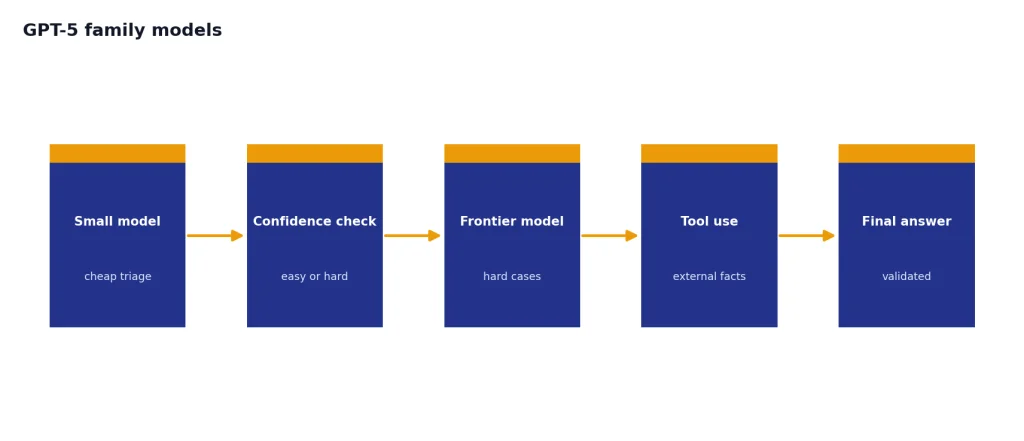
GPT-5 mini and GPT-5 nano exist for scale. They are the right place to start for classification, routing, extraction, templated support, metadata generation, and other work where a frontier model is wasteful. A common production pattern is a cascade: try GPT-5 nano or mini first, check confidence or validation rules, then escalate only ambiguous or high-value requests to GPT-5.5 or GPT-5.5-pro.
Codex variants are part of the GPT-5-era decision too. GPT-5-codex, GPT-5.1-codex, GPT-5.2-codex, and GPT-5.3-codex are best thought of as code-agent models rather than generic chat defaults. Choose them for repository-aware edits, refactors, test writing, debugging, and code review. For writing-heavy work, compare this guidance with our best gpt model for writing guide; for software work, use the coding-specific tradeoffs in best gpt model for coding.
GPT-4 family models
The GPT-4 family is no longer the frontier, but it still matters. GPT-4.1 is especially important because OpenAI launched it in the API with a very large context window and positioned it around coding, instruction following, and long-context comprehension.[6] OpenAI’s API comparison page lists GPT-4.1 with a 1,047,576-token context window, a 32,768-token max output limit, and pricing of $2.00 input and $8.00 output per 1 million tokens in the cited pricing snapshot.[2]
GPT-4.1 is a strong choice when the main bottleneck is input size. Think legal bundles, code repositories, compliance libraries, knowledge-base migrations, and long technical specifications. GPT-5.5 has the stronger current intelligence ceiling, but GPT-4.1’s million-token-class context window remains a practical advantage when the model must inspect a very large prompt in one pass.
GPT-4o is the older “omni” model. OpenAI’s model page lists it as a fast, intelligent, flexible GPT model that accepts text and image inputs and produces text outputs, with a 128,000-token context window and a 16,384-token max output limit.[7] It remains relevant for older integrations, but it is no longer the first model most new API projects should choose.
GPT-4.5 is best treated as a historical bridge. OpenAI’s GPT-4.1 launch post said GPT-4.5 Preview would be deprecated in the API and turned off on July 14, 2025.[6] If you are maintaining a system that still references GPT-4.5, plan a migration rather than new development.
For image understanding, GPT-4o-era material is still useful background; our gpt-4 vision guide explains that history. For image generation, compare the newer GPT Image line in our best gpt model for image generation guide instead of treating GPT-4o as the current generator.
o-series reasoning models
The o-series models were built around deliberate reasoning. They are not always the fastest or cheapest models. Their value is in harder tasks that require multi-step analysis, code reasoning, math, science, tool planning, visual reasoning, or careful verification.
OpenAI’s o3 model page describes o3 as a well-rounded reasoning model across math, science, coding, visual reasoning, technical writing, and instruction following. It lists a 200,000-token context window, a 100,000-token max output limit, and pricing of $2.00 input and $8.00 output per 1 million tokens in the cited snapshot.[8]
o3 is not the obvious first choice for new general-purpose builds because OpenAI’s page says it is succeeded by GPT-5.[8] Still, it remains useful as a comparison point and as a stable reasoning model for teams that have already validated it. o3-pro is the more compute-heavy version listed in API pricing, while o3-mini is the lighter older o-series option.[3] o3-deep-research is a more specialized research workflow rather than a drop-in replacement for chat.
o4-mini fills a different role. It is the lower-cost reasoning model in the o4 line, listed at $1.10 input and $4.40 output per 1 million tokens in the cited pricing page.[3] Use it when you want reasoning behavior but cannot justify a heavier model for every request. For model-specific details, see our openai o4-mini, openai o3, and openai o3-pro guides.
Media, speech, and legacy models
Not every OpenAI model belongs in a GPT chat ranking. The model catalog also includes GPT Image models, Sora video models, GPT audio and realtime models, Whisper for speech recognition, embeddings, moderation, and legacy base models.[1] These models solve different problems and should not be ranked on the same axis as text reasoning models.
For video, Sora 2 and Sora 2 Pro are the current Sora line, with Sora 2 Pro serving the higher-end video use case. OpenAI’s pricing page lists Sora 2 and Sora 2 Pro prices per second, with higher pricing for larger Sora 2 Pro output sizes.[3] If video is your target, compare sora 2 with our broader sora guide.
For images, the current GPT Image line includes GPT Image 2, GPT Image 1.5, and GPT Image 1. GPT Image 2 is the current top image-generation model, while older GPT Image and DALL·E models remain relevant for compatibility or historical comparisons. OpenAI’s pricing page lists image-generation prices by quality and size, and the model catalog marks DALL·E 3 and DALL·E 2 as deprecated.[3][1] For background, see dall-e 3, dall-e 2, and our dall-e vs stable diffusion comparison.
For speech, Whisper remains the familiar speech-to-text name. OpenAI’s pricing page lists Whisper transcription at $0.006 per minute.[3] Newer GPT-4o transcription models also appear in the pricing page, but Whisper is still useful when you need a stable, simple transcription reference. See our whisper guide for speech-specific coverage.
ChatGPT models versus API models
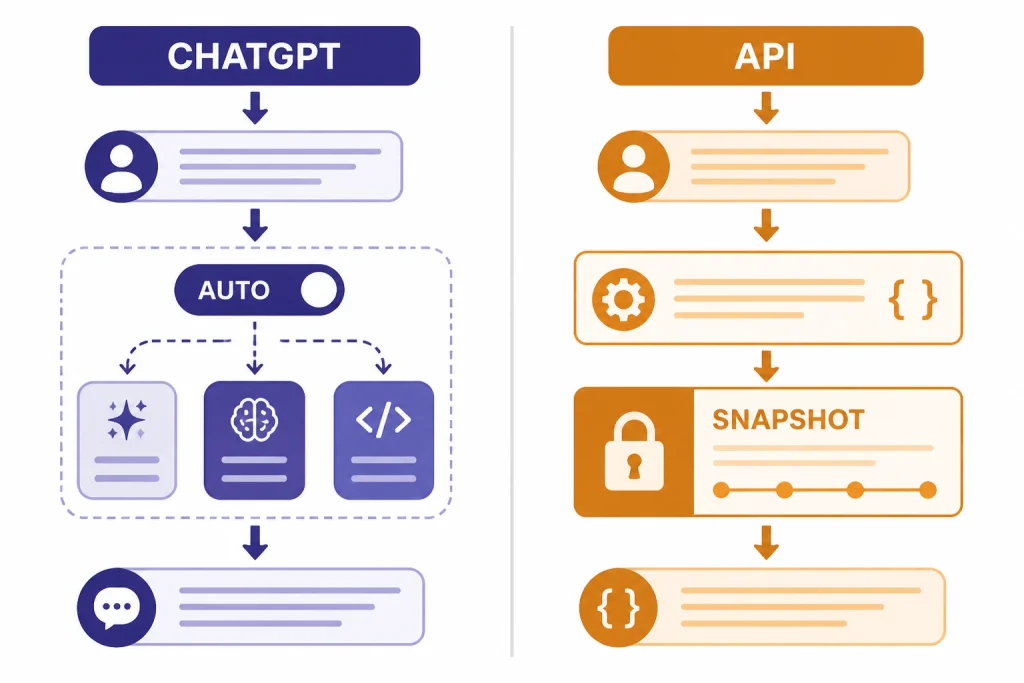
ChatGPT and the API use different selection logic. In ChatGPT, the model picker and automatic routing decide which model experience you see. OpenAI has described GPT-5.3 as a default ChatGPT experience and describes Auto as a system that brings together the best of its models into a single experience.[10] By May 2026, ChatGPT also surfaces newer GPT-5.5-era experiences. That is convenient for users, but it hides some implementation details.
The API is more explicit. You choose a model ID, endpoint, token budget, latency profile, and cost target. OpenAI’s API pages expose context windows, max output tokens, pricing, features, endpoints, and rate-limit tiers for many models.[2] That makes the API better for repeatable production behavior.
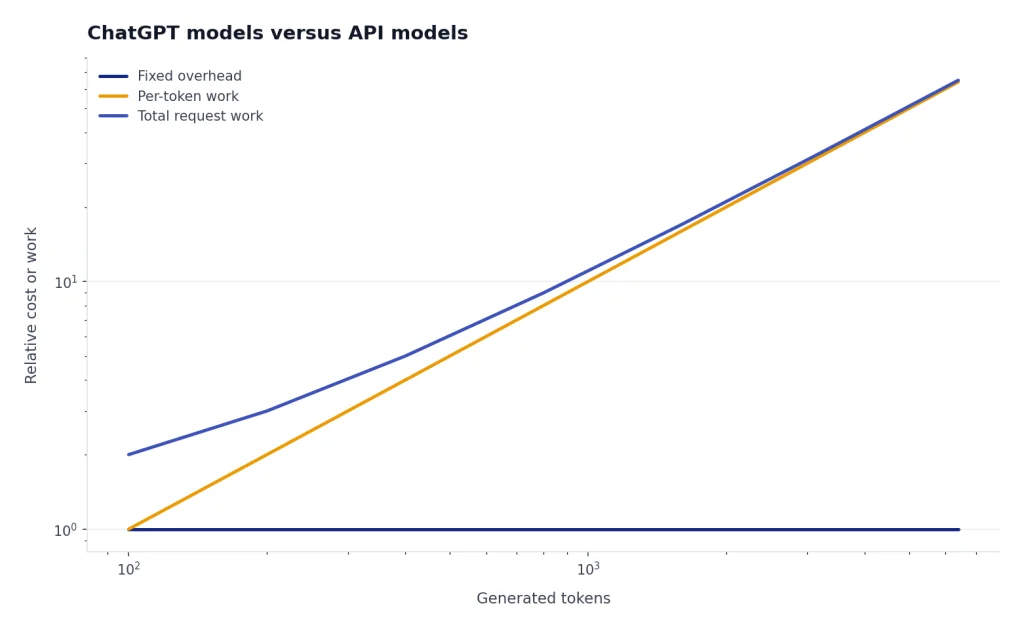
This difference explains why a model can be important in ChatGPT but absent from API pricing, or available in the API under a different ID. GPT-5.3 Instant is a ChatGPT-facing model in the cited sources, while GPT-5.2 has published API context and pricing figures in its model page and pricing references.[5][4] The current GPT-5.5-era lineup adds newer API and ChatGPT options, but the rule is the same: do not assume a model-picker label maps cleanly to a public API ID unless OpenAI publishes that mapping.
Developers should also care about snapshots. API snapshots let you lock behavior to a specific model version. ChatGPT prioritizes user-facing improvements and may change the default model experience over time. If you need reproducibility, use the API, record the model ID in logs, and track model changes in release notes.
How to choose the right GPT model
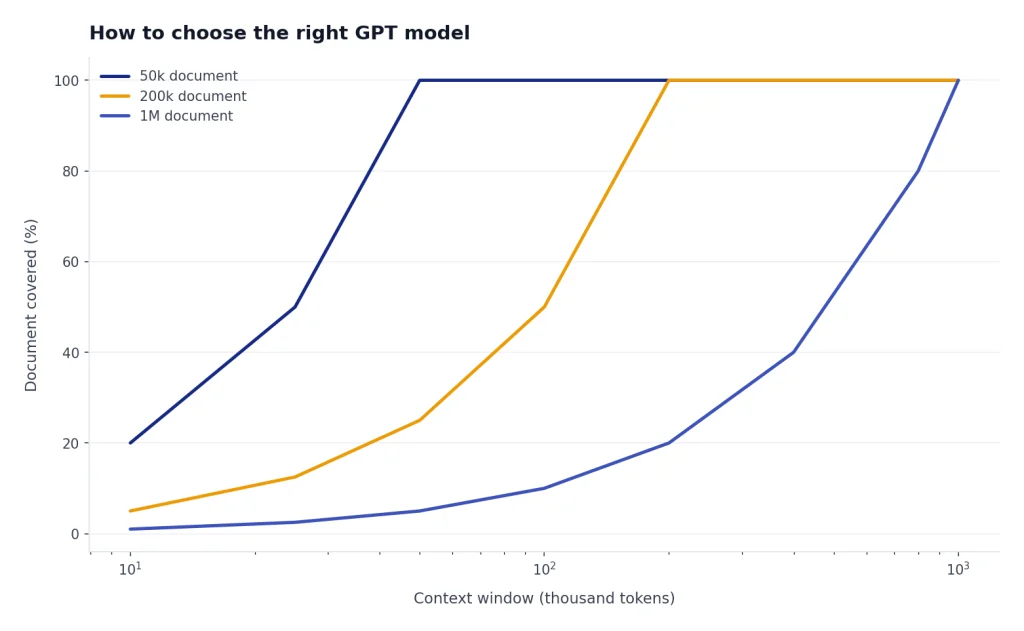
Start with the job, not the model name. The newest model is not always the best fit. A cheap model can be correct enough for structured extraction. A long-context model can outperform a smarter model when the answer is buried in a huge document. A reasoning or pro model can be worth the delay when the task has many dependent steps.
- Choose GPT-5.5 when you want the current high-end default for general writing, coding, analysis, tool use, and multimodal input.
- Choose GPT-5.5-pro when the task is hard enough to justify higher cost and slower responses.
- Choose GPT-5.4 or GPT-5.3 variants when your prompts, evals, or ChatGPT workflow are already standardized on those lines.
- Choose GPT-5.3-codex or another Codex variant when the task is primarily software engineering rather than general chat.
- Choose GPT-5.2 when you need a stable, well-documented GPT-5 API baseline with published 400,000-token context and 128,000-token output limits.[4]
- Choose GPT-5 mini or GPT-5 nano when cost, throughput, and predictable structure matter more than frontier reasoning.[3]
- Choose GPT-4.1 when the decisive factor is a very large prompt or document set.[2]
- Choose o3, o3-pro, o3-mini, o3-deep-research, or o4-mini when you specifically want o-series reasoning behavior or a research-oriented workflow.[8][3]
- Choose GPT Image 2, Sora 2 Pro, or Whisper when the task is image generation, video generation, or transcription rather than text reasoning.[1][3]
For performance-sensitive apps, test latency with your own prompts and use our fastest gpt model article as a planning aid. For production budgets, compare current rates in openai api pricing. For ChatGPT subscription decisions, match the model access you need against the chatgpt plus price in 2026 breakdown.
Frequently asked questions
What is the best GPT model overall?
As of May 2026, GPT-5.5-pro is the highest-ceiling GPT text choice when quality matters more than latency or cost, while GPT-5.5 is the best general top-tier default for most new GPT text work. GPT-5 mini and GPT-5 nano are better for high-volume simpler tasks, and GPT-4.1 can still be the right answer when the largest context window matters more than raw model intelligence.
Is GPT-5.3 available in the API?
There are GPT-5.3-era API model IDs, including gpt-5.3-chat-latest and gpt-5.3-codex, but GPT-5.3 Instant was described in the cited sources as a ChatGPT-facing model.[5] If you are building in the API, choose the explicit model ID published in OpenAI’s model catalog rather than assuming that a ChatGPT label has the same API behavior.[1]
Which GPT model has the largest context window?
Among the text models compared here with published figures in the cited OpenAI comparison page, GPT-4.1 has the largest API context window at 1,047,576 tokens.[2] GPT-5.2 has a 400,000-token context window in its model page, and the current GPT-5.5 tier remains the higher-intelligence choice for many tasks even when GPT-4.1 can fit more input.[4]
Which GPT model is cheapest?
Among GPT-5 family text models in the cited pricing page, GPT-5 nano is the lowest-cost listed option at $0.05 per 1 million input tokens and $0.40 per 1 million output tokens.[3] That does not make it the best model for every job. It is best for high-volume, simpler tasks such as routing, tagging, extraction, and classification.
Should I still use GPT-4o?
Use GPT-4o mainly for existing API integrations or workflows already validated on it. OpenAI’s API page still lists GPT-4o with a 128,000-token context window, but ChatGPT retired GPT-4o from the model picker on February 13, 2026.[7][10] New projects should usually evaluate GPT-5.5, GPT-5.5-pro, GPT-5 mini, GPT-5 nano, GPT-5 Codex variants, or GPT-4.1 first.
Are DALL-E, Sora, and Whisper GPT models?
No. They are OpenAI models, but they solve different tasks. DALL·E and GPT Image models generate images, Sora generates video, and Whisper transcribes speech.[1][3] Compare them by media output, quality, latency, and price rather than by GPT-style chat capability.