

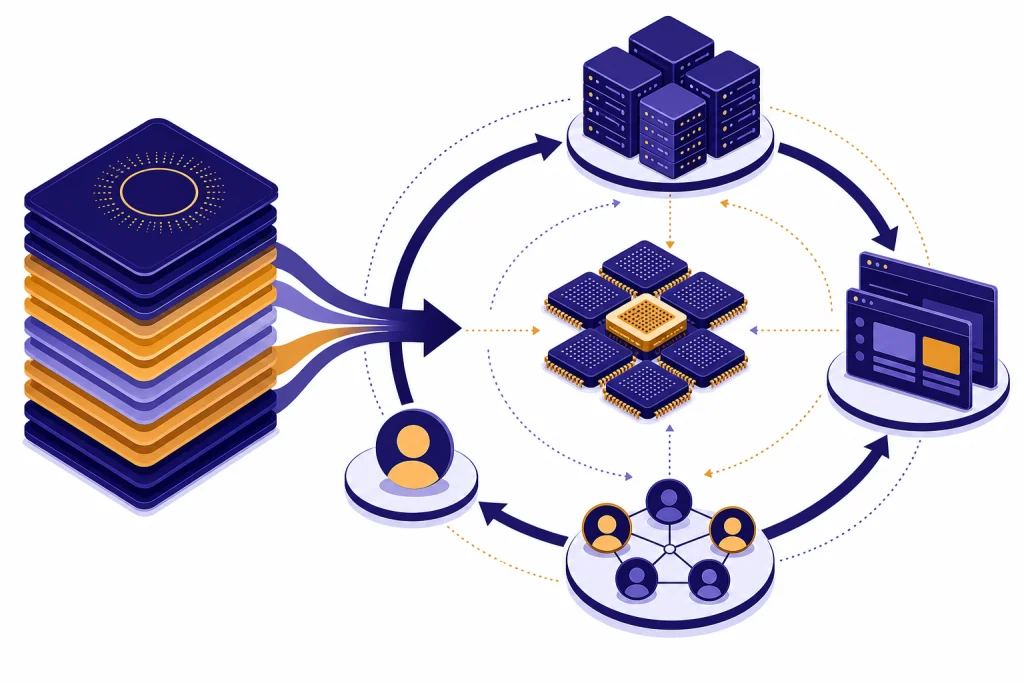
OpenAI’s latest funding round closed on March 31, 2026, with $122 billion in committed capital at an $852 billion post-money valuation, making it the company’s largest financing disclosed to date.[1] The round was anchored by Amazon, NVIDIA, and SoftBank, with Microsoft continuing as a long-term partner and a long list of institutional investors joining the cap table.[1] It also opened a new access point for individual investors through bank channels and ARK-managed exchange-traded funds.[1] This openai funding round is not just a balance-sheet event. It is a bet that ChatGPT, API usage, enterprise agents, and compute capacity can turn massive infrastructure spending into durable revenue.
Key numbers in the funding round
The headline figures are unusually large even by late-stage AI standards. OpenAI said it closed the round with $122 billion in committed capital and an $852 billion post-money valuation.[1] Axios separately reported the same total and valuation, adding more detail on how the commitments were layered into the round.[2]
The funding round should be read as a mix of strategic capital, financial-investor capital, individual-investor access, and credit capacity. It is not the same as an IPO, and it does not mean OpenAI stock is broadly listed for direct public trading. For a broader timeline of earlier financings, see our OpenAI Funding History tracker.
| Item | Reported figure | Why it matters |
|---|---|---|
| Closed round size | $122 billion in committed capital[1] | Gives OpenAI a much larger pool of capital for compute, product development, hiring, and infrastructure commitments. |
| Post-money valuation | $852 billion[1] | Sets the implied value of the company after the new capital is included. |
| Earlier February commitments | $110 billion from Amazon, NVIDIA, and SoftBank[3] | Shows that the March close expanded an already record-sized strategic financing. |
| Individual-investor channel | More than $3 billion raised through bank channels[1] | Marks OpenAI’s first disclosed expansion of participation to investors through bank channels. |
| Revolving credit facility | Approximately $4.7 billion, undrawn at close[1] | Adds borrowing flexibility without being part of the equity round itself. |
Who invested in OpenAI
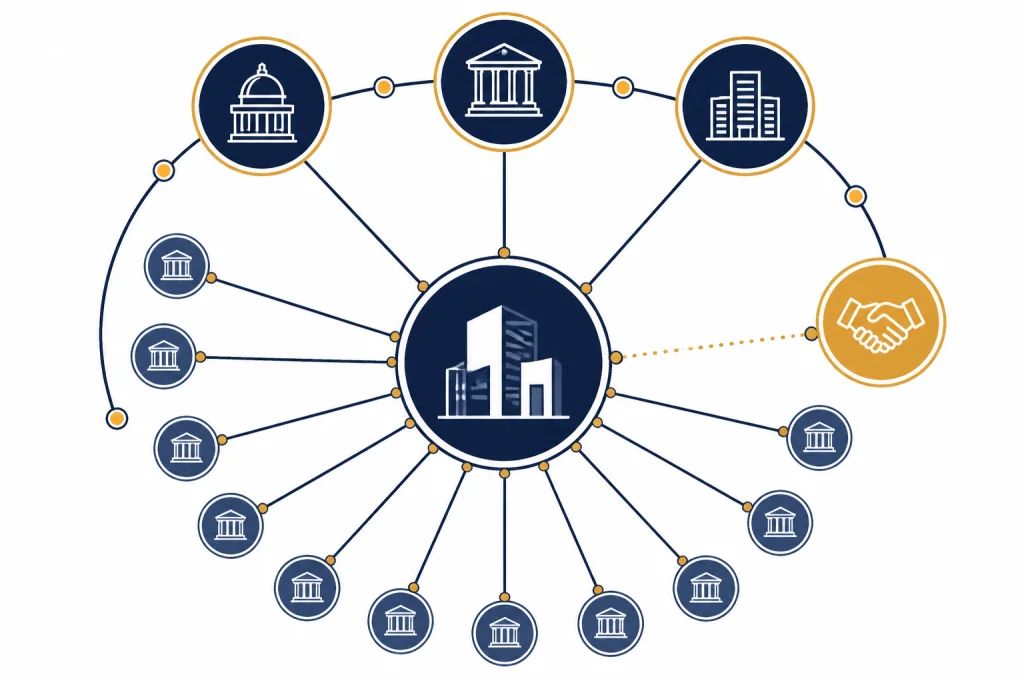
OpenAI described the round as being anchored by strategic partners Amazon, NVIDIA, and SoftBank, with continued participation from Microsoft.[1] That mix matters because the largest backers are not only financial investors. They are also central to cloud infrastructure, chips, distribution, and OpenAI’s broader commercial ecosystem. For background on the Microsoft side of the relationship, read our guide to OpenAI and Microsoft and our running OpenAI Microsoft News updates.
Strategic anchors
Axios reported in February 2026 that Amazon was investing $50 billion, while NVIDIA and SoftBank were each investing $30 billion.[3] Axios also reported that $35 billion of Amazon’s commitment was conditioned on OpenAI meeting certain milestones.[3] Those figures help explain why the round is best understood as both a financing event and an infrastructure alignment.
Amazon can benefit if OpenAI deepens use of AWS. NVIDIA can benefit if OpenAI’s training and inference demand keeps GPUs at the center of the stack. SoftBank can benefit if large-scale AI infrastructure becomes a durable operating layer for the next generation of software. Microsoft remains a long-term partner, but the March announcement makes clear that OpenAI is broadening the investor and infrastructure base around the company.[1]
Financial and institutional investors
OpenAI said SoftBank co-led the round alongside a16z, D. E. Shaw Ventures, MGX, TPG, and accounts advised by T. Rowe Price Associates, Inc.[1] It also named a long list of participating institutions, including Altimeter, Appaloosa LP, ARK Invest, affiliated funds of BlackRock, Blackstone, Coatue, D1 Capital Partners, Dragoneer, Fidelity Management & Research Company, Goanna Capital, Insight Partners, The Paragon Group, Sands Capital, Sequoia Capital, Sound Ventures, Temasek, Thrive Capital, UC Investments, and Winslow Capital.[1]
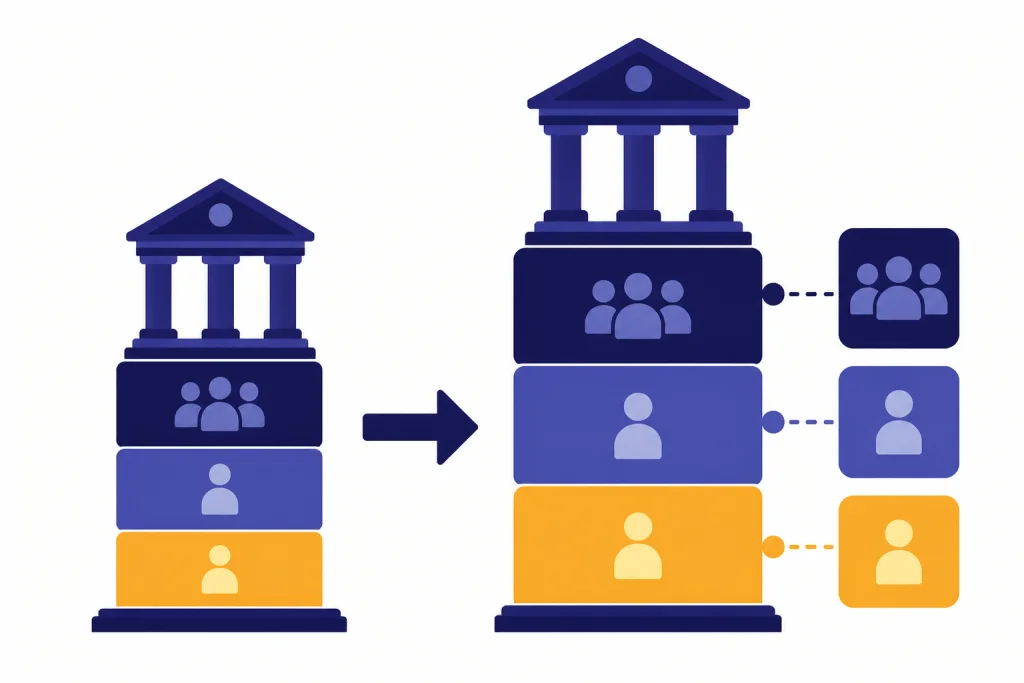
That list shows how far OpenAI has moved beyond a traditional venture round. The investor base now spans venture firms, asset managers, sovereign or sovereign-linked capital, strategic technology companies, and individual-investor channels. It also increases the number of constituencies watching OpenAI’s revenue growth, product roadmap, and possible public-market path.
How the round changed from February to March
The March close was not a completely separate event from the February news. It was the larger final form of the same financing arc. In February 2026, Axios reported that OpenAI had secured $110 billion in new funding from Amazon, NVIDIA, and SoftBank, with an $840 billion valuation including the capital raised.[3] On March 31, 2026, OpenAI announced that the round had closed at $122 billion in committed capital and an $852 billion post-money valuation.[1]
| Stage | Amount | Valuation | Investor picture |
|---|---|---|---|
| February 2026 announcement | $110 billion[3] | $840 billion including new capital[3] | Amazon, NVIDIA, and SoftBank were the disclosed strategic investors.[3] |
| March 31, 2026 close | $122 billion[1] | $852 billion post-money[1] | OpenAI added co-leads, institutional investors, individual-investor access, and ARK ETF inclusion.[1] |
| Change between the two | Increase of $12 billion | Increase of $12 billion | The round moved from strategic anchor commitments to a broader financing close. |
The comparison also explains why different articles may cite different numbers. Some February coverage used the earlier $110 billion figure. The current figure for this article, as of April 25, 2026, is the March 31 closing figure of $122 billion at an $852 billion post-money valuation.[1]
Why OpenAI raised so much capital
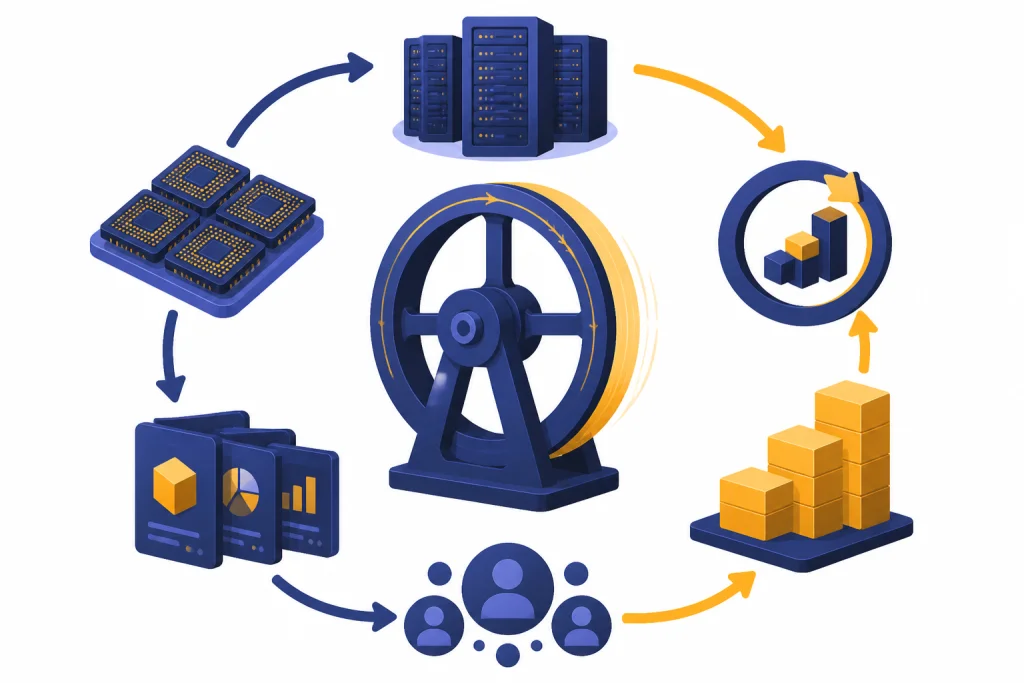
OpenAI’s own explanation centers on compute, product demand, and the compounding loop between better infrastructure and better AI products. The company said durable access to compute is a strategic advantage because it supports research, products, wider access, and lower delivery cost at scale.[1] That is the core financial logic behind the round.
The company also disclosed several growth metrics in the announcement. OpenAI said ChatGPT had more than 900 million weekly active users and more than 50 million subscribers.[1] It said it was generating $2 billion in revenue per month and that enterprise customers made up more than 40% of revenue.[1] Those figures are central to the valuation case because investors are underwriting both consumer reach and enterprise expansion.
OpenAI also framed the business as a multi-sided platform. Consumers use ChatGPT. Developers build on APIs. Enterprise customers deploy AI systems into workflows. Coding products such as Codex target software teams. The company said Codex served more than 2 million weekly users and that its APIs processed more than 15 billion tokens per minute.[1] For readers comparing the product side of this thesis, our all GPT models compared side by side, context window sizes for every GPT model, and OpenAI API pricing guides cover the model and developer angles in more detail.
The round also helps fund a broader infrastructure portfolio. OpenAI said its strategy spans cloud through Microsoft, Oracle, AWS, CoreWeave, and Google Cloud; silicon through NVIDIA, AMD, AWS Trainium, Cerebras, and a chip partnership with Broadcom; and data centers through Oracle, SBE, and SoftBank partnerships.[1] That breadth is expensive. It also reduces dependence on a single infrastructure path.
What retail investors can and cannot buy
OpenAI is still not a public company. The funding round did not create a normal OpenAI stock ticker that anyone can buy directly on a public exchange. OpenAI has not published an official IPO date.
What changed is access. OpenAI said it raised more than $3 billion from individual investors through bank channels and that its shares would be included in several exchange-traded funds managed by ARK Invest.[1] Axios reported that the bank-channel placement involved clients of three large banks and was part of the $122 billion round.[2] That is still not the same as buying OpenAI common stock directly in a standard brokerage account.
Another retail-access path appeared shortly before this article’s publication date. Robinhood Ventures Fund I announced that it purchased approximately $75 million of OpenAI common stock on April 17, 2026, and said the fund began trading on the New York Stock Exchange on March 6, 2026, under the symbol RVI.[6] That gives buyers exposure to a fund that owns OpenAI shares, not direct ownership of OpenAI itself. For a focused look at pre-IPO access and rumors, see our ChatGPT Stock News page.
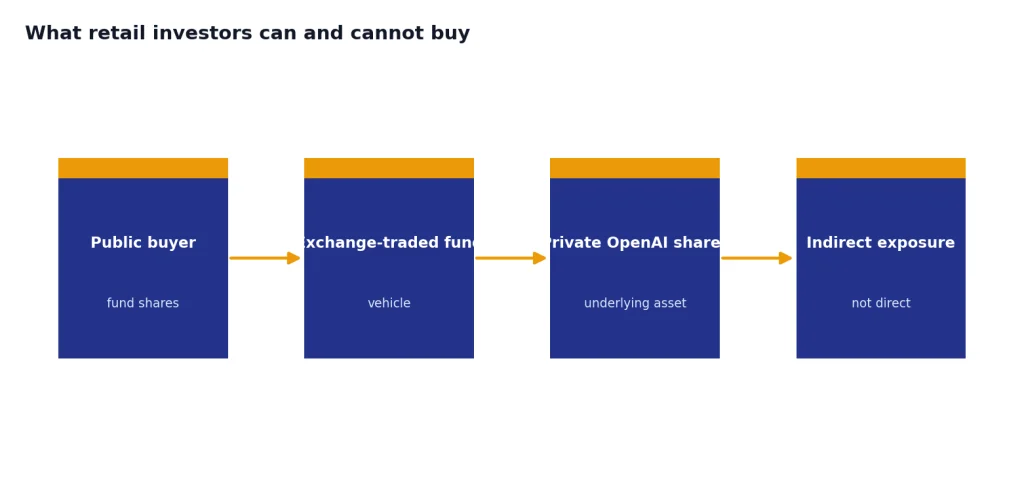
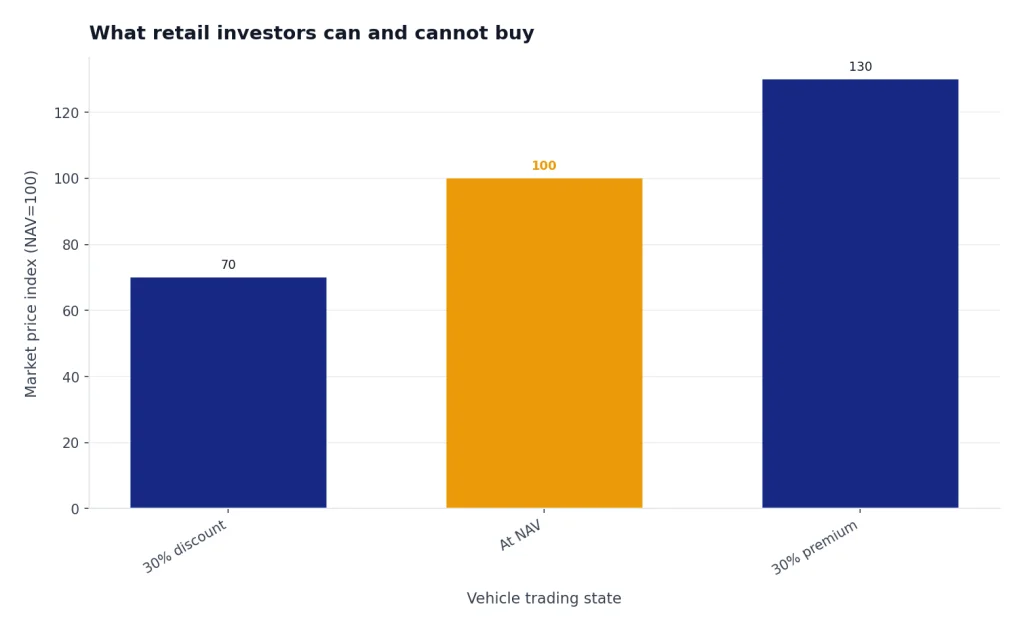
The distinction matters. A private-company exposure vehicle can trade at a premium or discount to its underlying net asset value. It may hold other private companies. It may have fees, liquidity limits, disclosure gaps, or concentration risk. Anyone considering these vehicles should read the fund documents, not just the OpenAI headline.
What the valuation means
A post-money valuation is the implied value of a company after the new financing is included. In this case, the number is $852 billion after the $122 billion committed capital round.[1] It does not mean OpenAI has that amount of cash, and it does not mean every existing share could be sold at that price in the open market.

The valuation is a negotiated price among private-market participants. It reflects expectations for future revenue, margins, product adoption, infrastructure control, and public-market demand. It also reflects strategic value to investors who may benefit from OpenAI’s cloud, chip, or distribution decisions. That is why this round is different from a simple financial investment in a software startup.
OpenAI’s 2025 financing provides useful context. On March 31, 2025, OpenAI announced new funding of $40 billion at a $300 billion post-money valuation.[4] One year later, the company announced $122 billion at an $852 billion post-money valuation.[1] The jump shows how quickly the market repriced frontier AI infrastructure and ChatGPT’s commercial reach.
The valuation also raises execution pressure. SiliconANGLE described the March 2026 round as the largest funding round in Silicon Valley history and noted that it puts more pressure on OpenAI to justify the valuation while spending heavily on chips, data centers, and talent.[5] That is the central tension: OpenAI has scale that few software companies have ever shown this early, but it also has unusually large capital needs.
Open questions after the round
The funding round answers one question clearly: OpenAI can still raise capital at enormous scale. It leaves several other questions open.
- IPO timing. OpenAI has not published an official IPO date. Reports continue to discuss a possible public listing, but the company has not given readers a definitive public-market calendar.
- Capital efficiency. OpenAI says compute is the flywheel behind better models, better products, adoption, revenue, and reinvestment.[1] Investors will watch whether that loop produces durable margins.
- Infrastructure dependence. The company is broadening across cloud and chip partners, but frontier AI remains deeply tied to scarce compute capacity.[1]
- Governance and legal risk. A larger investor base does not remove ongoing scrutiny of OpenAI’s structure, partnerships, and litigation. We track related issues in OpenAI Lawsuits 2026 and OpenAI Acquisitions.
- Product execution. The valuation depends on OpenAI turning models into paid tools across ChatGPT, APIs, enterprise agents, coding, search, and multimodal products. Our ChatGPT Updates 2026 changelog follows that product layer.
The practical takeaway is simple. The openai funding round gives OpenAI more time and more resources to build. It does not remove the need to prove that revenue can grow into the valuation. It also does not give public investors a direct, liquid OpenAI stock. For now, OpenAI remains a private company with wider indirect access and far higher expectations.
Frequently asked questions
How much did OpenAI raise in the latest funding round?
OpenAI said it closed its latest funding round on March 31, 2026, with $122 billion in committed capital.[1] That is the current figure for this article as of April 25, 2026.
What valuation did OpenAI receive?
OpenAI said the round valued the company at an $852 billion post-money valuation.[1] Post-money means the valuation includes the new capital from the round.
Who were the main investors in the round?
OpenAI said the round was anchored by Amazon, NVIDIA, and SoftBank, with continued participation from Microsoft.[1] Axios reported in February 2026 that Amazon was investing $50 billion and that NVIDIA and SoftBank were each investing $30 billion.[3]
Can I buy OpenAI stock now?
You cannot buy OpenAI as a normal public stock because OpenAI has not gone public. Some investors can get indirect exposure through bank-channel placements, ARK-managed ETFs, or funds such as Robinhood Ventures Fund I, which announced a roughly $75 million OpenAI common-stock purchase on April 17, 2026.[6]
Does the funding round mean an OpenAI IPO is confirmed?
No. OpenAI has not published an official IPO date. The wider investor access and scale of the round may make an eventual listing more plausible, but a public offering remains unconfirmed until OpenAI files or announces it directly.
Why does OpenAI need so much money?
OpenAI says compute is central to its strategy because it supports research, products, deployment, and revenue growth.[1] Frontier AI requires large spending on chips, cloud capacity, data centers, engineering talent, and product distribution.