
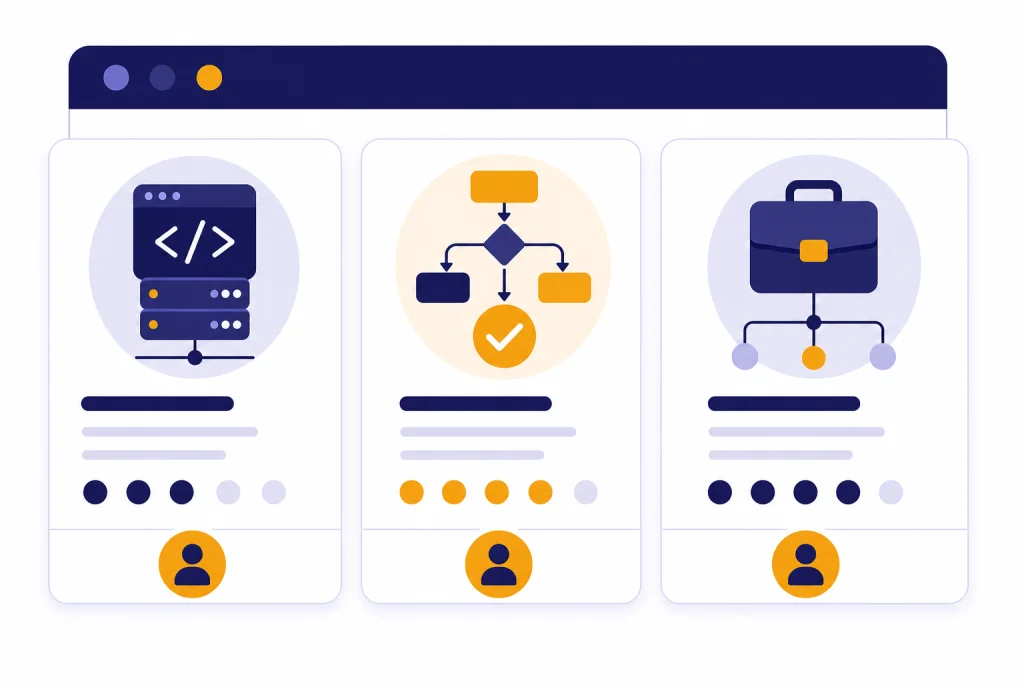
ChatGPT jobs in 2026 fall into three practical categories: roles at OpenAI that directly build or support ChatGPT, jobs at other companies that require ChatGPT and generative AI fluency, and future roles connected to OpenAI’s planned hiring products. The strongest opportunities are not generic “prompt writer” roles. They are engineering, product, data, security, customer operations, sales, education, and workflow automation jobs where ChatGPT is part of the work. This guide explains the open-role patterns to watch, the skills employers are signaling, what salary data says, and how to prepare an application that proves you can use AI responsibly at work.
What “ChatGPT jobs” means in 2026
The phrase “ChatGPT jobs” can mean several different things. It can mean jobs at OpenAI on the ChatGPT product. It can mean jobs at any company that expects workers to use ChatGPT in daily work. It can also refer to OpenAI’s planned jobs and credentialing efforts, including the OpenAI Jobs Platform that multiple reports said was expected by mid-2026.[11][12]
The safest way to read the market is to separate the employer from the skill. A role at OpenAI may never include “prompt engineer” in the title, but it may still support ChatGPT directly. A role at a bank, school, agency, healthcare company, or software vendor may not mention OpenAI at all, but it may require the ability to redesign work around generative AI.
That distinction matters for job seekers. If you want to work on ChatGPT itself, start with OpenAI’s careers site and look for teams tied to Applied AI, ChatGPT Engineering, Technical Success, safety, infrastructure, and go-to-market work.[1][2] If you want to get paid for using ChatGPT, focus on business problems: customer support, analytics, internal knowledge, content operations, training, sales enablement, coding, and process automation.
If you are new to the technology, start with what is ChatGPT? the complete beginner explanation and what is OpenAI? company mission explained. If you already understand the tool and want job-specific guidance, compare this article with our Prompt Engineering Jobs guide.
OpenAI roles working on ChatGPT
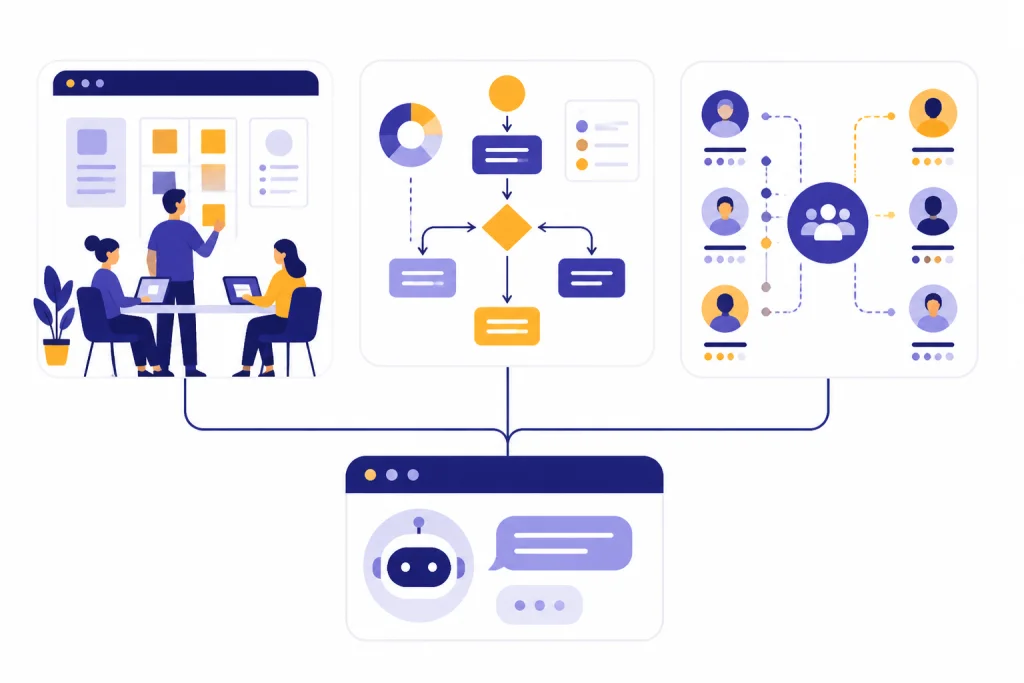
OpenAI’s public careers pages show that ChatGPT-related hiring is not limited to one department. The official search page has listed roles such as Backend Software Engineer, ChatGPT Engineering; ChatGPT Performance Engineer; Full Stack Software Engineer, ChatGPT Engineering; ChatGPT Partnerships; ChatGPT Infrastructure; and Jobs Platform engineering roles.[2] That mix shows where the product needs people: core software, performance, distribution, enterprise readiness, platform reliability, and business adoption.
A mirrored posting for Full Stack Software Engineer, ChatGPT Engineering listed San Francisco as the location, Applied AI as the department, a February 3, 2026 posting date, and a base salary range of $185,000 to $385,000 plus equity.[3][4] Another mirrored posting for Full Stack Software Engineer, ChatGPT Partnerships described work on partner-led growth and listed a February 11, 2026 posting date with the same $185,000 to $385,000 yearly salary range.[5] These postings are useful salary signals, but they are not a guarantee for every ChatGPT role.
OpenAI also describes broader career paths beyond standard full-time openings. Its careers page says the OpenAI Residency is for researchers and engineers who do not currently focus on AI, and the company also points early-career candidates toward internships, residencies, and full-time roles.[1] Treat those programs as separate from senior ChatGPT engineering roles. The application bar, portfolio evidence, and interview process can be very different.
| Role family | What the work usually involves | Best proof to show |
|---|---|---|
| ChatGPT engineering | Build product surfaces, backend systems, personalization, search, platform services, and user-facing features. | Shipped software, clean system design, product judgment, tests, reliability work, and examples of AI-assisted development. |
| Infrastructure and performance | Improve speed, reliability, observability, deployment, scaling, and production quality. | Incident writeups, performance benchmarks, distributed systems projects, and monitoring experience. |
| Technical success and deployment | Help customers adopt OpenAI products, design workflows, debug implementations, and measure outcomes. | Customer-facing technical projects, API integrations, security awareness, and before-and-after business results. |
| Safety, policy, and integrity | Reduce misuse, evaluate model behavior, support investigations, and translate policy into product controls. | Risk analysis, evaluation design, policy writing, abuse investigations, or trust and safety operations experience. |
| Go-to-market and partnerships | Build adoption channels, support enterprise programs, coordinate partner launches, and connect product work to revenue. | Partner launches, sales engineering work, market analysis, enablement materials, and measurable pipeline or adoption impact. |

Jobs that use ChatGPT at other companies
Most ChatGPT jobs will not be at OpenAI. They will be regular jobs that now expect AI fluency. A customer service manager may use ChatGPT to draft macros, summarize tickets, and improve help-center coverage. A financial analyst may use it to inspect assumptions and produce first-pass commentary. A marketing operations lead may use it to standardize campaign briefs. A developer may use it to explain unfamiliar code, generate tests, and write internal tools.
The common thread is not “asking ChatGPT questions.” It is using ChatGPT inside a controlled workflow. Employers care about whether you can preserve quality, protect confidential data, check outputs, document prompts, and measure time saved or error rates reduced. Our chatgpt customer service guide covers one of the clearest business examples.
OpenAI’s workforce materials frame AI fluency as a labor-market skill, not just a software skill. The company’s workforce blueprint says the OpenAI Jobs Platform is intended to give people a path to better jobs and long-term career security.[6] A separate OpenAI jobs paper describes OpenAI Certifications as proof-of-work credentials and says the company committed to certifying 10 million Americans by 2030.[7]
Do not wait for a formal “ChatGPT specialist” title. Build a portfolio around one business function. For example, a support candidate can show a ticket triage workflow. A creator can show a script-to-title-to-thumbnail testing system, supported by our ChatGPT for YouTubers guide. A founder can show a market research and forecast workflow using a chatgpt business plan generator.
Skills employers look for
Employers are moving past novelty prompts. They want workers who can turn AI into reliable output. The strongest candidates combine domain knowledge with judgment, communication, and technical literacy.
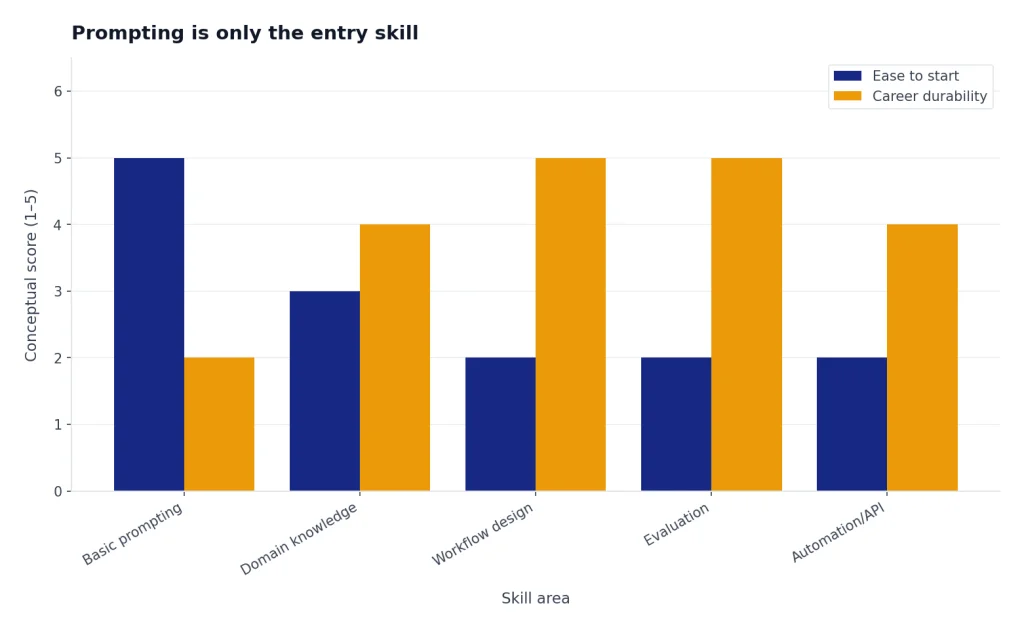
Prompting is only the entry skill
Prompting still matters. You should know how to provide context, define constraints, ask for structured output, request alternatives, and test failure cases. But prompt writing alone is rarely enough. If you want a dedicated track, compare programs in our prompt engineering certification guide and compensation patterns in prompt engineering salary in 2026.
Workflow design is the employable skill
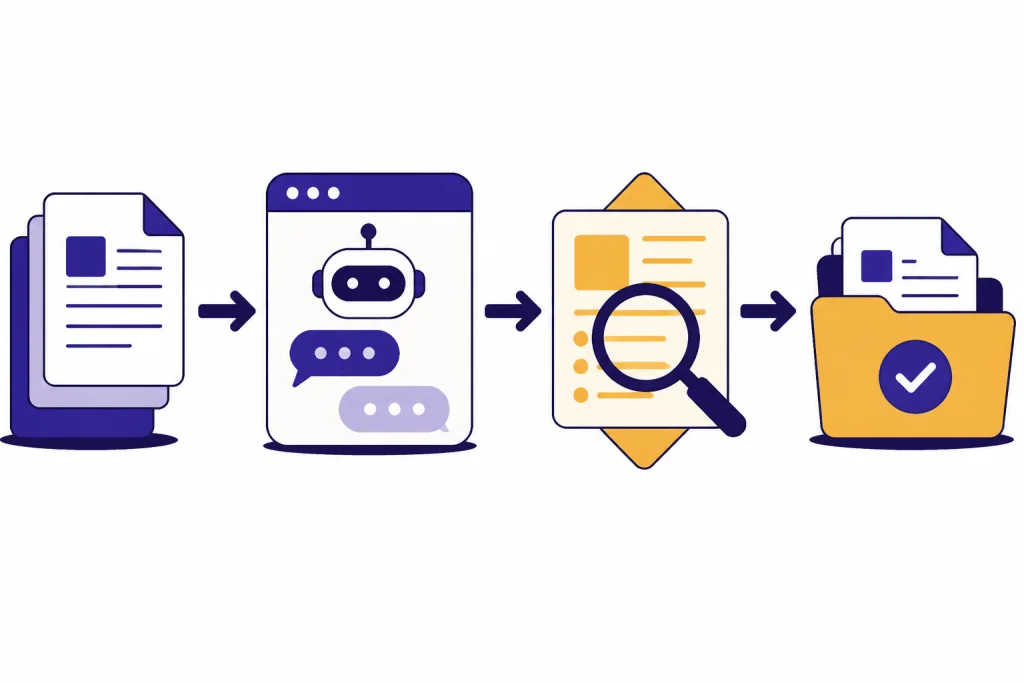
A workflow shows how an AI output becomes usable work. It includes inputs, constraints, review steps, handoffs, and metrics. A strong ChatGPT job candidate can explain where the model helps, where humans review, and where automation should stop.
Data and privacy judgment matter
Many employers will reject candidates who paste sensitive customer, legal, medical, or financial information into tools without controls. Learn the company’s AI policy before you show examples. When in doubt, use synthetic data, public data, or redacted examples.
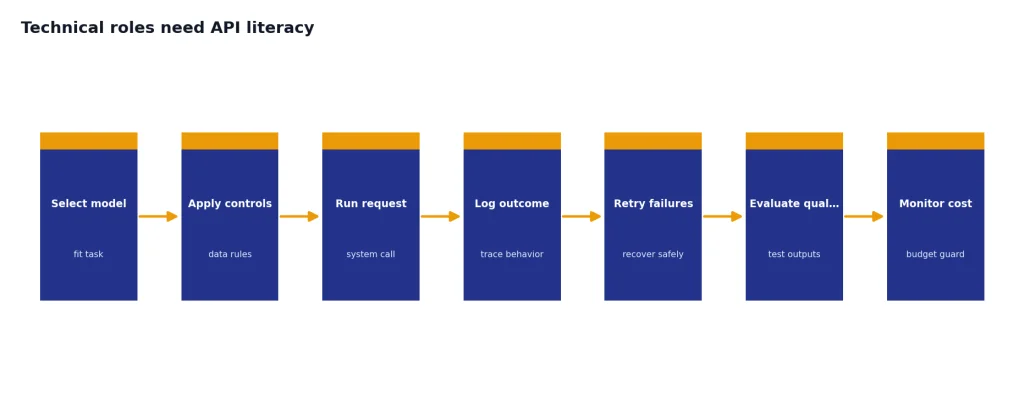
Technical roles need API literacy
For engineering, analytics, operations, and product roles, learn the difference between using ChatGPT in a browser and integrating models into a system. A candidate who understands model selection, logs, retries, evaluations, and cost controls will stand out. Our OpenAI API Errors and openai api pricing guides are useful if you want to move from user-level skills to implementation work.
- Show one complete AI workflow, not a folder of random prompts.
- Measure the result with time saved, quality improved, backlog reduced, or revenue influenced.
- Document where human review happens.
- Explain data boundaries and privacy controls.
- Use examples from the employer’s function, not generic chatbot demos.
Salary signals and market outlook
Salary for ChatGPT jobs depends more on the underlying role than on the word “ChatGPT.” A senior software engineer working on ChatGPT infrastructure will not be paid like an entry-level content assistant who uses ChatGPT for drafts. The market rewards scarcity: production engineering, AI evaluation, security, enterprise deployment, applied research, and domain-specific automation are usually more valuable than basic prompting.
The best available OpenAI-specific salary signal in the sources reviewed is the $185,000 to $385,000 base-pay range for Full Stack Software Engineer, ChatGPT Engineering, mirrored by two independent job boards from the same underlying posting.[3][4] A ChatGPT Partnerships engineering posting listed the same $185,000 to $385,000 yearly salary range.[5] These ranges apply to specific engineering jobs and should not be generalized to all ChatGPT-related work.
Broader labor-market data supports demand for adjacent technical roles. BLS projects computer and mathematical occupations to grow 10.1 percent from 2024 to 2034, compared with 3.1 percent projected growth for total employment.[8] The same BLS analysis projects software developers to grow 15.8 percent, computer and information research scientists 19.7 percent, and data scientists 33.5 percent from 2024 to 2034.[8] The Occupational Outlook Handbook rounds the data scientist outlook to 34 percent and reports a May 2024 median annual wage of $112,590.[9]
| Path | Typical target roles | Salary signal | Risk level |
|---|---|---|---|
| Build ChatGPT at OpenAI | Software engineer, infrastructure engineer, performance engineer, product engineer | Specific mirrored ChatGPT engineering postings show $185,000 to $385,000 base pay.[3][4] | High competition and demanding interviews. |
| Deploy ChatGPT for companies | Solutions engineer, AI deployment lead, technical success, automation consultant | Varies by employer and customer scope. OpenAI has listed technical success and deployment-oriented roles on its careers pages.[2] | Requires technical depth and customer judgment. |
| Use ChatGPT in an existing profession | Support manager, marketer, analyst, recruiter, educator, operations lead | Usually follows the base occupation, with AI fluency as a differentiator. | Lower barrier to entry, but weaker moat if you only know basic prompting. |
| Prompt-focused specialist | Prompt engineer, AI content systems specialist, model evaluation contractor | Highly variable by company, contract type, and technical depth. | Titles shift quickly as prompting becomes part of many jobs. |
How to apply for ChatGPT jobs
Start by choosing the lane. If you want OpenAI, study the official careers page and apply to a small number of relevant roles rather than every opening.[1][2] If you want a job that uses ChatGPT, choose one business function and build evidence around it. A focused support automation portfolio is stronger than a broad claim that you “know AI.”
Build a proof-of-work portfolio
Create two or three examples that show a real process before and after AI. Do not include confidential work. A strong portfolio item has a problem statement, input data, prompt or system design, review method, result, and limitation. For job seekers, pairing that evidence with stronger application materials matters; our ai resume builder tools compared guide can help you polish the resume layer without inventing experience.
Translate AI work into business language
Hiring managers do not need a tour of every prompt. They need to know what changed. Use verbs like reduced, standardized, accelerated, audited, classified, summarized, integrated, and evaluated. Then connect those actions to a metric or a quality control.
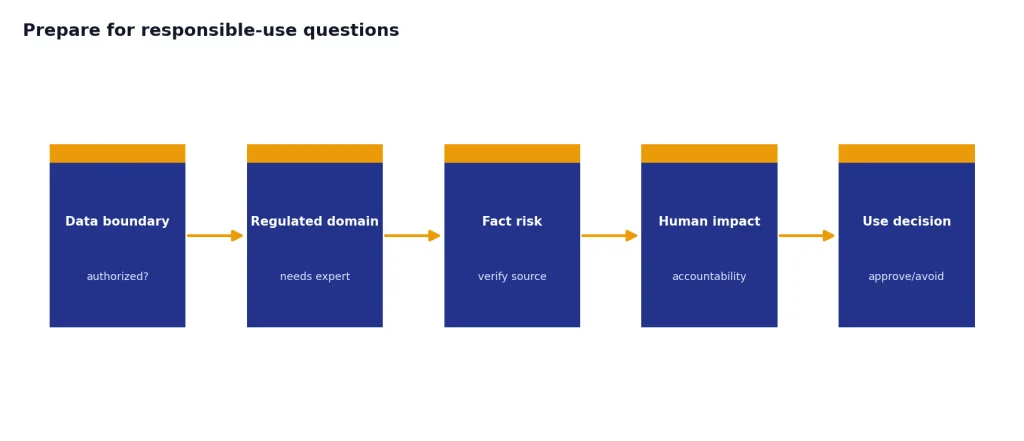
Prepare for responsible-use questions
Expect interviewers to ask where ChatGPT should not be used. Good answers include confidential data without authorization, regulated advice without review, final legal or medical judgment, unverified facts, and decisions that affect people without accountability. Responsible boundaries make you more credible, not less ambitious.
Practice role-specific examples
A sales candidate can show account research summaries and objection handling. A support candidate can show ticket clustering. A developer can show tests, refactors, and evaluation scripts. A founder or freelancer can use how to make money with chatgpt in 2026 for business ideas, but hiring managers still need proof that you can deliver repeatable work.
Mistakes to avoid
The biggest mistake is treating ChatGPT as a job title instead of a capability. Employers rarely hire someone only because they can write prompts. They hire people who can solve a business problem faster, safer, or at higher quality because they know how to use AI.
- Do not claim confidential results you cannot show. Redact, anonymize, or rebuild the example with synthetic data.
- Do not oversell automation. Explain human review, especially for customer, legal, medical, financial, or hiring decisions.
- Do not ignore the base profession. A ChatGPT analyst still needs analysis skills. A ChatGPT engineer still needs engineering skills.
- Do not rely on one tool. Employers value adaptable AI judgment, not loyalty to a single interface.
- Do not use AI-generated resumes without editing. Generic phrasing makes your application look interchangeable.
There is also a strategy mistake: waiting for perfect credentials. Certifications may help, but experience carries more weight. If you can document a workflow, measure the result, and explain the tradeoffs, you already have material for a stronger application.
Frequently asked questions
Are there real ChatGPT jobs in 2026?
Yes. OpenAI has listed roles tied directly to ChatGPT engineering, performance, partnerships, infrastructure, and related product work.[2] Outside OpenAI, many jobs now treat ChatGPT fluency as a practical workplace skill rather than a standalone title.
Do I need to be a software engineer to get a ChatGPT job?
No. Software engineering is one strong path, especially for roles building ChatGPT or integrating the API. But customer service, operations, marketing, education, recruiting, sales, analytics, and consulting roles can all involve ChatGPT if you can prove business impact.
Is prompt engineering still a good career path?
Prompt engineering can be useful, but narrow prompt-only jobs are less durable than roles that combine prompting with domain expertise, workflow design, evaluation, and automation. Treat prompting as a core skill inside a broader job, not the whole career plan.
What should I put on my resume for ChatGPT jobs?
List measurable AI-assisted work. Use bullets that show the process, tool, review step, and result. For example, “built a ticket summarization workflow that reduced manager review time” is stronger than “used ChatGPT daily.”
Where should I look for jobs working on ChatGPT itself?
Start with OpenAI’s official careers page and search for terms such as ChatGPT, Applied AI, infrastructure, safety, technical success, and product partnerships.[1][2] Because openings change quickly, verify every role on the official application page before applying.
Will the OpenAI Jobs Platform replace LinkedIn?
OpenAI has described a jobs platform focused on matching AI-ready workers with employers, and news reports said it was expected by mid-2026.[11][12] It is better to treat it as another potential hiring channel, not a replacement for LinkedIn, referrals, company career pages, and direct outreach.