
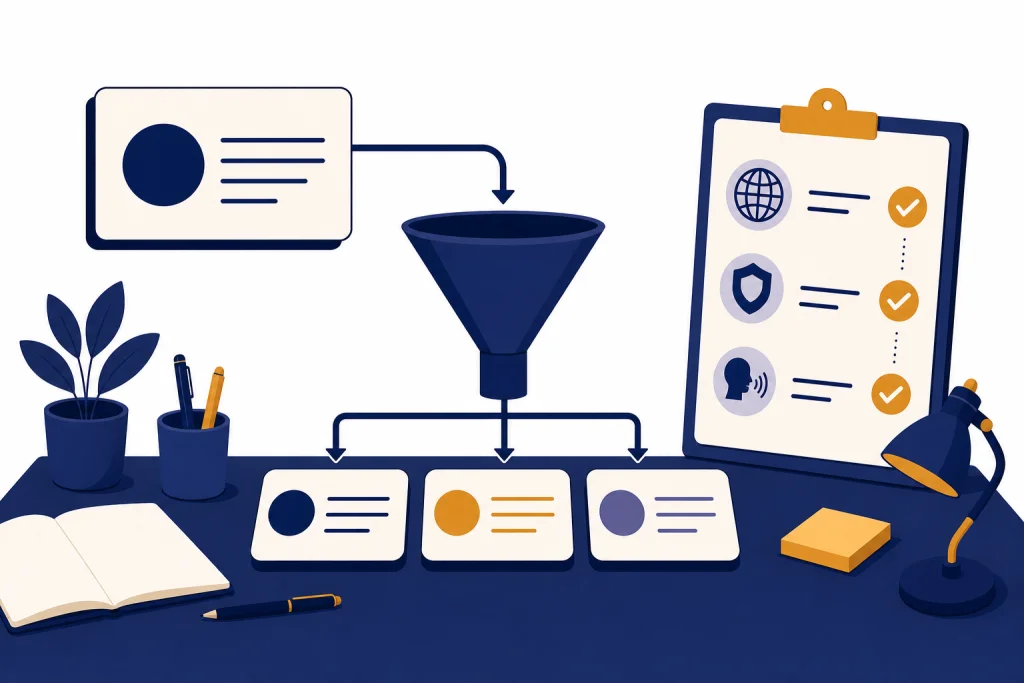
A ChatGPT business name generator is useful when you need a fast shortlist, not a final legal answer. The tool below helps you turn a business idea, audience, tone, and keywords into name options you can refine. Use it to explore naming directions, avoid blank-page thinking, and create a shortlist for domain, trademark, and customer checks. Do not treat any generated name as automatically available or protected. After you generate ideas, you still need to test pronunciation, search the web, check domain options, review state business records, and search the USPTO trademark database before you commit.
ChatGPT Business Name Generator
Describe your business idea and get 8 unique, brandable name suggestions with one-line rationales for each.
What the tool does
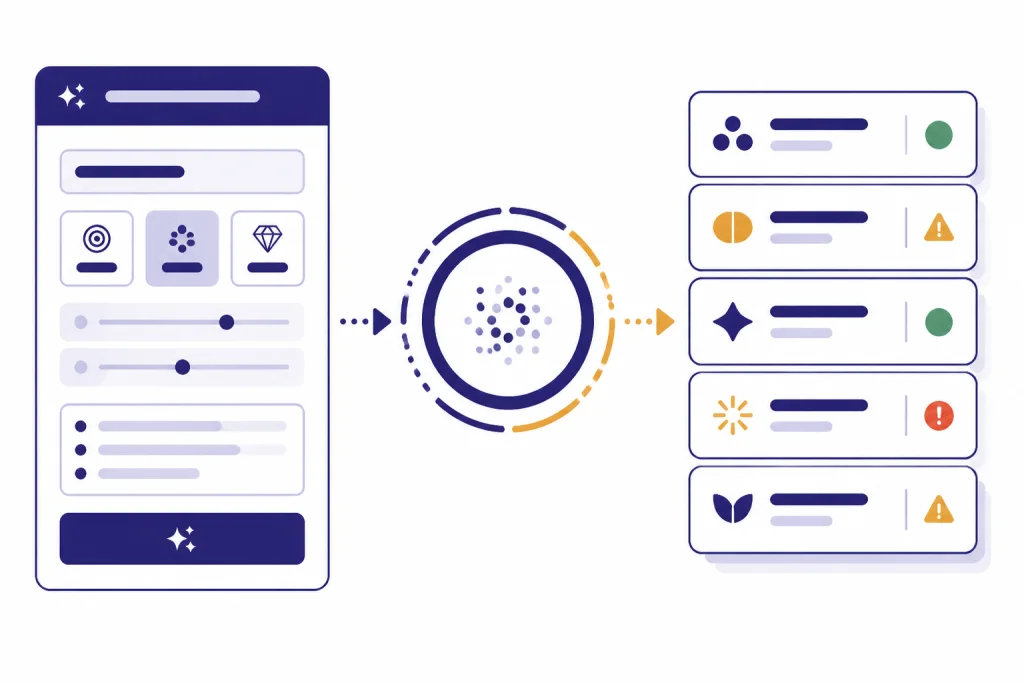
The generator turns a rough business idea into naming options. It works best when you give it a specific market, customer, benefit, tone, and words to include or avoid. A prompt such as “coffee shop” produces generic results. A prompt such as “a quiet neighborhood coffee shop for remote workers, warm but not cute, no animal names” gives the model a clearer creative boundary.
The tool is designed for early-stage naming. It can help with local service businesses, ecommerce stores, newsletters, SaaS products, agencies, restaurants, YouTube channels, and side projects. If you are also building the business model, pair the shortlist with our chatgpt business plan generator so the name matches the offer, audience, and pricing logic.
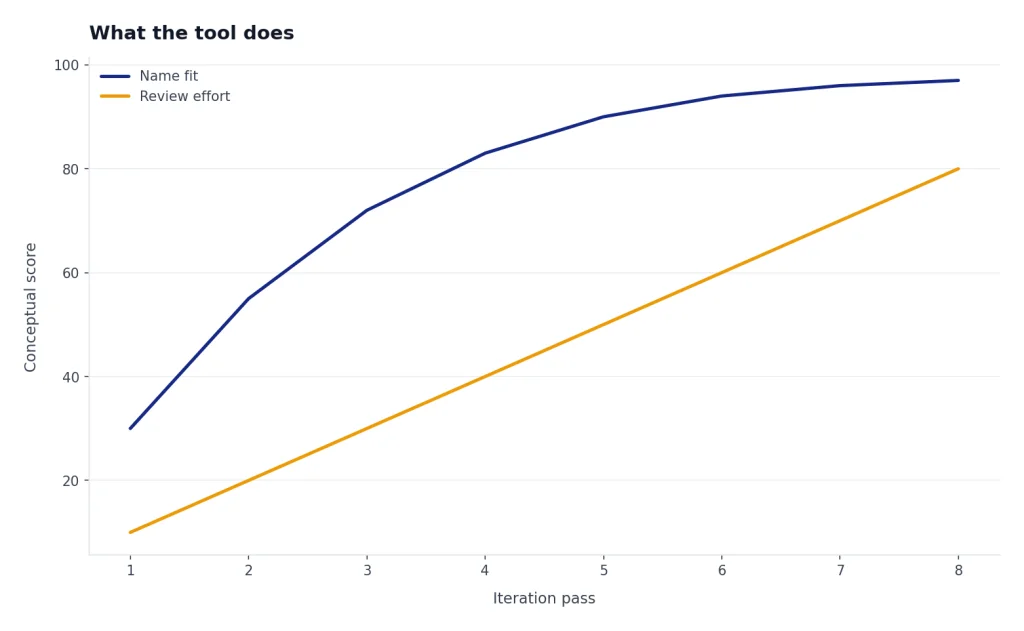
Use the first output as raw material. Good naming usually needs several passes. Ask for clearer names, shorter names, more premium names, more literal names, or names that avoid a crowded pattern in your industry. The value of ChatGPT is iteration. OpenAI’s consumer data controls let individual users turn off model-improvement use for future chats, while OpenAI says its business products do not train on organization inputs and outputs by default.[1][2]
How to use it step by step
Start broad, then narrow. The strongest workflow is not “generate one perfect name.” It is “generate naming territories, choose a direction, then refine against real constraints.”
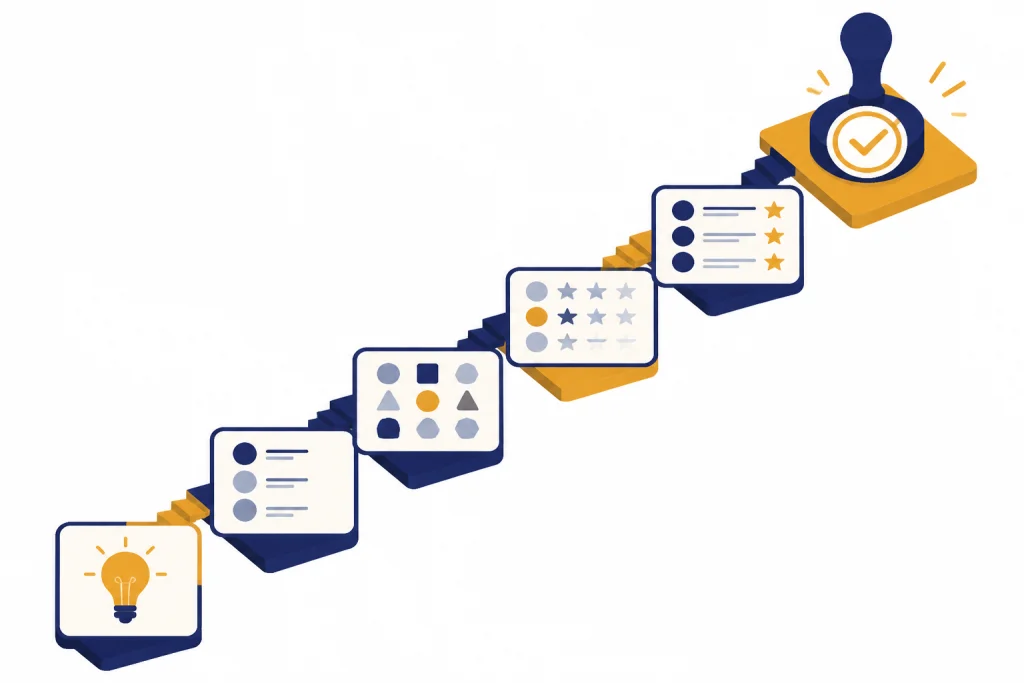
- Describe the business plainly. Include what you sell, who buys it, where it operates, and why customers choose it.
- Set the tone. Choose words such as practical, premium, playful, technical, local, calm, fast, handmade, modern, or family-friendly.
- Add exclusions. Tell the tool what you do not want. Exclusions reduce clichés.
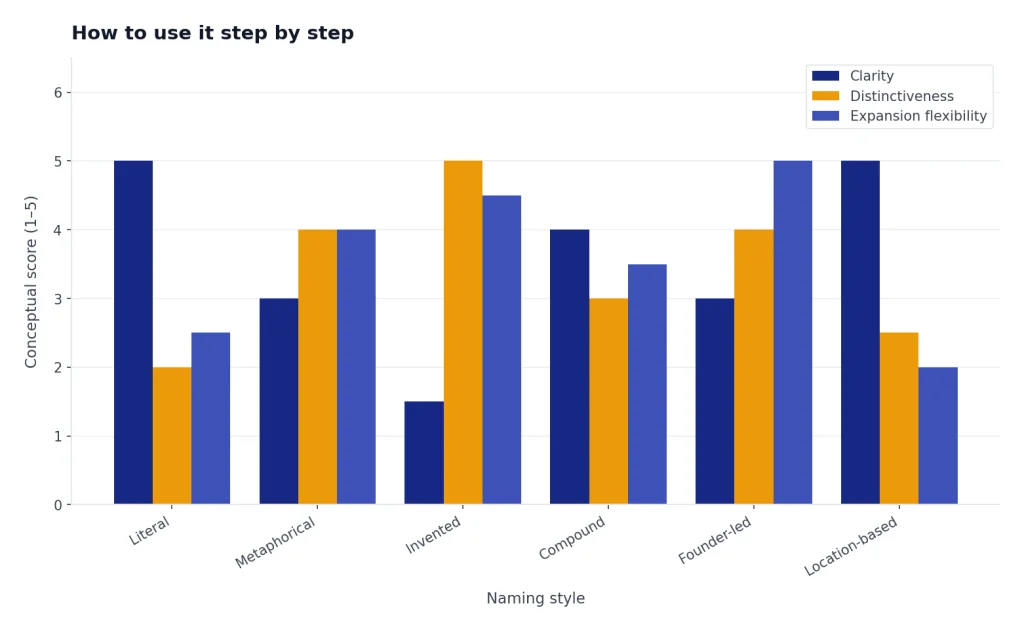
- Request categories. Ask for literal, metaphorical, invented, compound, founder-led, and location-based options.
- Shortlist only a few names. Pick the names worth testing. Do not try to evaluate every output equally.
- Run checks before you fall in love. Search the web, check domains, check state records, and search trademarks.
This table shows how to move from vague input to useful input.
| Input type | Weak version | Better version | Why it works |
|---|---|---|---|
| Business description | Fitness app | Mobile strength-training app for busy parents who train at home | It names the buyer, use case, and setting. |
| Tone | Cool | Confident, clear, and not aggressive | It gives the model a usable style boundary. |
| Exclusions | No bad names | Avoid “fit,” “flex,” “beast,” and gym-bro language | It blocks obvious category clichés. |
| Output format | Give me names | Return a table with name, style, meaning, and risk note | It makes review faster and more consistent. |
If you want better naming output across many projects, study prompt structure rather than memorizing one prompt. Our Best ChatGPT Prompt Generator Tools guide can help you build reusable prompt templates for naming, ads, landing pages, and product descriptions.
Prompt patterns that produce better names
Names improve when the prompt separates strategy from style. Ask the model to understand the business first, then generate names second. This prevents random wordplay from taking over.
Prompt for naming territories
You are helping me name a business. First, identify the strongest naming territories for this concept. Then generate names under each territory.

Business: [describe the business]
Audience: [who buys]
Benefit: [main outcome]
Tone: [tone]
Avoid: [words, styles, competitors]

Return naming territories first, then name ideas under each one.
Prompt for a local service business
Generate business name ideas for a local [service] company in [city or region]. The name should feel trustworthy, simple, and easy to say over the phone. Avoid puns and avoid names that sound like a national franchise. Include a mix of location-based, benefit-based, and founder-neutral names.Prompt for ecommerce or product brands
Create name ideas for an ecommerce brand selling [product category] to [audience]. The brand should feel [tone]. Names should be short, memorable, and suitable for packaging, social handles, and a domain. Avoid names that lock the brand into one product if the catalog expands.Prompt for refinement
Take these shortlisted names and improve them. Keep the core feeling, but make them easier to pronounce, less generic, and more distinctive. For each revised name, explain what changed and what risk remains.Prompting is a business skill, not just a writing trick. If you want to use this kind of work professionally, compare the skills in our prompt engineering certification guide with the practical tasks clients actually need.
How to judge the shortlist
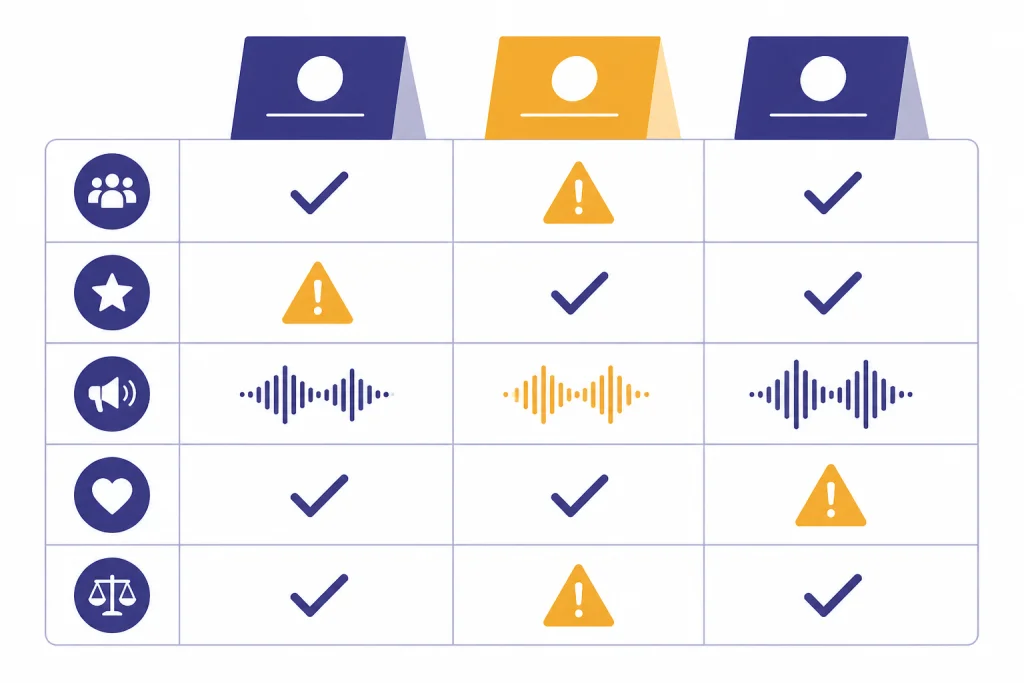
A name can sound clever and still fail. The best shortlist passes simple practical tests. It should be easy to say, easy to spell, hard to confuse with a competitor, flexible enough for the next product, and appropriate for the price point.
Use a scoring table before you ask friends for opinions. Friends often react to taste. A scoring table forces you to evaluate business fit.
| Test | Pass signal | Warning signal | What to ask ChatGPT next |
|---|---|---|---|
| Pronunciation | Most people say it correctly on first try. | People pause, misread it, or ask how to say it. | “Make this easier to pronounce without losing the tone.” |
| Spelling | A customer can spell it after hearing it once. | It relies on missing vowels, odd endings, or tricky homophones. | “Create cleaner spellings that still feel distinctive.” |
| Category fit | The name hints at the right market or feeling. | It could belong to any app, agency, or store. | “Make the name more specific to this buyer and outcome.” |
| Expansion | The name can survive a broader product line. | It names one product too narrowly. | “Make this less tied to the first product.” |
| Search clarity | Search results are not dominated by similar brands. | The phrase is already crowded or ambiguous. | “Suggest more distinctive alternatives with the same meaning.” |
For service businesses, also test the name in customer-facing scripts. Say it in a voicemail greeting, invoice subject line, referral message, and support reply. If the name feels awkward in daily operations, it will not get better after launch. If customer experience is central to the business, connect naming decisions with the workflows in our chatgpt customer service guide.
Availability, trademark, and domain checks
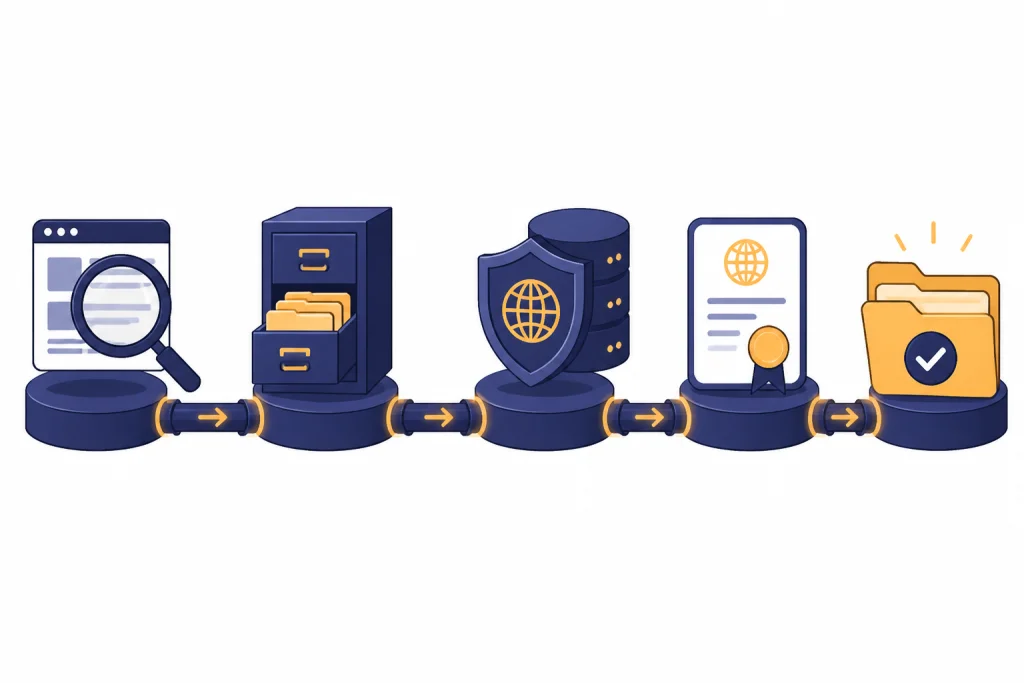
A generated name is only an idea. It is not proof that you can use the name. The U.S. Small Business Administration recommends checking prospective business, product, and service names against the official trademark database maintained by the United States Patent and Trademark Office.[3]
Start with a plain web search. Look for exact matches, close spellings, similar pronunciations, and businesses in adjacent categories. Then search your state business entity database if you plan to form an LLC or corporation. State rules vary, and some states do not allow registration of a name that is already registered by another business.[3]
Next, search the USPTO trademark database. The USPTO provides an official trademark search system for searching registered marks and pending applications.[4] A quick search is not the same as a legal clearance search, but it can reveal obvious conflicts before you spend money on design, packaging, signage, or ads.
Then check domains. ICANN explains that a domain registrant is the person or entity that registers a domain name and enters into a contract with a registrar to maintain it.[5] Do not judge a business name only by whether the exact dot-com is available. A strong name can work with a modifier, but a confusing domain can create support problems, lost referrals, and trust issues.
Also check how the name will appear in search. Google says site owners can use WebSite structured data on the home page to indicate a preferred site name in Google Search.[6] That does not guarantee branding control everywhere, but it is one more reason to choose a name that is consistent across your site, metadata, profiles, and business listings.
If the name is important to your company value, talk to a qualified trademark attorney. This article is practical guidance, not legal advice.
When not to use a name generator
Do not use a generator as the final decision maker for a regulated business, a venture-backed startup, a national product launch, a franchise concept, or any brand where trademark risk is expensive. In those cases, use the tool for early exploration only. A naming consultant or attorney may cost more upfront, but rebranding after launch can cost far more.
Do not paste confidential strategy into a consumer chat if the information should stay private. OpenAI’s consumer data controls give users settings for model improvement, and OpenAI publishes separate commitments for business products.[1][2] If you work inside a company, follow your organization’s AI policy before entering unreleased product plans, customer data, acquisition ideas, or internal positioning.
Do not use the generator to imitate a competitor. A name that looks like a shortcut to recognition can create legal and trust problems. Ask for names that are distinct from named competitors, not names that sound like them.
Do not use it when the brand depends on deep cultural nuance you cannot evaluate. Names can carry meanings across languages, regions, and communities that a model may miss. If you plan to sell internationally, test the shortlist with native speakers and local advisors.
How it compares with alternatives
A ChatGPT business name generator is strongest when you want context-aware iteration. Dedicated naming tools are stronger when you want fast bulk output or built-in domain workflows. Human naming help is strongest when the stakes are high and the name must support positioning, trademark strategy, and launch messaging.
| Option | Best for | Strength | Limitation |
|---|---|---|---|
| This ChatGPT business name generator | Early brainstorming and refinement | Adapts to your audience, tone, exclusions, and feedback | Still needs external availability and legal checks |
| General ChatGPT prompt | Custom workflows and deeper strategy | Lets you combine naming with positioning, offers, and messaging | Requires better prompting discipline |
| Shopify business name generator | Store owners who want quick ecommerce ideas | Shopify describes its tool as a free business name creator for ecommerce naming.[7] | Less useful for nuanced positioning or non-commerce brands |
| Namelix | Short, brandable startup-style names | Namelix says it generates short, branded names relevant to a business idea.[8] | Can favor stylized names that still need pronunciation and legal review |
| Human naming consultant | High-stakes launches | Can combine research, positioning, linguistic review, and stakeholder management | Higher cost and longer timeline |
If you already use ChatGPT for business tasks, naming can connect to other workflows. A solo founder might use a name generator, then draft offers with how to use ChatGPT to make money online, build service scripts with ChatGPT for Customer Service Teams, and compare plan costs in our chatgpt plus price in 2026 guide before choosing a daily tool.
Turn a name into a usable brand system
A name is only one part of the brand. Once you have a shortlist, ask ChatGPT to create a practical brand kit for each finalist. The kit should include a one-sentence positioning line, a plain-English description, a short tagline, sample homepage headline, email sender name, social bio, and customer support signature.
This step exposes weak names. Some names look good in isolation but collapse when you try to write a homepage. Others become stronger when paired with a clear promise. For example, an abstract name may need a descriptive tagline. A literal name may need a warmer voice. A local name may need a broader descriptor if you plan to expand.
For each shortlisted business name below, create a mini brand system:

Name: [name]
Business: [business description]
Audience: [audience]
Tone: [tone]

Return:
- One-sentence positioning line
- Plain-English business description
- Short tagline
- Homepage headline
- Social bio
- Email sender name
- Customer support signature
- Risk note
If the business is a content brand, test the name in titles and thumbnails. Our ChatGPT for YouTubers guide shows how AI-assisted titles and scripts can shape audience expectations. If the business is part of a broader income plan, read how to make money with ChatGPT in 2026 before you spend weeks polishing a name for an offer that has not been validated.
Frequently asked questions
Can ChatGPT create a good business name?
Yes, ChatGPT can create useful business name ideas when you give it enough context. It performs best as a brainstorming and refinement tool. You still need human judgment, customer feedback, domain checks, and trademark review.
Are ChatGPT business names legally safe to use?
No generator can guarantee that a name is legally safe. Search the web, check state records, and search the USPTO trademark database before using a name publicly. For important launches, ask a trademark attorney to review the shortlist.
What should I include in a business name prompt?
Include the business type, audience, main benefit, tone, location if relevant, competitor names to avoid, and words you do not want. Ask for several naming styles instead of one list. Then refine the best names in a second pass.
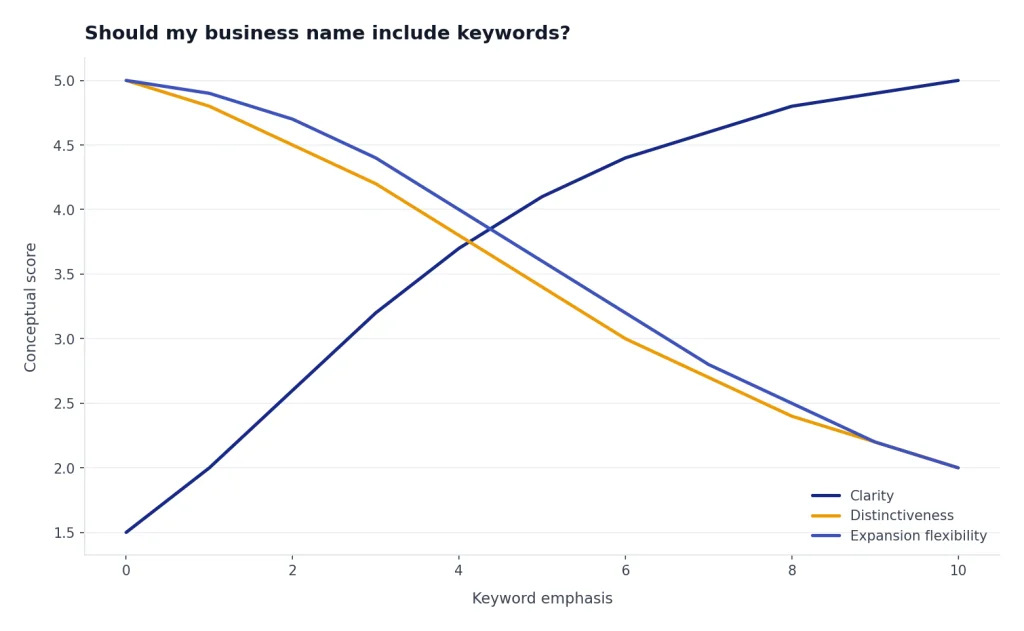
Should my business name include keywords?
Sometimes. Keywords can help make a local service or niche offer easier to understand. They can also make a name sound generic, limit expansion, or blend into search results. Use keywords when clarity matters more than brand distinctiveness.
Is a matching domain required?
A matching domain is helpful, but it is not always required. Many businesses use a modifier such as “get,” “try,” “hello,” a location, or an industry word. The domain should still be easy to say, spell, and trust.
Can I use this tool for product names instead of company names?
Yes. Product naming works well if you describe the product, customer, benefit, price position, and parent brand. Product names often need more hierarchy than company names, so ask whether the name fits a product line, feature, or flagship offer.