
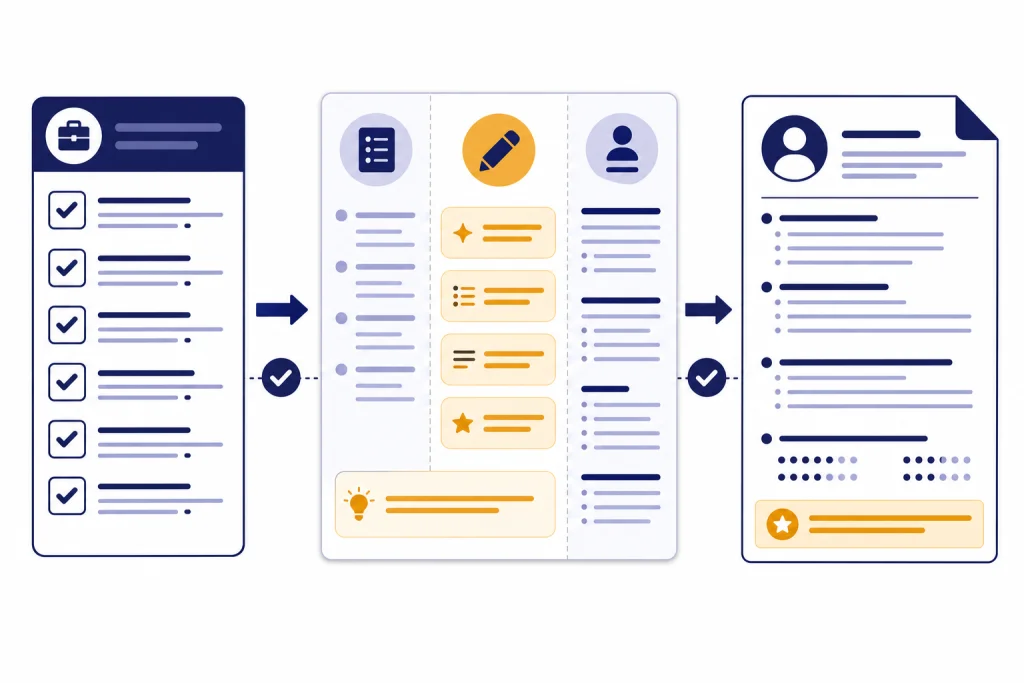
The best ChatGPT resume prompts do not ask for a generic rewrite. They give ChatGPT a target job, your real work history, the sections you want improved, and clear rules about honesty, keywords, formatting, and tone. Use ChatGPT as a resume editor, not as a career inventor. It can compare your resume with a job posting, identify missing skills you genuinely have, turn duties into accomplishment bullets, and flag vague language. It should not fabricate metrics, inflate titles, or add qualifications you cannot defend in an interview. The prompts below are built for practical resume work: tailoring, bullet rewriting, ATS checks, summaries, career changes, gaps, and final proofreading.
Use ChatGPT as a resume editor, not a ghostwriter
ChatGPT can help with resume writing, but the safest approach is to keep control of the facts. Give it your actual experience, then ask it to clarify, condense, reorganize, and target the wording. CareerOneStop, a U.S. Department of Labor-sponsored resource, specifically suggests using an AI tool to identify skills from past job descriptions, review a current resume, and compare a resume with a job posting for targeting suggestions.[4]
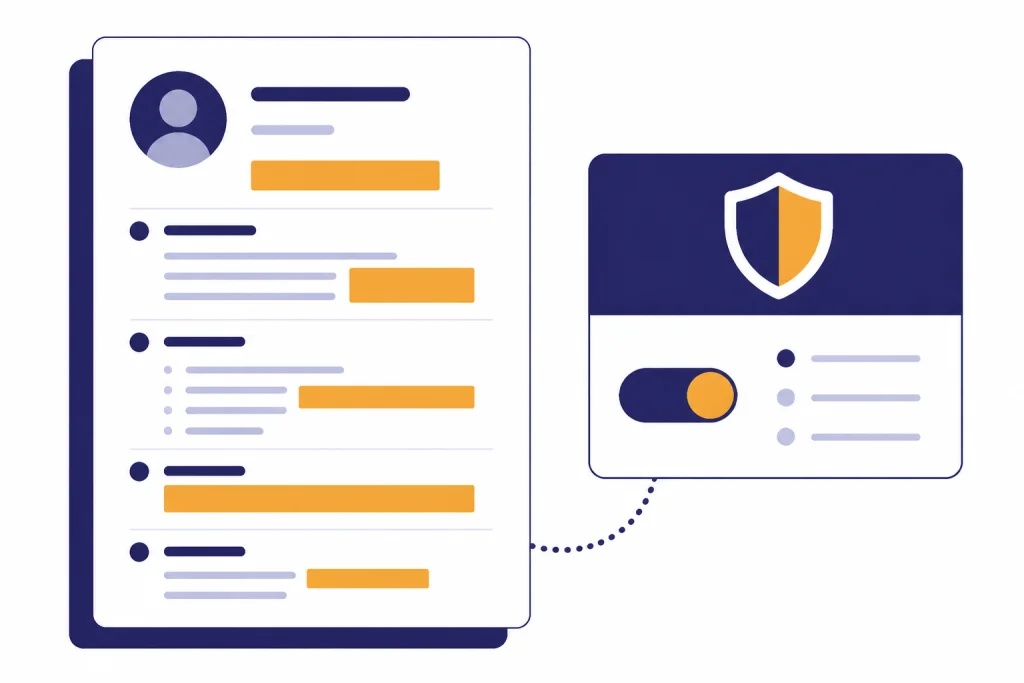
Do not paste sensitive information into a prompt unless you are comfortable sharing it with the service. OpenAI says content submitted to ChatGPT and other individual services may be used to improve model performance depending on user settings, including prompts, responses, images, and files.[1] OpenAI’s Data Controls let users choose whether conversations help improve its models, and signed-in users can turn off “Improve the model for everyone” in Settings under Data Controls.[2]
For resume work, remove your street address, personal phone number, references, Social Security number, private employer data, and any information covered by a confidentiality agreement. Replace them with placeholders such as [phone], [city], [company], and [client]. If you upload a resume file, remember that OpenAI says files expire independently of chat retention settings and internal backups may retain expired files for up to thirty additional days.[3]
The rule is simple. Ask ChatGPT to improve evidence, not invent evidence. If you want a broader prompt system for other projects, use our chatgpt prompt generator after you build your resume prompts here.
The resume prompt workflow that works
A good resume prompt has five parts: the target role, the job posting, your current resume content, the output you want, and the rules ChatGPT must follow. Most weak prompts fail because they skip the job posting or ask for “a better resume” without defining better.
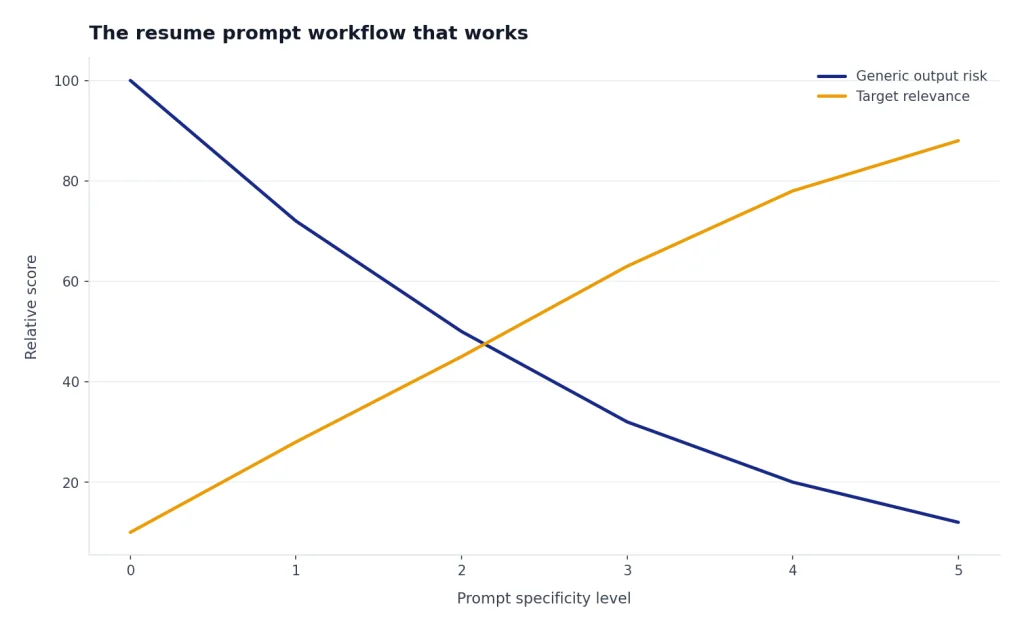
Use this workflow before you ask for a full rewrite:
- Start with analysis. Ask ChatGPT to read the job description and extract required skills, repeated keywords, tools, responsibilities, and likely screening criteria.
- Compare honestly. Ask it to map those requirements to your existing resume and separate “already shown,” “true but underexplained,” and “not supported by your experience.”
- Rewrite one section at a time. Start with your summary, then skills, then each role. This reduces generic output.
- Keep evidence visible. Ask ChatGPT to explain which job requirement each edited bullet supports.
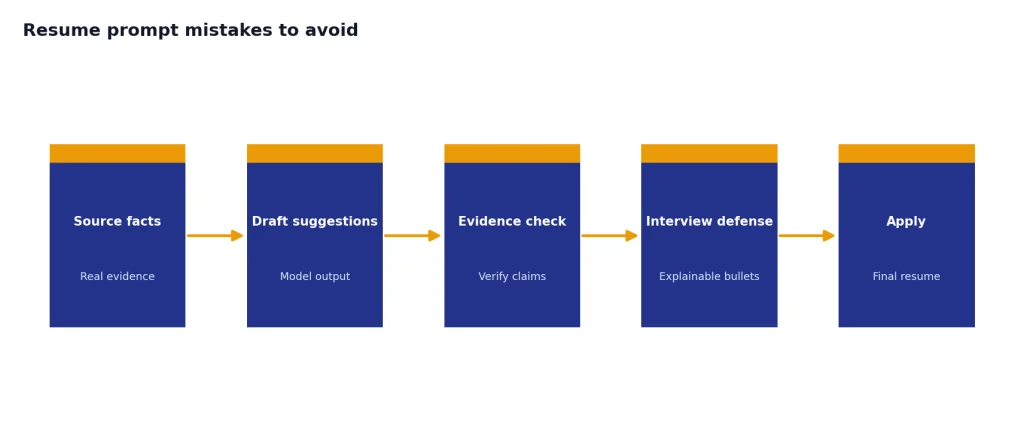
- Do a final human pass. Verify titles, dates, metrics, tools, grammar, and tone before applying.
This workflow pairs well with specialized tools. If you want a dedicated product instead of a prompt-only process, compare options in ai resume builder tools compared. If you handle hiring from the employer side, our chatgpt hr prompts for hiring and onboarding cover job descriptions, interview plans, and onboarding documents.
| Resume task | Best ChatGPT prompt style | What to inspect before using the output |
|---|---|---|
| Tailor a resume to a job | Comparison prompt with the job posting and your current resume | Whether added keywords are supported by real experience |
| Improve weak bullets | Accomplishment prompt with action, context, and result | Whether the metric, scope, or outcome is accurate |
| Write a summary | Positioning prompt based on target role and strongest evidence | Whether it sounds specific rather than inflated |
| Check ATS formatting | Plain-text parsing and formatting audit prompt | Whether the final file follows the employer instructions |
| Explain a career change | Transferable-skills prompt | Whether it connects past work to the new role without overclaiming |
Copy-paste ChatGPT resume prompts by task
Use these prompts as templates. Replace bracketed text with your information. Do not paste a job description and ask ChatGPT to “optimize” your resume in one step. Ask for analysis first, then edits.
Prompt: extract the real requirements from a job posting
Act as a resume strategist. Read this job posting and extract the information I should use to tailor my resume. Return five sections: required skills, preferred skills, repeated keywords, tools or systems named, and responsibilities that seem most important. Do not write my resume yet. Job posting: [paste job posting]Prompt: compare my resume with the job posting
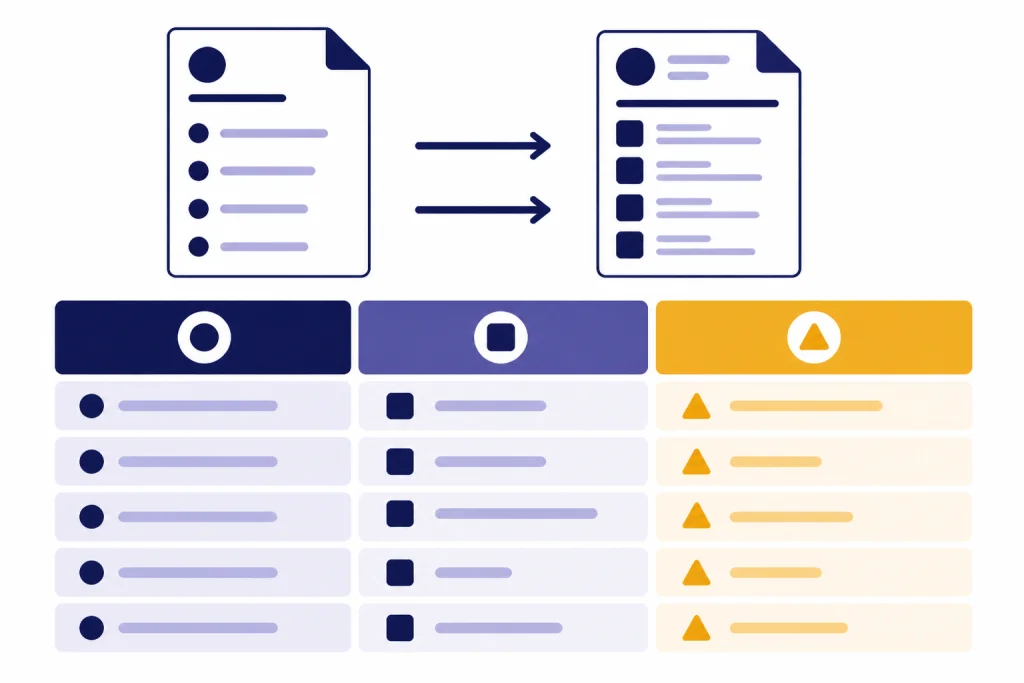
Compare my resume with the job posting below. Create a table with three columns: job requirement, evidence already in my resume, and missing or underdeveloped evidence. Only mark something as a match if my resume clearly supports it. Do not invent experience. Job posting: [paste job posting] Resume: [paste resume]Prompt: tailor my resume without changing the facts
Rewrite my resume for this target role while preserving the facts. Use the job posting to prioritize relevant skills and accomplishments. Do not add tools, metrics, responsibilities, degrees, certifications, or titles that are not already supported by my resume. If a section needs more evidence, leave a comment in brackets instead of fabricating. Target role: [role] Job posting: [paste job posting] Resume: [paste resume]Prompt: create a targeted professional summary
Write three versions of a resume summary for this role. Each version must be concise, specific, and based only on my real experience. Avoid clichés such as hard-working, results-driven, dynamic, and passionate. Mention the strongest role-relevant skills from my resume and the job posting. Job posting: [paste job posting] Resume evidence: [paste top experience]If you write resumes for multiple roles, save these prompts in a small library. You can adapt the same method for sales, operations, education, and freelance work. For adjacent prompt sets, see ChatGPT Sales Prompts for Closers, ChatGPT Business Prompts for Owners, and chatgpt productivity prompts for daily workflow.
Prompts for stronger resume bullets
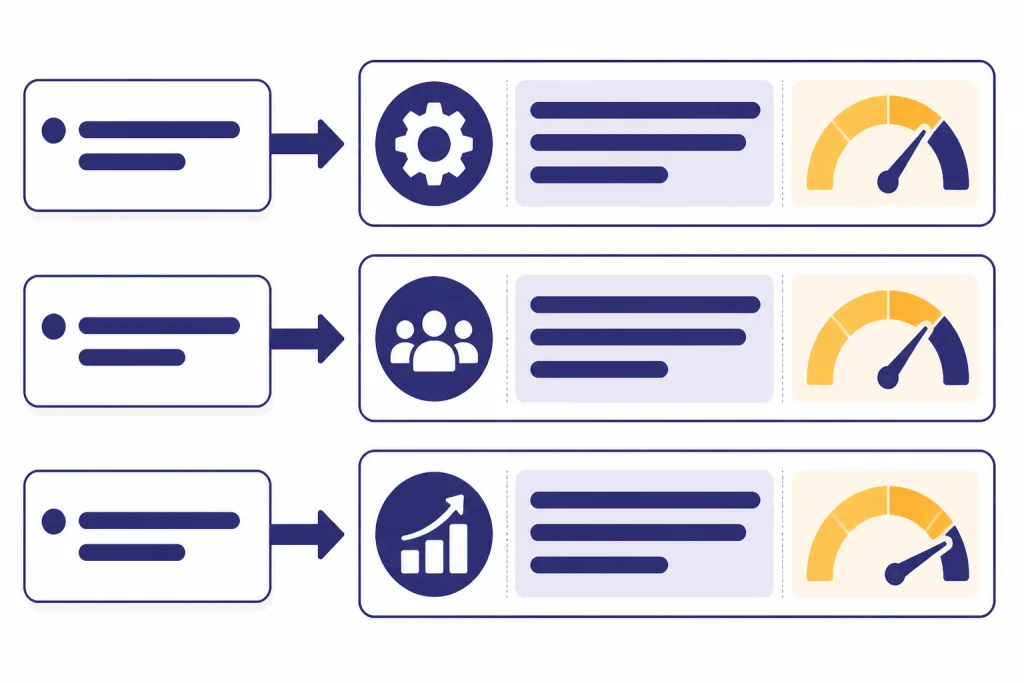
The most useful resume bullets show what you did, under what conditions, and what changed because of it. UC Davis describes accomplishment statements as proof of relevant skills and gives the formula “action verb plus context equals results,” with a recommendation to quantify results when possible.[6]
ChatGPT is especially useful when you have duty-heavy bullets. Give it the raw duty and ask it to interview you for missing context before it rewrites. This prevents fake metrics and makes the final bullet more believable.
Prompt: turn duties into accomplishments
Help me turn these resume duties into accomplishment bullets. First, ask me follow-up questions about scope, tools, stakeholders, volume, time saved, money saved, quality improved, risk reduced, or customer impact. After I answer, rewrite each bullet using action, context, and result. Do not invent metrics. Duties: [paste bullets]Prompt: improve bullets with stronger verbs
Rewrite these resume bullets with stronger action verbs and clearer outcomes. Keep the meaning accurate. Remove vague phrases, repeated verbs, and filler. If a bullet lacks evidence, add a bracketed note telling me what detail to provide. Bullets: [paste bullets]Prompt: make bullets more concise
Edit these resume bullets for concision. Preserve the strongest action, tool, scope, and result. Remove words that do not help a recruiter understand the accomplishment. Return a before-and-after table and explain what changed. Bullets: [paste bullets]Prompt: create interview-ready bullet notes
For each resume bullet below, create interview prep notes. Explain the likely follow-up questions an interviewer may ask and what evidence I should be ready to discuss. Flag any bullet that sounds inflated or unsupported. Bullets: [paste bullets]For roles that depend on spreadsheets, reporting, or measurable operations work, pair bullet prompts with our ChatGPT Excel Prompts for Power Users. It can help you translate spreadsheet-heavy work into clearer business impact.
Prompts for ATS-friendly formatting and keywords
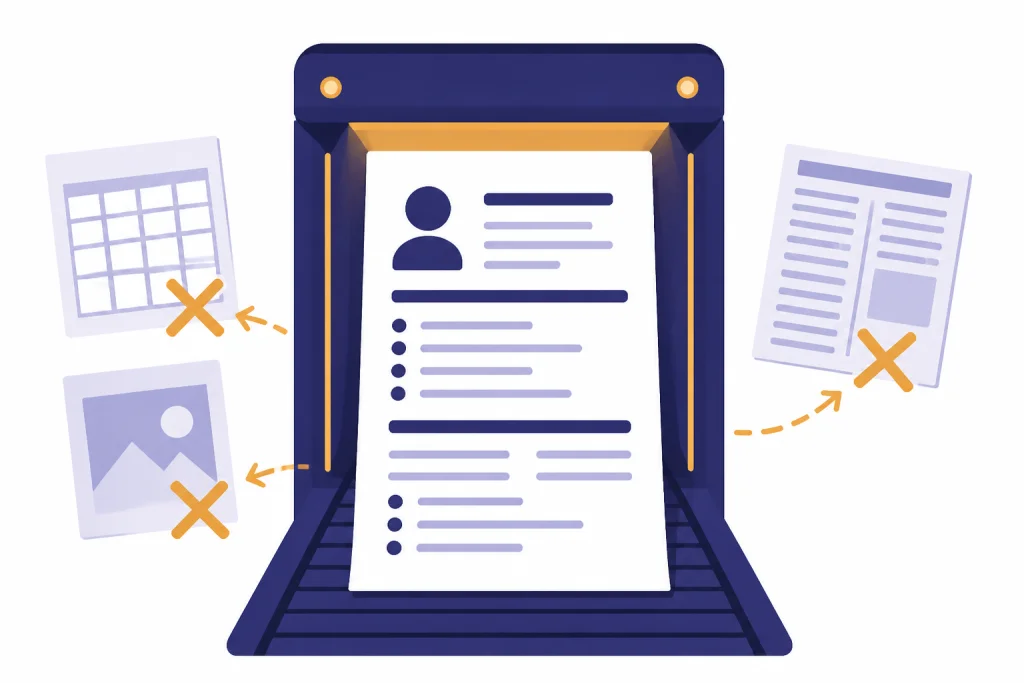
Applicant tracking systems are one reason resume prompts should include formatting rules. CareerOneStop recommends a simple, single-column resume layout, standard section headings, and avoiding tables, text boxes, logos, columns, images, and graphics because ATS tools may scramble content.[5] The University of Minnesota Duluth Career Center also advises matching job-posting language, giving context and examples, avoiding tricks, and following the file type requested by the employer.[7]
Do not ask ChatGPT to “beat the ATS.” Ask it to make your resume clear, parseable, and honest. A resume that reads like a keyword dump may get attention for the wrong reason.
Prompt: find keywords I can honestly use
Identify job-posting keywords that I can honestly include in my resume. Separate them into three groups: already present, missing but supported by my experience, and not supported. For the supported missing keywords, suggest where they could fit naturally. Do not recommend keyword stuffing. Job posting: [paste job posting] Resume: [paste resume]Prompt: plain-text ATS check
Review this resume as plain text for ATS readability. Flag confusing headings, unusual formatting, missing dates, unclear job titles, unexplained acronyms, and sections that may not parse cleanly. Do not rewrite the whole resume. Give a prioritized fix list. Resume text: [paste plain text]Prompt: remove keyword stuffing
Review this tailored resume for keyword stuffing. Highlight any repeated phrases that sound unnatural. Rewrite only the affected lines so they still include relevant language from the job posting but read naturally to a human recruiter. Job posting: [paste job posting] Resume: [paste resume]For U.S. resumes, avoid personal details that are not job-related. The American Chemical Society advises leaving off private personal information such as date of birth, Social Security number, height, weight, health, marital status, religious affiliation, children, sex, national origin, race, or ethnicity, and says photographs on resumes are not acceptable in the United States.[8]
Prompts for career changes, gaps, students, and federal jobs
Resume prompts need to change when your situation changes. A senior product manager, a new graduate, a career changer, and a federal applicant should not use the same prompt. The facts, format, and screening criteria differ.
Prompt: career changer resume positioning
Act as a career coach for a career changer. My past roles are in [old field], and I am applying for [target role]. Identify transferable skills that are clearly supported by my experience. Suggest changes to my summary, skills section, and bullets so the resume points toward the target role without pretending I have direct experience I do not have. Resume: [paste resume] Job posting: [paste job posting]Prompt: explain a resume gap carefully
Help me address a resume gap from [timeframe] in a professional way. Ask me what I did during the gap, including caregiving, study, freelance work, volunteering, health, travel, job search, or personal reasons. Then suggest resume wording that is truthful, concise, and not overly personal. Do not make assumptions.Prompt: student or recent graduate resume
Rewrite this student resume for [target internship or entry-level role]. Prioritize projects, coursework, campus work, volunteer experience, part-time jobs, and transferable skills that match the posting. Do not exaggerate the level of responsibility. Suggest where I need more specific project outcomes. Resume: [paste resume] Job posting: [paste job posting]Students can combine this prompt with ChatGPT Student Prompts for Better Grades to turn class projects, labs, research, and presentations into cleaner resume evidence.
Prompt: federal resume targeting
Federal resumes require extra care because the job announcement controls what you must prove. USAJOBS says applicants should read the announcement closely, show how they meet qualifications and requirements, and tailor the resume to each job.[9] OPM announced a two-page resume limit for federal job applications submitted through USAJOBS, effective September 27, 2025; NIH also describes federal resumes as limited to two pages.[10][11]
Review my federal resume against this USAJOBS announcement. Identify the qualification requirements, specialized experience, required documents, and evaluation criteria. Then map my resume evidence to each requirement. Flag any requirement that is not clearly supported. Keep the rewrite concise and compliant with the announcement. Announcement: [paste announcement] Resume: [paste resume]If your target role involves bilingual work or international experience, use chatgpt translation prompts for quality output to prepare careful translations of project descriptions before you adapt them into a U.S.-style resume.
A master ChatGPT resume prompt you can reuse
Use this master prompt when you want one structured session. It tells ChatGPT to analyze before rewriting, preserve the facts, and flag weak evidence.
Act as a careful resume strategist and editor. I will provide a target job posting and my current resume. Your job is to help me tailor the resume honestly.

Rules:
- Do not invent experience, tools, employers, titles, dates, education, certifications, or metrics.
- If a keyword is not supported by my resume, mark it as unsupported.
- If a bullet needs evidence, ask a follow-up question instead of guessing.
- Keep the tone professional, plain, and specific.
- Prioritize human readability and ATS-friendly formatting.
- Avoid tables, graphics, unusual headings, keyword stuffing, and clichés.

Step one: Extract the role’s required skills, preferred skills, repeated keywords, tools, and core responsibilities.
Step two: Compare those requirements with my resume in a gap table.
Step three: Suggest section-by-section edits.
Step four: Rewrite only after I approve the direction.

Job posting: [paste job posting]
Resume: [paste resume]
Save the result as your baseline conversation. Then start fresh chats for each employer so old job descriptions do not contaminate new resume versions. If you build many reusable prompt systems, our Best ChatGPT Prompt Generator Tools guide can help you compare dedicated prompt-building tools.
Resume prompt mistakes to avoid
The fastest way to get bad output is to ask for a complete resume with too little context. ChatGPT can produce confident wording even when the source material is thin. Your prompt should force it to separate facts from suggestions.
- Do not ask for fake metrics. Ask for questions that help you find real scope, volume, quality, speed, revenue, savings, or risk evidence.
- Do not paste every private detail. Use placeholders for contact details, addresses, references, and confidential client names.
- Do not use one resume for every job. Tailor the emphasis while keeping the same factual foundation.
- Do not let keywords replace clarity. Recruiters still need to understand what you did and why it mattered.
- Do not skip proofreading. Check dates, employer names, acronyms, tense, punctuation, and file instructions.
- Do not copy output blindly. If you cannot explain a bullet in an interview, it does not belong on your resume.
ChatGPT resume prompts work best when they make you a better editor of your own experience. The model can help you see patterns, reduce clutter, and match the employer’s language. You are still responsible for the truth of the final document.
Frequently asked questions
Can ChatGPT write my entire resume?
It can draft a resume, but you should treat the output as an editable draft. The best use is to provide your real experience, then ask ChatGPT to organize and clarify it for a target role. Review every line before you apply.
Should I paste my full resume into ChatGPT?
You can, but remove sensitive details first. Use placeholders for your phone number, street address, references, and confidential company or client information. Also review ChatGPT’s data controls before using it for private career documents.[2]
What is the best ChatGPT resume prompt?
The best prompt includes the job posting, your current resume, and strict instructions not to invent facts. Ask for a requirement gap analysis before asking for a rewrite. This produces a more targeted and honest resume.
Can ChatGPT make my resume ATS-friendly?
It can help identify formatting risks, missing keywords, unclear headings, and overly designed sections. You still need to follow the employer’s upload instructions. Use plain structure, standard headings, and natural keyword placement rather than tricks.
Can ChatGPT help if I do not have metrics?
Yes. Ask it to interview you for scope, frequency, tools, stakeholders, deadlines, quality improvements, and outcomes. Not every bullet needs a number, but every strong bullet needs evidence.
Is it dishonest to use ChatGPT for a resume?
No, not if the resume remains accurate. Using ChatGPT for editing is similar to using a writing assistant or career coach. It becomes a problem when it adds credentials, responsibilities, achievements, or metrics you cannot support.