

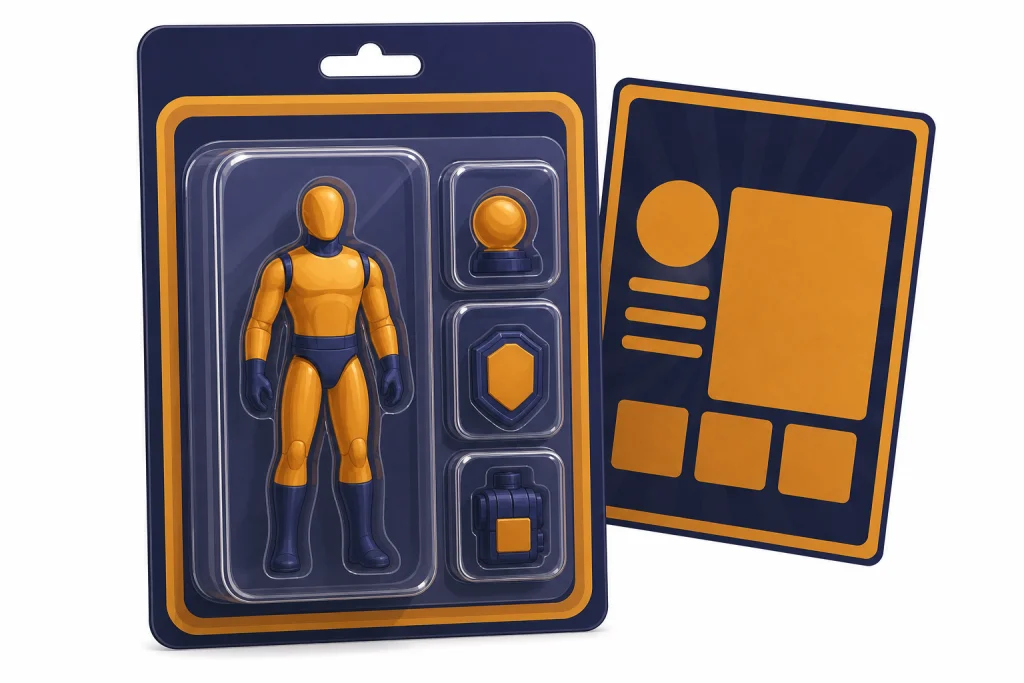
ChatGPT action figure prompts turn a photo, pet portrait, brand character, or fictional persona into a collectible toy-box image with a plastic blister pack, accessories, nameplate, and themed packaging. The viral format works because it gives the image model a clear physical structure: figure, pose, package, props, background card, and finish. Use the prompts below as starting points, then swap in your job, hobby, outfit, accessories, color palette, and scene details. For best results, upload a clear reference image when you want the figure to resemble a real person, and avoid using someone else’s likeness without permission.
What the ChatGPT action figure trend is
The ChatGPT action figure trend is a viral image-prompt format where users ask ChatGPT to turn a person, pet, character, or role into a boxed collectible toy. The common layout includes a stylized figure in a clear blister package, a printed card backing, a title at the top, and small accessories arranged beside the figure. Tom’s Guide described the format as a way to turn yourself into an action figure, while Forbes reported that the craze spread after OpenAI launched its newer ChatGPT image generator powered by GPT-4o image generation.[3][4]
The format became popular because it is specific. A toy package gives the image model strong visual constraints. It has a front-facing figure, a transparent shell, props in compartments, a background card, and a retail-display composition. That structure usually produces cleaner images than vague prompts such as “make me look cool” or “turn this into a toy.”
OpenAI introduced 4o Image Generation on March 25, 2025, and said it was rolling out to Plus, Pro, Team, and Free users as the default image generator in ChatGPT, with Enterprise and Edu access coming later.[1] OpenAI’s help documentation says ChatGPT Images can create images from prompts, follow precise instructions, add details, add text, make transparent backgrounds, and edit uploaded images.[2]
If you want broader visual prompt ideas beyond this one trend, start with our Best ChatGPT Image Prompts. If you want a lighter list of playful ideas, use Fun ChatGPT Prompts to Try Today.
How to make a ChatGPT action figure image
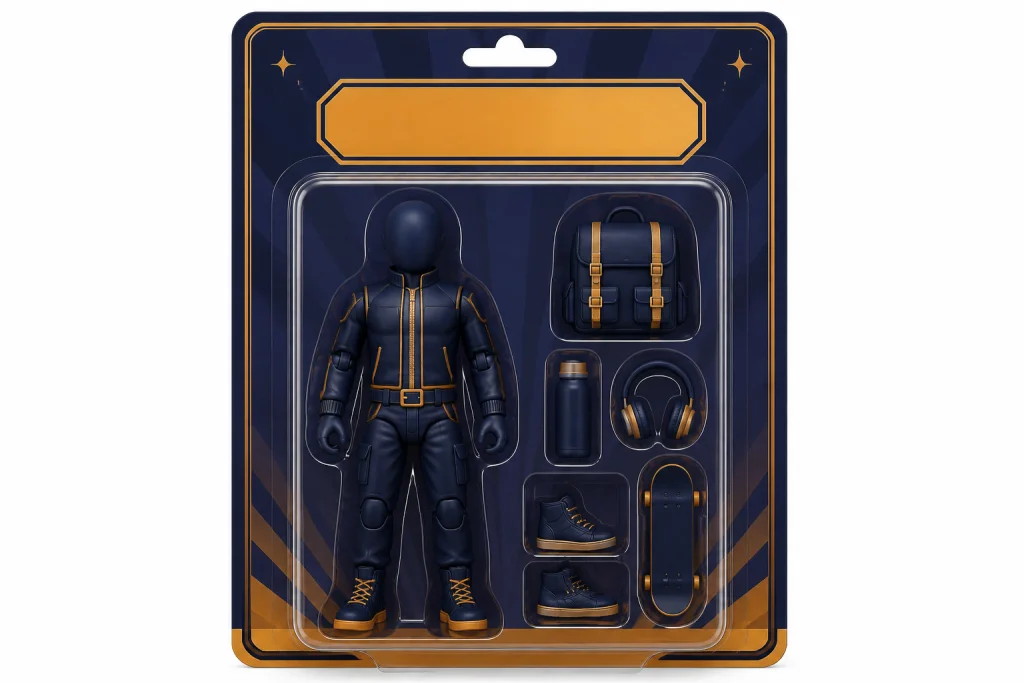
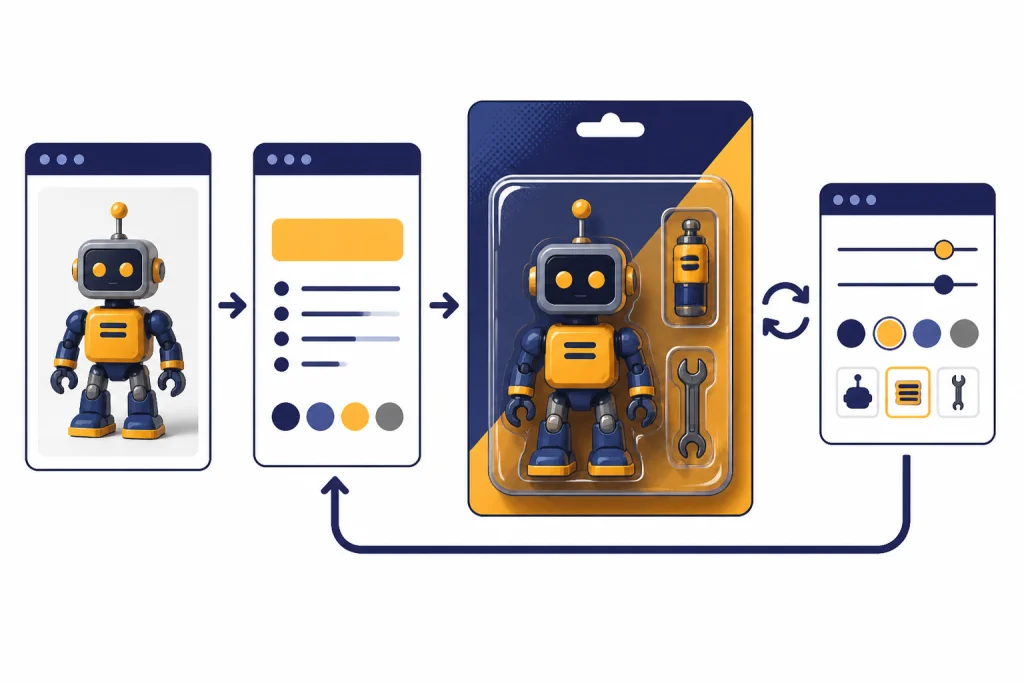
The easiest workflow is simple: upload a clear photo, paste a structured prompt, review the result, then ask for a small edit instead of starting over. ChatGPT image editing works best when the prompt names the subject, pose, package type, accessories, style, color palette, and what should not change.
- Choose a clean reference image. Use a front-facing or three-quarter photo with good lighting. Avoid cluttered backgrounds if you want the figure’s face and outfit to carry over.
- Name the figure clearly. Use a display name, job title, hobby title, or fictional character name. Keep it short if you want the package to look believable.
- Pick a package format. The viral version usually uses a clear plastic blister pack on a printed cardboard backing.
- List the accessories. Add props that define the person or character. A designer might get a tablet, color swatches, and headphones. A runner might get shoes, a water bottle, and a race bib.
- Control the style. Ask for a stylized collectible toy, not a realistic person trapped in plastic. Words like “toy-like,” “vinyl figure,” “miniature,” and “product mockup” help.
- Request one change at a time. If the face is good but the accessories are wrong, keep the face and ask only to revise the accessory tray.
For more systematic prompt building, use our chatgpt prompt generator after you choose the action figure concept. It helps turn a quick idea into a reusable prompt pattern.
Copy-paste ChatGPT action figure prompts
Use these prompts as templates. Replace the bracketed details with your own subject, style, accessories, and packaging notes. If you upload a reference photo, say which parts should stay recognizable and which parts can be stylized.
| Use case | Copy-paste prompt | Best for |
|---|---|---|
| Classic viral toy box | Turn the person in the uploaded photo into a stylized collectible action figure inside a clear plastic blister package on a printed cardboard backing. Keep the main facial features, hairstyle, outfit vibe, and posture recognizable, but make the body toy-like and polished. Add accessories in separate molded compartments: [accessory], [accessory], and [accessory]. Put the figure name as [NAME] and the subtitle as [ROLE OR TAGLINE]. Use a clean retail product mockup composition, glossy plastic, soft studio lighting, and a playful premium toy aesthetic. | Personal portraits and social posts |
| Professional persona | Create a boxed action figure version of [JOB TITLE OR ROLE]. The figure should wear [OUTFIT] and stand confidently inside a clear blister package. Add miniature work accessories: [TOOL], [TOOL], and [TOOL]. The cardboard backing should feel modern, organized, and polished, with colors that match [COLOR PALETTE]. Make it look like a high-end collectible toy for someone in this profession, not a real product from an existing brand. | LinkedIn posts, team pages, creator bios |
| Pet action figure | Turn the pet in the uploaded photo into a charming collectible pet action figure inside a toy blister package. Preserve the pet’s coat color, markings, ears, expression, and personality. Add small accessories in molded compartments: [toy], [treat], and [funny object]. Use a playful package card with a bold nameplate reading [PET NAME]. Make the figure cute, toy-like, glossy, and display-ready. | Dog, cat, and pet owner posts |
| Creator kit | Create an action figure toy package for a content creator named [NAME]. The figure should look like [VISUAL DESCRIPTION] and stand inside a clear blister pack. Include creator accessories: camera, microphone, editing tablet, ring light, and notebook. Make the packaging feel like a creator starter kit, with a clean modern card backing, bright accent colors, and a polished collectible-toy finish. | YouTubers, streamers, podcasters |
| Fitness figure | Create a collectible action figure of [NAME], a [FITNESS STYLE] athlete. Put the figure in a dynamic but toy-like pose inside a clear blister package. Add accessories: training shoes, shaker bottle, towel, stopwatch, and [SPORT-SPECIFIC ITEM]. Use energetic colors, glossy plastic, and a sporty package backing. Keep it fun and non-photorealistic. | Coaches, runners, gym posts |
| Retro comic figure | Transform [SUBJECT] into a retro comic-inspired action figure in a blister card package. Use bold shapes, dramatic pose, stylized toy proportions, and a nostalgic printed backing. Include accessories that match the character: [PROP], [PROP], and [PROP]. Make it feel like a fictional collectible from a vintage toy aisle, without copying any real comic brand or logo. | Fictional personas and fan-style posts |
| Founder or small-business owner | Create a premium collectible action figure of [NAME], founder of [BUSINESS TYPE]. The figure should wear [OUTFIT] and stand inside a clear molded blister package. Add miniature accessories that represent the business: [ITEM], [ITEM], and [ITEM]. The package should look like a clean product mockup with elegant colors, a confident pose, and a polished entrepreneurial theme. | Brand storytelling and launches |
| Student or teacher version | Create a school-themed collectible action figure of [NAME]. Put the figure inside a clear blister package with a printed classroom-inspired backing. Include accessories: backpack, notebook, laptop, pen set, and [SUBJECT-SPECIFIC TOOL]. Use a friendly academic style, toy-like proportions, and a clean display layout. | Education posts and class projects |
Creators can adapt the creator-kit prompt with ideas from ChatGPT for YouTubers. Coaches can combine the fitness prompt with ChatGPT for Fitness. Teachers and students can adapt the school prompt with ChatGPT Teacher Prompts or ChatGPT Student Prompts for Better Grades.
The prompt formula that works best
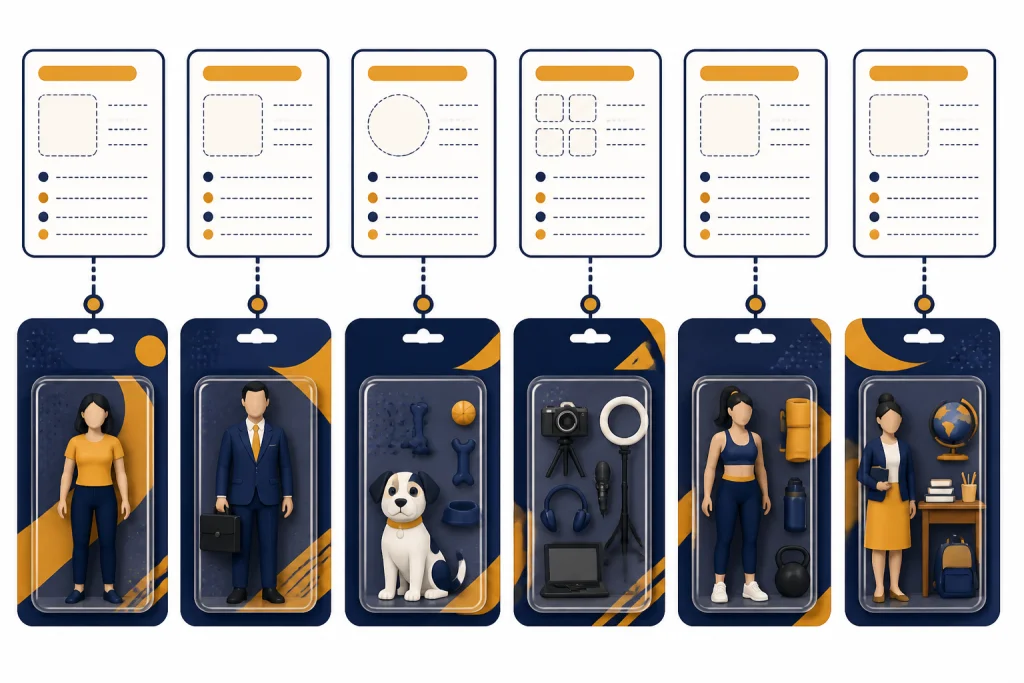
A strong ChatGPT action figure prompt has a repeatable structure. You do not need fancy wording. You need concrete visual instructions in the right order.
Create a [toy style] action figure of [subject] inside [package type].
Preserve [recognizable traits] from the reference image.
The figure should wear [outfit] and pose [pose].
Add accessories in separate molded compartments: [props].
Use packaging details: [name], [subtitle], [color palette], [background motif].
Make the result [finish and lighting].
Avoid [brands, logos, copied characters, unwanted elements].
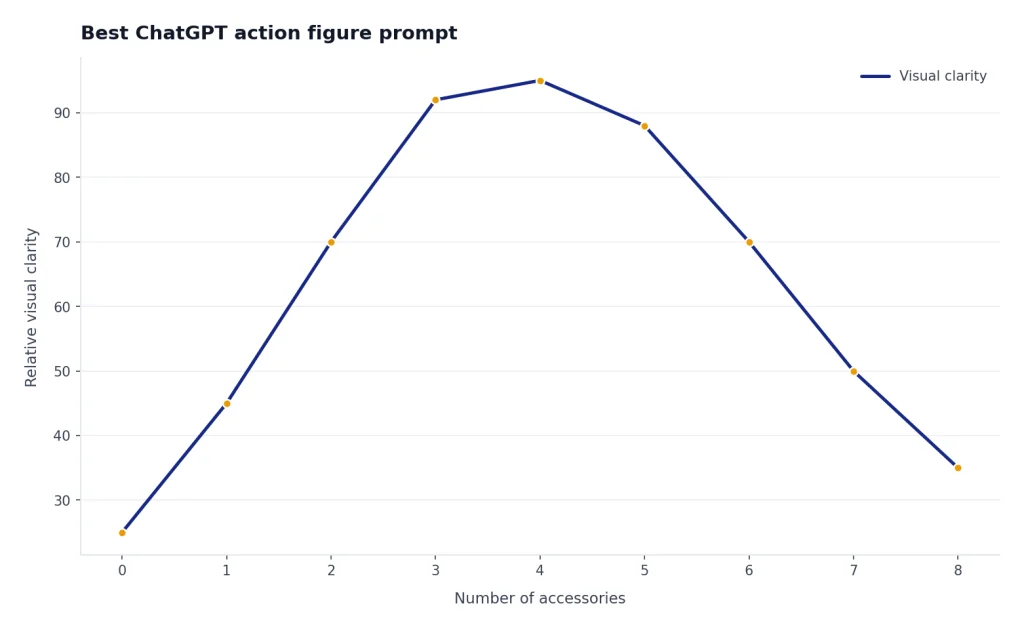
The most important part is the accessory list. Accessories make the image feel personal. They also tell the model what story the figure should communicate. A “marketing manager” toy with a laptop, coffee cup, sticky notes, and campaign dashboard reads faster than a generic office figure.
Use constraints instead of long adjectives
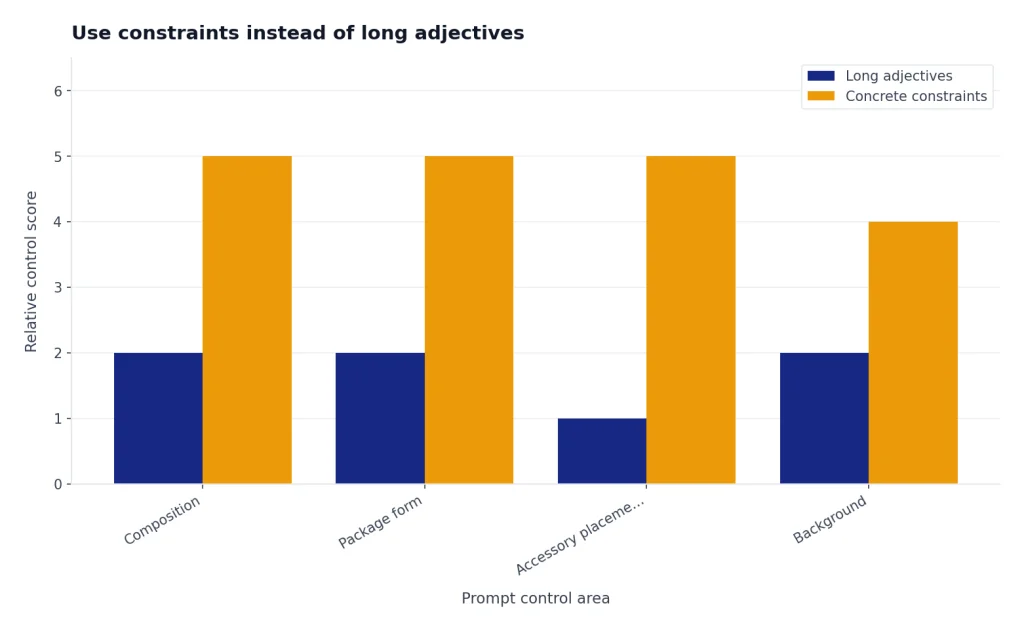
A prompt full of adjectives can drift. A prompt with constraints gives the model a composition to follow. Say “clear plastic blister pack with three accessory compartments on the right” instead of “make it super detailed and amazing.” Say “front-facing retail product mockup on a white background” instead of “make it look professional.”
Add negative instructions
Negative instructions help when the first result looks too real, too messy, or too close to an existing toy line. Add lines such as “do not use real brand logos,” “do not copy an existing movie character,” “do not make the face photorealistic,” or “do not add extra hands.” If you need an intentionally exaggerated portrait, try our ChatGPT Caricature Prompts instead of forcing the action figure prompt to do both jobs.
Style ideas for different use cases
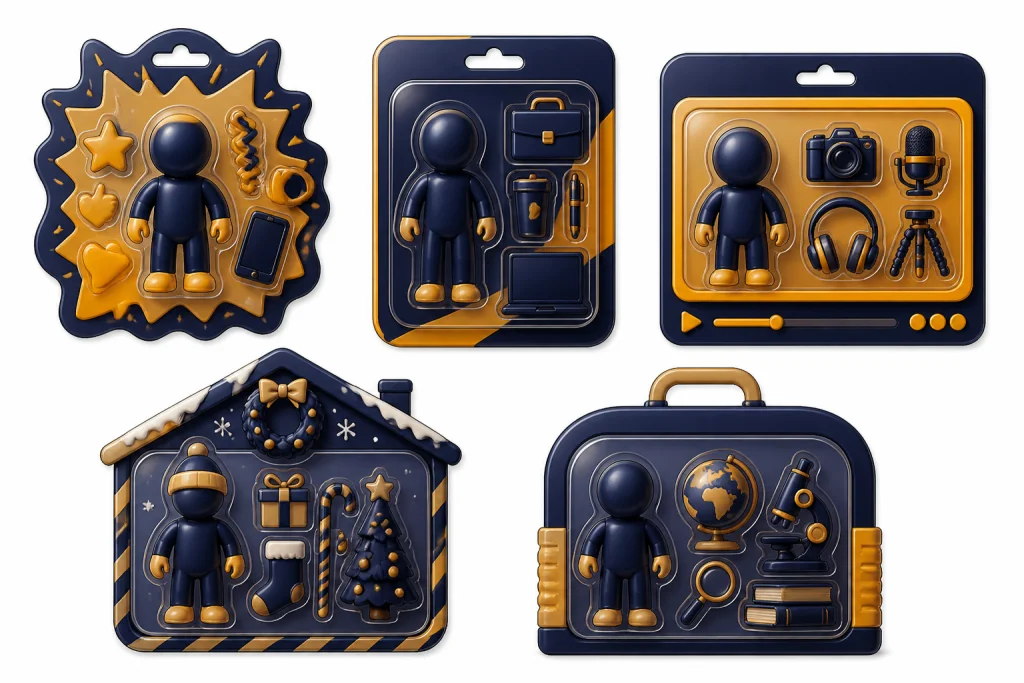
The same action figure format can support different goals. A social media post can be funny. A professional post can be polished. A holiday card can be seasonal. A profile graphic can be clean and identity-focused. Choose the prompt style before you write the accessories.
| Style direction | Prompt additions | What to avoid |
|---|---|---|
| Playful viral post | Use a bright package card, exaggerated toy proportions, funny accessories, and a dramatic nameplate. | Overloading the package with too many props. |
| Professional personal brand | Use a restrained color palette, clean package layout, role-specific accessories, and studio lighting. | Fake company logos, client logos, or real certification marks. |
| Creator thumbnail | Use a centered figure, high contrast, a simple background card, and accessories that read at small size. | Tiny text, cluttered shelves, or small props that disappear on mobile. |
| Holiday version | Use seasonal props, gift-box cues, warm lighting, and a festive color palette. | Specific copyrighted characters or trademarked holiday mascots. |
| Education version | Use classroom tools, subject props, notebooks, charts, and a friendly display style. | Using real student faces without permission. |
If you plan to post the result on Instagram, TikTok, LinkedIn, or X, pair the image with a short caption from chatgpt social media prompts for every platform. For seasonal versions, adapt the format with ideas from ChatGPT Christmas Photo Prompts. For adjacent visual trends, compare it with ChatGPT Studio Ghibli Style Prompts, but avoid copying living artists or recognizable studio marks.
Safety, privacy, and likeness rules
Action figure prompts look harmless, but they often use real faces. Use your own image, a photo you have permission to edit, or a fictional subject. OpenAI’s usage policies warn against using someone’s likeness, including a photorealistic image or voice, without consent in ways that could confuse authenticity.[5] That matters if you are making an action figure of a coworker, student, client, public figure, or child.
Also avoid pretending that the generated image is a real product. A toy-box mockup can look convincing. If you post it publicly, label it as AI-generated or clearly present it as a concept image. OpenAI’s C2PA help page says people may be able to use Content Credentials Verify to check whether an image was generated by ChatGPT or DALL·E through OpenAI tools, but it also notes that many social platforms remove metadata and that screenshots can remove it too.[6]
Do not ask for real brand logos, existing toy-line packaging, or exact copies of copyrighted characters. You can say “retro toy aisle feel,” “space explorer,” “fantasy chef,” or “cartoon pet hero” without naming a protected franchise. If you want a brand-safe business post, make the design fictional and use broad category language.
For workplace use, get written permission before making action figure versions of employees. For school use, avoid student faces unless your school’s policy and parent permissions clearly allow it. For client work, treat uploaded photos as sensitive creative assets and confirm that your client understands how the image tool will be used.
Troubleshooting bad action figure results
If the result looks wrong, do not rewrite the whole prompt immediately. Identify the failure and ask for a targeted edit. The most common problems are weak resemblance, messy text, too many accessories, plastic that hides the figure, or a design that resembles an existing brand too closely.
| Problem | What likely happened | Follow-up prompt |
|---|---|---|
| The face does not resemble the reference | The prompt gave style more weight than identity. | Keep the toy-box composition, but revise the face, hair, and expression to better match the uploaded reference while staying stylized. |
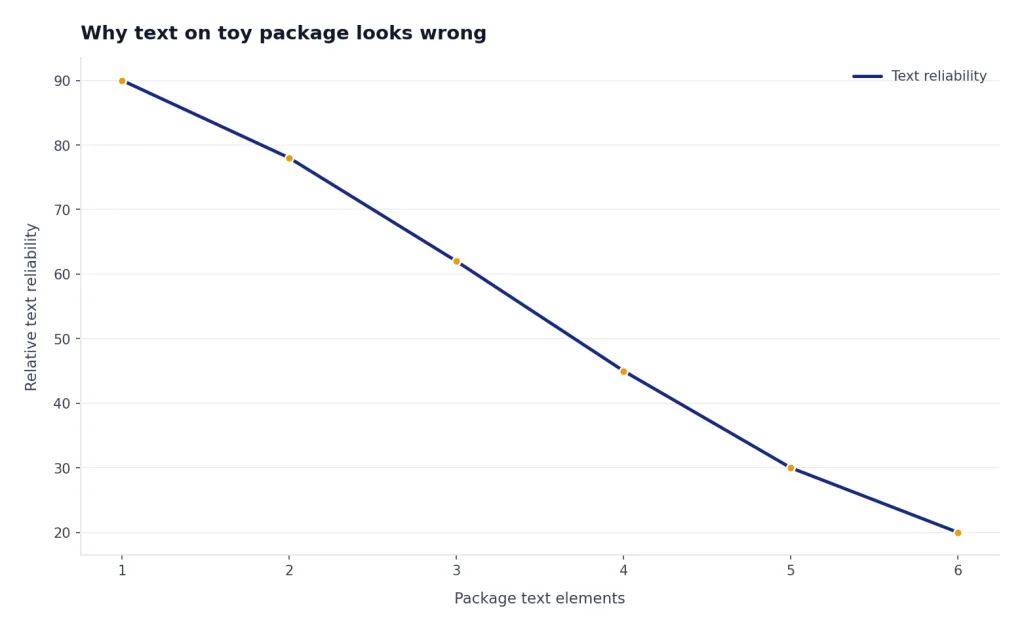
| The package text is garbled | Image models can still struggle with exact text placement. | Simplify the package text to only the name [NAME] and one short subtitle [SUBTITLE]. Remove all other text-like marks. |
| The accessories are random | The prompt listed a broad role but not concrete props. | Replace the accessories with only these items: [item], [item], and [item]. Put each one in a separate molded compartment. |
| The figure looks too realistic | The prompt emphasized the photo more than toy styling. | Make the figure clearly toy-like with vinyl proportions, simplified skin texture, smooth molded hair, and glossy plastic surfaces. |
| The design copies a known toy brand | The prompt used a brand name or too-specific franchise cue. | Remove any real brand references. Make the packaging fictional, original, and generic while keeping the collectible toy-box format. |
When you want a more polished image series, generate several versions with the same formula and only change one variable at a time. Change the outfit, then the accessories, then the package colors. This gives you a consistent set instead of unrelated images.
If the whole idea needs a sharper creative angle, combine this guide with ChatGPT Creative Prompts for Storytellers. Ask ChatGPT to invent a backstory, catchphrase, accessory set, and fictional product line before generating the image prompt.
Frequently asked questions
What is the best ChatGPT action figure prompt?
The best prompt names the subject, package type, pose, outfit, accessories, color palette, and visual finish. Start with: “Turn the person in this photo into a stylized collectible action figure inside a clear plastic blister package.” Then add three to five personal accessories and a short nameplate.
Can ChatGPT make an action figure from my photo?
Yes, ChatGPT Images can use an uploaded image as a reference and apply changes based on your prompt.[2] Use a clear photo and ask it to preserve the face, hairstyle, outfit vibe, and expression while making the result toy-like.
Why does the text on the toy package look wrong?
Text inside generated images can still be unreliable, especially when you ask for long labels, small print, or multiple slogans. Keep the package text short. Ask for only a name and one short subtitle if accuracy matters.
Can I make action figures of celebrities?
Be careful. Policies, rights of publicity, and platform rules can apply when using someone’s likeness. OpenAI’s usage policies warn against using a person’s likeness without consent in ways that could confuse authenticity.[5] A safer route is to create a fictional character inspired by broad traits, not a real person.
How do I make the result look more like a real toy?
Add physical packaging details. Ask for a clear molded blister shell, separate accessory compartments, a printed cardboard backing, glossy plastic, studio product lighting, and simplified vinyl-like proportions. Those details give the image model a stronger object structure.
Can I use these prompts for business marketing?
Yes, but keep the result fictional and permission-based. Do not use client, employee, or customer likenesses without approval. Avoid real logos, real toy packaging, trademarked characters, and claims that the image represents an actual product.