

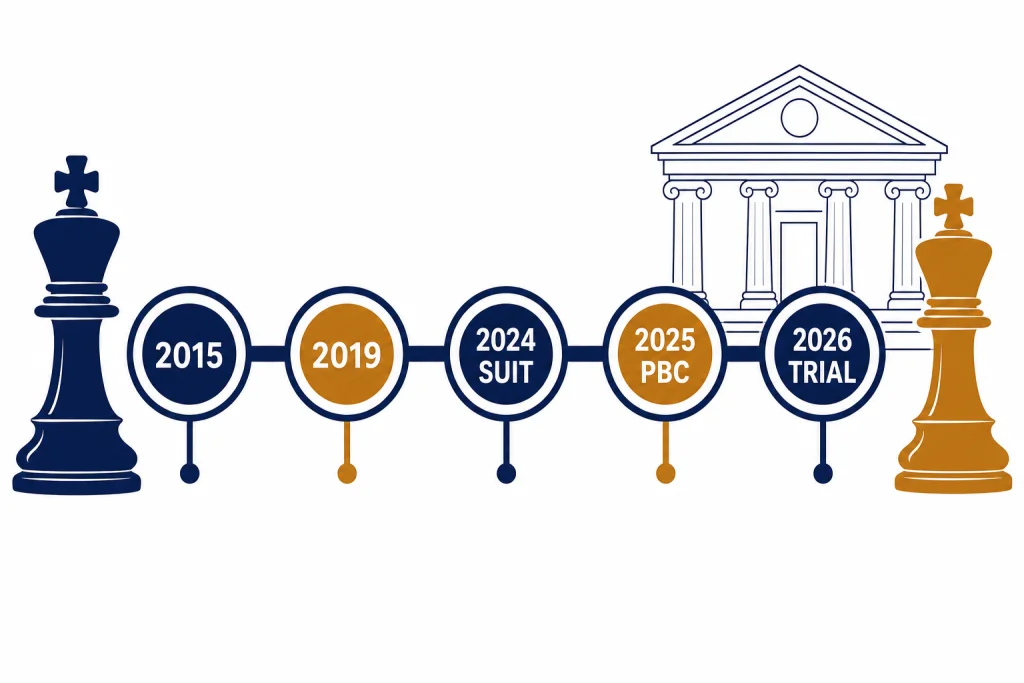
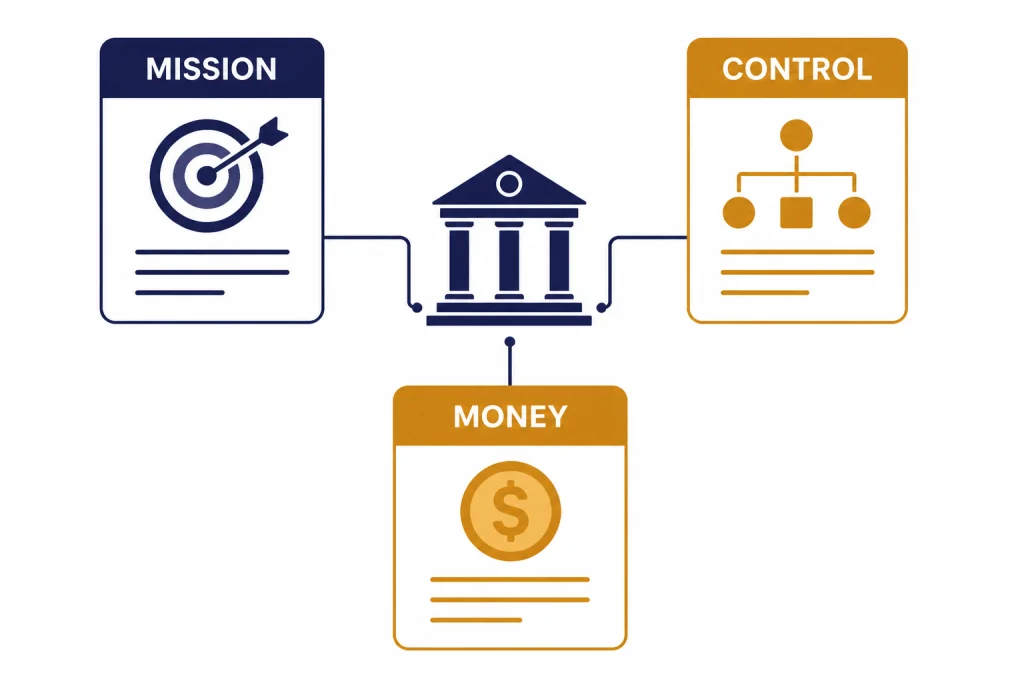
The Sam Altman vs Elon Musk feud is a fight over what OpenAI was supposed to become. Musk says Altman, Greg Brockman, OpenAI, and related entities betrayed the nonprofit mission announced in 2015. OpenAI says Musk supported a for-profit path when he expected control, left after failed negotiations, and now attacks a competitor. The dispute moved from public criticism to litigation in 2024 and entered the federal trial-stage period in Oakland beginning April 27, 2026, after the judge dismissed Musk’s fraud claims but allowed breach-of-charitable-trust and unjust-enrichment claims to proceed.[6][8] The core issues are mission, control, money, openness, and Microsoft’s role in OpenAI’s transformation.
What the feud is really about
The fight is not just a personality clash. It is a dispute over OpenAI’s founding promise, who gets to define that promise, and whether OpenAI’s current corporate structure is still faithful to it.
OpenAI launched publicly on December 11, 2015, as a nonprofit AI research company. Its launch post said the aim was to build value for everyone rather than shareholders, encourage researchers to publish work, share patents if any existed, and collaborate broadly. The same post named Sam Altman and Elon Musk as co-chairs.[1] That original framing is the reference point for nearly every later argument.
Musk’s side argues that OpenAI took donations, talent, and public trust under a nonprofit and open-research banner, then changed into a profit-oriented company tied closely to Microsoft. OpenAI’s side argues that massive computing costs made the original structure unrealistic, that the nonprofit remained in control, and that Musk accepted or even pushed for a for-profit structure before leaving.
For a broader company timeline, see our OpenAI history. For the governance mechanics behind the dispute, see our guide to OpenAI ownership structure.
Timeline of the Altman-Musk OpenAI fight
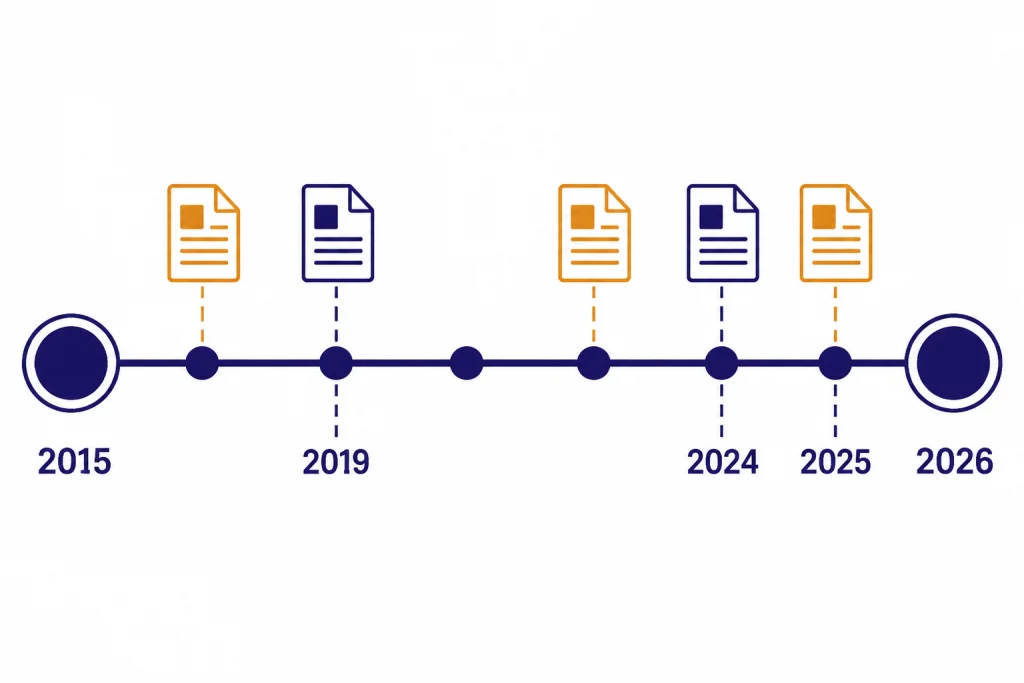
The feud makes more sense as a sequence of governance decisions rather than a single rupture. Musk and Altman started as co-founders and co-chairs. Their split hardened as OpenAI moved from nonprofit lab to capped-profit subsidiary, then to a public benefit corporation under nonprofit control.
| Date | Event | Why it matters |
|---|---|---|
| December 11, 2015[1] | OpenAI launches publicly as a nonprofit, with Altman and Musk named co-chairs. | This created the mission language Musk now points to. |
| March 11, 2019[2] | OpenAI creates OpenAI LP as a capped-profit entity. | OpenAI says it needed a hybrid structure to raise capital and hire talent. |
| July 22, 2019[3] | Microsoft invests $1 billion and becomes OpenAI’s exclusive cloud provider. | The partnership gives OpenAI compute and gives Musk a target for claims about commercialization. |
| February 29, 2024[7] | Musk sues Altman, Brockman, OpenAI, and related entities in California state court. | The private dispute becomes a legal campaign. |
| June 11, 2024[7] | Musk withdraws the state-court lawsuit shortly before a scheduled hearing. | OpenAI later uses the withdrawal to argue the claims are tactical. |
| August 5, 2024[6] | Musk files a new federal case in the Northern District of California. | The case becomes the main venue for the feud. |
| October 28, 2025[4] | OpenAI announces an updated structure with OpenAI Foundation controlling OpenAI Group PBC. | The new structure is central to the trial fight. |
| April 27, 2026[8] | The federal trial began with jury selection in Courtroom 1, U.S. District Court for the Northern District of California. | The court will test claims that have shaped OpenAI’s public narrative for years. |
Musk’s argument
Musk’s core claim is that OpenAI was created to be a nonprofit devoted to safe AI and broad public benefit, then was allegedly redirected toward private gain. The Northern District of California’s case page summarizes his complaint as alleging that Altman, Brockman, and OpenAI-related entities induced him to help found and fund OpenAI as a nonprofit focused on safe AI and broad sharing, then shifted to a profit-driven structure that allegedly locked down valuable technology and concentrated benefits with Microsoft and affiliated entities.[6]
That claim has several parts. First, Musk says the original deal was about open research and public benefit. Second, he says OpenAI’s later licensing and product strategy departed from that deal. Third, he says the corporate structure enabled insiders and commercial partners to benefit from what began as a charitable project.
Musk’s legal strategy has also targeted OpenAI’s restructuring. In late 2024, his side sought a preliminary injunction to pause OpenAI’s transition toward a for-profit structure. Judge Yvonne Gonzalez Rogers denied that request on March 4, 2025, but the denial did not end the case.[9]
The public-relations strategy has been just as important as the legal strategy. Musk has repeatedly framed OpenAI as a company that moved away from its name and mission. That message resonates because OpenAI’s own 2015 language emphasized public benefit, publication, and nonprofit status.[1]
OpenAI’s response
OpenAI’s answer is that Musk is rewriting history. The company argues that the original nonprofit model could not support the computing costs needed for frontier AI, and that Musk knew a for-profit structure was under discussion before he left.
OpenAI’s 2019 explanation for OpenAI LP said the company wanted to raise capital while still serving the mission. It described OpenAI LP as a hybrid capped-profit company where investors and employees could receive capped returns, while returns beyond that cap would belong to the original nonprofit entity.[2] That is OpenAI’s main structural defense: capital was needed, but the mission was still supposed to govern the business.

OpenAI also published emails and a timeline arguing that Musk questioned the nonprofit structure as early as November 2015, that OpenAI leaders and Musk discussed a for-profit path in 2017, and that Musk later demanded majority equity, absolute control, and the CEO role for the for-profit entity.[5] OpenAI’s point is direct: the company says Musk objected when he did not get control, not because a for-profit structure was inherently against the mission.
The company escalated in April 2025 by filing counterclaims. In that filing, OpenAI said Musk first sued on February 29, 2024, withdrew the state case on June 11, 2024, and then filed a federal action about two months later with new plaintiffs and claims, including xAI, Shivon Zilis, Microsoft, antitrust allegations, fiduciary breach, fraud, contract theories, charitable trust theories, and racketeering theories.[7]
For the people and roles inside OpenAI, see our guide to OpenAI’s CTO and leadership team. For more on Altman’s career before this dispute, read our Sam Altman biography.

Why Microsoft matters
Microsoft matters because OpenAI’s shift from research lab to global AI platform required compute, cloud infrastructure, and commercial distribution. In 2019, OpenAI announced that Microsoft was investing $1 billion, that the companies would jointly develop Azure AI supercomputing technologies, and that Microsoft would become OpenAI’s exclusive cloud provider.[3]
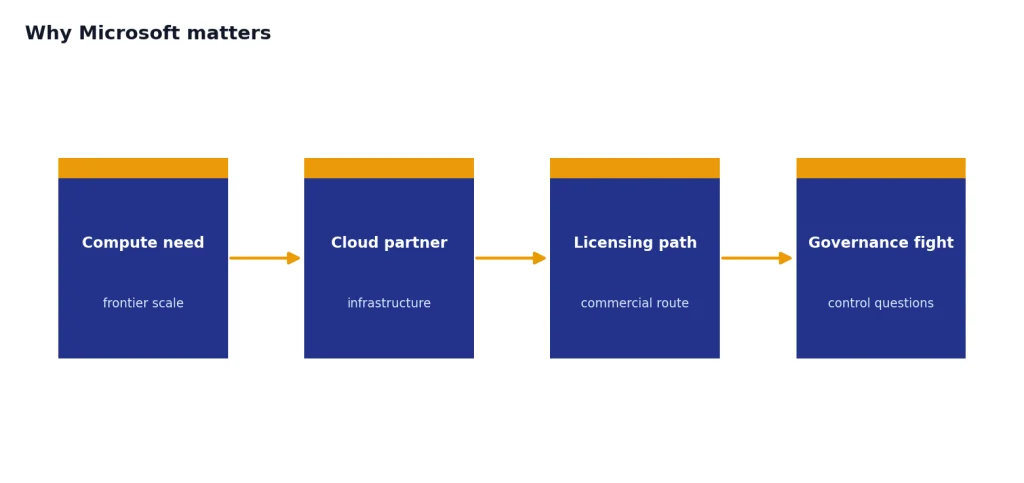
OpenAI also said in 2019 that it intended to license some pre-AGI technologies, with Microsoft as the preferred partner for commercializing them.[3] That sentence sits near the center of the feud. To OpenAI, licensing helped fund the mission. To Musk, the Microsoft relationship is evidence that OpenAI’s public-benefit commitments became subordinate to private commercial interests.
The current structure increases the stakes. OpenAI says that, under the structure announced on October 28, 2025, the nonprofit is now OpenAI Foundation, the for-profit is OpenAI Group PBC, and the Foundation continues to control the Group.[4] OpenAI also says the Foundation holds a 26% stake worth approximately $130 billion, Microsoft holds roughly 27%, and the remaining 47% is held by current and former employees and investors.[4]
Those percentages make the dispute larger than a founder argument. They define who benefits if OpenAI’s value rises, who controls the company, and how much power the nonprofit has over a commercial AI business. For a deeper look at that commercial relationship, see our OpenAI and Microsoft breakdown.
Where the case stands now
As of publication (May 2026), the federal trial is in progress in the U.S. District Court for the Northern District of California. A March 16, 2026 pretrial order set trial to begin in Courtroom 1 on April 27, 2026, with jury selection, and opening statements and evidence to begin no earlier than April 28, 2026.[8] The trial proceeded on that schedule.
The same order sets tight limits on trial presentation. It gives Musk and the OpenAI defendants 24 hours each to present their liability cases, including opening and closing arguments, and gives Microsoft 8 hours for the same scope.[8] Those limits suggest the court wants a focused trial, not a free-form history of every OpenAI grievance.
The trial is important because both sides want more than damages. Musk wants a court to validate the claim that OpenAI departed from its founding commitments. OpenAI wants a court to treat Musk’s campaign as a bad-faith attempt to slow or control a competitor. Microsoft wants to defend the legitimacy of a partnership that helped define modern AI infrastructure.
The court has already rejected Musk’s preliminary bid to stop OpenAI’s for-profit transition, but that ruling was not a final trial decision on every claim.[9] The trial will decide what remains live after years of amended pleadings, public statements, and restructuring.

What could happen next
Several outcomes are possible. The court could side substantially with OpenAI, which would weaken Musk’s legal effort and strengthen OpenAI’s claim that its current structure remains mission-aligned. The court could side with Musk on some claims, which could create pressure around governance, disclosures, licensing, or remedies. The parties could also settle, although the public tone of the dispute makes that hard to predict.
One practical issue is remedy. Even if Musk wins on some theory, the court would still need to decide what remedy fits. A money award, governance order, injunction, or declaratory ruling would have different effects. Courts often distinguish between proving that something went wrong and proving that a specific requested remedy is legally available.
The dispute also affects OpenAI’s reputation with employees, partners, regulators, and investors. OpenAI’s valuation and revenue story are now tied to questions about nonprofit control, public benefit, and commercial scale. For related context, see our guides to OpenAI valuation and OpenAI revenue.
The fight also intersects with OpenAI’s broader operating footprint. OpenAI is not just a lab. It sells consumer subscriptions, enterprise products, API access, and platform tools. That commercial reality is why the corporate structure matters to developers, businesses, and regulators.
How to read the feud
The cleanest reading is that both sides point to real pieces of history but draw opposite conclusions. Musk points to OpenAI’s nonprofit launch and public-benefit language. OpenAI points to the capital requirements of frontier AI and to emails it says show Musk understood the need for a for-profit structure.[1][5]
Readers should separate four questions. Was there an enforceable founding agreement? Did OpenAI’s later structure violate any legal duty? Did Musk’s later conduct undermine his claims? And even if a violation occurred, what remedy would a court have authority to impose? The public debate often merges these questions, but the court will not.
The feud is also a competition story. Musk’s xAI competes with OpenAI. OpenAI says that conflict matters. Musk says competition does not erase the founding promise. Both points can be true at the same time, which is why the lawsuit has become a proxy fight over how AI labs should be governed.
For ongoing updates after the trial begins, follow our OpenAI News page. For the consumer product timeline that made OpenAI a household name, see when ChatGPT was released.
Frequently asked questions
Why are Sam Altman and Elon Musk fighting?
They are fighting over OpenAI’s mission, structure, and control. Musk says OpenAI betrayed its nonprofit and open-research founding commitments. OpenAI says it evolved its structure to fund the mission and that Musk supported a for-profit approach when he expected control.
Did Elon Musk co-found OpenAI?
Yes. OpenAI’s December 11, 2015 launch post named Sam Altman and Elon Musk as co-chairs.[1] Musk later left OpenAI, and the relationship deteriorated as OpenAI pursued a capital-intensive commercial path.
What is Musk asking the court to do?
Musk’s filings challenge OpenAI’s shift from its original nonprofit framing toward its current commercial structure. The case page describes allegations involving inducement, locked-down technology, Microsoft benefits, self-dealing, and unjust enrichment.[6] The exact remedies available will depend on what claims survive and what the court finds at trial.
What does OpenAI say in response?
OpenAI says Musk is attacking the company after failing to control it. It has published emails and a timeline claiming Musk questioned the nonprofit structure in 2015, discussed a for-profit path in 2017, and demanded majority equity, absolute control, and the CEO role.[5]
When does the Musk v. Altman trial start?
The federal trial began on April 27, 2026, with jury selection, followed by opening statements and evidence starting on or after April 28, 2026, per the March 16, 2026 pretrial order.[8] As of May 2026, the trial is in progress.
Is Microsoft a defendant in the feud?
Yes, Microsoft is part of the federal case. OpenAI’s counterclaim filing says Musk’s federal action added Microsoft along with new plaintiffs and broader theories after the earlier state-court case was withdrawn.[7] Microsoft matters because of its investment, cloud role, and current ownership stake in OpenAI Group PBC.