


OpenAI history is the story of a nonprofit AI research lab that became one of the most valuable private technology companies in the world. OpenAI launched as a nonprofit research company in December 2015 with a mission to develop AI for broad human benefit.[1][2] It later created a capped-profit arm in 2019, partnered deeply with Microsoft, released ChatGPT in November 2022, and reached a $300 billion post-money valuation in March 2025.[4][8][13][14] As of March 15, 2026, OpenAI is best understood as both a frontier AI lab and a commercial platform company controlled through a nonprofit foundation and a public benefit corporation.[15][16]
Short answer: what OpenAI became
OpenAI began as a nonprofit research lab and became a hybrid AI institution: part mission-led research organization, part high-growth platform business. The key shift was not one single product. It was the combination of scaling research, commercial deployment, cloud infrastructure, and governance changes between 2015 and 2025.[1][2][15][16]
The company’s public identity still rests on the mission it described in its Charter: ensuring that artificial general intelligence benefits all of humanity.[3] Its operating reality is now shaped by product revenue, infrastructure demands, enterprise adoption, and a Microsoft partnership that has influenced the company since 2019.[5][16] For a deeper ownership view, see our guide to who owns OpenAI.
OpenAI history timeline
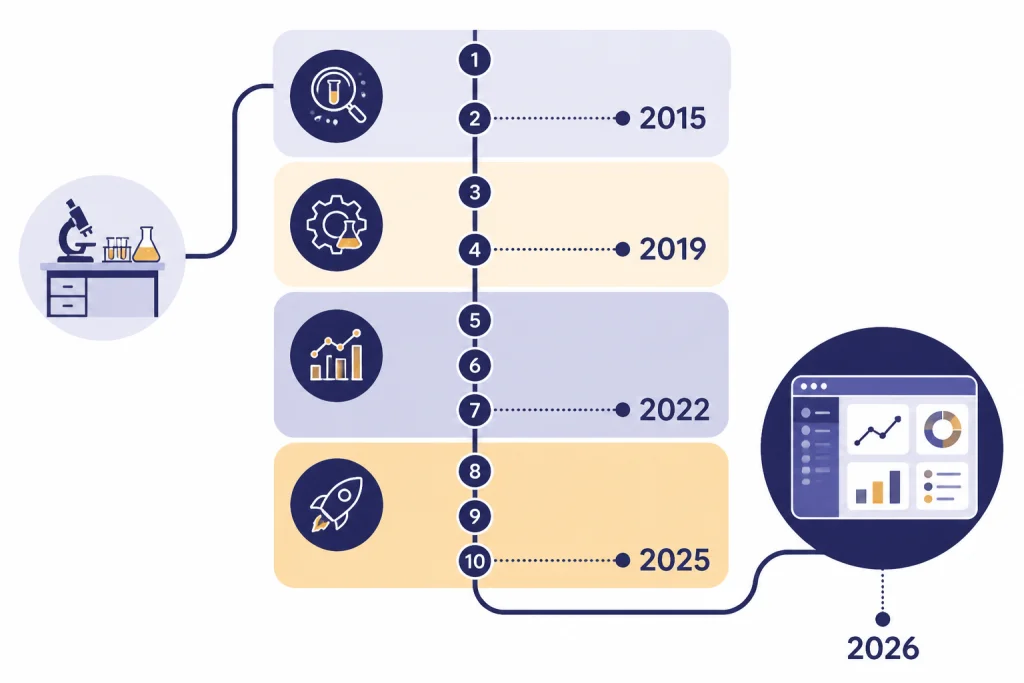
The fastest way to understand OpenAI history is to separate the company into four phases: nonprofit research, capped-profit scaling, ChatGPT-era commercialization, and the public benefit corporation era. Each phase changed the company’s incentives.
| Period | What changed | Why it mattered |
|---|---|---|
| December 2015 | OpenAI launched as a nonprofit AI research company.[1][2] | The founding model prioritized broad benefit over direct financial return. |
| April 2018 | OpenAI published its Charter, defining principles for AGI development and benefit-sharing.[3][12] | The Charter became the reference point for later debates over mission and governance. |
| March 2019 | OpenAI created OpenAI LP as a capped-profit structure.[4][11] | The company said it needed startup-like capital and compensation to scale compute-heavy research. |
| July 2019 | Microsoft invested $1 billion and became OpenAI’s exclusive cloud provider.[5][16] | OpenAI’s research path became tied to large-scale Azure infrastructure. |
| November 2022 | OpenAI released ChatGPT as a research preview.[8][9] | OpenAI moved from a company known mostly inside AI to a mainstream consumer brand. |
| March 2023 | OpenAI released GPT-4.[10][19] | The company showed that its deployment pipeline could turn frontier models into consumer and developer products. |
| November 2023 | The board removed Sam Altman, then he returned days later under a changed board.[11][12] | The episode made OpenAI’s unusual governance structure a global business story. |
| March 2025 | OpenAI announced $40 billion in funding at a $300 billion post-money valuation.[13][14] | OpenAI became a symbol of the capital intensity of frontier AI. |
| October 2025 | OpenAI completed a recapitalization into OpenAI Foundation and OpenAI Group PBC.[15][16] | The new structure formalized the split between nonprofit control and a public benefit corporation operating business. |
| March 2026 | OpenAI released GPT-5.4 in ChatGPT, the API, and Codex.[20] | The model roadmap showed OpenAI’s focus on professional work, coding, computer use, and agents. |
This timeline also explains why OpenAI is hard to classify. It is not only a lab, not only a startup, and not only a software vendor. It is a research institution that learned to ship mass-market products while raising enough capital to compete at the frontier.
The nonprofit years
OpenAI launched in December 2015 as a nonprofit artificial intelligence research company.[1][2] Early coverage emphasized the same tension that still defines the company: advanced AI might be too important to leave entirely to companies optimizing for profit, but the work requires elite talent, deep technical infrastructure, and long-term funding.[2][18]
The original idea was unusually idealistic for Silicon Valley. OpenAI said it wanted to advance digital intelligence in a way most likely to benefit humanity as a whole, without a need to generate financial return.[1] Outside coverage at launch described more than $1 billion in pledged support over time from a group that included Elon Musk, Sam Altman, Peter Thiel, Reid Hoffman, Jessica Livingston, Amazon Web Services, Infosys, and YC Research.[2][18]
Those first years were not defined by ChatGPT. They were defined by research, hiring, and a public commitment to openness. The company’s early philosophy helps explain why later choices became controversial. When a group starts with a nonprofit mission and public-benefit language, later moves toward restricted model releases, enterprise sales, and large investor stakes invite scrutiny.
OpenAI’s Charter, published in April 2018, gave that philosophy a more formal shape.[3][12] It framed AGI as a technology that could affect humanity broadly and said OpenAI’s primary fiduciary duty was to humanity. That language became important later, especially when critics argued that the company’s commercial needs were pulling it away from its founding purpose.
For readers tracking the people behind this period, our Sam Altman biography explains how Altman moved from Y Combinator into OpenAI’s central leadership role.
Why OpenAI created a capped-profit arm
OpenAI’s first major structural turn came in March 2019, when it created OpenAI LP.[4][11] The company said the reason was compute. Frontier AI research was becoming expensive enough that donations alone could not support the scale of cloud infrastructure, talent compensation, and model training it expected to need.[4]
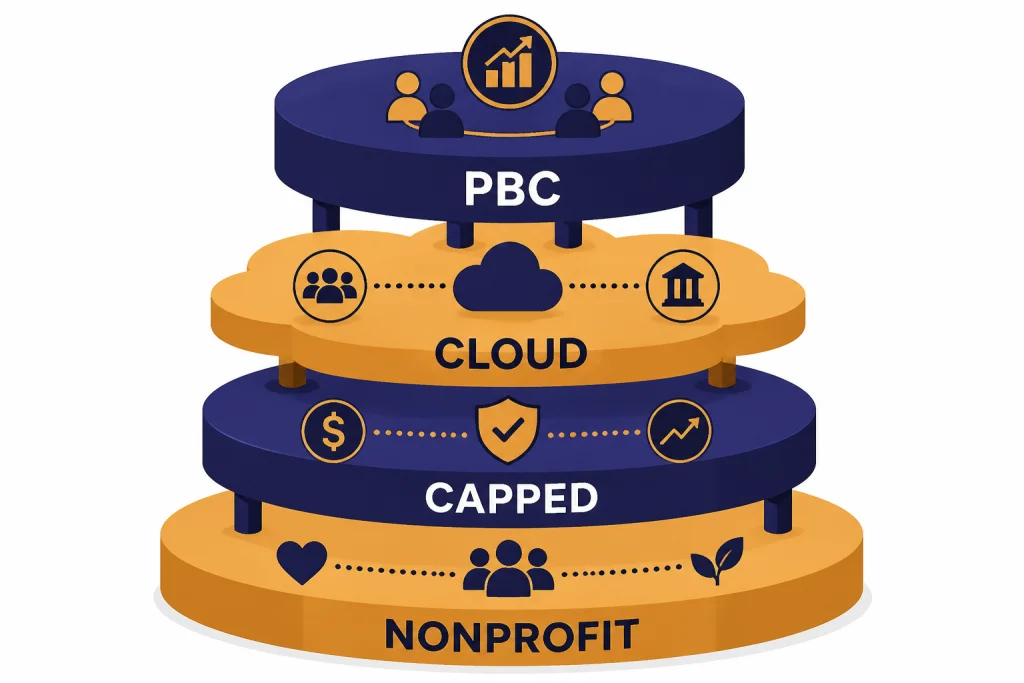
The phrase “capped-profit” matters. OpenAI said investors and employees could earn a capped return, while value beyond that cap would belong to the original nonprofit entity.[4] In theory, this structure tried to solve a hard problem: attract capital like a startup without becoming a conventional startup. In practice, it introduced a permanent tension between mission language and investor expectations.
Microsoft’s July 2019 investment made the capital question much more concrete.[5][16] OpenAI said Microsoft was investing $1 billion and that the two companies would build Azure AI supercomputing technologies, with Microsoft becoming OpenAI’s exclusive cloud provider.[5] That partnership is important enough that we cover it separately in our OpenAI and Microsoft breakdown.
The move changed OpenAI’s trajectory. Before the Microsoft partnership, OpenAI looked like a research lab trying to prove that open-ended AI research could be mission-governed. After the partnership, it looked like a frontier model company building on industrial-scale cloud infrastructure.
| Structure | Capital model | Main tradeoff |
|---|---|---|
| Original nonprofit | Donations and pledged support after the 2015 launch.[1][2] | Strong mission framing, but limited ability to match private-sector compensation and compute spending. |
| OpenAI LP capped-profit | Investor and employee returns were capped under the 2019 structure.[4][11] | More capital access, but harder public messaging around profit and mission. |
| Microsoft cloud partnership | Microsoft invested $1 billion in 2019 and supplied Azure infrastructure.[5][16] | Massive compute support, but tighter dependence on one strategic partner. |
| OpenAI Group PBC | The 2025 recapitalization created a public benefit corporation controlled by OpenAI Foundation.[15][16] | More conventional equity economics, but continued debate over nonprofit control and commercial power. |
ChatGPT changed the company
OpenAI had shipped important research before ChatGPT. GPT-2, announced in February 2019, became a defining example of staged release because OpenAI initially withheld the full 1.5 billion-parameter model over misuse concerns.[6] The OpenAI API, launched in June 2020, turned model access into a developer product rather than a traditional downloadable research artifact.[7]
ChatGPT changed the scale of public attention. OpenAI introduced ChatGPT on November 30, 2022, as a research release that could answer follow-up questions, admit mistakes, challenge incorrect premises, and reject some inappropriate requests.[8][9] Reuters later reported, citing a UBS study, that ChatGPT was estimated to have reached 100 million monthly active users in January 2023, about two months after launch.[9]
That adoption curve gave OpenAI leverage and pressure at the same time. It validated conversational AI as a consumer product. It also forced the company to handle safety, moderation, subscriptions, reliability, enterprise demand, and developer expectations at internet scale. If you want the narrow release chronology, see our separate guide to when ChatGPT was released.

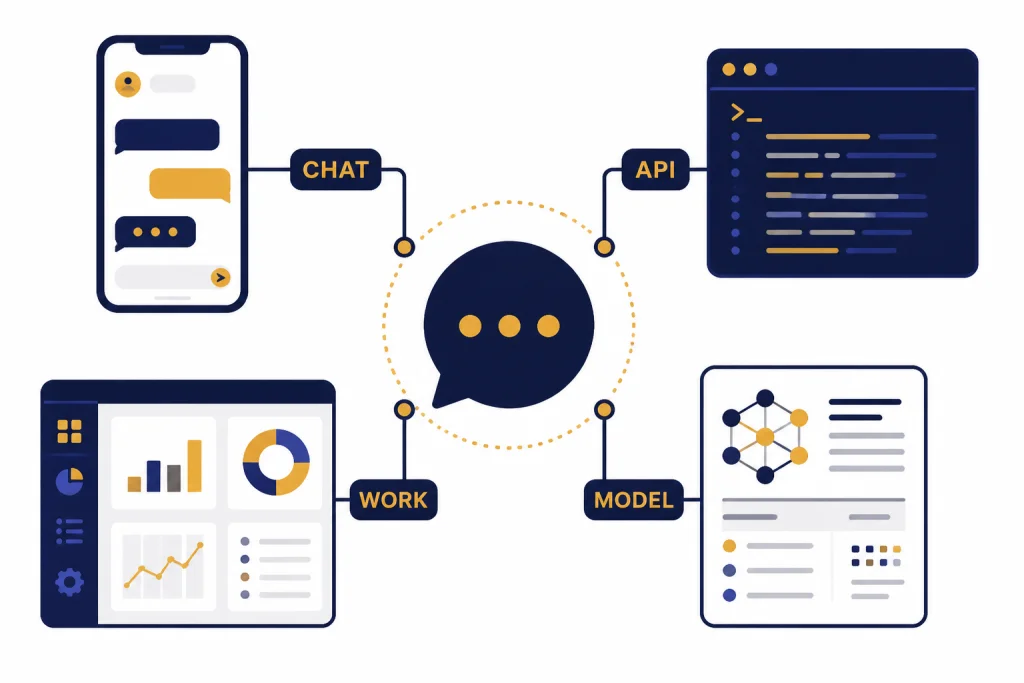
GPT-4, released in March 2023, deepened the shift from research demo to platform.[10][19] OpenAI described GPT-4 as a large multimodal model that accepted image and text inputs and produced text outputs, and it released GPT-4 in ChatGPT and the API.[10] Later releases such as GPT-5 in August 2025 and GPT-5.4 in March 2026 show how the product line kept moving toward unified model routing, coding, agent workflows, and professional work.[19][20] Developers comparing current usage costs should use our OpenAI API pricing guide.
By March 2025, OpenAI said new funding would support tools for 500 million people using ChatGPT every week.[13][14] That number explains why the company’s history now belongs in both AI research and consumer internet history.
The governance crisis and what it exposed
The most dramatic governance moment in OpenAI history came in November 2023.[11][12] OpenAI announced on November 17, 2023, that Sam Altman would depart as CEO and that CTO Mira Murati would serve as interim CEO.[11][12] Days later, OpenAI said Altman would return, and outside coverage reported that the board would be partly restructured.[12]
The episode mattered because it revealed how unusual OpenAI’s structure was. A nonprofit board had authority over a company with massive commercial relationships, a widely used consumer product, and strategic importance to Microsoft. The board’s action was formally possible because of the mission-first governance design; the backlash showed how much the company had already become systemically important to employees, partners, customers, and investors.
It also sharpened the public debate around OpenAI’s leaders. Readers following the executive side can start with our overview of OpenAI’s CTO and leadership team. Readers following the long-running founder conflict should see our guide to Sam Altman vs Elon Musk.
The Musk dispute is part of the same governance story. In March 2024, Elon Musk sued OpenAI, Sam Altman, Greg Brockman, and affiliated entities, alleging a betrayal of the nonprofit mission.[17][18] OpenAI disputed Musk’s framing, and the legal fight became a proxy for a bigger question: whether OpenAI’s later commercial structures were a practical necessity or a departure from its founding promise.
The public benefit corporation era
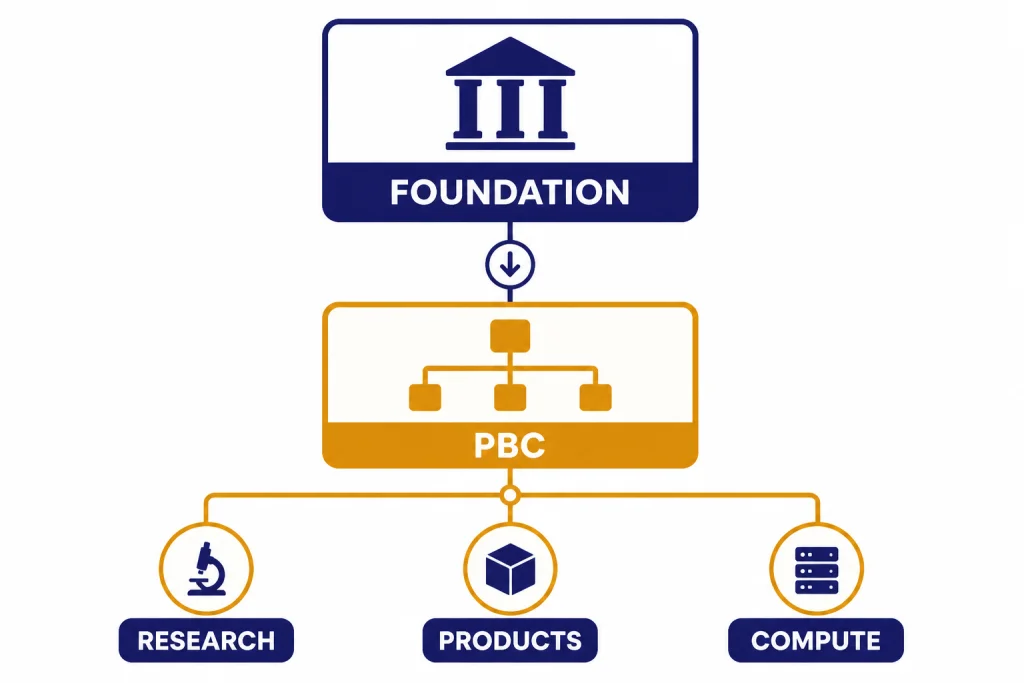
OpenAI’s 2025 recapitalization created the structure that defines the company as of March 15, 2026. OpenAI said the nonprofit became OpenAI Foundation and the for-profit business became OpenAI Group PBC, a public benefit corporation controlled by the foundation.[15][16]
The Microsoft relationship also changed. OpenAI and Microsoft said that after the recapitalization, Microsoft held an investment in OpenAI Group PBC valued at approximately $135 billion, representing roughly 27 percent on an as-converted diluted basis.[16][21] GeekWire also reported that OpenAI had contracted to purchase an incremental $250 billion in Microsoft Azure cloud services under the revised arrangement.[21] For technical buyers, the related cloud decision is covered in our Azure OpenAI Service vs OpenAI API guide.
The new structure did not end controversy. It clarified the corporate wrapper but did not remove the central tension. OpenAI still says its mission is broad human benefit. It also operates a high-revenue, high-cost, capital-intensive platform in one of the most competitive sectors in technology.
The company’s March 2025 funding announcement made that tension visible in numbers: $40 billion in new funding at a $300 billion post-money valuation.[13][14] That valuation belongs in context, not as a simple scoreboard. It reflects investor belief in OpenAI’s future revenue, but also the extreme cost of training, serving, and improving frontier models. For financial detail, see our guides to OpenAI valuation and OpenAI revenue.
Analysis: the pattern behind OpenAI’s growth
The pattern in OpenAI history is escalation. Each breakthrough created the need for a larger structure. The nonprofit needed more compute. The capped-profit arm needed a cloud partner. The Microsoft partnership helped enable large model deployment. ChatGPT created consumer scale. Consumer scale attracted enterprise demand, political scrutiny, lawsuits, and a valuation that required a more conventional capitalization model.
This is the OpenAI flywheel: research credibility leads to better models; better models lead to useful products; useful products create usage data, revenue, and strategic importance; strategic importance attracts capital; capital buys compute and talent; compute and talent support the next model. The flywheel is powerful, but it is not free. It increases dependence on infrastructure, raises governance stakes, and makes every safety decision more public.
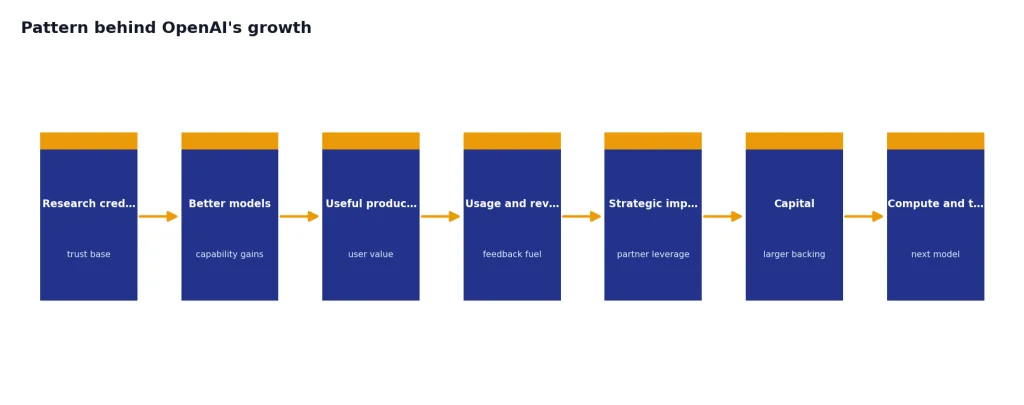
The central tradeoff is mission control versus capital access. A pure nonprofit can hold a clearer public-interest posture, but it may struggle to fund frontier-scale AI. A conventional company can raise capital more easily, but it risks optimizing for growth and investor return. OpenAI’s structures since 2019 have tried to occupy the middle, first with capped profit and later with a public benefit corporation controlled by a foundation.[4][15][16]

Whether that middle position works is the unresolved question. OpenAI’s history shows that governance design is not a side issue. It shapes who can make decisions, how conflicts get resolved, and how much trust the public places in the company when its models become more capable. To track current developments after this history, use our OpenAI News page.
Frequently asked questions
When was OpenAI founded?
OpenAI was publicly announced in December 2015 as a nonprofit artificial intelligence research company.[1][2] Its stated goal was to advance digital intelligence for broad human benefit, not to maximize financial return.[1] That founding mission still shapes debates about the company’s later commercial structures.
Why did OpenAI stop being a pure nonprofit?
OpenAI created OpenAI LP in March 2019 because it said frontier AI research required far more capital for compute, talent, and supercomputing than the nonprofit model could easily support.[4][11] The capped-profit model let investors and employees receive limited returns.[4] OpenAI argued that this preserved mission control while allowing the company to scale.
What role did Microsoft play in OpenAI history?
Microsoft became central in July 2019 with a $1 billion investment and an Azure cloud partnership.[5][16] The relationship later expanded into a broad commercial and infrastructure alliance. After the 2025 recapitalization, Microsoft’s investment in OpenAI Group PBC was valued at approximately $135 billion, representing roughly 27 percent on an as-converted diluted basis.[16][21]
Why was ChatGPT such a turning point?
ChatGPT launched on November 30, 2022, and moved OpenAI from a research-focused company into mainstream consumer use.[8][9] Reuters reported that ChatGPT was estimated to have reached 100 million monthly active users in January 2023, about two months after launch.[9] That growth made OpenAI a household name and accelerated demand for subscriptions, enterprise products, and API access.
What happened with Sam Altman in 2023?
OpenAI announced on November 17, 2023, that Sam Altman would depart as CEO and that Mira Murati would serve as interim CEO.[11][12] Days later, Altman returned as CEO under a changed board arrangement reported by multiple outlets.[12] The episode exposed the tension between nonprofit board control and the commercial reality of a fast-growing AI platform.
Is OpenAI still controlled by a nonprofit?
As of March 15, 2026, OpenAI says OpenAI Foundation controls OpenAI Group PBC.[15][16] The 2025 recapitalization changed the for-profit business into a public benefit corporation.[15][16] That means OpenAI is no longer a simple nonprofit lab, but the company says nonprofit control remains central to its structure.
What is the latest major OpenAI model in this history?
As of the March 15, 2026 publication date of this article, the latest major model release covered here is GPT-5.4, which OpenAI released on March 5, 2026.[20] OpenAI said GPT-5.4 was released in ChatGPT, the API, and Codex.[20] The release emphasized professional work, coding, agentic workflows, computer use, and longer-context capabilities.[20]
Bottom line
OpenAI’s history is not a straight line from nonprofit purity to commercial scale. It is a series of attempts to reconcile a public-benefit mission with the cost and competitive pressure of building frontier AI systems.
The next chapter will depend on whether OpenAI can keep that balance credible. Watch the foundation’s control rights, Microsoft’s role, model safety decisions, enterprise revenue, and the pace of agent products such as Codex and computer-use systems.