
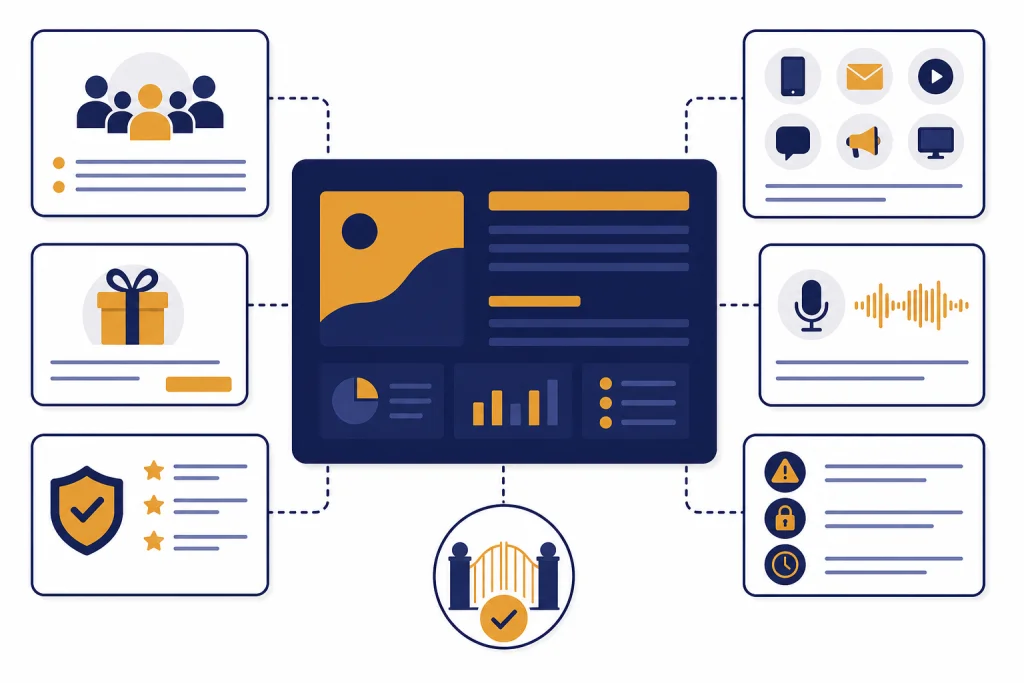
ChatGPT marketing prompts work best when they give the model a campaign goal, audience, offer, channel, brand voice, constraints, and review standard. The prompts below are built for real campaign work: strategy, positioning, email, paid ads, social media, landing pages, content repurposing, testing, and reporting. Use them as starting templates, then add your own customer research, product proof, offer details, and channel rules. Do not ask ChatGPT to invent claims, testimonials, statistics, guarantees, or legal disclosures. Treat it as a drafting and planning assistant, not as the final approver for your brand, compliance, or performance data.
How to use these ChatGPT marketing prompts
A strong marketing prompt is a brief, not a magic phrase. It tells ChatGPT what you are selling, who the campaign is for, what the audience already believes, what action you want, and what the output must avoid. OpenAI’s prompt guidance recommends clear instructions, useful examples, and concrete output requirements instead of vague requests.[1]
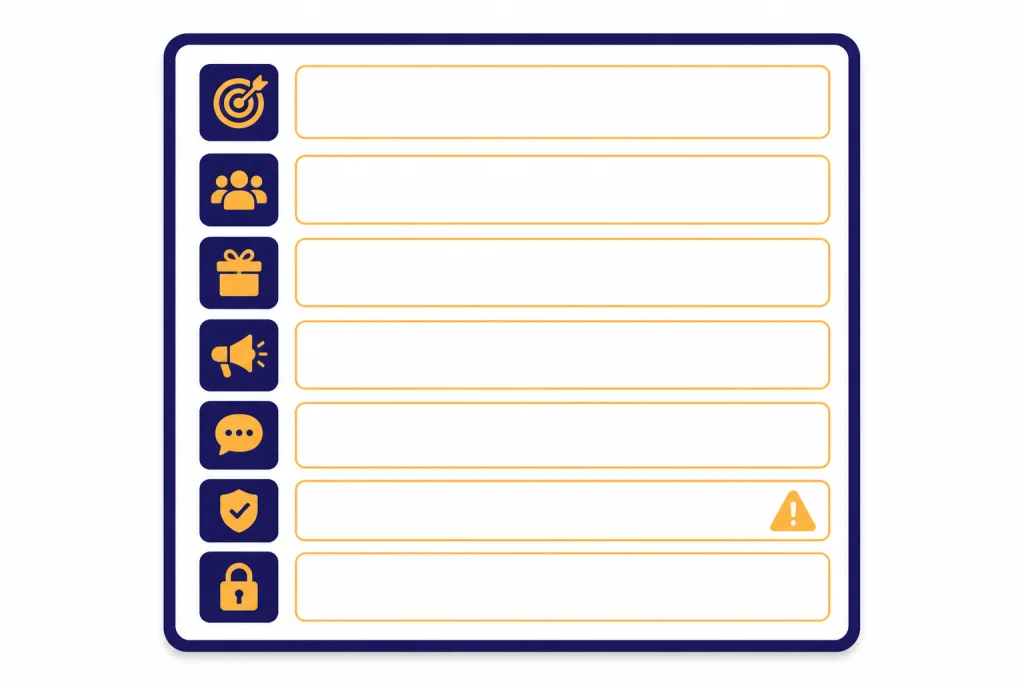
For campaign work, start with a reusable prompt structure. Paste the template below, then fill in the brackets with your product details. If you already use a swipe file or prompt system, pair this article with our chatgpt prompt generator to turn your best prompts into a repeatable library.
Act as a senior marketing strategist for [company].

Campaign goal: [primary business goal]
Audience: [specific segment]
Offer: [product, service, promotion, or content asset]
Channel: [email, paid search, paid social, landing page, organic social, webinar, etc.]
Brand voice: [plainspoken, technical, premium, playful, direct, etc.]
Proof available: [case study, customer quote, benchmark, feature list, demo, research, guarantee]
Constraints: [claims to avoid, compliance rules, words to avoid, length, format]

Create [deliverable]. Use only the proof provided. If information is missing, list the missing inputs before drafting.
The last sentence matters. It prevents the model from filling gaps with unsupported claims. You want ChatGPT to ask for missing proof instead of inventing proof. That is especially important for marketing teams in finance, health, education, employment, software, and any category where claims can create legal or trust risk.
Use this simple sequence for most campaigns:
- Brief first. Ask for the audience, offer, pain points, proof, objections, and desired action.
- Draft second. Generate variations only after the brief is clear.
- Critique third. Ask ChatGPT to review the draft against your constraints.
- Human edit last. Verify claims, improve taste, and check channel policy before publishing.
Campaign strategy prompts
Use strategy prompts before copy prompts. They help you turn a rough idea into a campaign plan with audience segments, messages, offers, channels, and measurement points. HubSpot’s marketing trend reporting for twenty twenty-six emphasizes AI-personalized content, automation, values-led content, search changes, and cross-channel repurposing as major priorities for marketers.[6] Your prompts should reflect that reality: ask for channel-specific work, not generic copy.
Campaign brief prompt
Act as a campaign strategist. Build a campaign brief for [product or offer].

Use this context:
Audience: [describe buyer]
Problem: [problem the buyer wants solved]
Current belief: [what the buyer probably believes now]
Desired belief: [what we want them to believe after the campaign]
Primary action: [book a demo, start trial, download guide, buy, reply, register]
Proof: [approved proof points]
Channels: [channels]
Deadline: [launch date]

Return a brief with: campaign promise, audience insight, offer angle, message pillars, channel roles, creative concept, assets needed, risks, and approval questions.
Positioning angle prompt
Generate positioning angles for [product] aimed at [audience].

Use only these differentiators: [list differentiators].
Use only these proof points: [list proof].
Avoid these claims: [list claims].

For each angle, include: main promise, emotional driver, rational proof, objection it handles, best channel fit, and one sample headline.
Audience objection prompt
Act as a skeptical buyer in [audience segment]. Review this campaign idea: [paste idea].

List the objections that would stop you from taking action. Separate them into: trust objections, price objections, timing objections, product-fit objections, and proof objections. Then suggest copy or assets that could address each objection without exaggerating.
These prompts are useful for founders, solo marketers, and agencies. For a broader operating view beyond campaign copy, see ChatGPT Business Prompts for Owners. If your campaign hands off to a revenue team, connect the messaging to ChatGPT Sales Prompts for Closers so follow-up emails and sales calls do not drift away from the campaign promise.
Copy-paste marketing prompt library
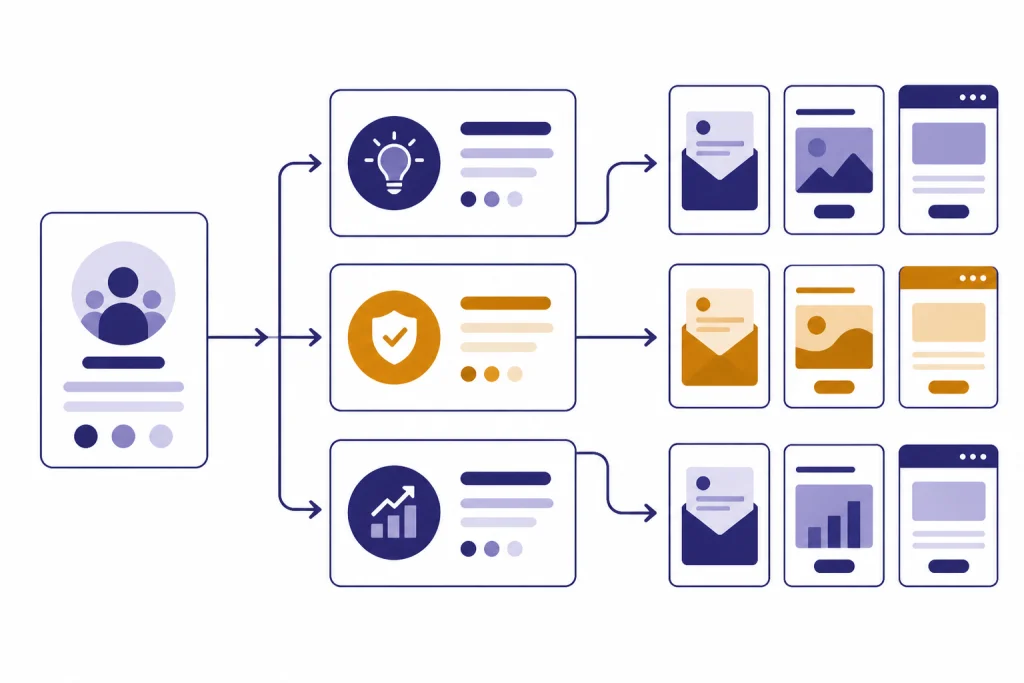
This library is organized by campaign task. Do not use every prompt in one sitting. Pick the prompt that matches the next decision you need to make.
| Campaign task | Best prompt type | Use it when | Human review focus |
|---|---|---|---|
| Audience research | Interview synthesis | You have survey notes, call transcripts, or reviews | Whether the model preserved the real customer language |
| Positioning | Message matrix | You need different angles for different segments | Whether each angle uses approved proof |
| Campaign planning | Brief builder | You need a launch plan before writing assets | Whether the plan matches team capacity |
| Creative copy | Variant generator | You need headlines, hooks, email copy, or ad copy | Whether the copy is specific and true |
| Optimization | Experiment planner | You need a test hypothesis and measurement plan | Whether the test can actually isolate a variable |
| Reporting | Insight summarizer | You have campaign results and need next steps | Whether the conclusion follows the data |
Customer research synthesis
Analyze these customer notes for campaign messaging: [paste notes].

Extract recurring pains, desired outcomes, exact phrases customers use, objections, buying triggers, and moments of urgency. Do not add themes that are not present in the notes. Return a concise messaging summary and a list of quotes worth reusing after approval.
Message matrix
Create a message matrix for [campaign].

Segments: [segment list]
Offer: [offer]
Proof: [approved proof]
Brand voice: [voice]

For each segment, provide: pain point, desired outcome, primary promise, supporting proof, likely objection, response to objection, headline direction, and call to action.
Campaign concept generator
Generate campaign concepts for [offer] targeting [audience].

Each concept must include a campaign name, central idea, emotional hook, rational hook, sample headline, sample visual direction, best-fit channels, and why the concept should work. Avoid puns unless they are natural for the brand voice.
Landing page outline
Build a landing page outline for [offer].

Audience: [audience]
Traffic source: [source]
Awareness level: [unaware, problem-aware, solution-aware, product-aware, most-aware]
Proof available: [proof]
Primary action: [CTA]

Return sections in order. For each section, include the job of the section, draft copy, proof needed, and possible friction point.
Email nurture sequence
Create an email nurture sequence for [campaign].

Audience: [audience]
Trigger: [why they entered the sequence]
Offer: [offer]
Objections: [objections]
Proof: [proof]
Tone: [tone]

For each email, provide subject line options, preview text, goal, body copy, CTA, and the buyer belief it should move forward.
Ad copy variations
Write paid ad copy variations for [platform] promoting [offer].

Audience: [audience]
Angle: [angle]
Proof: [proof]
Forbidden claims: [claims to avoid]
Landing page promise: [promise]

Return distinct versions by angle: problem-aware, outcome-led, proof-led, objection-led, and urgency-led. Keep the claims conservative and specific.
Creative testing plan
Create a creative testing plan for [campaign].

Current hypothesis: [hypothesis]
Audience: [audience]
Offer: [offer]
Channels: [channels]
Available assets: [assets]
Metric we care about most: [metric]

Return test themes, sample copy differences, visual differences, what each test teaches, and what result would justify scaling.
For campaign spreadsheets, exports, and performance summaries, combine these prompts with ChatGPT Excel Prompts for Power Users. For platform-native captions and short-form planning, use chatgpt social media prompts for every platform alongside the channel prompts below.

Prompts by marketing channel
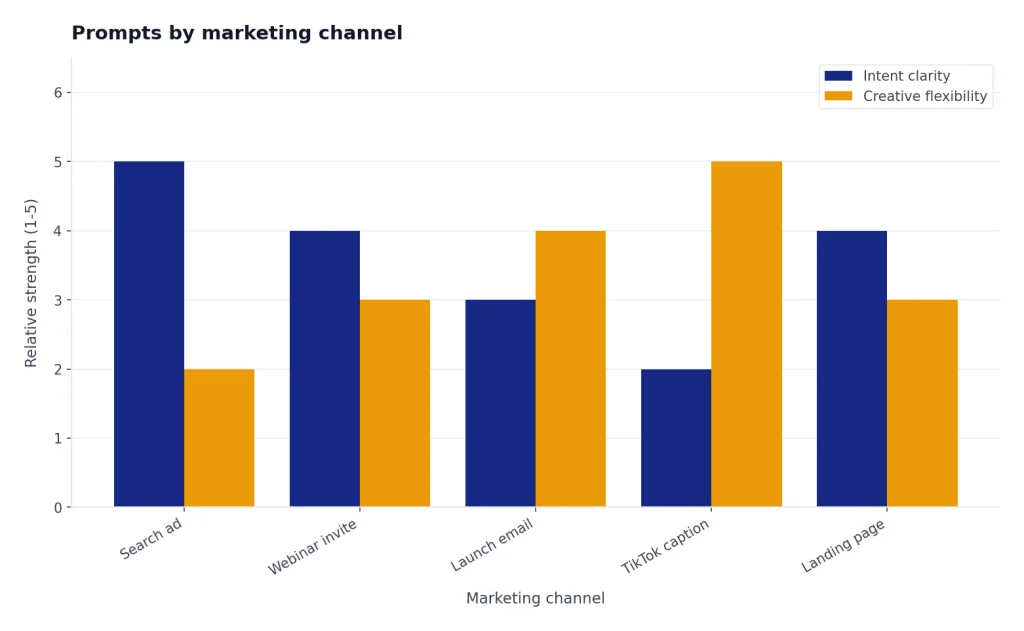
Marketing copy fails when it ignores the channel. A search ad, webinar invite, product launch email, and TikTok caption should not sound like the same asset in different boxes. Use these prompts to force ChatGPT to adapt structure, intent, and call to action.
Search campaign prompt
Act as a paid search strategist. Create search ad copy for [offer].

Search intent: [intent]
Keywords: [keywords]
Landing page promise: [promise]
Audience: [audience]
Proof: [proof]
Disallowed claims: [claims]

Return tightly matched ad groups, headline ideas, description ideas, sitelink ideas, callout ideas, and negative keyword themes to review.
Paid social hook prompt
Write paid social hooks for [platform] for [audience].

Campaign angle: [angle]
Offer: [offer]
Audience pain: [pain]
Proof: [proof]
Visual asset available: [describe asset]

Create hooks in these styles: direct pain, contrarian belief, before-and-after, objection, proof-led, and curiosity. Do not use clickbait or claims we cannot prove.
Organic social repurposing prompt
Repurpose this campaign asset into organic social posts: [paste asset].

Platforms: [platforms]
Audience: [audience]
Voice: [voice]
Goal: [goal]

Create platform-specific posts with different openings, not recycled intros. For each post, include the purpose, draft copy, CTA, and one idea for a supporting visual.
SEO campaign prompt
Build an SEO content plan that supports [campaign].

Product: [product]
Audience: [audience]
Campaign offer: [offer]
Core topic: [topic]
Buyer questions: [questions]
Competitor alternatives: [alternatives]

Return topic clusters, search intent, suggested article angles, internal linking ideas, lead magnet placements, and conversion paths.
Localization prompt
If you market across regions, do not only translate words. Ask for cultural and regulatory review notes. For language-specific work, start with chatgpt translation prompts for quality output, then adapt this campaign prompt.
Adapt this campaign copy for [market or language]: [paste copy].

Audience: [audience]
Local market context: [context]
Tone to preserve: [tone]
Terms to keep unchanged: [terms]
Claims that must remain exact: [claims]

Return localized copy, phrases that may not translate well, cultural risk notes, and questions for a native reviewer.
Image prompt for ad concepts
When you use ChatGPT to brainstorm visual concepts, keep the prompt focused on layout, metaphor, product context, and brand-safe constraints. Then review the output against platform rules and your brand standards. For more visual prompting patterns, see Best ChatGPT Image Prompts.
Create visual concept directions for an ad promoting [offer].

Audience: [audience]
Campaign promise: [promise]
Brand style: [style]
Do show: [approved objects, product context, scene types]
Do not show: [restricted people, logos, claims, sensitive content]

Return visual concepts with composition, focal object, emotion, color direction, and copy overlay idea. Do not create final claims or imply results we cannot prove.
A safer workflow for AI-assisted campaigns
The best use of ChatGPT in marketing is not one giant prompt that produces a finished campaign. It is a workflow with checkpoints. ChatGPT drafts, reframes, critiques, and summarizes. Humans approve claims, strategy, taste, and policy fit.
Use this review prompt after any major output:
Review this campaign asset before publication: [paste asset].

Check it against these standards:
Brand voice: [voice rules]
Approved proof: [proof]
Claims to avoid: [claims]
Compliance notes: [notes]
Audience sensitivity: [notes]
Channel: [channel]

Return: unsupported claims, vague claims, missing proof, tone issues, possible policy risks, stronger alternatives, and questions for the human reviewer.
Then use a second prompt to improve the asset without changing the strategy:
Revise the campaign asset using the review notes below.

Asset: [paste asset]
Review notes: [paste notes]

Keep the same audience, offer, and CTA. Improve clarity, specificity, and credibility. Remove or soften unsupported claims. Return a revised version and a change log.
This workflow also helps teams collaborate. A strategist can create the brief, a copywriter can generate variations, a channel owner can adapt the copy, and a reviewer can run the risk check. If the campaign leads to support conversations, align the promise with ChatGPT Customer Service Prompts and Templates so the post-click experience matches the ad.
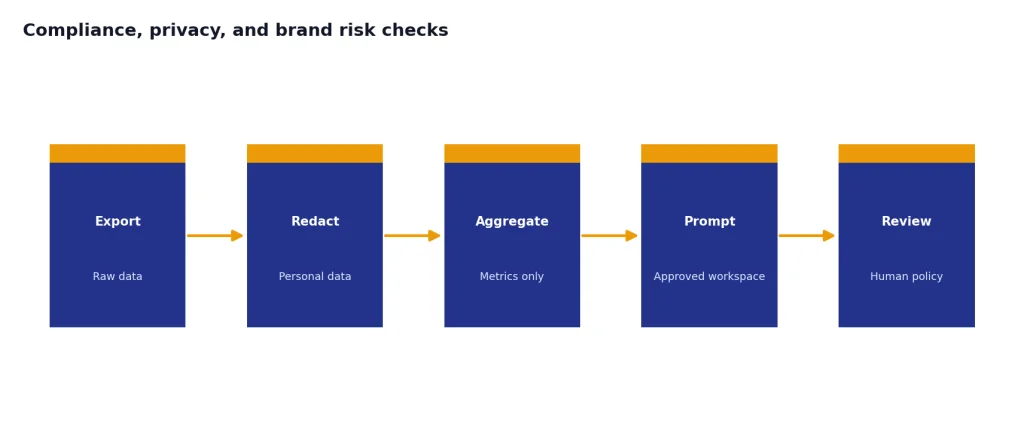
For campaign reporting, give ChatGPT real numbers only after removing sensitive customer data that your organization should not paste into a chat. Ask it to separate observations from recommendations:
Analyze this campaign performance summary: [paste anonymized results].

Campaign goal: [goal]
Channels: [channels]
Audience: [audience]
Assets tested: [assets]

Separate the answer into: what happened, what likely caused it, what we cannot conclude, what to test next, and what to stop doing. Do not imply causation unless the data supports it.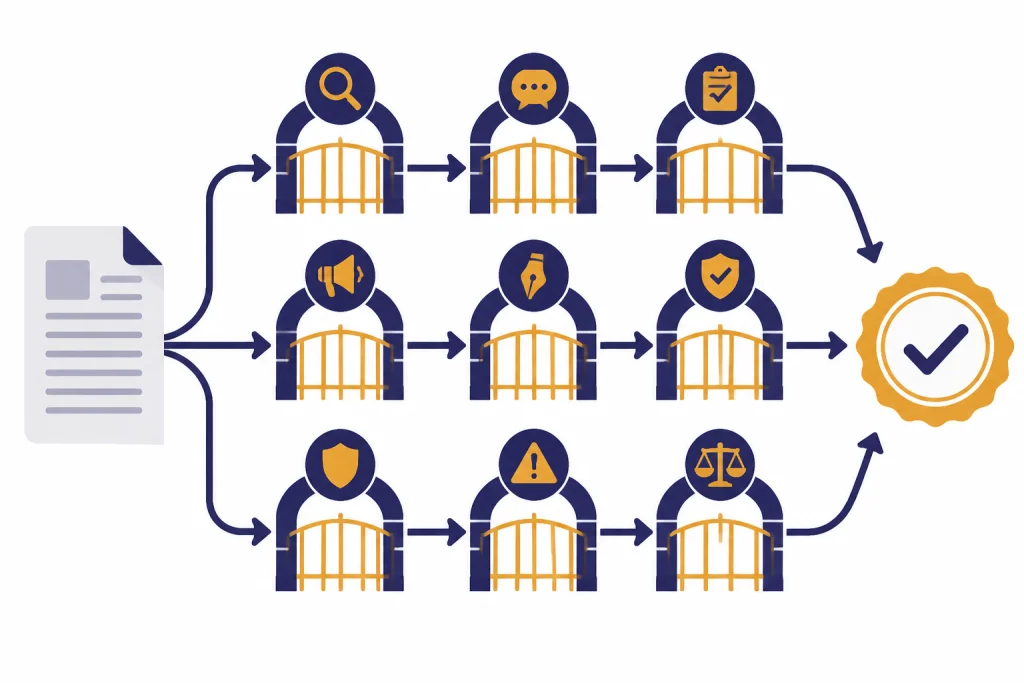
Compliance, privacy, and brand risk checks
AI-assisted marketing still has to follow the same rules as other marketing. Google Ads says advertising content is subject to Ads Policy regardless of how it is created, and that generative AI content is held to the same content standards, reviews, and enforcement for policy violations.[3] Meta says it labels ads created or significantly edited with its in-house generative AI creative features under specified conditions, including significant edits or AI-generated photorealistic humans.[4]
The FTC has also warned that AI tools can be used behind the screen to create or spread deception, including synthetic media, fake profiles, deepfakes, and misleading advertising contexts.[5] For practical campaign work, that means you should never use ChatGPT to fabricate reviews, invent customer quotes, impersonate real people, create fake scarcity, exaggerate performance, or imply a result that your proof does not support.
Privacy matters too. OpenAI says it does not use data from ChatGPT Enterprise, ChatGPT Business, ChatGPT Edu, ChatGPT for Healthcare, ChatGPT for Teachers, or the API platform for training or improving models by default, including inputs and outputs.[2] That does not mean every marketing team can paste confidential customer data into any account or workspace. Follow your company policy, remove personal data when possible, and use approved workspaces for business material.
Pre-publication checklist prompt
Act as a cautious marketing reviewer. Review this asset: [paste asset].

Flag anything that may be:
- Unsupported by the proof provided
- Too absolute or guaranteed
- Potentially misleading to a reasonable buyer
- Inconsistent with the landing page
- Risky for the channel policy
- Too similar to a competitor claim
- Dependent on private customer information

Return a table with issue, why it matters, safer rewrite, and whether a human expert should review it.
Use extra caution for legal, medical, financial, employment, housing, and regulated claims. If your marketing touches legal services or legal content, start with ChatGPT Legal Prompts for safer framing. If your campaign supports recruiting or employee communications, connect it with chatgpt hr prompts for hiring and onboarding.
The safest rule is simple. ChatGPT can help you express a true claim more clearly. It should not decide whether the claim is true.
Frequently asked questions
What is the best ChatGPT prompt for marketing campaigns?
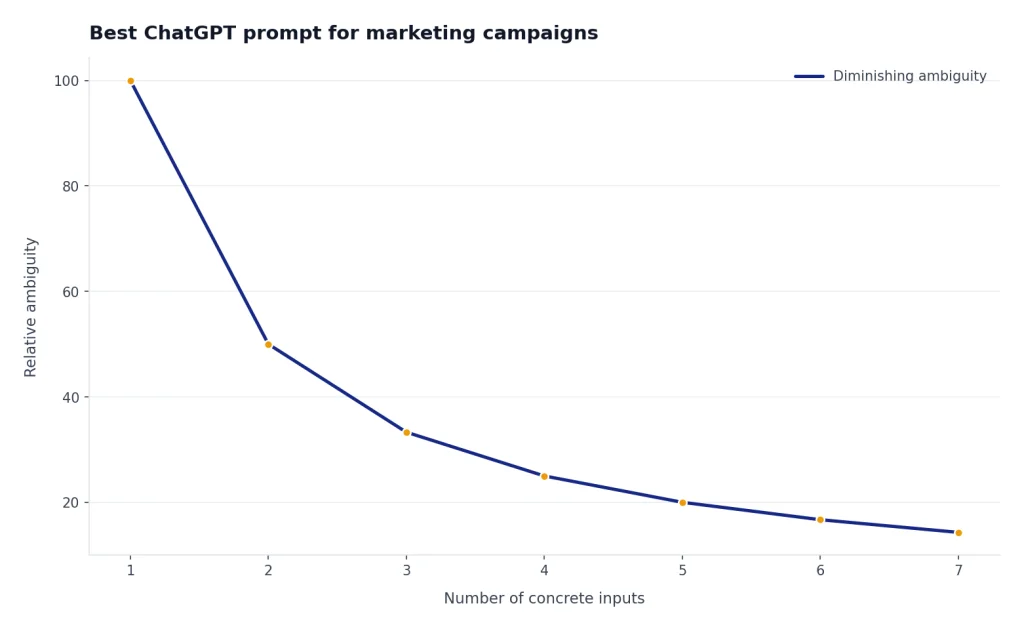
The best prompt gives ChatGPT a campaign goal, audience, offer, channel, brand voice, approved proof, and constraints. A strong version also asks the model to list missing information before drafting. That helps prevent generic copy and unsupported claims.
Can ChatGPT write a full marketing campaign?
ChatGPT can draft a campaign brief, message matrix, email sequence, ad variations, landing page outline, and reporting summary. It should not be the final decision-maker. A human still needs to approve strategy, claims, customer fit, legal risk, and channel compliance.
How do I make ChatGPT marketing copy sound less generic?
Feed it real inputs: customer language, product proof, objections, sales call notes, review snippets, and brand voice examples. Ask it to preserve specific phrases from your research and to avoid broad filler such as “save time,” “grow faster,” or “unlock potential” unless those claims are backed by real context.
Should I use ChatGPT for paid ads?
Yes, but use it for drafts, angles, hooks, and test planning. Review the output against the ad platform’s rules before publishing. Paid ads need extra care because short copy can easily imply guarantees, restricted claims, or misleading urgency.
Can I paste customer data into ChatGPT for campaign analysis?
Only paste data that your organization allows you to use in the workspace you are using. Remove names, email addresses, phone numbers, account details, and other personal or confidential information when possible. If you work in a regulated industry, follow your company’s approved AI and data-handling policy.
How should agencies use these prompts with clients?
Agencies should turn the prompts into a repeatable intake and review process. Ask clients for approved proof, prohibited claims, brand voice examples, compliance notes, and target audience details before generating copy. Send AI-assisted drafts through the same approval process as human-written campaign assets.