

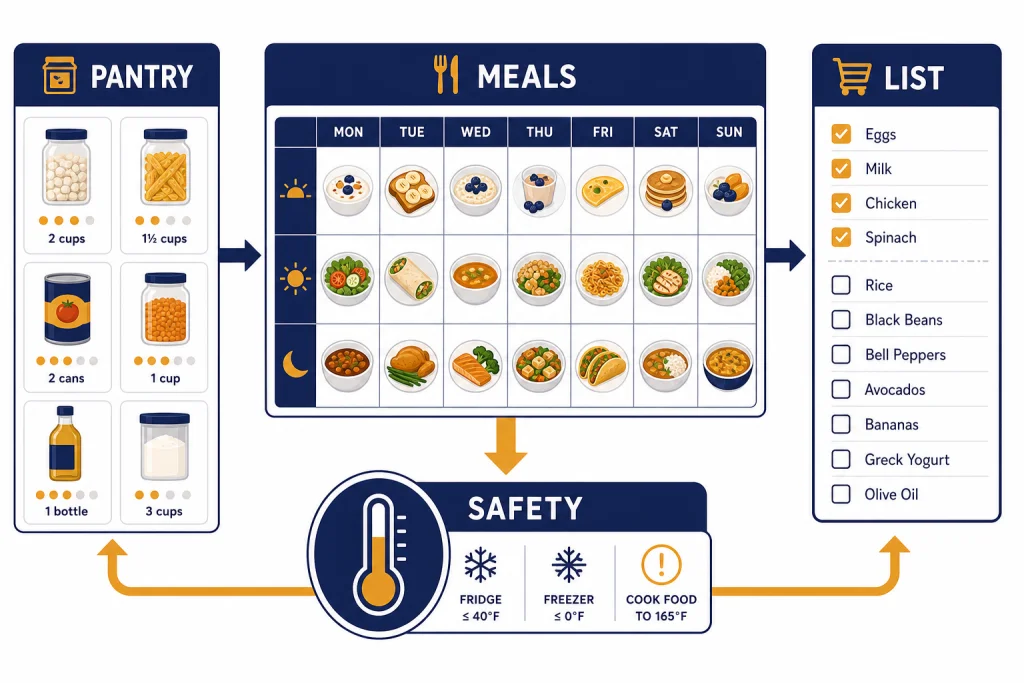
ChatGPT can be a useful cooking assistant when you treat it as a planner, recipe improver, and kitchen organizer rather than an authority. It can turn pantry items into dinner ideas, build meal plans, group grocery lists, scale recipes, suggest substitutions, and help you think through timing. OpenAI lists cooking, grocery shopping, meal prep, recipe scaling, budget meal plans, and food safety questions as common ChatGPT cooking uses.[1] The safe workflow is simple: give it your real constraints, ask for a practical output, verify temperatures and health-sensitive advice, then adjust the plan after you cook.
What ChatGPT can do in the kitchen
ChatGPT for cooking works best when you need a thinking partner before you start cooking. It is strongest at turning messy inputs into a usable plan. Give it a refrigerator list, a time limit, a skill level, a budget, and the tools you own. Ask it to produce meals, steps, substitutions, and a shopping list.
OpenAI’s own cooking use-case page includes examples such as making dinner from leftovers, planning meals within a budget, cooking a fast meal, finding vegetarian meal prep ideas, scaling a recipe, converting measurements, checking food safety, and making grocery lists.[1] Those are the right lanes. ChatGPT is less reliable when you ask it to invent a delicate baking formula from scratch, diagnose a medical diet, or decide whether questionable food is safe to eat without outside verification.
Use it for structure. Use trusted recipes, labels, thermometers, and medical professionals for final decisions. If you are new to the product itself, start with what is ChatGPT? the complete beginner explanation before using it around food decisions.
- Good use: “Build three weeknight dinners from chicken thighs, rice, cabbage, and yogurt.”
- Good use: “Turn this recipe into a grocery list grouped by store section.”
- Good use: “Suggest a dairy-free swap for cream in this soup and explain what texture changes.”
- Riskier use: “Tell me if this leftover seafood is definitely safe.”
- Riskier use: “Create a therapeutic diet for my medical condition.”
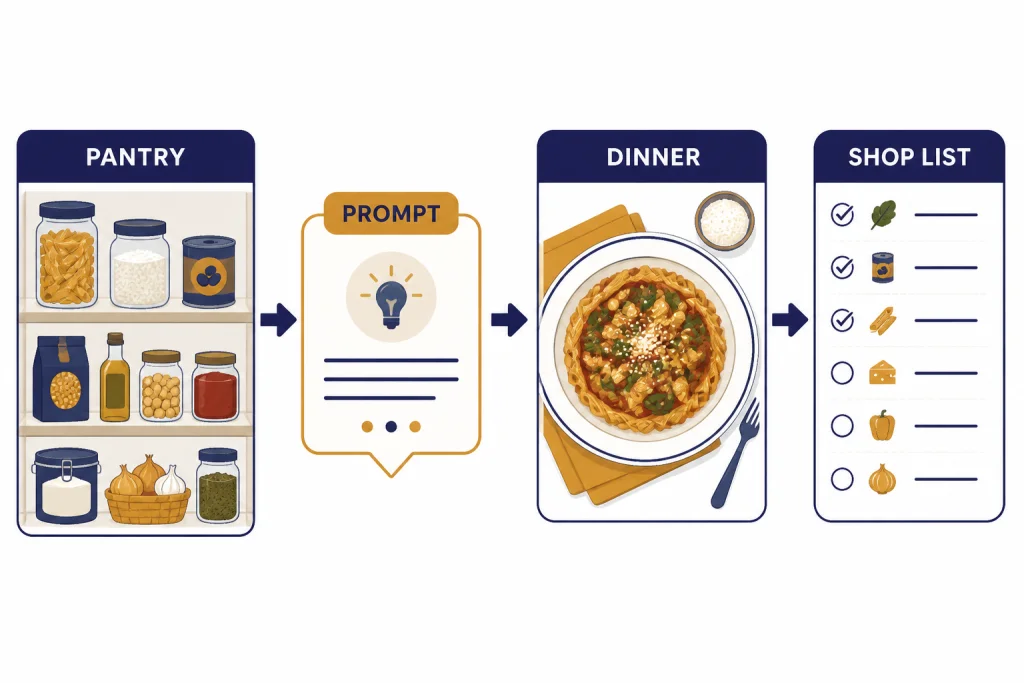
A prompt framework that produces better recipes
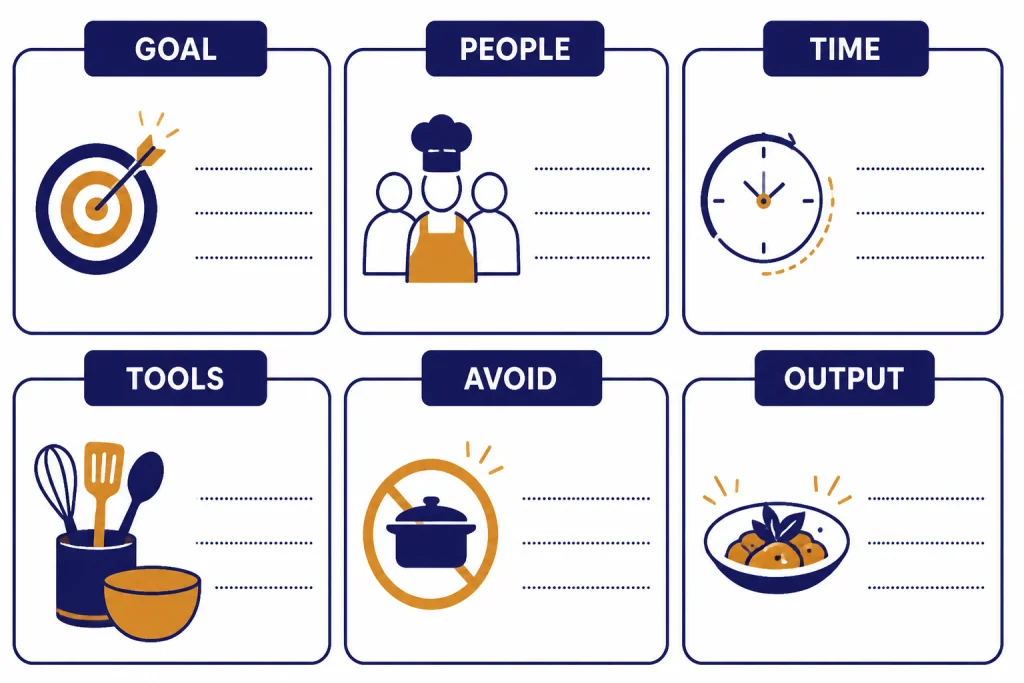
Bad cooking prompts are too vague. “Give me dinner ideas” usually produces generic dishes. Better prompts describe the people, ingredients, schedule, equipment, dislikes, budget, and output format. The more real-world friction you include, the more useful the answer becomes.
Use this format as your default:
You are my practical home-cooking assistant.
Goal: [weeknight dinner / meal prep / use leftovers / reduce grocery spend]
People: [number of adults, kids, appetites]
Diet: [allergies, dislikes, preferences]
Ingredients I have: [specific list with approximate amounts]
Tools: [oven, stovetop, air fryer, slow cooker, blender]
Time: [active time and total time]
Skill level: [beginner / comfortable / advanced]
Output: Give me [number] options. For each, include ingredients, steps, timing, substitutions, and what to prep first.
Safety: Include safe internal temperatures when meat, poultry, seafood, eggs, or leftovers are involved.
The “output” line matters. Ask for exactly what you want. A recipe card is different from a prep schedule. A shopping list is different from a budget estimate. A low-waste plan is different from a high-protein plan. If you build prompts often, save your best versions in a small prompt library. Our ChatGPT prompt generator guide explains how to make reusable prompt templates instead of starting from scratch every week.
You can also use memory for stable preferences. OpenAI says saved memories can include details you directly ask ChatGPT to remember, such as “Remember that I am vegetarian when you recommend a recipe,” and that you can delete individual memories, clear them, or turn memory off in settings.[3] For a cooking workflow, useful memories might include “avoid cilantro,” “prefer meals under 30 minutes,” or “plan around a nut allergy.” Do not store sensitive health details unless you are comfortable with how your account settings handle them. See ChatGPT Tutorial: Memory Power-User Tips for a fuller privacy and workflow walkthrough.
Meal plans and grocery lists that actually work
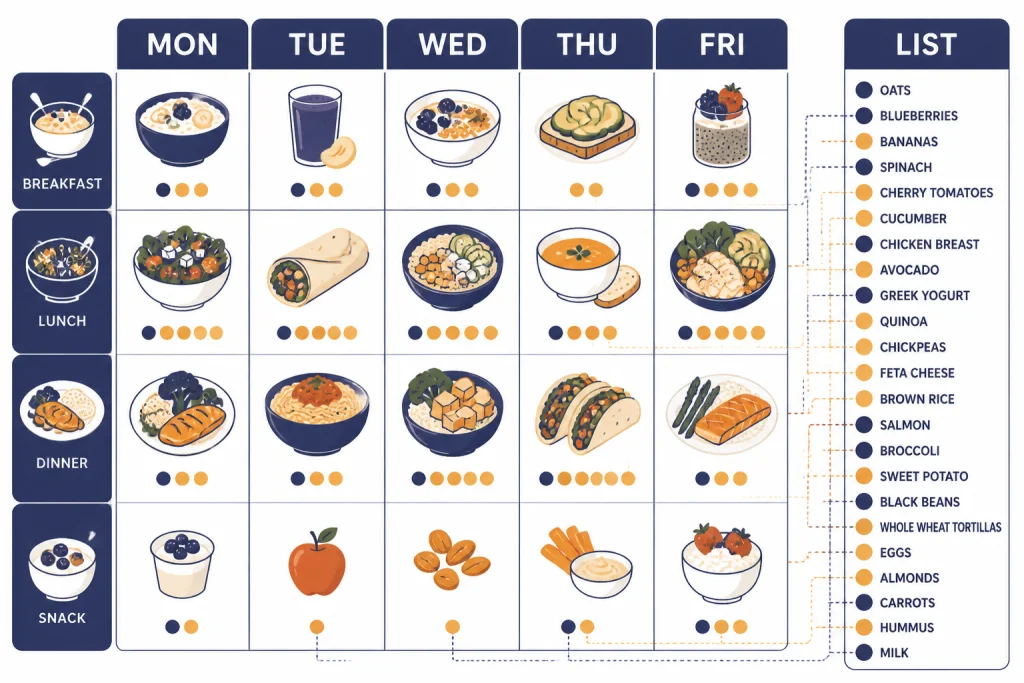
The best ChatGPT meal plans start with inventory, not inspiration. List what you already own first. Then ask ChatGPT to reuse ingredients across meals. This reduces one-off purchases and makes the grocery list shorter.
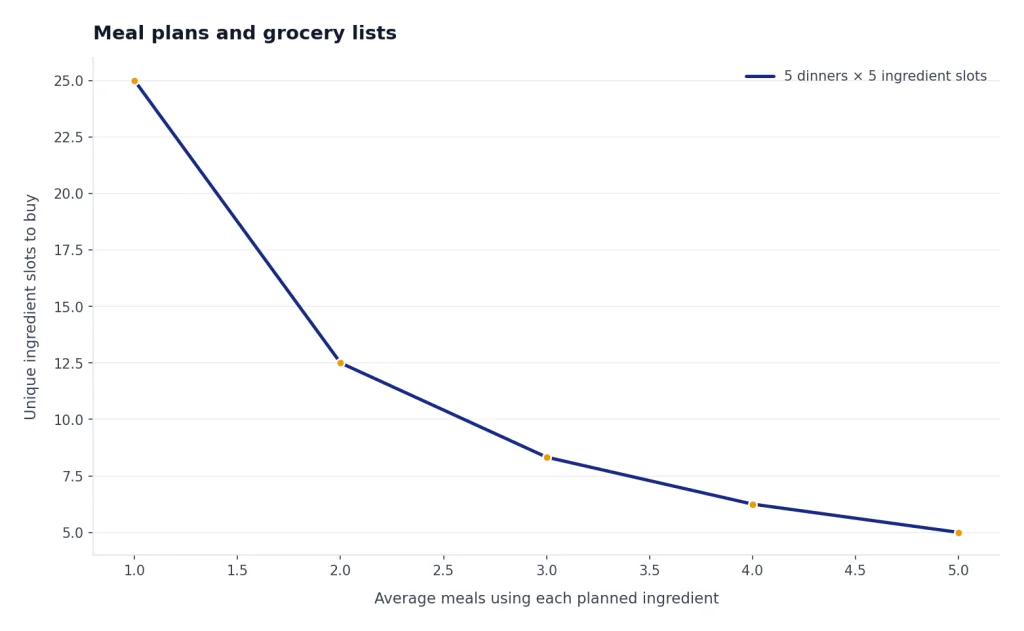
For example, instead of asking for “a healthy weekly meal plan,” try this:
Plan 5 dinners for 2 adults. Use these items first: 1 pound ground turkey, 2 bell peppers, 1 bag spinach, eggs, rice, canned black beans, Greek yogurt, and tortillas. Avoid mushrooms. Active cooking time should be under 25 minutes on weeknights. Reuse ingredients so the shopping list stays short. Give me a table with dinner, prep-ahead step, leftovers plan, and items to buy.Ask for a table, then ask for revisions. “Make Wednesday vegetarian.” “Move the longest meal to Sunday.” “Use the spinach before the lettuce.” This iterative process is the main advantage over static recipe pages.
OpenAI’s file-upload documentation says ChatGPT can work with common text files, spreadsheets, presentations, and documents, and can synthesize, transform, and extract information from uploaded files.[2] In cooking terms, that means you can upload a recipe document, pantry spreadsheet, or grocery export if your plan supports file uploads. If you already track groceries in a spreadsheet, pair this workflow with chatgpt for Excel or the Code Interpreter tutorial to clean lists, compare costs, and summarize pantry patterns.
A good meal-plan output should include more than recipe names. Ask for prep order, storage notes, repeat ingredients, and leftovers. Otherwise, ChatGPT may create a plan that looks nice but fails on Tuesday night.
| Meal-plan field | Why it helps | Example instruction |
|---|---|---|
| Inventory | Uses food you already paid for | “Use these items before suggesting new groceries.” |
| Time | Keeps weeknights realistic | “Keep active cooking under 25 minutes.” |
| Repeat ingredients | Reduces waste and shopping complexity | “Use peppers in at least two meals.” |
| Prep-ahead step | Makes cooking easier later | “Tell me what to chop or cook on Sunday.” |
| Leftovers plan | Prevents duplicate meals from feeling boring | “Turn leftovers into lunch without repeating dinner exactly.” |
Recipe adaptation, substitutions, and scaling
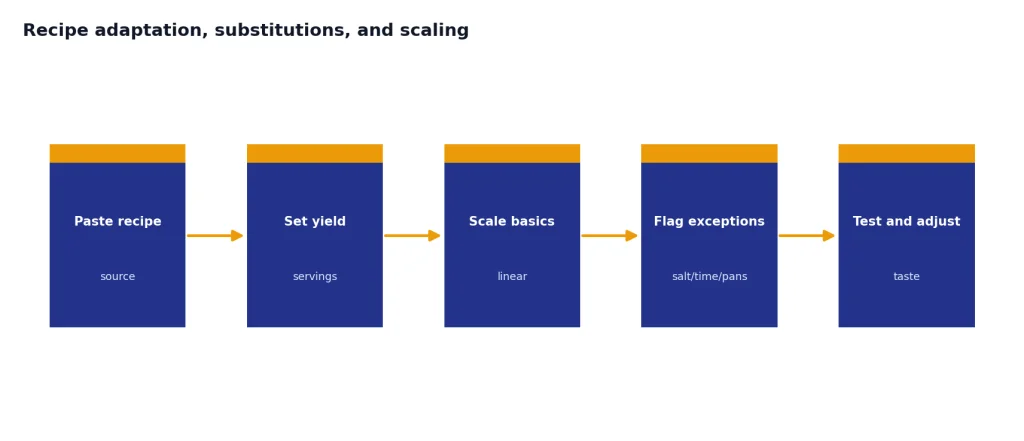
ChatGPT is often more useful for adapting an existing recipe than inventing a new one. Paste the recipe, upload it if your account supports that, or summarize the ingredients and method. Then ask for a specific change.
- Diet swap: “Make this dairy-free, but keep the sauce creamy.”
- Equipment swap: “Convert this stovetop soup to a slow cooker method.”
- Ingredient gap: “I have no tomato paste. What can I use, and what will change?”
- Time reduction: “Keep the same flavor profile but cut active prep.”
- Batch cooking: “Turn this into lunches that reheat well.”
Scaling needs extra caution. ChatGPT can multiply ingredient amounts, but cooking does not scale perfectly. Salt, spices, thickeners, baking powder, pan size, evaporation, and cooking time often need judgment. Ask it to flag ingredients that should not be scaled linearly. Then check the result yourself.
For baking, be stricter. Baking depends on ratios, hydration, pan size, and oven behavior. Use ChatGPT to explain what a change may do, not as the only source for a new formula. For savory cooking, it can safely help with flavor direction: acid, salt, fat, herbs, texture, and garnish.
If you write recipes for a blog or YouTube channel, keep the creative and testing steps separate. ChatGPT can draft variations and structure instructions, but you still need to cook the result. For publishing workflows, see chatgpt for blog writing and ChatGPT for YouTubers.
Food safety and nutrition limits
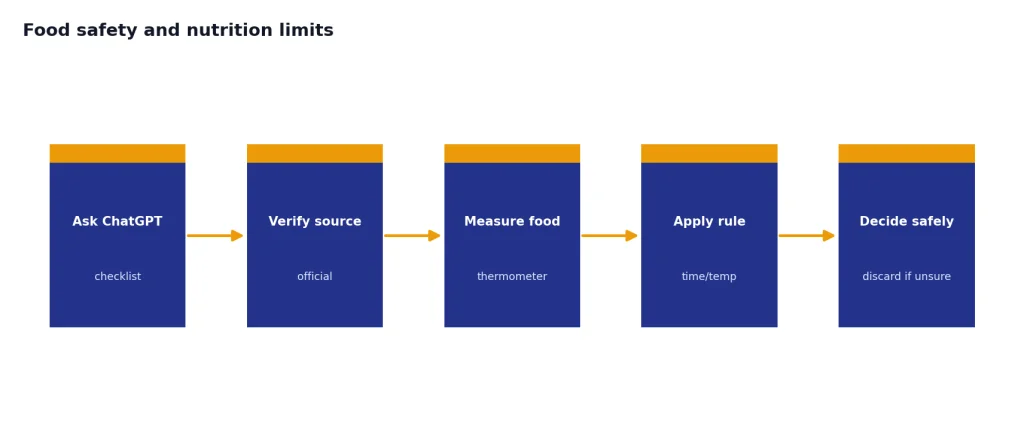
Food safety is the section where you should slow down. OpenAI says ChatGPT can produce incorrect or misleading outputs, including confident answers that are wrong, and recommends verifying important information with reliable sources.[4] That warning matters in the kitchen because a plausible answer can still be unsafe.
Use ChatGPT to remind you what to check. Do not use it as the final authority on spoiled food, allergens, medical diets, infant feeding, pregnancy restrictions, or foodborne illness symptoms. OpenAI’s cooking page also states that ChatGPT should not replace medical advice from an expert.[1] If your cooking question is really a health question, talk to a qualified professional. Our ChatGPT for Doctors and Healthcare Professionals article explains why AI health outputs need human oversight.
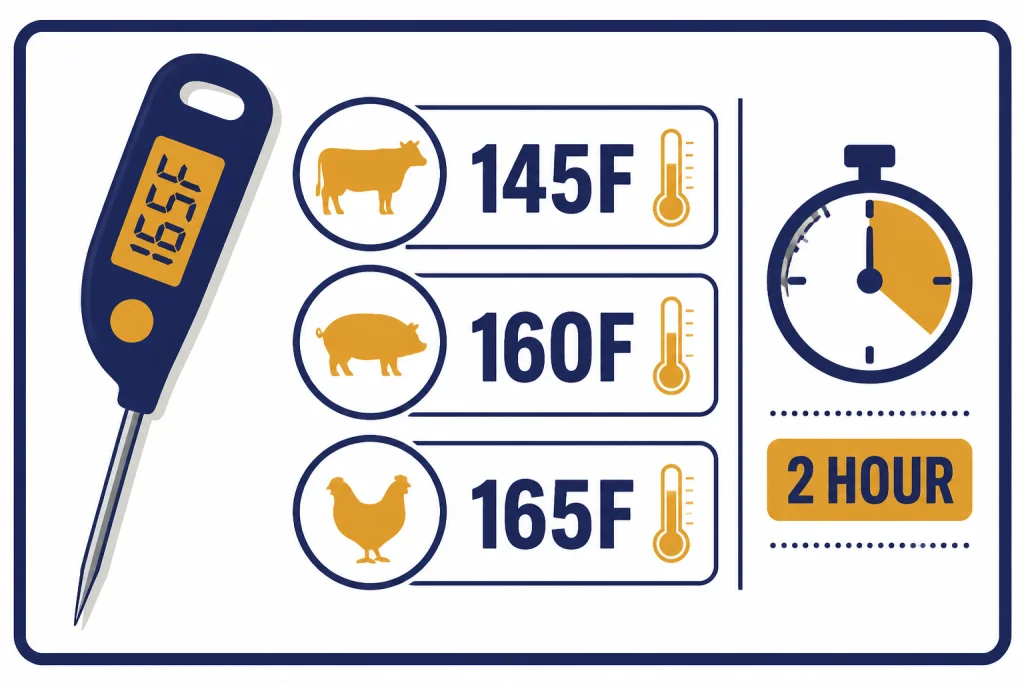
For internal temperatures, use official food safety sources and a thermometer. FoodSafety.gov says beef, bison, veal, goat, and lamb steaks, roasts, and chops should reach 145°F with a 3-minute rest; ground meat and sausage should reach 160°F; chicken, turkey, other poultry, casseroles, and leftovers should reach 165°F; and fish should reach 145°F or cook until the flesh is no longer translucent and separates easily with a fork.[5]
For storage, follow official time and temperature rules. The FDA says foods that require refrigeration should not sit at room temperature for more than 2 hours, or more than 1 hour if the air temperature is above 90°F.[6] If ChatGPT gives a different answer, trust the official source.
For nutrition, keep claims modest. ChatGPT can help you plan meals around protein, fiber, vegetables, or budget. It should not replace a dietitian for diabetes, kidney disease, eating disorders, pregnancy, allergies, or other medical needs. USDA’s MyPlate framework describes five food groups: Fruits, Vegetables, Grains, Protein Foods, and Dairy.[7] That is a useful general planning lens, but it is not a personalized medical plan.
Practical ChatGPT cooking workflows
Pantry rescue dinner
Use this when you do not want to shop. List ingredients by category: protein, vegetables, starches, dairy, condiments, and herbs. Add time and tools. Ask for several options, then choose one and ask for a step-by-step plan.
I need dinner without shopping. I have canned chickpeas, eggs, frozen peas, rice, onions, yogurt, lemons, curry powder, and spinach. I have 35 minutes and one skillet. Give me 4 options, then recommend the best one for leftovers.Weekly plan with leftovers
Use this when the week is busy. Tell ChatGPT which nights are rushed and which nights can handle more cooking. Ask it to cook once and reuse components without repeating the same plate.
Build a weeknight dinner plan. Monday and Wednesday must be very fast. Tuesday can use the oven. Thursday should use leftovers. Friday should feel different from the earlier meals. Use chicken thighs, rice, cabbage, carrots, yogurt, and tortillas across the week.Hands-busy kitchen help
Voice can help when your hands are messy. OpenAI’s Voice Mode FAQ says you can ask questions through voice input and receive spoken responses.[8] In cooking, that can mean asking for the next step, a substitution, or a timing reminder while you are at the stove. Be careful with privacy. The same FAQ says audio and video clips for voice-chat messages are retained for 30 days, and deletion behavior depends on the chat and training choices.[8]
Travel kitchen or rental cooking
ChatGPT is also useful when you are away from your normal kitchen. Tell it what appliances are missing, what staples you refuse to buy for a short stay, and whether you need packable leftovers. If you are planning meals around flights, rentals, and restaurants, pair this with chatgpt for travel planning.
Fitness-adjacent meal planning
If your goal is performance, weight management, or more consistent protein, ChatGPT can organize meals around your preferences. Keep it practical. Ask for grocery lists, batch-cooking plans, and meal timing ideas. For a deeper look at workout and diet planning, read ChatGPT for Fitness.
ChatGPT versus recipe sites and meal-planning apps
ChatGPT is not always the best cooking tool. It is flexible, but flexibility can create errors. Recipe sites are better when you want tested results from a specific cook. Meal-planning apps are better when you want repeatable menus, nutrition databases, and grocery integrations. Spreadsheets are better when your main problem is budget tracking.
| Tool | Best for | Weakness | Best workflow |
|---|---|---|---|
| ChatGPT | Custom ideas, leftovers, substitutions, meal-plan drafts | May produce incorrect details or untested recipes | Use it to plan, then verify safety and test the recipe |
| Recipe sites and cookbooks | Tested dishes and technique-specific guidance | Less adaptive to your pantry and schedule | Choose a trusted recipe, then ask ChatGPT to adapt the plan |
| Meal-planning apps | Repeatable menus, saved recipes, recurring grocery lists | May be less flexible for unusual constraints | Use the app as the system of record and ChatGPT for brainstorming |
| Nutrition apps | Tracking nutrients and portions | Can become tedious and still depends on data accuracy | Use ChatGPT for meal ideas, then log in the nutrition app |
| Spreadsheet | Budgeting, pantry inventory, price comparison | Requires manual setup | Track staples, then ask ChatGPT to summarize patterns |
The best setup is usually hybrid. Keep trusted recipes in one place. Track pantry staples if you care about cost. Use ChatGPT when you need a bridge between what you planned and what is actually in the kitchen. If you publish food content, this same planning skill overlaps with chatgpt for social media content creation and chatgpt for marketing, but cooking still requires testing.
Frequently asked questions
Can ChatGPT create recipes from ingredients I already have?
Yes. This is one of its strongest cooking uses. List the ingredients, rough amounts, tools, time limit, and any foods you dislike. Ask for multiple options before choosing one recipe.
Can I trust ChatGPT recipes without checking them?
No. Treat ChatGPT recipes as drafts. Check cooking times, temperatures, ratios, and food safety guidance before relying on them. This is especially important for meat, poultry, seafood, eggs, leftovers, canning, and allergy-sensitive meals.
Is ChatGPT good for meal planning on a budget?
Yes, if you give it realistic constraints. Tell it what you already have, where you shop, which ingredients can repeat, and what meals need leftovers. Do not expect exact prices unless you provide current store prices or a receipt.
Can ChatGPT help with allergies or medical diets?
It can help organize questions and suggest general meal ideas, but it should not be the final authority. For allergies, verify every ingredient label and cross-contamination risk. For medical diets, work with a physician or registered dietitian.
What is the best first prompt for ChatGPT cooking?
Start with: “I need dinner for [people] using [ingredients]. I have [time] and [tools]. Avoid [foods]. Give me three options, then a step-by-step recipe for the best one.” This prompt gives ChatGPT enough context to be practical.
Can ChatGPT scale a recipe?
Yes, but review the output. Scaling is not always simple because spices, salt, baking ingredients, pan size, and cooking time may not increase evenly. Ask ChatGPT to identify which ingredients need human judgment.