
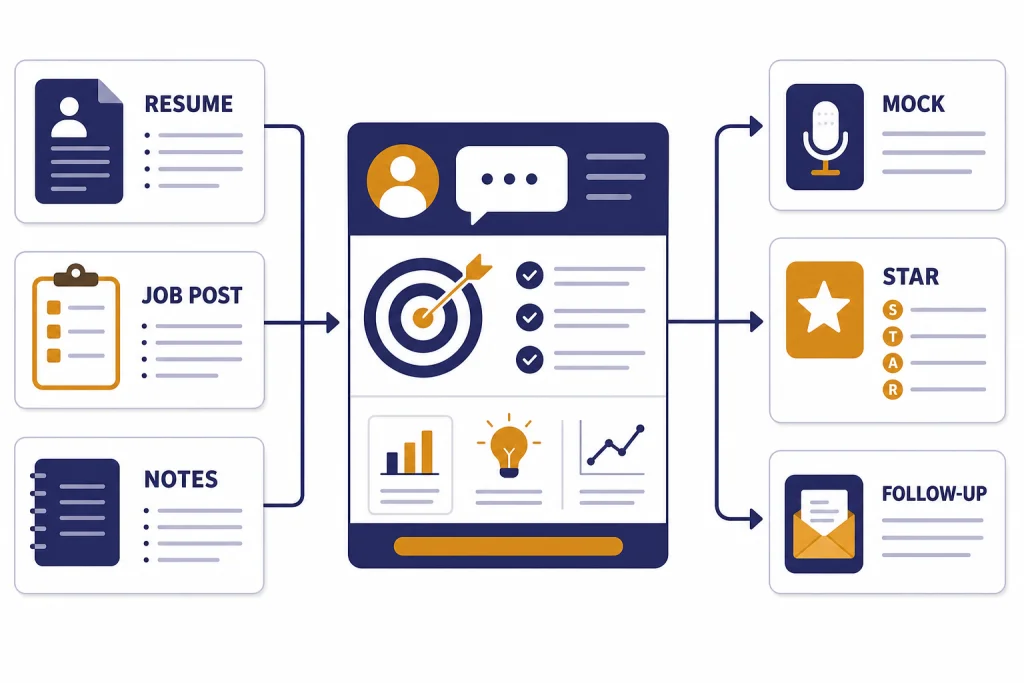
ChatGPT can make job interview prep faster, sharper, and more realistic when you treat it like a practice partner instead of a scriptwriter. Use it to analyze the job description, compare your resume against the role, generate likely questions, pressure-test your answers, and run mock interviews. The best workflow starts with the actual posting, your resume, company notes, and a clear target role. Then ask ChatGPT to coach you, not impersonate you. The goal is to enter the interview with specific stories, concise answers, better questions, and fewer surprises. This guide shows how to use ChatGPT for job interview prep without sounding rehearsed or inventing experience.
Why use ChatGPT for interview prep
Job interviews reward preparation, clarity, and examples. ChatGPT helps because it can convert scattered interview materials into a usable practice system. It can summarize a job posting, identify the likely evaluation criteria, turn your resume into interview talking points, and ask follow-up questions when your answers are too vague.
OpenAI describes ChatGPT as a conversational assistant that can work with text, uploaded files, images, data analysis, voice, and other modes depending on your plan and workspace settings.[1] For interview prep, the most useful pieces are simple: text chat for planning, file upload for resumes and job descriptions, and Voice Mode for spoken practice.
That does not mean ChatGPT should write a fake persona for you. It should help you express real experience more clearly. Strong interview answers still need evidence: projects you completed, conflicts you handled, customers you helped, decisions you made, and results you can explain. If you are new to ChatGPT itself, start with what is ChatGPT before using it for a high-stakes interview.
The Bureau of Labor Statistics advises job seekers to research the employer, practice describing their qualifications, prepare examples from work or school, and rehearse before the interview.[6] ChatGPT fits into that traditional process as a coach that is available whenever you need another round of practice.
Set up your interview prep chat
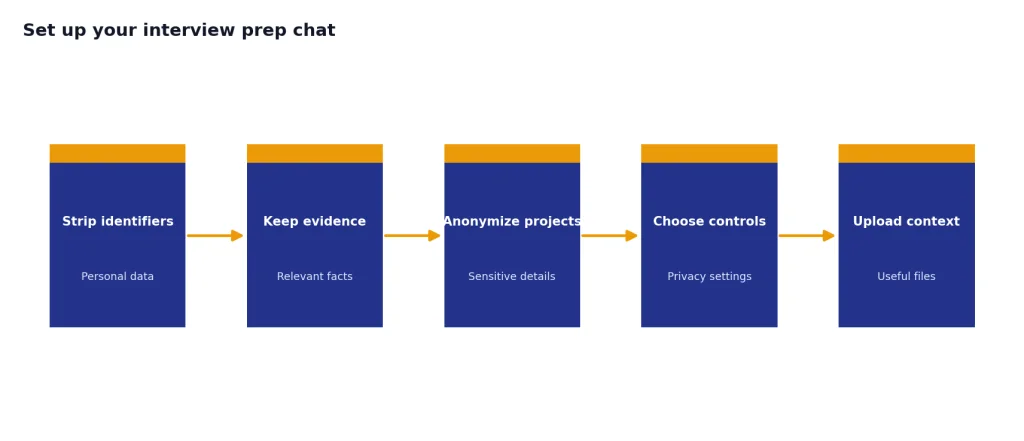
Start with a single dedicated chat for the role. Give ChatGPT the context it needs, but do not paste confidential employer documents, private references, sensitive personal identifiers, or anything you would not want stored in a third-party service. Interview prep works best with enough context to be useful and enough restraint to protect your privacy.
OpenAI says ChatGPT can work with uploaded files directly in a conversation, including formats such as CSV, XLSX, PDF, DOCX, JPEG, PNG, and TXT.[2] OpenAI’s Help Center also lists common supported file extensions for text files, spreadsheets, presentations, and documents, including XLSX, XLS, CSV, TSV, DOCX, PPTX, PDF, and TXT.[4] For interview prep, that means you can upload a resume, cover letter, job posting, portfolio notes, or a public company briefing.
Before uploading, remove home addresses, phone numbers, personal IDs, compensation history, and names of people who did not consent to being included. Keep the useful parts: job titles, dates if they matter, accomplishments, skills, responsibilities, and project summaries. If you use memory features, be careful about what you ask ChatGPT to remember. Our ChatGPT memory tutorial explains how persistent context can help or hurt depending on the situation.
OpenAI says Temporary Chat conversations do not appear in history, do not use or create memories, and are not used to train its models.[5] If you are practicing with sensitive job-search details, Temporary Chat is worth considering. You can also use OpenAI’s data controls to manage whether your ChatGPT conversations are used to improve model performance.[5]
Use this opening prompt to create the workspace:
You are my job interview coach. I am preparing for a [ROLE] interview at [COMPANY]. I will provide my resume, the job description, and notes about the company. Your job is to help me prepare truthful, concise answers based only on my real experience. Do not invent achievements. Ask clarifying questions when my evidence is weak. Focus on likely interview questions, STAR stories, role-specific scenarios, questions I should ask, and follow-up messages.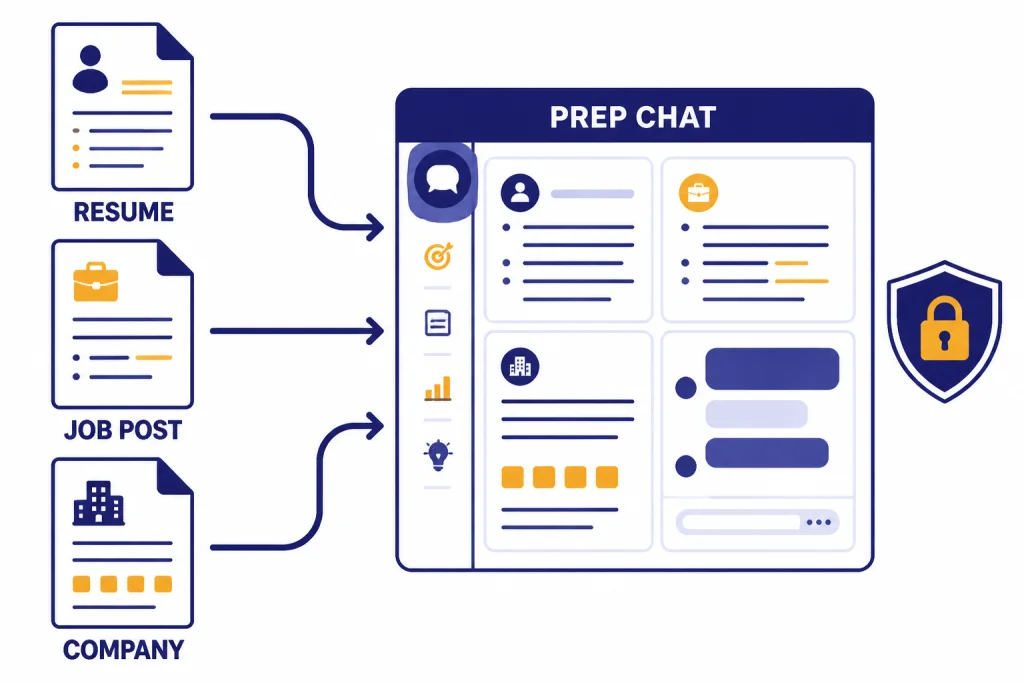
Turn the job posting into a prep plan
The job posting is the closest thing you have to the interviewer’s scorecard. Ask ChatGPT to pull out the signals that matter: required skills, preferred skills, repeated language, tools, customers, performance metrics, and responsibilities. Then ask it to map those signals to your resume.
Do not ask for generic questions first. Generic questions produce generic practice. Start with the employer’s language, then move to likely questions. This is the difference between “Tell me about yourself” practice and a targeted answer that explains why your background fits the specific job.
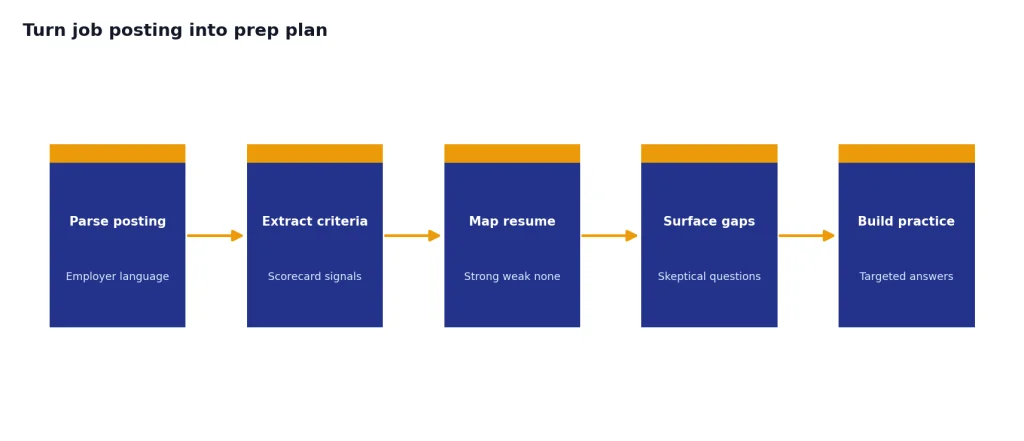
Use this prompt after you paste or upload the job description:
Analyze this job description as if you were the hiring manager. Create a prep brief with: key responsibilities, must-have skills, nice-to-have skills, likely screening criteria, possible concerns about my background, and the five interview themes I should prepare for. Then compare the posting to my resume and show where I have strong evidence, weak evidence, or no evidence. Do not invent anything.After ChatGPT produces the brief, ask it to challenge you. A good follow-up is: “What would a skeptical interviewer ask me based on this resume?” That prompt surfaces gaps before the interviewer does.
If you are interviewing for a sales role, pair this process with ChatGPT for Sales Professionals to build role-specific customer stories. If the position involves research, analysis, or sourcing facts, chatgpt for research can help you design a better company-research workflow.
Build strong behavioral answers
Behavioral interviews test how you acted in real situations. ChatGPT can help you structure those stories, but you need to provide the raw material. Start by listing projects, conflicts, failures, improvements, leadership moments, customer issues, deadlines, and times you learned something quickly.
The BLS recommends thinking of examples from past jobs, schoolwork, and activities before the interview so you can give solid answers under pressure.[6] ChatGPT is especially useful here because it can turn a rough memory into a clear answer without changing the facts.
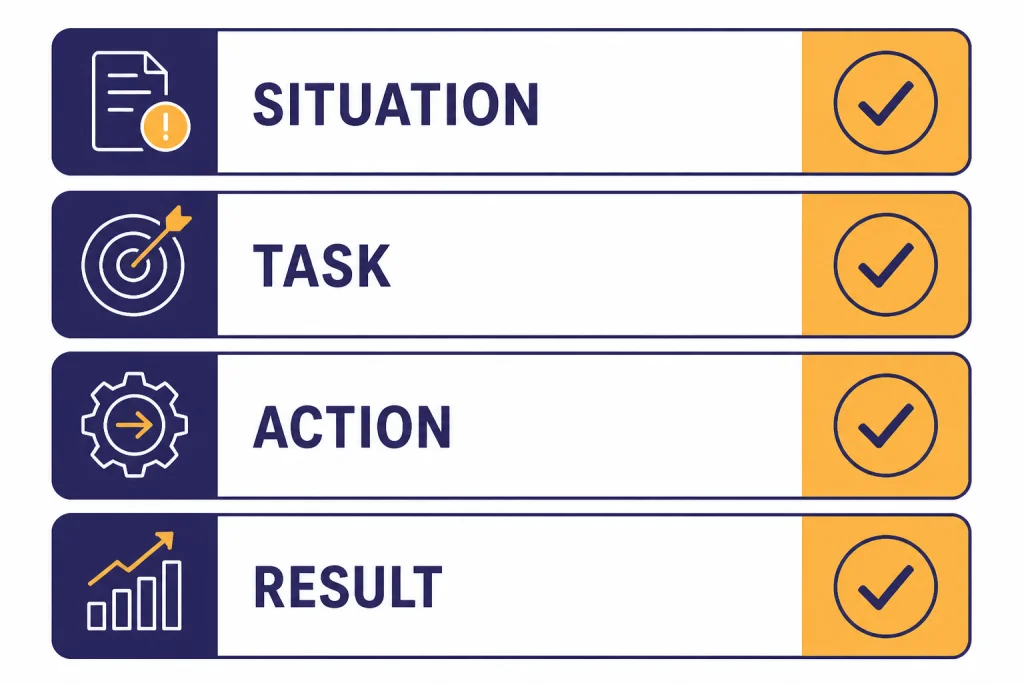
Use the STAR structure as a drafting tool, not a cage. Situation sets the context. Task explains your responsibility. Action shows what you did. Result explains what changed. If you do not have metrics, use observable outcomes: faster handoffs, fewer escalations, cleaner documentation, stronger team alignment, better customer feedback, or a decision that moved forward.
| Interview theme | What ChatGPT should ask you | What your final answer needs |
|---|---|---|
| Conflict | Who disagreed, what was at stake, and what did you do next? | A calm explanation of the disagreement, your action, and the working relationship afterward. |
| Leadership | What changed because you took responsibility? | Evidence that you influenced people, process, or priorities without exaggerating your authority. |
| Failure | What did you learn, and how did your behavior change? | Accountability, a concrete adjustment, and a better result later. |
| Ambiguity | How did you decide what to do when the answer was unclear? | A decision process, trade-offs, and communication with stakeholders. |
| Impact | What would have been worse if you had not acted? | A before-and-after contrast tied to the role you want. |
Here is a useful prompt for behavioral stories:
I will give you a rough interview story. Turn it into a concise STAR answer. Keep it truthful. Preserve my voice. Ask questions if the result is unclear. Then give me a stronger version, a shorter version, and a list of possible follow-up questions an interviewer might ask.For writing-heavy roles, you can also use chatgpt for writing to practice turning complex experience into concise language. For design roles, ChatGPT for Designers can help convert portfolio projects into clearer case-study narratives.
Run a realistic mock interview
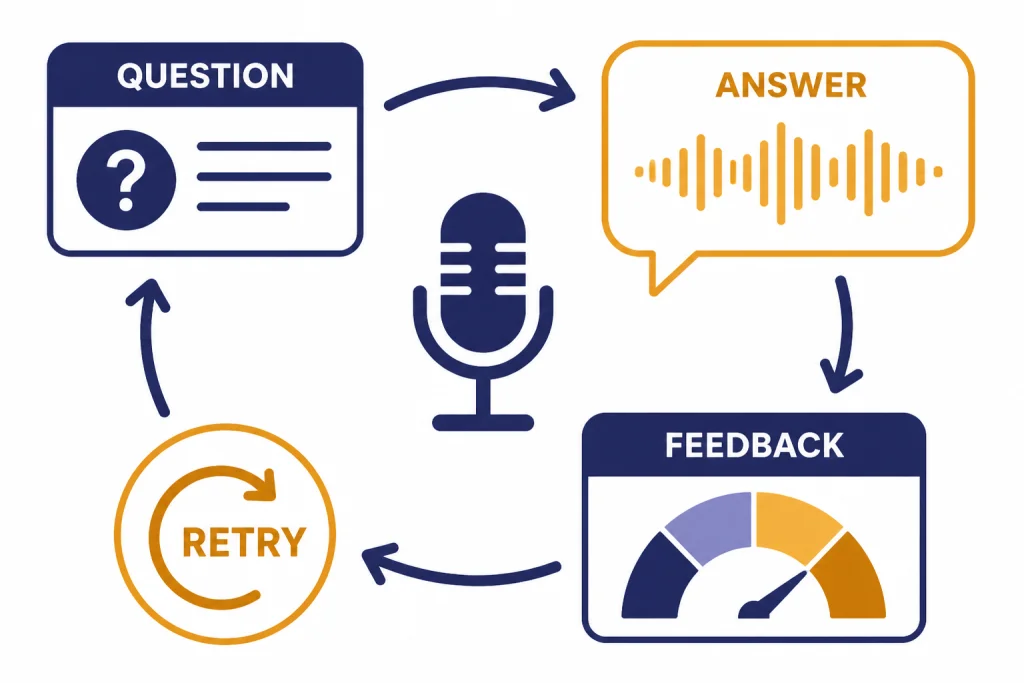
Mock interviews work when they feel slightly uncomfortable. Ask ChatGPT to act like a hiring manager, ask one question at a time, interrupt vague answers with follow-ups, and score your response after you answer. Do not ask it to be nice. Ask it to be useful.
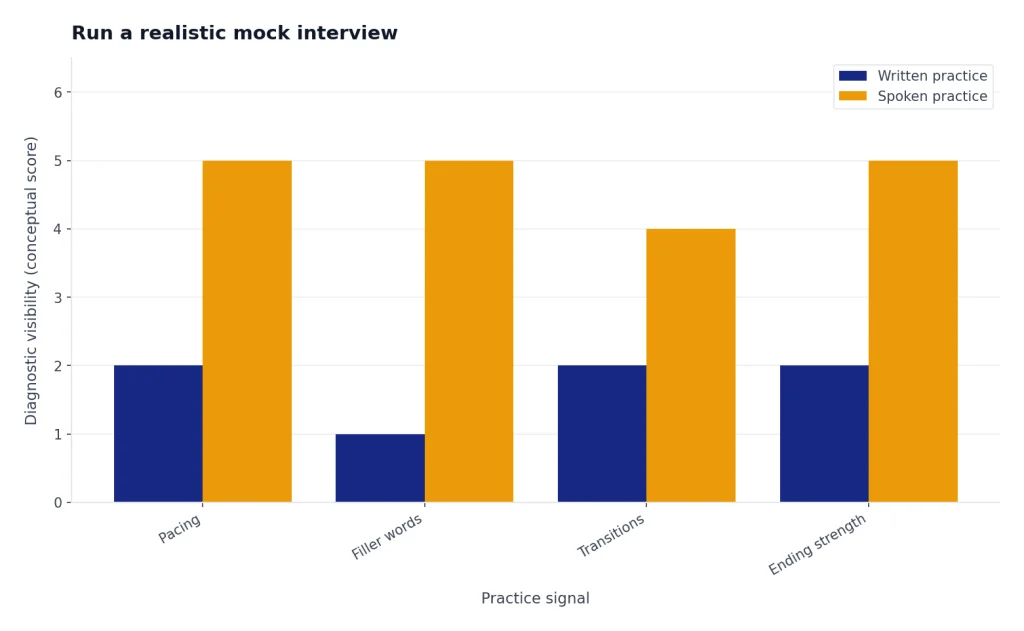
OpenAI says Voice Mode lets users have spoken conversations with ChatGPT on supported mobile, desktop, and web platforms.[3] That makes it useful for interview practice because speaking an answer is different from writing one. Written answers can hide rambling. Spoken answers reveal pacing, filler words, unclear transitions, and weak endings.
Try this mock-interview prompt:
Run a mock interview for the role I described. Ask one question at a time. Use a realistic hiring-manager tone. After each answer, score me on relevance, specificity, structure, and credibility. Tell me what to cut, what to clarify, and what follow-up question you would ask. Do not give me the next question until I answer.After the mock interview, ask for a coaching summary. Have ChatGPT identify repeated weaknesses, missing stories, overused phrases, and answers that sounded too scripted. Then repeat the mock interview with a different style: recruiter screen, hiring manager, peer panel, executive stakeholder, or technical interviewer.
The Department of Labor describes the job interview as a two-way discussion and emphasizes listening carefully to each question.[7] Use ChatGPT to practice that discipline. Ask it to include confusing, layered, or broad questions so you can practice pausing, clarifying, and answering the question that was actually asked.
Prepare for role-specific interviews
Once your general answers are solid, switch to role-specific practice. The questions for an accountant, recruiter, translator, marketer, and software analyst will differ. ChatGPT can generate scenarios that match the work you will actually do.
For example, an HR candidate can practice employee-relations scenarios with ChatGPT for HR Departments. A recruiter can practice intake meetings, candidate objections, and hiring-manager calibration with ChatGPT for Recruiters and HR Teams. An accountant can prepare explanations of reconciliations, controls, close processes, and client communication with ChatGPT for Accountants and Bookkeepers.
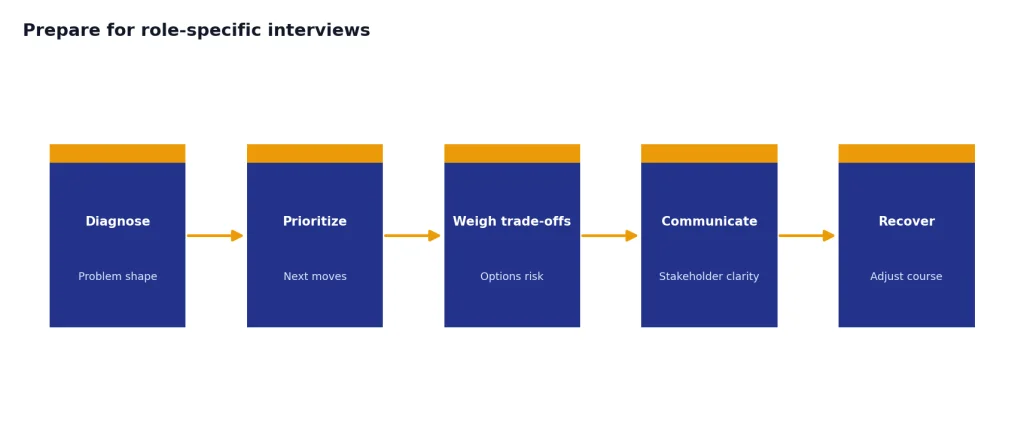
Role-specific prep should include scenarios, not just questions. Ask ChatGPT to give you a realistic problem and require you to talk through your approach. This matters because many interviews test judgment. The interviewer wants to know how you diagnose, prioritize, communicate, and recover when the first answer is not obvious.
Use this prompt:
Create role-specific interview scenarios for this job. Include practical problems I may face in the first few months. For each scenario, ask me what I would do, what trade-offs I see, and what I would communicate to stakeholders. After I answer, grade my reasoning and suggest a clearer response.If your interview includes a work sample, ask ChatGPT to help you define the evaluation criteria before you start. For example, a marketing candidate might prepare a campaign critique with chatgpt for marketing, while a candidate for an email-heavy role can practice concise communication with ChatGPT for Email Writing That Converts.
Write questions and follow-ups
Your questions can make you sound prepared, curious, and realistic. Ask about expectations, decision-making, team structure, success measures, onboarding, and the problems the new hire should solve first. Avoid questions that are already answered clearly in the job posting unless you are asking for deeper context.
The BLS lists examples of questions candidates can ask, including what the employer expects in the first six months, what a typical assignment looks like, what training is provided, and what advancement opportunities exist.[6] Use ChatGPT to customize those questions to the role, the company, and the interview stage.
Try this prompt before the interview:
Based on the job description and company notes, write thoughtful questions I can ask the interviewer. Separate them by audience: recruiter, hiring manager, future teammate, senior leader, and HR. Avoid questions that make me sound unprepared. Include a short reason why each question is worth asking.After the interview, use ChatGPT to draft a follow-up note. Do not let it write a generic thank-you email. Give it your notes: who you met, what you discussed, what part of the role you are excited about, and one point you want to reinforce.
The BLS recommends sending a brief thank-you letter preferably within two days after the interview.[6] A strong follow-up should thank the interviewer, mention one specific conversation point, restate your fit, and keep the tone professional.
Draft a concise follow-up email after my interview. Use these notes: [PASTE NOTES]. Keep it warm, professional, and specific. Do not overstate my interest. Include one sentence that connects my experience to the team's stated need. Give me two versions: one slightly formal and one more conversational.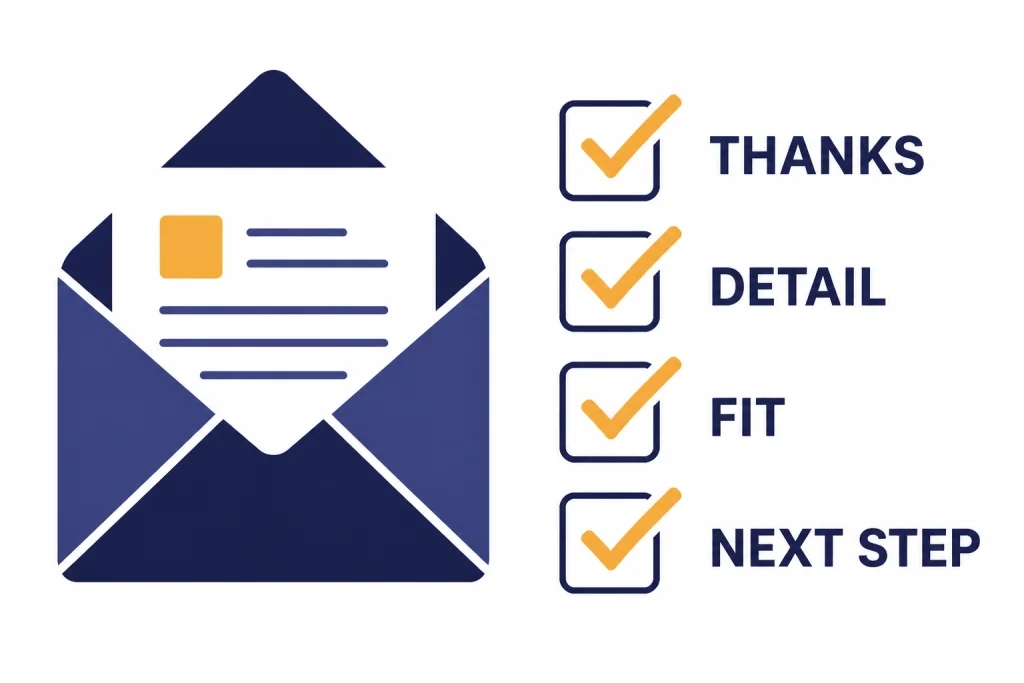
Mistakes to avoid
The biggest mistake is outsourcing your judgment. ChatGPT can help you prepare, but you must decide what is true, relevant, and appropriate. If an answer sounds impressive but does not match your experience, delete it. Interviewers can usually detect inflated stories when they ask follow-up questions.
Do not memorize long answers. Memorized answers often fail when the interviewer changes the wording. Instead, memorize story anchors: the problem, your action, and the result. Then practice delivering the same story in different lengths.
Do not paste confidential company information from a current employer. If you need to describe a project, anonymize the client, remove proprietary numbers, and focus on your responsibility. This matters especially for lawyers, doctors, finance professionals, HR teams, and anyone who handles sensitive records. For higher-risk professional use cases, compare the caution in ChatGPT for Lawyers and ChatGPT for Doctors and Healthcare Professionals.
Do not use ChatGPT during a live interview unless the employer explicitly allows it. Live assistance can violate interview rules and damage trust. Use ChatGPT before and after the interview. During the interview, rely on your preparation.
Finally, do not let ChatGPT flatten your voice. A polished answer that sounds like everyone else is not the goal. Ask for clearer structure, then revise the wording until it sounds like you.
Prompt library
Use these prompts as starting points. Replace the brackets with your real information. If you want to build a reusable system for future roles, the ChatGPT prompt generator can help you turn these into a personal prompt library.
Resume-to-interview prompt
Review my resume for interview prep. Identify the strongest stories I should be ready to tell, the weakest areas an interviewer may challenge, and the achievements I should quantify or explain better. Do not rewrite my resume. Focus only on interview readiness.Tell me about yourself prompt
Help me answer "Tell me about yourself" for this role. Use a simple structure: current professional identity, relevant background, strongest evidence for this role, and why this opportunity makes sense. Keep it under a minute when spoken. Ask me questions if my motivation is unclear.Weakness answer prompt
Help me answer a question about a weakness or development area. Make it honest but not disqualifying. Show what I am doing to improve. Avoid clichés such as perfectionism. Give me three possible angles based on my background.Salary and logistics prompt
Help me prepare professional language for compensation, availability, remote work, relocation, and start-date questions. Give me flexible wording that does not lock me into a number too early and does not sound evasive.Final review prompt
Act as a strict interview coach. Review my likely answers and identify anything that sounds vague, inflated, defensive, too long, too negative, or unrelated to the role. Give me a prioritized practice plan for the remaining time before the interview.Frequently asked questions
Can ChatGPT conduct a full mock interview?
Yes. Ask it to play the interviewer, ask one question at a time, and wait for your answer before giving feedback. For best results, provide the job description, your resume, and the interview stage. Use voice practice if you want to test pacing and delivery.
Should I upload my resume to ChatGPT?
You can, but remove unnecessary personal information first. Keep the content ChatGPT needs to coach you: roles, achievements, skills, projects, and career goals. Consider Temporary Chat or data controls if your job search is sensitive.[5]
Will ChatGPT make my answers sound fake?
It can if you accept polished wording without editing. Ask ChatGPT to preserve your voice, use plain language, and avoid exaggeration. Then practice the answer aloud and rewrite any sentence you would not naturally say.
Can ChatGPT help with technical interviews?
Yes, especially for explaining concepts, practicing scenarios, and reviewing your reasoning. It should not replace hands-on practice or official documentation. For coding, data, or spreadsheet-heavy roles, use it to ask follow-up questions and identify gaps in your explanation.
Is it ethical to use ChatGPT for job interview prep?
Using ChatGPT to prepare is similar to working with a coach, mentor, or career center. The ethical line is honesty. Do not invent experience, use confidential information, or rely on live assistance during an interview unless the employer permits it.
What should I do the night before an interview?
Review your strongest stories, confirm logistics, prepare your questions, and do a short mock interview. Do not keep generating new answers until you feel overloaded. The final goal is confidence and recall, not a perfect script.