

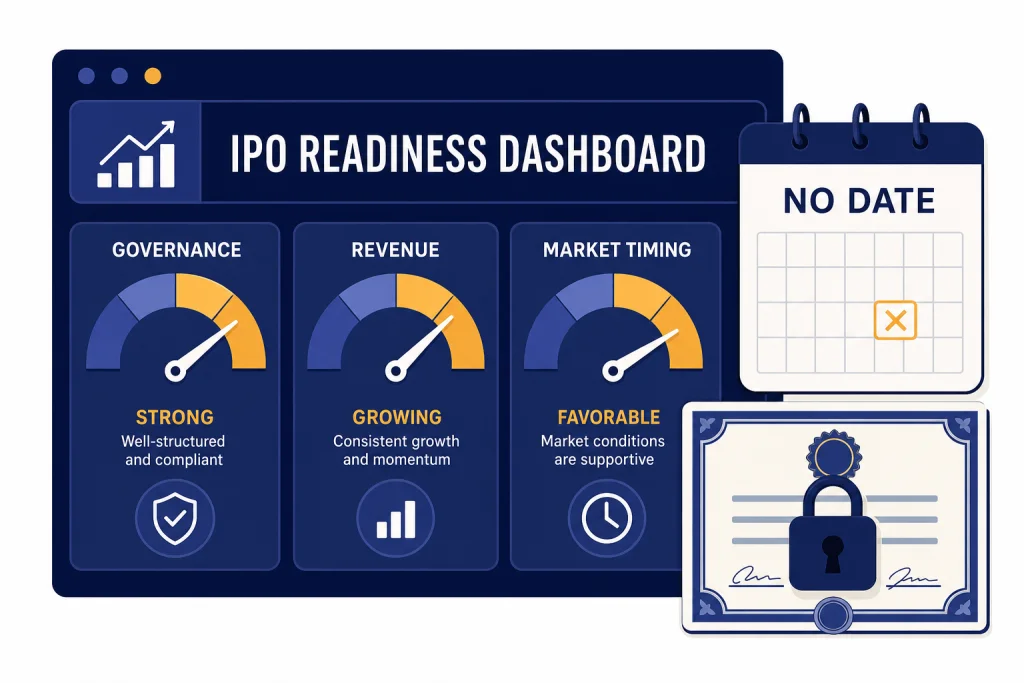
OpenAI has not announced an IPO date, and there is no public ticker for OpenAI stock as of March 13, 2026. The clearest read is that an OpenAI IPO is possible but not scheduled. Reuters reported that OpenAI had discussed a filing as soon as the second half of 2026, while OpenAI’s CFO later said an IPO was not in the company’s near-term plans.[4][5] The company’s October 2025 recapitalization into OpenAI Group PBC made a future public listing more practical, but it did not make one inevitable.[1][2]
OpenAI IPO date: the direct answer
OpenAI has no announced IPO date. The best available reporting points to a possible filing window in the second half of 2026, with some internal expectations around a 2027 listing and some advisers suggesting late 2026 could be possible.[4][5]
The company itself has been more cautious. An OpenAI spokesperson told Reuters that an IPO was not the company’s focus and that it could not have set a date, while CFO Sarah Friar later said an IPO was not on the cards at that time.[4][5]
That means readers should treat any claimed OpenAI IPO date, ticker, price range, or retail allocation as unconfirmed unless it appears in an SEC filing or an official OpenAI announcement. For now, the practical answer is: possible in 2026 or 2027, not official.

Latest OpenAI IPO news
The OpenAI IPO story changed materially in late 2025. On October 28, 2025, OpenAI announced that its for-profit business had become OpenAI Group PBC, a public benefit corporation still controlled by the nonprofit OpenAI Foundation.[1][2] That change matters because it created a more conventional equity structure, which is usually easier for large investors, employees, and public-market buyers to understand.
One day later, Reuters reported that OpenAI was laying groundwork for an IPO that could value the company at up to $1 trillion, citing people familiar with the matter.[4] The same report said OpenAI was considering filing with securities regulators as soon as the second half of 2026, but also cautioned that the plans, figures, and timing could change.[4]
The next public signal pulled expectations back. On November 5, 2025, Reuters reported that Friar said an IPO was not in OpenAI’s near-term plans and that the company was focused on scaling operations.[5] That did not cancel a future IPO. It did clarify that the company had not moved from preparation to a formal public offering process.
For readers following the OpenAI news cycle, this is the important distinction. OpenAI can prepare systems, governance, investor relations, accounting controls, and capital plans without having selected a listing date. IPO readiness is a process. An IPO date is a decision.
| Date | Event | Why it matters for an IPO |
|---|---|---|
| October 28, 2025[1][2] | OpenAI completed its updated structure and formed OpenAI Group PBC. | It made OpenAI’s equity and governance structure more legible to outside investors. |
| October 28, 2025[2][3] | Microsoft’s OpenAI Group PBC investment was valued at about $135 billion, representing roughly 27% on an as-converted diluted basis. | It gave public-market observers a concrete ownership and valuation reference point. |
| October 29, 2025[4][6] | Reuters reported IPO groundwork and a possible valuation of up to $1 trillion. | It put a possible public-market target into the discussion, but not an official date. |
| November 5, 2025[5][4] | Friar said an IPO was not in near-term plans. | It showed that reported planning did not equal an imminent offering. |
| January 18, 2026[7][8] | OpenAI said annualized revenue reached $20B+ in 2025. | Revenue scale is one of the core metrics future IPO investors will study. |
Why OpenAI’s restructure matters for an IPO
OpenAI was founded in 2015 as a nonprofit and created a for-profit subsidiary in 2019.[1] That unusual structure helped preserve mission control, but it also made a conventional public-company path harder to explain. Public investors generally need ordinary equity rights, audited financials, risk disclosures, and clear governance.
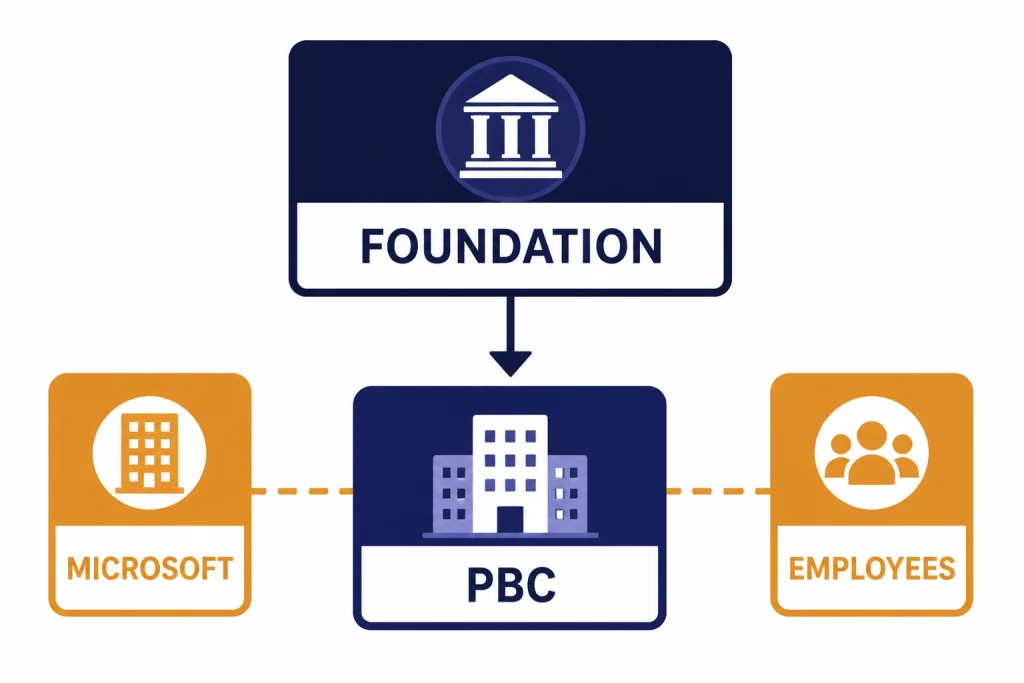
The October 28, 2025 recapitalization kept the nonprofit in control while turning the for-profit business into OpenAI Group PBC.[1][2] OpenAI says the Foundation continues to appoint the OpenAI Group board through special voting and governance rights.[1] That control feature is central to any future IPO because public shareholders would likely buy into a company where the nonprofit parent still has decisive governance power.
This is why the OpenAI IPO is not a normal software-company IPO. It is also a governance story. Anyone studying who owns OpenAI should separate economic ownership from control. The OpenAI Foundation holds equity, but it also holds governance rights that matter more than a simple cap table.
The Microsoft agreement is the other key piece. Microsoft and OpenAI said Microsoft’s IP rights for models and products were extended through 2032, with specific carve-outs and safety guardrails.[2][3] For public investors, this creates both comfort and complexity. Microsoft remains a major partner, but the contract details would likely become a central risk-factor section in any registration statement.
For more context on the partnership behind this structure, see our guide to OpenAI and Microsoft. Leadership also matters here, because the company’s board, CEO, CFO, and product heads will need to tell one consistent public-market story. Our overview of OpenAI’s CTO and leadership team tracks those roles.
Who owns OpenAI before any IPO
OpenAI’s pre-IPO ownership is now clearer than it was before the recapitalization. OpenAI says the OpenAI Foundation holds a 26% equity stake in OpenAI Group, worth about $130 billion based on OpenAI Group’s current valuation.[1][5] Microsoft holds roughly 27% of OpenAI Group, and the remaining 47% is held by current and former employees and investors.[1][2]
These numbers do not mean a public investor would be buying the same influence as the Foundation or Microsoft. They describe economic stakes before any public offering. A future IPO could add new shares, sell existing shares, or combine both, and the final public float would depend on the S-1 prospectus.
The Foundation’s warrant is also important. OpenAI says the Foundation holds a warrant that would let it receive additional shares if OpenAI Group reaches a valuation milestone, and that if the share price increases more than tenfold after 15 years, the Foundation would receive significant additional equity.[1] OpenAI has not published a corroborated figure for the exact future dilution effect of that warrant.
| Holder group | Reported stake or value | What it means before an IPO |
|---|---|---|
| OpenAI Foundation | 26% equity stake, about $130B in value[1][5] | The nonprofit keeps control and is positioned as a major long-term beneficiary. |
| Microsoft | Roughly 27%, valued at about $135B[2][3] | Microsoft remains the largest strategic investor and a critical commercial partner. |
| Employees and other investors | Remaining 47%[1][2] | This pool includes current and former employees plus outside investors. |
| Future public shareholders | No public stake yet[4][5] | There is no IPO allocation, ticker, or public float until OpenAI files and prices an offering. |
Valuation and business metrics investors are watching
The most cited valuation marker is about $500 billion. Reuters described OpenAI as a $500 billion company after the Microsoft restructuring, and Axios also described the recapitalization as creating a $500 billion AI powerhouse.[6][9] Reuters later reported that a future IPO could value OpenAI at up to $1 trillion, but that figure was not an official valuation and was tied to early discussions.[4]
Revenue is the stronger operating signal. OpenAI CFO Sarah Friar wrote on January 18, 2026 that OpenAI’s annualized revenue grew from $2B in 2023 to $6B in 2024 and $20B+ in 2025.[7][8] The same post said compute grew from 0.2 GW in 2023 to 0.6 GW in 2024 and about 1.9 GW in 2025.[7][8] That is the core business argument OpenAI will likely make to investors: more compute allows more product usage, which drives more revenue.
The risk is that this same flywheel is capital intensive. OpenAI needs large amounts of compute for ChatGPT, API customers, agents, coding products, enterprise deployments, and research. Readers comparing OpenAI’s business model with developer pricing should also review our OpenAI API pricing guide and our explainer on Azure OpenAI Service vs OpenAI API.
Consumer revenue is also part of the story. ChatGPT subscriptions provide a visible revenue line, and we track the consumer side in our ChatGPT Plus price breakdown. But an IPO investor will likely focus more on whether OpenAI can turn broad usage into durable enterprise, API, agent, and platform revenue.

Expected date scenarios
The realistic OpenAI IPO date range depends on how quickly the company clears accounting, governance, legal, and market-readiness gates. Reuters reported that OpenAI had considered filing with securities regulators as soon as the second half of 2026, while Friar had told associates the company was aiming for a 2027 listing and advisers suggested late 2026 could be possible.[4][5]
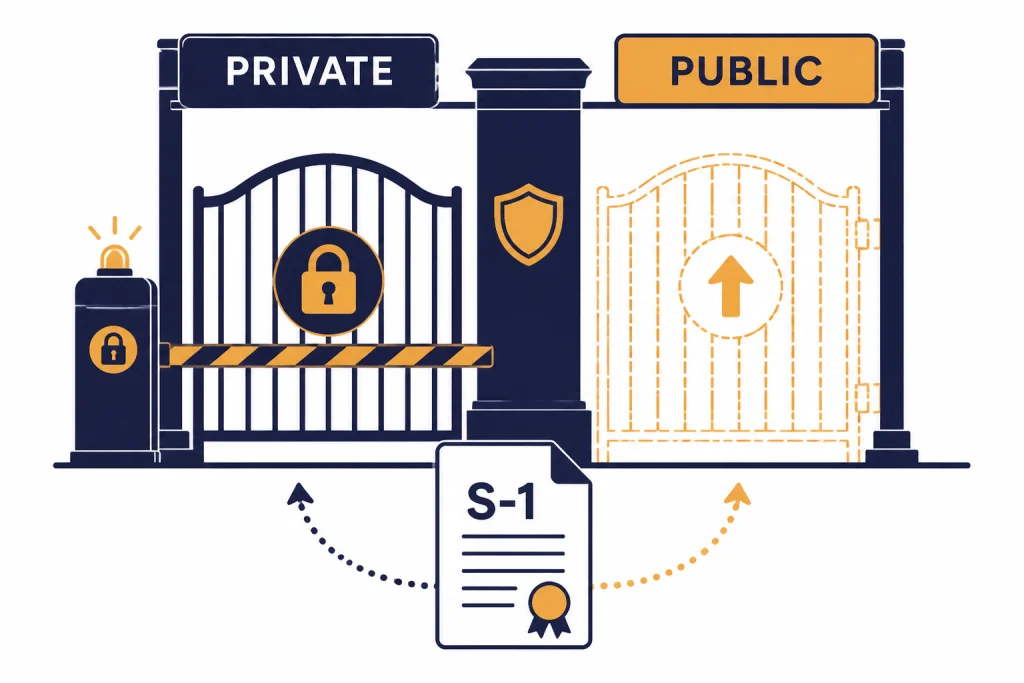
A public IPO usually starts becoming concrete when investors can read a registration statement. The SEC says that, to register an offering, a company typically files a registration statement using Form S-1, and the prospectus describes the company, IPO terms, business, financial condition, management, and other decision-critical information.[10] OpenAI has not published an official S-1 as of this article’s publication date.
| Scenario | What would need to happen | How to read it |
|---|---|---|
| Late 2026 listing | OpenAI would need to move quickly from preparation to SEC filing, investor education, pricing, and first trade.[4][10] | Possible based on reporting, but aggressive because the company says no date has been set.[4][5] |
| 2027 listing | OpenAI would have more time to build public-company controls and prove revenue durability.[4][5] | This fits the reported internal expectation attributed to Friar.[4][5] |
| No IPO in the near term | OpenAI could continue raising private capital or using strategic partnerships instead of public markets.[5][7] | This fits Friar’s statement that an IPO was not in near-term plans.[5] |
The cleanest signal will not be a rumor. It will be a public filing, an official announcement, or a company statement with a price range and exchange. Until then, date estimates should be treated as scenarios.
Can you invest in OpenAI before the IPO?
Most ordinary investors cannot buy OpenAI stock directly today because OpenAI is private. Some accredited investors may see private-market or fund-based exposure, but those products are not the same as owning freely traded public shares. Fees, lockups, valuation marks, transfer restrictions, and eligibility rules can materially change the economics.
The SEC’s IPO bulletin is useful here because it explains the basic distinction: an IPO is the first time a company offers shares to the general public, and public investors should read the prospectus because it contains key information about the company and offering terms.[10] Before that prospectus exists, investors are relying on private information, press reports, fund disclosures, or secondary-market terms.
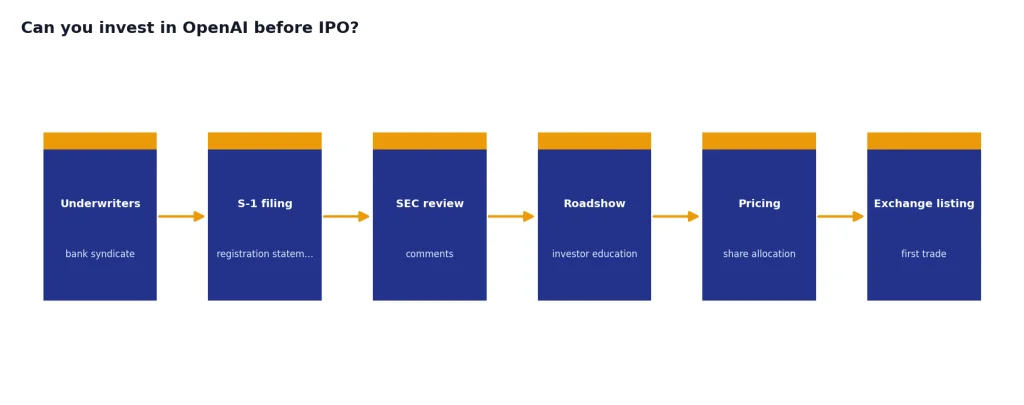
Be skeptical of any site claiming to sell guaranteed OpenAI IPO shares to the general public. A legitimate IPO will have underwriters, a registration process, a prospectus, pricing, and an exchange listing. If you are not an accredited investor, the first practical opportunity may be after OpenAI is already public.
Also remember that OpenAI exposure already exists indirectly in public markets through companies connected to its ecosystem. Microsoft is the clearest example because of its roughly 27% OpenAI Group PBC stake.[2][3] That is not a pure OpenAI investment, but it is one public-market route to partial exposure.
Original analysis: the three-gate IPO framework
The best way to think about the OpenAI IPO is not as a countdown. It is a three-gate process.
Gate 1: governance clarity
OpenAI has made major progress here. The company has a PBC structure, a nonprofit controller, defined Foundation and Microsoft stakes, and a clearer Microsoft agreement.[1][2] The open question is whether public investors will accept a structure where mission governance remains stronger than ordinary shareholder control.
Gate 2: financial predictability
OpenAI’s annualized revenue scale is large, but the business is tied to compute availability and cost.[7][8] That creates a public-market tradeoff. Investors may reward growth, but they will also ask whether margins can improve as usage grows.
Gate 3: market timing
A $500 billion private valuation and a possible $1 trillion IPO target create a narrow pricing challenge.[4][6] OpenAI needs public investors to believe the upside remains large after private investors have already captured enormous gains. If the AI market is strong, a late 2026 or 2027 window becomes more plausible. If markets demand profitability and lower capital intensity, OpenAI may wait.
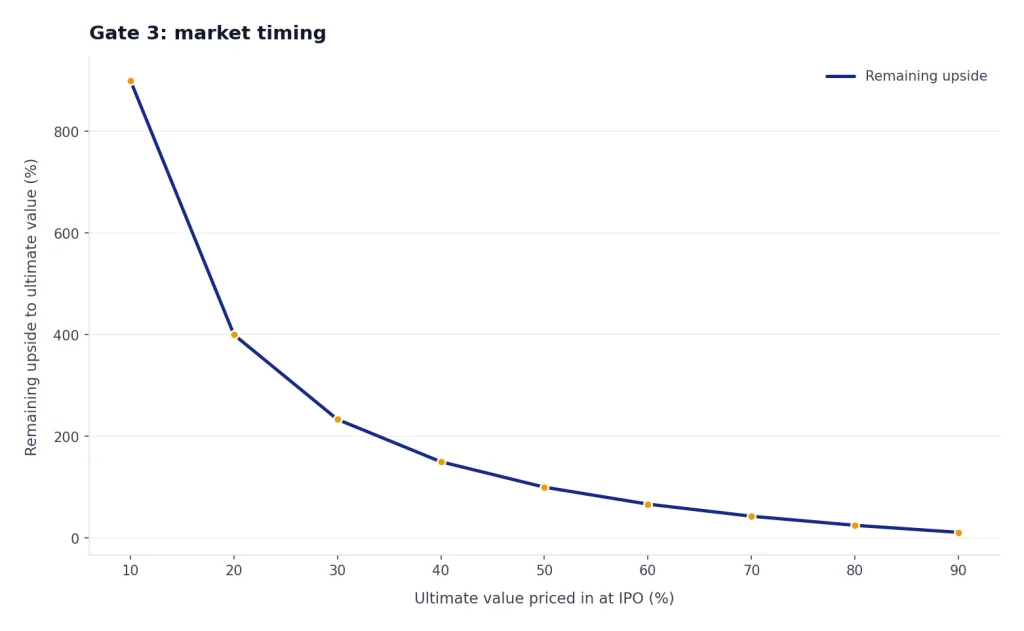
This framework also explains why Sam Altman’s background and capital-market instincts matter. Our Sam Altman biography, Sam Altman net worth, and OpenAI history pages provide more context on the people and events behind this transition.
Frequently asked questions
When is the OpenAI IPO expected?
There is no official OpenAI IPO date. Reuters reported that OpenAI had considered filing with securities regulators as soon as the second half of 2026, while Friar had told some associates the company was aiming for a 2027 listing.[4][5] The safest wording is that an IPO is possible in 2026 or 2027, but not scheduled.
What will the OpenAI stock ticker be?
OpenAI has not announced a stock ticker. A ticker normally appears when a company files IPO documents, selects an exchange, and gets closer to pricing. As of March 13, 2026, there is no official public ticker, price range, or first-trading date.
How much could OpenAI be worth in an IPO?
Reuters reported that early IPO discussions contemplated a valuation of up to $1 trillion, but also said the timing and figures could change.[4] The more concrete private-market reference is about $500 billion, which Reuters and Axios tied to the October 2025 restructuring.[6][9] OpenAI has not published an official IPO valuation.
Is OpenAI already public?
No. OpenAI Group PBC is a for-profit public benefit corporation, but that does not mean it is publicly traded. The SEC explains that an IPO is when a company first offers shares to the general public and registers the offering, typically using Form S-1.[10] OpenAI has not completed that process.
Who owns OpenAI now?
OpenAI says the OpenAI Foundation holds 26% of OpenAI Group, Microsoft holds roughly 27%, and the remaining 47% is held by current and former employees and investors.[1][2] The Foundation also controls OpenAI Group through special voting and governance rights.[1] That means control and economics are not the same thing.
Why did OpenAI restructure before an IPO?
OpenAI said the recapitalization gives OpenAI Group the structure to raise capital and attract and retain talent while keeping mission-focused governance.[1] Reuters reported that the deal removed fundraising constraints and made going public more likely as OpenAI funds data centers and advanced AI development.[6] The restructure does not require an IPO, but it makes one easier to imagine.
Can retail investors buy OpenAI before the IPO?
Most retail investors cannot buy OpenAI stock directly while it remains private. Some funds or secondary platforms may claim exposure, but those are not the same as freely traded public shares. Retail investors should wait for official IPO documents and read the prospectus, because the SEC says the prospectus contains key information about the offering terms, financial condition, management, and risks.[10]
What to watch next
Watch for an S-1, a named exchange, an official ticker, and updated financial disclosures. Those signals matter more than private-market chatter. Also watch whether OpenAI can keep converting compute into revenue, because Friar’s January 2026 post framed compute capacity and revenue growth as moving together.[7][8]
Bottom line: the OpenAI IPO is plausible, but not dated. The company has built much of the structure a future IPO would need. It still has to decide when public markets are the right source of capital.