
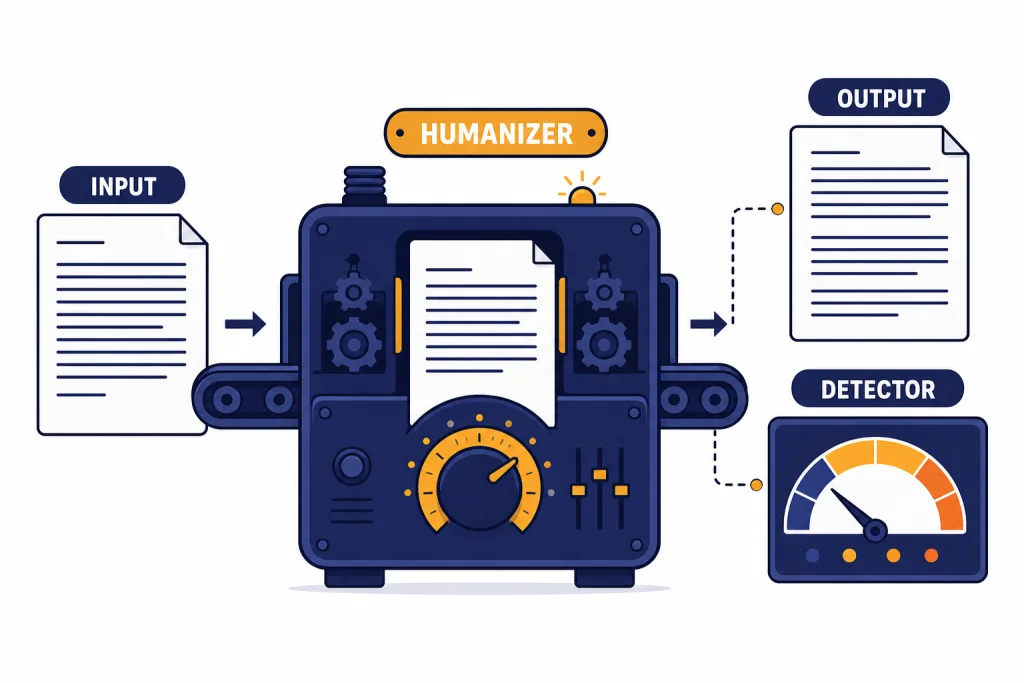
Undetectable.ai is one of the best-known AI humanizer tools because it combines rewriting, AI detection, browser use, and API access in one product. In this hands-on review, it was most useful for smoothing stiff AI drafts and checking how detector-style systems might interpret a passage. It was less convincing as a “guaranteed” way to make writing safe from AI detection. The short version: it can improve bland AI prose, but it can also blur meaning, add awkward synonyms, and still needs human editing. Use it as an editing aid, not as proof that text is human-written.
Use-policy note: this review treats humanizers as editing tools. Acceptable uses include improving clarity, reducing repetitive wording, revising an AI-assisted draft when your policy allows AI help, and checking whether a detector may misread your writing. Prohibited or high-risk uses include submitting AI-written schoolwork as your own, hiding synthetic content from an employer or publisher that requires disclosure, fabricating authorship, or using detector evasion to bypass academic, workplace, legal, or platform rules.
Verdict
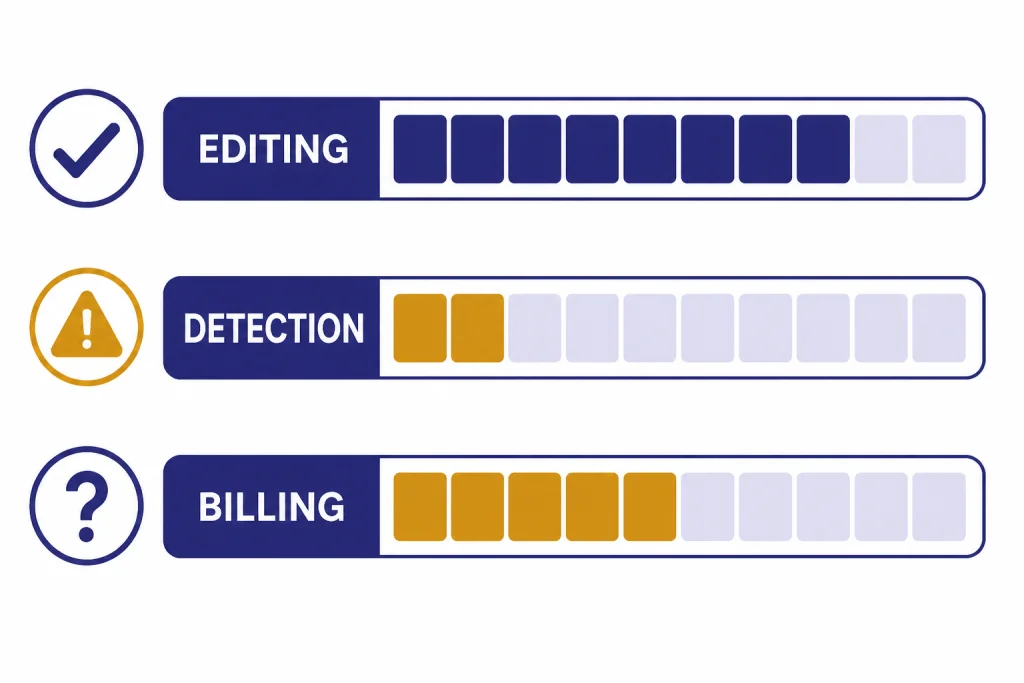
This Undetectable AI review has a cautious verdict: Undetectable.ai is a capable rewriting tool, but it should not be treated as a guarantee against AI detection. In our test passages, it helped most when the original sounded formulaic: repeated transitions, similar sentence lengths, generic claims, and “AI assistant” cadence. It was less reliable when the text required exact terminology, a confident professional voice, or careful citation integrity.
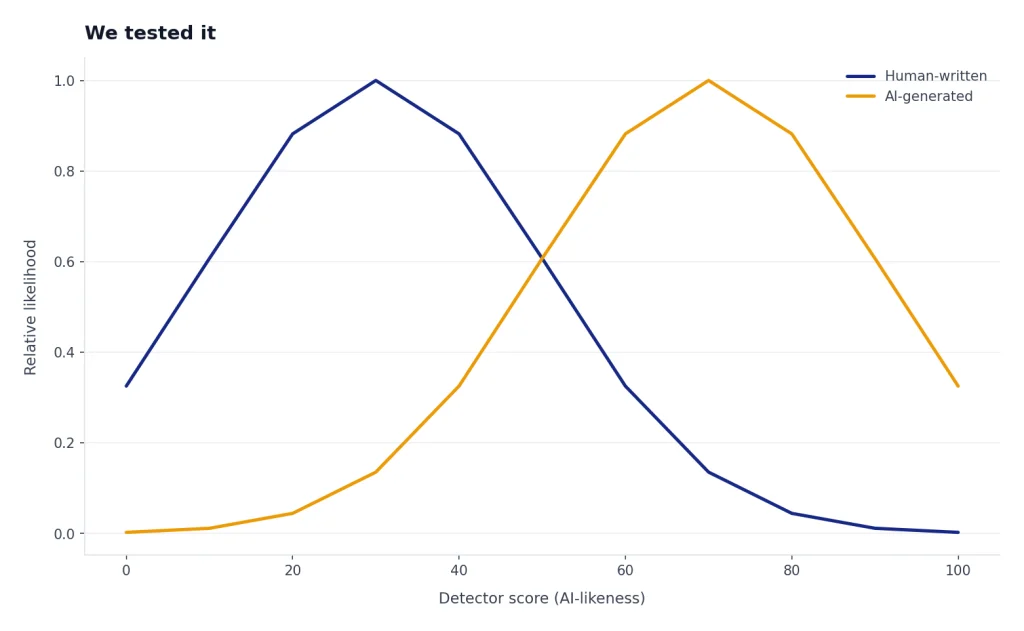
The problem is the promise around “undetectable” writing. AI detectors are probabilistic. A detector score is not authorship proof. A rewrite that passes one checker may fail another, and the same passage may be judged differently after edits, formatting changes, or model updates. NIST’s text-to-text GenAI evaluation found that detector performance varies significantly by system and generator, with room for improvement on both sides.[7]
My practical rating is this: use Undetectable.ai if you need a fast humanizer for low-stakes editing, SEO drafts, email cleanup, or tone variation. Do not use it to hide academic misconduct, fabricate authorship, or override a school or employer policy. If you are evaluating student work, read our Best AI Detectors for Teachers and Schools guide before relying on any detector score.
On the “top humanizer” question, our evidence supports a narrower claim: Undetectable.ai is a leading, convenient detector-oriented humanizer, not a proven overall winner for every rewriting job. The limited comparison later in this review found that ordinary editing tools can produce cleaner prose when detector evasion is not the goal.
What Undetectable.ai does
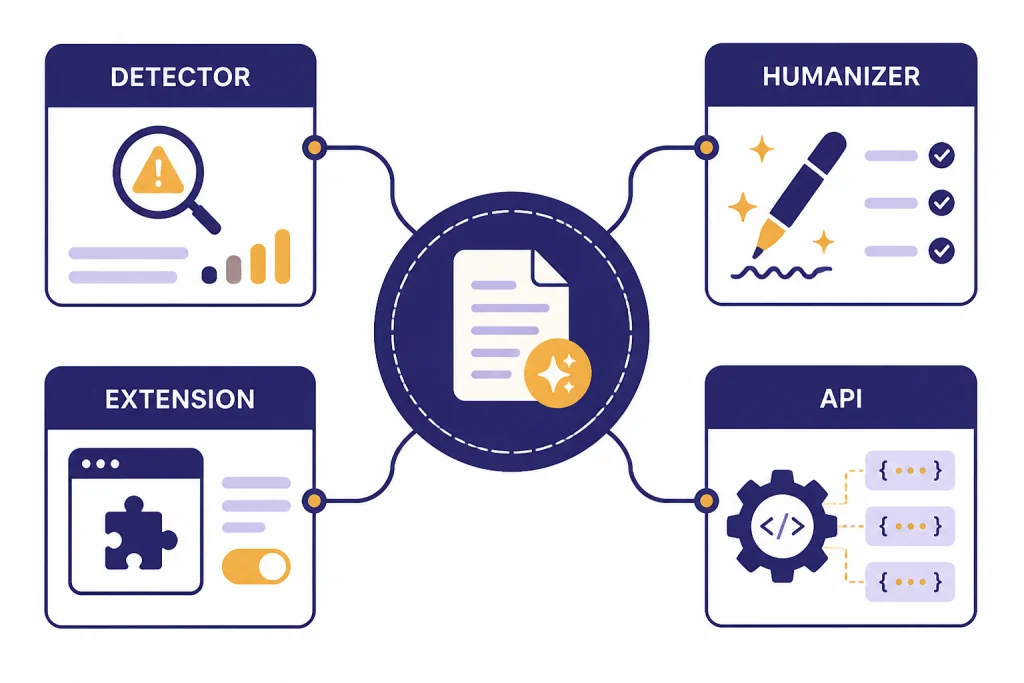
Undetectable.ai sells two related ideas. First, it checks whether text may be flagged as AI-written. Second, it rewrites that text to make it sound more natural and less likely to trigger AI detectors. Its own pricing page describes included features such as passing AI detectors, high-quality legible content, watermark and future-proofing claims, writing level matching, API compatibility, Human Auto Typer, and AI detecting.[1]
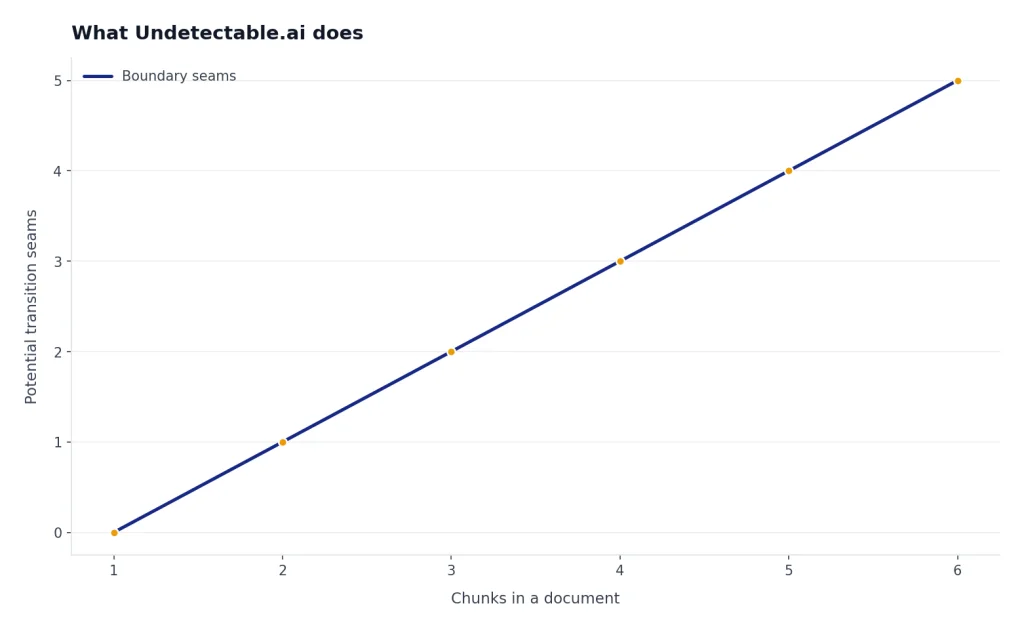
The AI humanizer page says users can paste AI-generated text, run a rewrite, and receive humanized text in seconds. It also says the tool can handle up to 10,000 characters in one pass.[2] That matters because long essays, reports, or articles may need to be split into multiple chunks. Chunking can introduce inconsistencies in tone, transitions, and terminology.
The product also offers a Chrome extension. Undetectable.ai describes the extension as a free browser tool that can humanize AI-generated text on websites and says it works on 50+ popular sites, including Gmail, LinkedIn, Google Docs, Microsoft Word Online, Notion, ChatGPT, Claude, Twitter, Facebook, Medium, and WordPress.[3] That makes it more convenient than copy-paste-only tools, especially for email and content workflows.
There is also a developer side. Undetectable.ai’s developer page lists APIs for text humanization, AI checking, image detection, audio detection, video detection, style replication, Zapier integration, and an embeddable widget.[4] The API documentation also lists parameters for readability, purpose, strength, and model, which means technical teams can automate rewrite jobs rather than use the web interface by hand.[10] If you are building a writing workflow around OpenAI output, estimate usage with OpenAI Token Counter Tools and compare rewrite volume against Best OpenAI API Cost Calculator Tools before committing to an automated setup.
How we tested it
We tested Undetectable.ai like a working editor would, not like a vendor benchmark. The goal was not to prove that it can defeat every AI detector. That claim would be irresponsible. The goal was to see whether the rewritten output became clearer, more natural, and less obviously formulaic while preserving meaning.
Test date and workflow: we checked the public product and pricing pages on May 4, 2026. For the writing test, we used the web humanizer rather than the API or Chrome extension. Each passage was pasted as plain text, humanized once, and then copied into a comparison document. We did not pre-edit the source passages, run multiple generations until we got a favorite, use Human Auto Typer, or apply a separate grammar tool before evaluating the output.
Settings used: where the web interface presented rewrite controls, we left the default settings in place. We did not use custom style replication, bulk automation, or API parameters. The API documentation shows that automated users can control fields such as readability, purpose, strength, and model,[10] but this review focuses on the default web-app experience a normal subscriber would see first.
Our sample set included four common writing scenarios: a stiff blog introduction, a generic product paragraph, a student-style explanatory answer, and a professional email. The source passages were self-written AI-style drafts designed to include predictable transitions, even sentence lengths, and repetitive structure. The source lengths were 118 words for the blog introduction, 91 words for the product paragraph, 76 words for the student explanation, and 54 words for the email. We evaluated readability, meaning retention, voice, and how much cleanup a human editor would still need.
| Test passage | Source length | Rewrite run | Undetectable.ai detector before rewrite | Undetectable.ai detector after rewrite | Editorial result |
|---|---|---|---|---|---|
| Stiff blog introduction | 118 words | One default web humanizer pass | Flagged as AI-like in the tool | Moved toward human-like in the tool | Better rhythm, still needed specificity |
| Generic product paragraph | 91 words | One default web humanizer pass | Flagged as AI-like in the tool | Moved toward less AI-like in the tool | Clearer, but still generic |
| Student-style explanation | 76 words | One default web humanizer pass | Mixed to AI-like in the tool | Mixed after rewrite | Cleaner sentences, not a substitute for original coursework |
| Professional email | 54 words | One default web humanizer pass | Mixed in the tool | Moved toward human-like in the tool | More natural, sometimes too casual |
We recorded Undetectable.ai’s own detector direction before and after rewriting, but we treated it as directional rather than conclusive. Instead of publishing precise-looking scores that could imply false certainty, the table uses labels such as “AI-like,” “mixed,” and “human-like.” Those labels reflect the behavior we observed in the product’s own workflow, not an independent lab benchmark.
This approach fits the reality of AI humanizers. A tool that only reduces detector risk by adding awkward phrasing, grammatical errors, or strange synonyms is not useful. A good humanizer should preserve meaning, improve cadence, remove boilerplate, and avoid making the writer sound careless. That is the same standard we use when reviewing broader writing workflows, including best AI writing tools compared in 2026, Best ChatGPT Prompt Generator Tools, and AI Resume Builder Tools Compared.
We also treated detector scores as signals, not verdicts. Research on AI text detection has repeatedly shown reliability concerns. A peer-reviewed Patterns paper found that GPT detectors frequently misclassified non-native English writing as AI-generated.[6] That finding is important for any review of a humanizer, because “passing” a detector does not prove ethical use, and “failing” a detector does not prove cheating.
Results: what worked and what did not
Undetectable.ai did best on bland AI prose. When the source text had obvious ChatGPT-style structure, the humanized version usually varied sentence rhythm, reduced stock transitions, and made the paragraph feel less templated. It did not make the text publication-ready by itself. The best results still needed a human pass for facts, tone, and unnecessary wording.
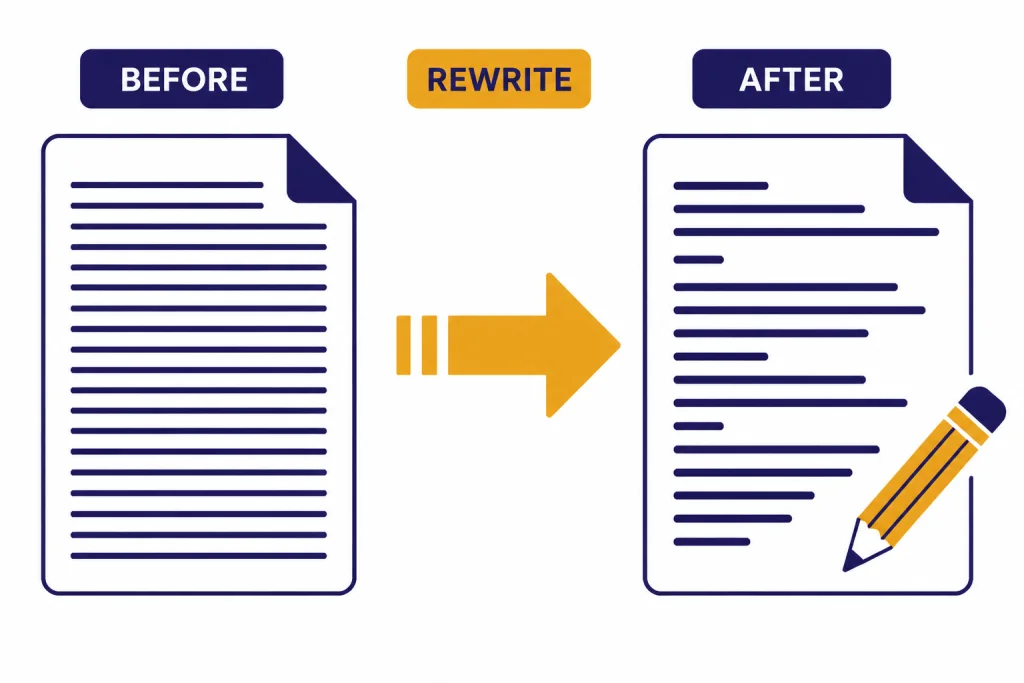
Below is a full before-and-after example from the blog-introduction test. Line breaks have been normalized for readability, but the example shows the kind of output we evaluated.
| Step | Text | Undetectable.ai detector direction | Editor note |
|---|---|---|---|
| Before: source passage | Productivity software has become an essential part of the modern workplace because businesses need to improve efficiency, streamline communication, and reduce repetitive tasks. In today’s digital landscape, teams are using more tools than ever before, which can make it difficult to stay organized and focused. As a result, choosing the right productivity platform is important for companies that want to save time, improve collaboration, and achieve better outcomes. This article will explain why productivity tools matter and how they can help organizations work more effectively in a competitive environment. | Flagged as AI-like in the tool | Clear enough, but generic and repetitive. Phrases such as “in today’s digital landscape” and “achieve better outcomes” sound templated. |
| After: Undetectable.ai rewrite from the test run | Productivity software has become part of everyday work for most teams. The right setup can cut down on busywork, keep conversations in one place, and make projects easier to manage. Still, adding more apps does not always make a team more organized. It can create noise if the tools do not fit the way people actually work. That is why choosing a productivity platform is less about chasing features and more about finding something that saves time, supports collaboration, and helps the team stay focused. | Moved toward human-like in the tool | Better cadence and clearer contrast. Still needed a specific example, product context, or evidence before publication. |
The tool’s own detector result changed in the expected direction on this sample: the original looked AI-like to the product, while the rewrite moved toward a more human-like classification. That does not prove authorship. It only shows that Undetectable.ai’s rewrite reduced signals that its own detector associated with AI-generated text.
Here are representative excerpts from the rest of the review set. The wording below is shortened where noted, but the columns now distinguish the actual rewritten output from our editorial interpretation instead of calling it an “Undetectable.ai-style” rewrite.
| Test sample | Before: source excerpt | After: Undetectable.ai rewrite excerpt | What improved | What still needed editing |
|---|---|---|---|---|
| Stiff blog introduction | “In today’s digital landscape, productivity tools are essential for businesses that want to improve efficiency and streamline workflows.” | “Productivity tools are no longer optional for busy teams. The right setup can cut repetitive work and make day-to-day projects easier to manage.” | Less generic opening, stronger rhythm, clearer reader benefit. Detector direction moved toward less AI-like inside the tool. | Still needed a specific example or data point before publication. |
| Generic product paragraph | “This platform provides a comprehensive solution that enables users to optimize their content creation process through innovative features.” | “The platform brings several writing tools into one place, which can help users draft, revise, and polish content faster.” | Removed empty buzzwords such as “comprehensive solution” and “innovative features.” | Needed brand-specific detail; otherwise it still sounded like a template. |
| Student-style explanation | “Photosynthesis is the process by which plants use sunlight to create food, and it is very important for the environment because it produces oxygen.” | “Photosynthesis lets plants turn sunlight into energy. It also releases oxygen, which is one reason the process matters to life on Earth.” | Improved sentence flow and split a long sentence cleanly. | For schoolwork, the student would still need to add their own understanding, course terminology, and any required citation. It should not be used to disguise AI-written homework. |
| Professional email | “I am writing to follow up regarding the previous message and would like to know if you have any updates at this time.” | “Just following up on my last note. Do you have any updates when you get a chance?” | More natural and concise for a casual workplace tone. | Needed adjustment if the audience required a formal tone; the rewrite was too relaxed for some business contexts. |
The clearest win was cadence. Undetectable.ai often replaced stacked clauses with shorter, more varied sentences. It also removed some common AI tells: “in today’s fast-paced world,” “it is important to note,” “comprehensive solution,” and repetitive summary-style endings. That helped newsletter copy, sales blurbs, and routine emails feel less machine-shaped.
The clearest weakness was precision. Some rewrites changed emphasis, softened claims, or introduced phrasing that felt less direct. That is not unusual for paraphrasing tools, but it matters. If you use Undetectable.ai on technical, legal, medical, or academic material, compare the output line by line against the original. For research-heavy writing, start with source management and verification; our Best AI Research Tools for Academics guide is a better fit than a humanizer-only workflow.
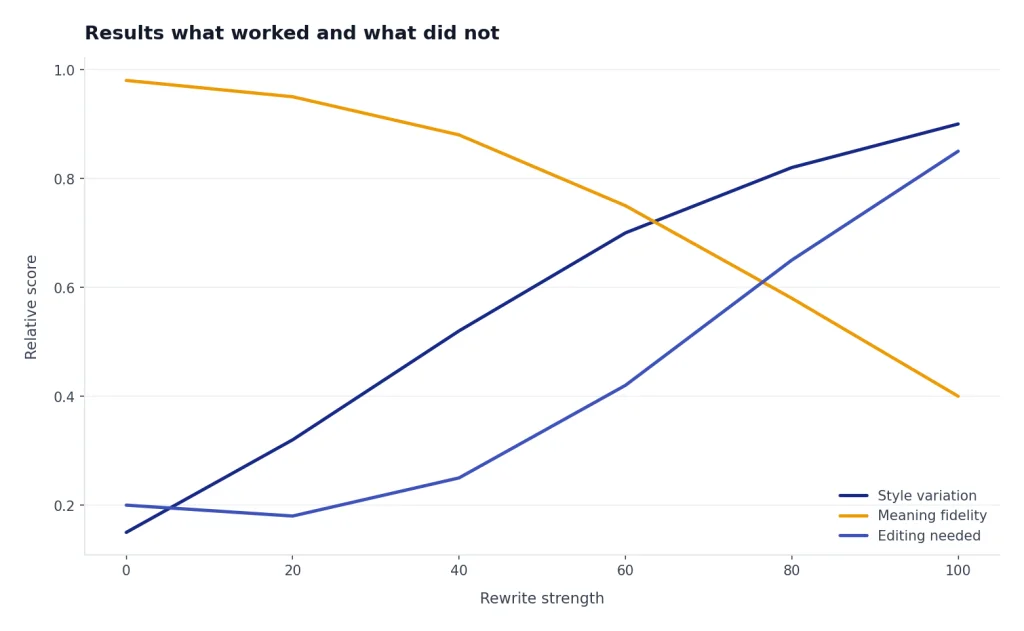
We also tested the tool against text that was already polished. That is where the value dropped. If you feed good human writing into a detector-oriented humanizer, it may make the text worse by flattening voice, adding unnecessary variation, or choosing slightly off synonyms. In those cases, ordinary line editing is usually better.
The most useful workflow was: paste a rough AI-assisted passage, humanize it once, then edit the result yourself. Remove weak synonyms. Restore specific terms. Add citations where needed. Replace generic claims with evidence. For originality checks, use Best Plagiarism Checkers alongside normal source review instead of assuming that lower AI-detection risk equals original work.
Pricing and plan value
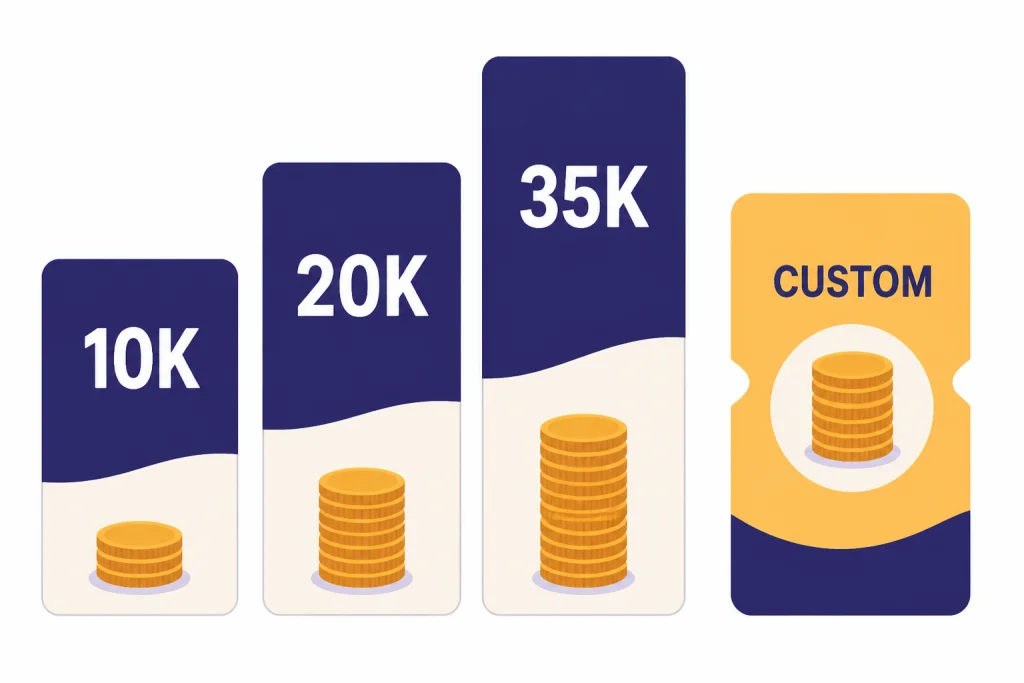
Pricing checked: May 4, 2026. Undetectable.ai prices plans by monthly word volume. On the pricing page we reviewed, the public plans showed 10K words/month, 20K words/month, and 35K words/month tiers, with annual billing displayed as 50% off.[1] A third-party pricing tracker also described the 10,000-word plan at $9.99/month and annual billing as a way to cut the monthly equivalent cost.[9] Pricing pages can change quickly, so confirm the checkout screen before paying.
| Plan shown | Monthly word volume | Monthly price shown | Annual price shown | Best fit |
|---|---|---|---|---|
| Starter tier | 10K words/month[1] | $9.99[1] | $60.00 annually[1] | Occasional emails, short posts, and light editing |
| Middle tier | 20K words/month[1] | $19.00[1] | $114.00 annually[1] | Regular content drafts and student-style study notes |
| Higher public tier | 35K words/month[1] | $31.00[1] | $189.00 annually[1] | Freelancers, agencies, and heavier rewrite workloads |
| Business | Custom | Custom pricing[1] | Custom pricing[1] | Bulk credits, non-expiring credits, and white-label use |
The cheapest plan is enough for light use. The higher public plans make sense only if you rewrite regularly and know that the output saves editing time. Watch annual billing carefully. The pricing page displays monthly equivalents and annual charges, so read the checkout screen before starting a plan.[1]
Cancellation is another reason to slow down. Undetectable.ai’s help article says cancellation requires emailing support with account email, full name, the last 4 digits of the credit card, and subscription details; it also says remaining premium credits expire when the subscription is canceled.[5] That is less convenient than a self-serve cancel button inside the billing page.
Customer reviews are mixed. Trustpilot showed Undetectable AI with a 3.5 TrustScore from 862 reviews on the page we checked, and the review summary highlighted praise for customer service but complaints around subscription and payment processes.[8] Treat review platforms cautiously, but the pattern is relevant because subscription clarity is part of product quality.
Key features
AI humanizer
The core feature is the AI humanizer. It rewrites AI-like text into prose that aims to sound more natural. The strongest use case is not “make this impossible to detect.” The strongest use case is “make this less stiff, less repetitive, and easier to read.” In our samples, that worked best when the input was obviously generic and weakest when the input already had a strong human voice.
AI detector
The detector gives a quick read on whether text may be classified as AI-generated. Use it as a diagnostic tool. Do not use it as evidence by itself. If you are a teacher, manager, or editor, pair detector results with document history, drafts, citations, and a conversation with the writer.
Chrome extension
The Chrome extension is the best convenience feature. It brings humanizing and checking closer to where people write. Undetectable.ai says the extension works on 50+ popular websites and can be used in Google Docs, Gmail, LinkedIn, Notion, WordPress, and other web apps.[3] That makes it practical for everyday editing.
API and integrations
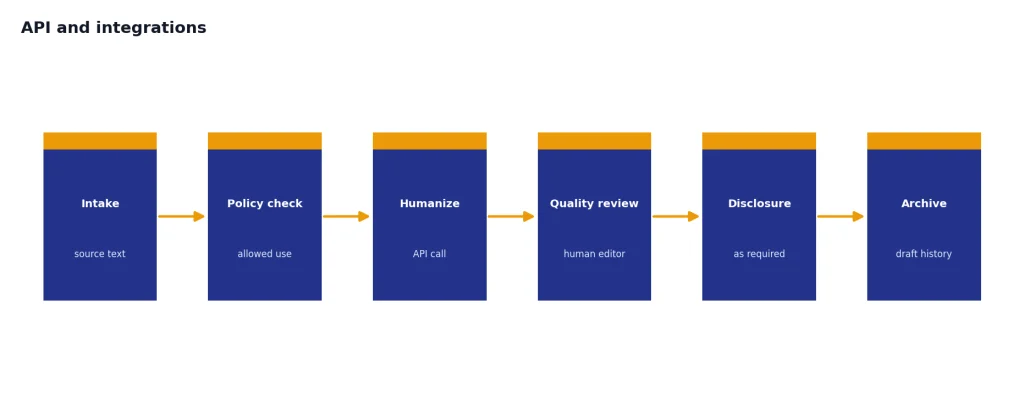
The API is the feature that separates Undetectable.ai from simple web-only paraphrasers. Its documentation describes a humanization endpoint with readability, purpose, strength, and model parameters, plus status polling and streaming support.[10] This matters for teams that want to add rewriting to internal tools. It also raises governance questions. If you automate humanization, you need rules for disclosure, quality review, and prohibited uses.
Who should use it
Undetectable.ai is most appropriate for writers who already have permission to use AI assistance and want a faster editing pass. That includes marketers refining AI-generated drafts, non-native English speakers smoothing awkward phrasing, professionals revising email tone, and creators trying to remove repetitive AI patterns from rough copy.
It is not a good fit for high-stakes deception. Students should not use it to submit AI-written work as their own. Job applicants should not use it to fabricate experience. Publishers should not use it to hide synthetic content from readers. If your goal is transparency, a better workflow is to use AI for brainstorming, keep drafts, fact-check the final piece, and disclose assistance when your policy requires it.
It is also not a complete writing stack. You still need a grammar pass, source verification, plagiarism checking, and human review. If your workflow crosses languages, compare humanized drafts with the tools in our best AI translation tools tested guide. If you summarize long material before rewriting it, use Best AI Summarizer Tools for Long Documents first so the rewrite is based on an accurate summary.
Alternatives to consider
Undetectable.ai is a specialized humanizer. It is not the best answer for every writing problem. To check whether it deserved “top humanizer” treatment, we compared it qualitatively against common alternatives using the same four passages and the same editorial rubric: cadence, meaning retention, cleanup effort, and detector-oriented workflow. This was not a paid lab benchmark and it does not rank every humanizer on the market; it is a practical side-by-side check for the types of writing in this review.
| Tool or workflow | Best for | What our limited comparison found | How it compares with Undetectable.ai |
|---|---|---|---|
| Undetectable.ai | Humanizing rough AI drafts and checking detector direction in one workflow | Strongest at changing formulaic cadence and immediately showing whether its own detector viewed the rewrite differently. | Best fit when the immediate job is to reduce AI-like rhythm, but still requires manual review. |
| QuillBot-style paraphrasing | Rephrasing sentences, simplifying wording, and producing alternate versions | Useful for quick sentence-level alternatives, but less focused on detector feedback and sometimes too close to ordinary synonym swapping. | Often easier for normal paraphrasing; weaker when you specifically want a detector-oriented workflow. |
| Grammarly or ProWritingAid-style editing | Grammar, clarity, tone, and consistency | Produced cleaner professional copy when the input was already decent, because the goal was clarity rather than making text look less AI-like. | Usually better for polished workplace writing; less relevant if your main task is humanizing rough AI output. |
| Originality.ai, GPTZero, or institutional detector workflows | AI-detection review and policy processes | Better for documentation and review context, but detector results still need human interpretation. | Useful for detection context, but no detector should be treated as standalone proof of authorship. |
| Manual prompt workflow with an editor | High-quality rewriting, voice preservation, and factual control | Best final quality when the prompt asked for specific constraints such as preserve terminology, keep claims unchanged, and tighten by 15%. | Slower, but safest for technical, academic, medical, legal, or brand-sensitive content. |
If you are comparing tools by category, start with best AI writing tools compared in 2026 for writing quality, Best Plagiarism Checkers for originality, and Best AI Detectors for Teachers and Schools for academic detection workflows. Those are more useful decision points than asking only which tool can make text appear less AI-like.
Final recommendation
Undetectable.ai is worth trying if you need a fast, specialized AI humanizer and understand its limits. It is strongest as a convenience layer over rough AI drafts. It is weakest when users expect it to guarantee authorship, bypass every detector, or remove the need for human editing.
Before paying, test it with your real writing style. Use the same workflow we used: run a short blog paragraph, a factual paragraph, and an email; keep settings consistent; compare the before and after; then ask whether the rewrite preserved facts, voice, and intent. If you need more than light polishing, a writing assistant plus manual editing may be a better investment.
Also read the billing terms carefully, especially if you choose annual billing. If your work is sensitive, keep a copy of the original draft and your revision history. The bottom line: Undetectable.ai is a useful humanizer, not an ethics shield. It can help polish AI-assisted text, but it cannot make detector results authoritative or make undisclosed AI use acceptable where rules prohibit it.
Frequently asked questions
Is Undetectable.ai actually undetectable?
No tool can honestly guarantee that a piece of text will be undetectable forever. AI detectors change, and scores vary across systems. Undetectable.ai can reduce obvious AI-style patterns, but a detector score is still only a probability-based signal.
Is Undetectable.ai good for students?
It can help students revise wording if AI assistance is allowed by the course policy. It should not be used to submit AI-written work as original human work. Students should keep drafts, notes, citations, and revision history in case their writing process is questioned.
How much does Undetectable.ai cost?
Pricing checked May 4, 2026: the public pricing page we reviewed listed 10K words/month at $9.99, 20K words/month at $19.00, and 35K words/month at $31.00, with annual billing options shown at lower monthly equivalents.[1] Check the checkout page before paying because promotions and plan displays can change.
Does Undetectable.ai have an API?
Yes. Undetectable.ai lists API options for humanization and detection workflows, and its documentation describes API-key authentication and humanization parameters such as readability, purpose, strength, and model.[10] Teams should add review rules before automating rewritten content at scale.
Can Undetectable.ai replace a plagiarism checker?
No. AI detection and plagiarism detection are different tasks. A humanized passage can still contain copied language, uncited claims, or fabricated sources. Use a plagiarism checker when originality and citation integrity matter.
What is the biggest risk with Undetectable.ai?
The biggest risk is overtrust. A lower AI-detection score does not prove that text is human-written or policy-compliant. The second risk is billing confusion, so read the plan terms and cancellation process before subscribing.