
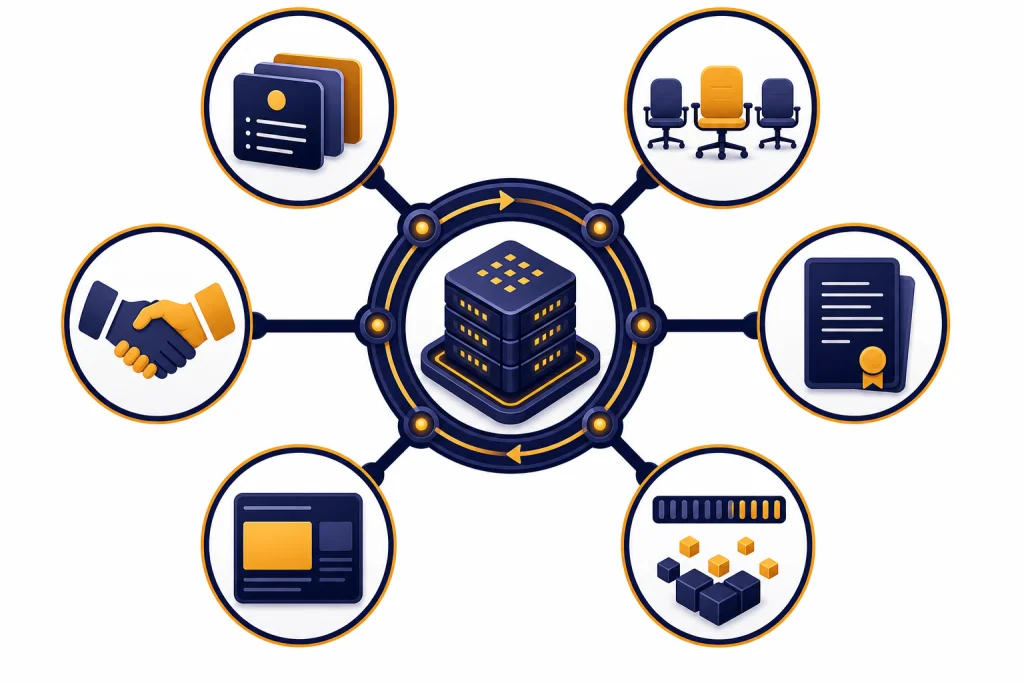
ChatGPT makes money through a layered business model: paid subscriptions for individuals, per-seat plans for companies, usage-based API charges for developers, enterprise contracts, advertising tests on lower-cost plans, and strategic partnerships. The free version is not the main revenue product. It is a distribution engine that brings users into the ecosystem, teaches the product what people need, and creates demand for paid plans at work. OpenAI has published annual recurring revenue figures, but it has not published an official revenue split by subscriptions, API, enterprise, ads, and partnerships. The best way to understand ChatGPT’s business model is to follow how a free user can become a Plus subscriber, a workplace seat, an API customer, or an enterprise account.
Quick answer
The short answer is that ChatGPT makes money by selling access to OpenAI’s AI systems in different packages. Consumers pay monthly for higher limits and more advanced features. Businesses pay for managed workspaces, privacy controls, admin tools, and support. Developers pay for API usage, usually based on tokens and tool calls. Large enterprises negotiate custom contracts. OpenAI also began testing ads in ChatGPT for some Free and Go users in the United States on February 9, 2026.[8]
This is a classic freemium model with an unusually expensive product behind it. Free access creates awareness and habit. Paid plans convert the heaviest users. Workplace adoption turns personal use into company spending. API access lets other software companies build products on top of OpenAI models. If you are new to the product itself, start with what ChatGPT is before digging into the economics.
The main revenue streams
OpenAI describes its current business as a multi-tier system that includes consumer and team subscriptions, a free ad- and commerce-supported tier, and usage-based APIs tied to production workloads.[6] That statement is the clearest official summary of how ChatGPT makes money.
The revenue streams fall into six practical buckets:
- Consumer subscriptions. Individuals pay for more access, higher limits, faster responses, and advanced tools.
- Business subscriptions. Teams pay per user for shared workspaces, business controls, and no training on workspace data.
- Enterprise contracts. Larger organizations pay for security, support, compliance, custom terms, and deployment scale.
- API usage. Developers and companies pay based on model usage, including text, image, audio, and built-in tool usage.
- Advertising and commerce. OpenAI is testing ads on lower-cost plans to help fund broad access to ChatGPT.[8]
- Strategic partnerships. OpenAI has received major backing through partnerships such as Microsoft’s multi-year, multi-billion-dollar investment announced on January 23, 2023.[9]
OpenAI has not published an official revenue split for these buckets. It has published top-line annual recurring revenue figures: $2 billion in ARR in 2023, $6 billion in 2024, and more than $20 billion in 2025.[6] Those figures show scale, but they do not tell readers exactly how much came from ChatGPT Plus, business seats, API calls, enterprise contracts, or ads.
Subscriptions turn individual demand into recurring revenue
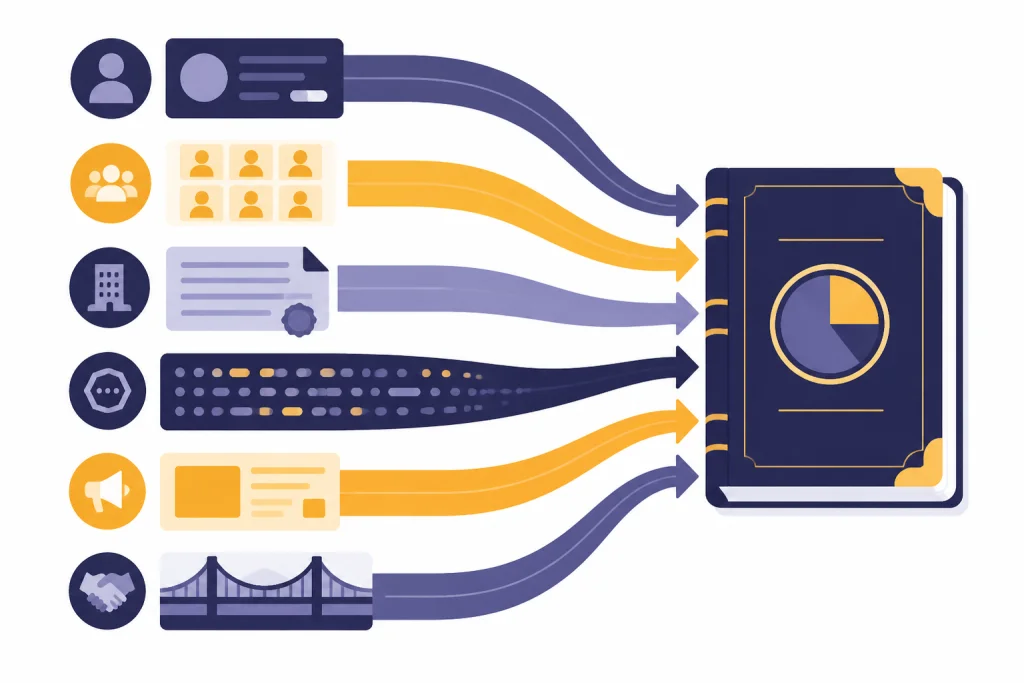
ChatGPT’s most visible revenue stream is the paid subscription. OpenAI’s official plan lineup includes Free, Go, Plus, Pro, Business, and Enterprise plans.[1] The consumer side is designed to let someone start with no payment, hit limits or need better tools, and then upgrade.
ChatGPT Plus is the mainstream paid plan. OpenAI’s Help Center describes Plus as a subscription plan for the ChatGPT web app at $20 per month.[2] Pro targets heavier users. OpenAI’s Pro documentation lists a $200 per month Pro tier and describes it as a plan for people who rely on AI for complex work.[3] For a deeper buyer-focused view, see our ChatGPT Plus price in 2026 guide.
The subscription model works because many users do not need the same amount of compute every day. Some subscribers use ChatGPT lightly. Others use it heavily. OpenAI can price plans around expected average use, feature access, and rate limits. This gives users predictable monthly pricing while giving OpenAI recurring revenue.
Subscriptions also create a direct relationship with users. OpenAI can add features, adjust limits, and introduce new tools without selling a separate product every time. That matters because ChatGPT is not one static chatbot. It is a product wrapper around models, memory, voice, files, images, search, coding tools, and agent-style workflows. Each new feature can make the paid tier more valuable.
Business and enterprise plans monetize workplace use
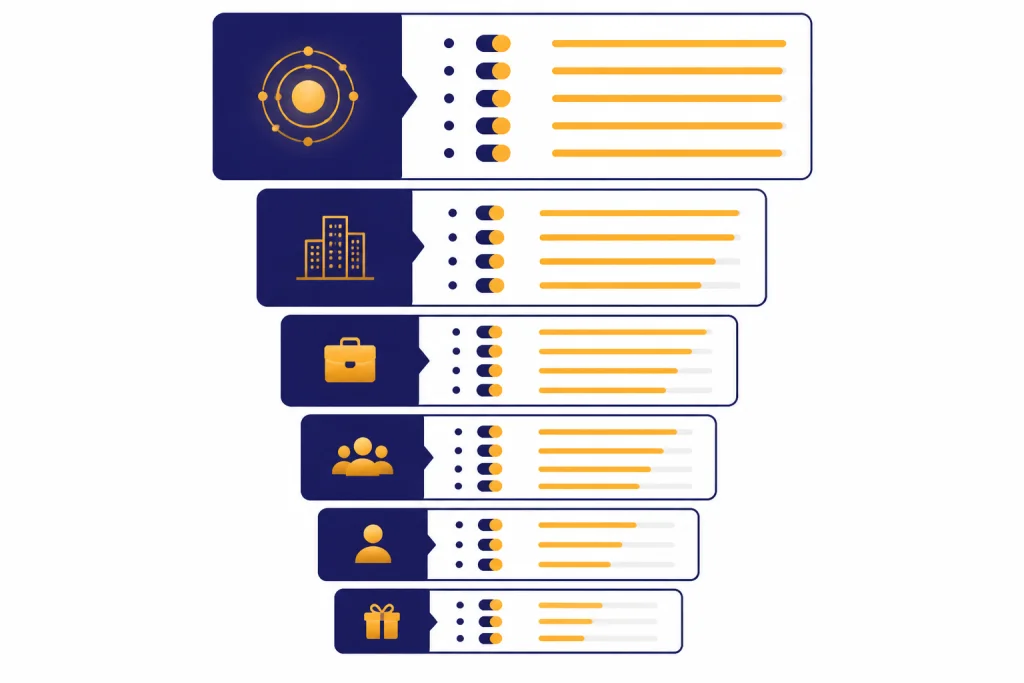
ChatGPT becomes more valuable when it moves from personal tasks into company workflows. A person may start by using ChatGPT to draft emails or summarize documents. Then a department wants shared access, admin controls, data protections, and a way to manage billing. That is where business plans come in.
As of this article’s March 18, 2026 publication date, OpenAI’s Help Center listed ChatGPT Business pricing in most countries at $25 per user per month when billed annually or $30 per user per month when billed monthly, with a minimum of 2 seats.[4] Business workspaces also include enterprise privacy commitments, and OpenAI says it will not train on workspace data.[4]
Enterprise plans go further. OpenAI’s pricing page lists Enterprise as custom pricing and points buyers to sales.[1] Enterprise customers generally care less about a single-seat price and more about security review, access controls, data retention, compliance, support, uptime expectations, procurement, and organization-wide rollout. If your company is considering a support workflow, our ChatGPT customer service guide explains one common business use case.
OpenAI has also highlighted workplace adoption as a major strategic channel. Its enterprise AI report says ChatGPT serves more than 800 million users every week and that consumer adoption creates a flywheel that accelerates AI use in professional settings.[7] In plain terms, people try ChatGPT at home, bring the habit to work, and then companies pay for managed access.
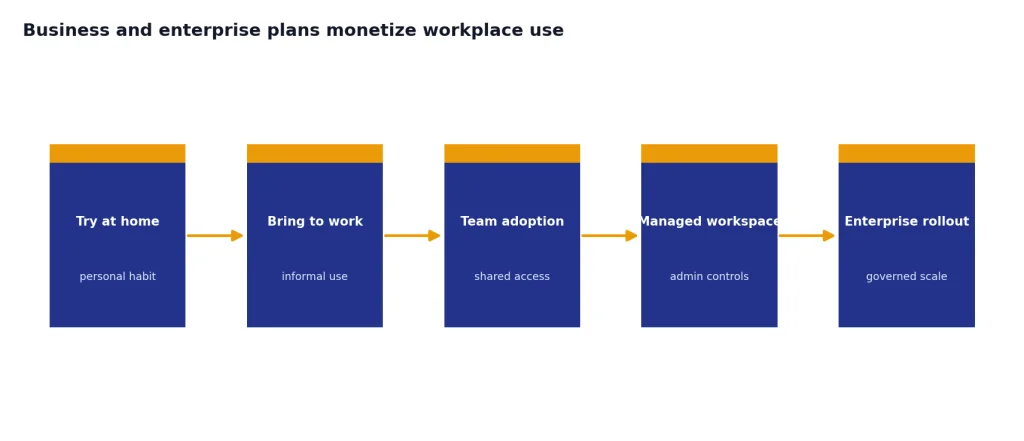
This is why ChatGPT’s business model is not only consumer software. It is also business software. OpenAI can sell the same underlying intelligence to a student, a freelancer, a startup, a call center, a bank, and a global enterprise. The packaging changes by buyer. The core product stays connected.
API usage turns ChatGPT technology into infrastructure
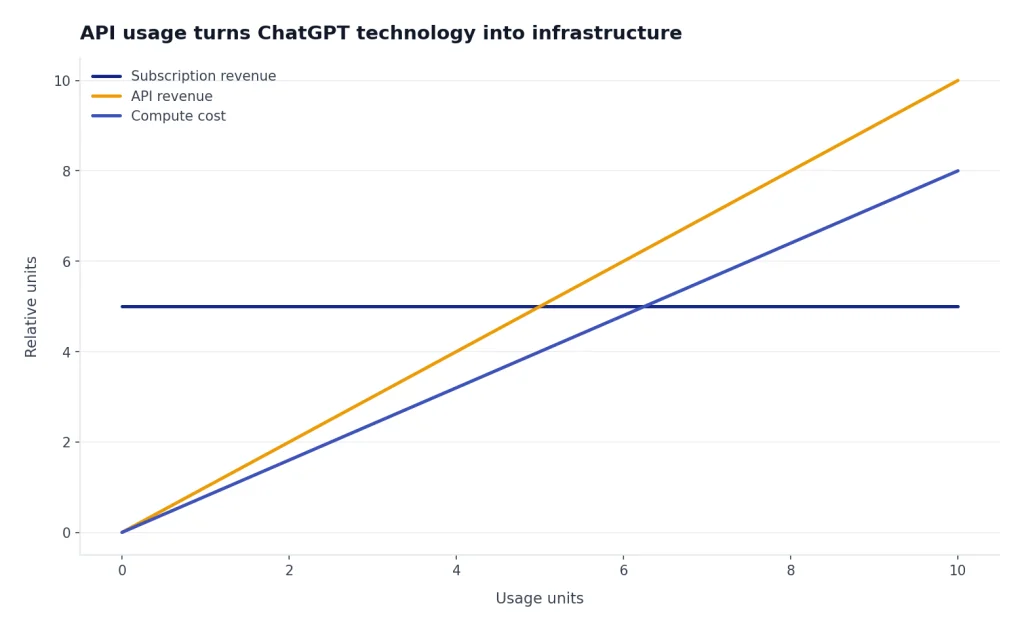
The API is a separate revenue engine from the ChatGPT app. In the app, users pay for a plan. In the API, developers pay for usage. OpenAI’s API pricing page lists prices by model and modality, commonly using rates per 1 million tokens, plus separate pricing for tools such as web search and containers.[5]
This matters because many customers do not want employees to use the ChatGPT interface manually. They want AI inside their own product, helpdesk, analytics pipeline, document workflow, coding tool, or internal dashboard. The API lets them build that. The company pays when its software sends inputs and receives outputs.
API revenue can scale with customer success. A small prototype may cost little. A production product with millions of requests can become a large monthly bill. That is why developers need to track tokens, caching, model choice, and tool use. Our OpenAI API pricing breakdown covers this in more detail.
For OpenAI, API pricing has a different economic profile from subscriptions. A subscription creates predictable monthly revenue but exposes OpenAI to heavy users who may consume a lot of compute. API billing ties revenue more closely to actual usage. That makes it attractive for production workloads, especially when customers build revenue-generating products on top of OpenAI models.

Ads, commerce, and partnerships expand the model
Advertising is now part of the ChatGPT business model, but it is still early. OpenAI says it is testing ads because keeping Free and Go plans fast and reliable requires significant infrastructure and ongoing investment.[8] The Help Center says the U.S. test began on February 9, 2026.[8]
Ads change the economics of free access. Without ads, free users are mainly an acquisition cost and a usage cost. With ads, some free or low-cost usage can generate direct revenue. OpenAI says actions such as hiding, reporting, viewing, or clicking an ad do not get added to ChatGPT memory.[8] That detail matters because trust is central to the product.
Commerce is related but different. If ChatGPT helps a user compare products, plan travel, select software, or find a service provider, there may be future ways to monetize those transactions. OpenAI has not published a full official commerce revenue model, so any detailed estimate would be speculation. The important point is that conversational AI sits close to user intent. That can become valuable if handled transparently.
Partnerships also matter. Microsoft and OpenAI announced an expanded partnership on January 23, 2023, including a multi-year, multi-billion-dollar investment.[9] Partnerships can provide capital, cloud infrastructure, distribution, and product integrations. They are not the same as ChatGPT subscription revenue, but they help explain how OpenAI has funded a product that requires large-scale computing infrastructure.
Why revenue does not equal profit
ChatGPT can generate large revenue and still be expensive to run. Every answer requires compute. More advanced models, longer context windows, voice, images, file analysis, search, coding agents, and deep research can all increase resource usage. OpenAI’s CFO wrote that revenue directly tracks available compute and reported compute growth from 0.2 GW in 2023 to 0.6 GW in 2024 and about 1.9 GW in 2025.[6]
This is the central tension in ChatGPT’s business model. OpenAI wants broad access because mass adoption creates value, data about use cases, brand strength, and a path into workplaces. But broad access also creates infrastructure cost. Paid plans, API billing, enterprise contracts, and ads are ways to fund that access.
The best analogy is not a normal software app where one more user costs almost nothing. ChatGPT is closer to a cloud service that performs work each time you ask for something. That is why limits, model routing, paid tiers, and usage pricing matter. They are not only product decisions. They are economic controls.
OpenAI has not published an official product-level profit figure for ChatGPT. It has published ARR and broad business model commentary, but not a full income statement for ChatGPT as a standalone product. Any claim that ChatGPT is profitable or unprofitable by itself should be treated carefully unless OpenAI publishes that figure.
ChatGPT business model table
This table summarizes how ChatGPT turns usage into money. It separates who pays, what they pay for, and why that channel matters.
| Revenue stream | Who pays | Pricing signal | Why it matters |
|---|---|---|---|
| Consumer subscriptions | Individuals | Plus is $20 per month; Pro is listed at $200 per month.[2][3] | Turns heavy personal use into recurring revenue. |
| Business seats | Teams and small companies | As of March 18, 2026, Business was listed at $25 per user per month annually or $30 per user per month monthly, with a 2-seat minimum.[4] | Monetizes workplace adoption with admin controls and privacy terms. |
| Enterprise contracts | Large organizations | Custom pricing through sales.[1] | Supports larger deployments, compliance, support, and procurement needs. |
| API usage | Developers and software companies | Model and tool usage are priced on OpenAI’s API pricing page, commonly per 1 million tokens.[5] | Lets other products embed OpenAI models and pay based on usage. |
| Ads | Advertisers | OpenAI began testing ads in the U.S. on February 9, 2026.[8] | Helps fund free and lower-cost access without requiring every user to subscribe. |
| Strategic partnerships | Technology partners and investors | Microsoft’s expanded partnership included a multi-year, multi-billion-dollar investment announced January 23, 2023.[9] | Provides capital, infrastructure support, distribution, and ecosystem reach. |
What this means for users and businesses
For individual users, the business model explains why the free tier has limits and why paid plans exist. The free tier is useful, but it cannot offer unlimited access to the most expensive capabilities for everyone. If you use ChatGPT often for work, learning, coding, writing, or research, a paid plan may be worth comparing against your time savings.
For businesses, the key question is not whether ChatGPT can answer questions. It is whether the tool can improve a workflow enough to justify seats, training, governance, and integration. A support team might use it to draft responses. A marketing team might use it to produce first drafts. A founder might use it with a ChatGPT business plan generator to structure an idea before hiring help.
For developers, the API changes the calculation. You are not buying a fixed app. You are buying a metered capability. That means product design affects cost. A short prompt, cached context, cheaper model, or batch job can change margins. A long reasoning workflow with tools can cost more but may solve a higher-value problem.
For workers and creators, ChatGPT’s business model creates a secondary economy. People use it to deliver services, build automations, write content, analyze data, and prototype products. If that is your angle, see how to make money with ChatGPT in 2026 and our guide to prompt engineering jobs.
The practical takeaway is simple. ChatGPT makes money when users need more reliability, more capacity, more privacy, more integration, or more scale than the free product offers. That is why the same product can be free for a casual user, a monthly subscription for a professional, a per-seat tool for a team, a usage-based API for a developer, and a custom contract for a large enterprise.
Frequently asked questions
Does ChatGPT make money from free users?
Free users can create business value even when they do not pay directly. They expand adoption, create upgrade opportunities, and bring ChatGPT into workplaces. OpenAI is also testing ads for some Free and Go users, which can turn part of free usage into direct advertising revenue.[8]
Is ChatGPT Plus the main way OpenAI makes money?
OpenAI has not published an official revenue split by product line. ChatGPT Plus is clearly an important consumer revenue stream because it charges $20 per month.[2] But OpenAI also earns money from business seats, enterprise contracts, API usage, ads, and partnerships.
How does the OpenAI API make money?
The API charges developers and companies based on usage. OpenAI’s pricing page lists model and tool prices, commonly using rates per 1 million tokens.[5] This lets software companies embed OpenAI models in their own apps without sending users to the ChatGPT interface.
Does OpenAI sell ChatGPT conversations to advertisers?
OpenAI’s ad Help Center says ads can support broader access and continued product investment. It also says actions like hiding, reporting, viewing, or clicking an ad do not get added to ChatGPT memory.[8] Users should still review OpenAI’s current privacy and data controls before using ChatGPT for sensitive information.
Why does ChatGPT need paid plans if AI software is digital?
ChatGPT is digital software, but each response uses computing infrastructure. Advanced models, long files, images, voice, search, and agents can be expensive to operate. Paid plans and API billing help match heavy use with revenue.
Can businesses make money using ChatGPT?
Yes, but ChatGPT is a tool, not a business by itself. Companies use it to reduce support workload, draft content, analyze documents, build prototypes, and speed up internal work. For examples, read our guide on how to use ChatGPT to make money online.