
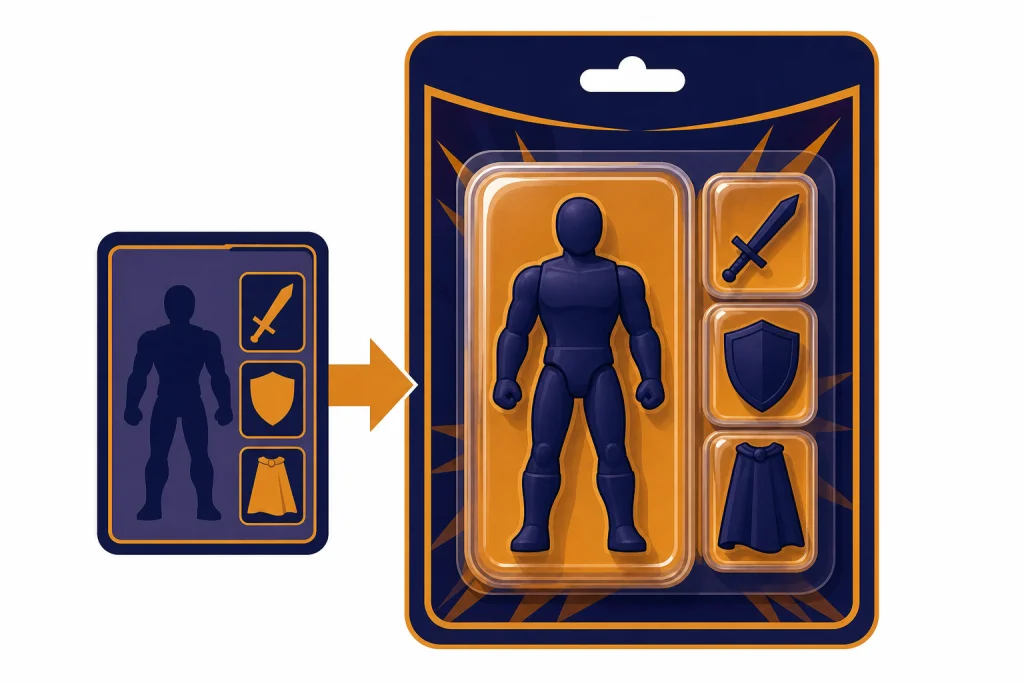
The ChatGPT action figure trend is a viral image prompt format that turns a selfie or portrait into a fake boxed collectible, usually with a plastic blister pack, a nameplate, and small accessories that represent the person. It spread across LinkedIn, Instagram, TikTok, and X after OpenAI added native image generation to ChatGPT in March 2025.[1] You can still try it in ChatGPT by uploading a photo, describing the toy packaging, and asking for a stylized action figure image. The best results come from a specific prompt, clean source photo, and a few privacy checks before you upload your face.
What the ChatGPT action figure trend is
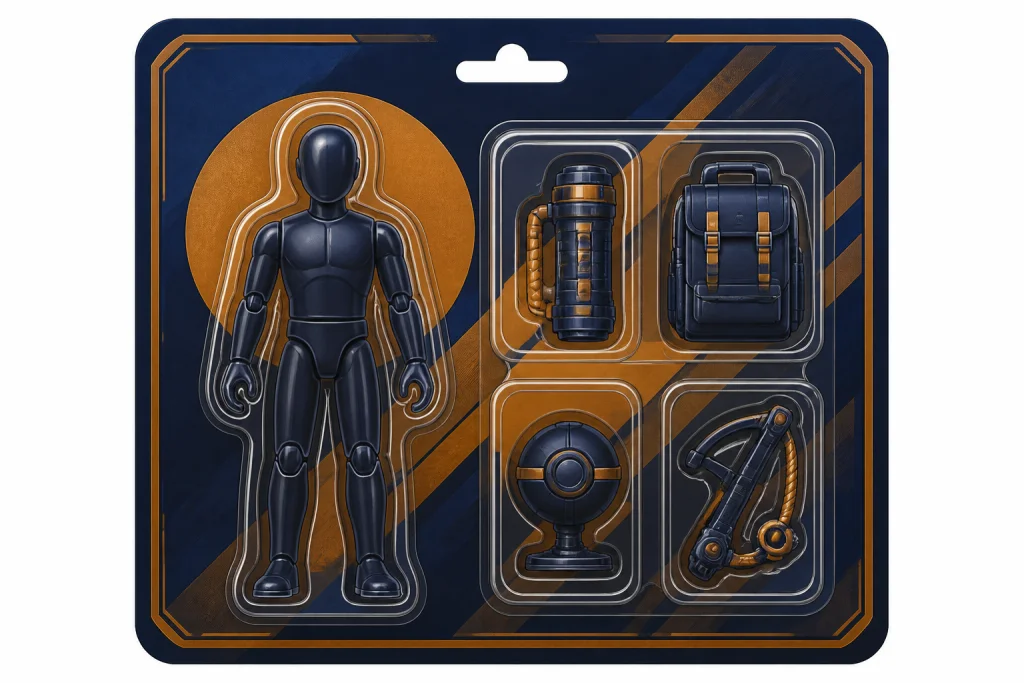
The chatgpt action figure trend is a prompt pattern, not an official OpenAI campaign. A user uploads a photo and asks ChatGPT to transform the person into a toy-style figure inside retail packaging. The image usually includes a molded plastic tray, a cardboard backing card, a large figure window, and several accessory compartments.
The format went viral because it combines three things social platforms reward: a recognizable face, a nostalgic toy-store visual, and a compact personal brand summary. Forbes described the format in April 2025 as a way to create a toy version of yourself, a pet, or another subject by logging into ChatGPT, uploading a photo, and adding a descriptive prompt.[3] Tom’s Guide published a how-to on April 9, 2025, shortly after the trend began spreading through image-generation posts.[4]
Most versions are not meant to look like an actual manufactured product. They are digital mockups. The humor comes from choosing accessories that summarize a role or personality: a laptop for a founder, a camera for a creator, a coffee cup for a project manager, a notebook for a student, or a tennis racket for a weekend athlete.
The trend also fits a wider pattern of AI image memes. If you track viral prompt formats, compare it with the chatgpt caricature trend and the ChatGPT Christmas photo trend. Both use the same basic ingredients: a personal photo, a recognizable visual convention, and a prompt that tells the image model what to preserve and what to stylize.
Before you generate one
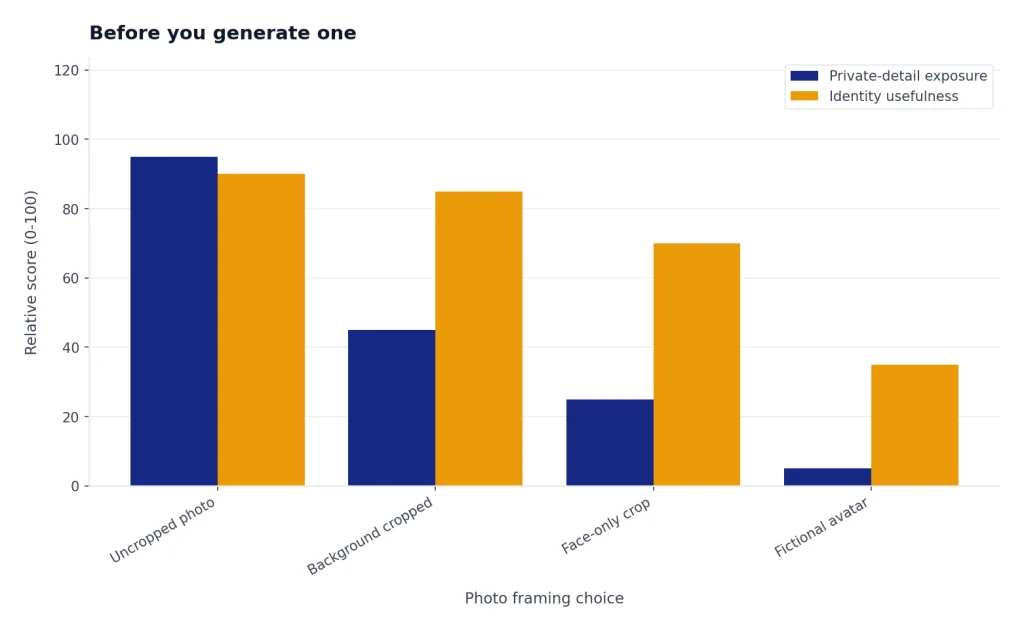
Start with a simple rule: do not upload a photo you would not be comfortable placing inside a commercial image tool. The trend asks for a face photo, and face photos can reveal more than you think. They may include your home, office, school badge, children, license plates, documents, or GPS clues in the background.
BBC News covered the AI action doll trend on April 12, 2025, and highlighted concerns about privacy, culture, and environmental cost as the format spread across social media.[5] WIRED also warned that action-figure and similar ChatGPT image trends require users to hand over photo data, so readers should consider the privacy trade-off before participating.[6]
OpenAI says that for individual services such as ChatGPT, Sora, and Operator, it may use user content to improve and train its models, and users can opt out through the privacy portal by selecting “do not train on my content.”[7] That does not mean every upload is unsafe. It does mean you should decide first, not after the image has already been generated.
Use this checklist before you try the prompt:
- Use your own photo. Do not upload someone else’s face without permission.
- Crop the background. Remove addresses, badges, children, screens, medical papers, and private objects.
- Avoid real brands. Do not ask ChatGPT to imitate a real toy line, movie franchise, or retail package.
- Keep it obviously fictional. A playful collectible mockup is safer than a fake product advertisement.
- Check your data settings. If you do not want your content used for model training, review OpenAI’s opt-out controls first.[7]
OpenAI’s usage policies also prohibit using someone’s likeness, including a photorealistic image or voice, without consent in ways that could confuse authenticity.[8] For this trend, that means you should not make fake boxed figures of coworkers, celebrities, classmates, or customers unless you have a clear right to use their likeness.
How to make a ChatGPT action figure
OpenAI’s Help Center says ChatGPT Images lets users create new images and edit existing ones, and users can either ask ChatGPT to create an image or choose Images from the sidebar.[2] The same Help Center page says ChatGPT Images is available on web, iOS, and Android, and that ChatGPT Images 2.0 is available on all tiers.[2]
Here is the cleanest workflow.
- Choose a source photo. Pick a front-facing or three-quarter portrait with good lighting. A simple background helps the model understand clothing, hair, pose, and face shape.
- Open ChatGPT. Start a new chat so the image prompt is not mixed with unrelated context.
- Upload the photo. Use a cropped version if the original contains private details.
- Paste a specific prompt. Describe the figure, packaging, accessories, mood, camera angle, and what to avoid.
- Generate the image. OpenAI says complex image instructions may take up to two minutes to generate.[2]
- Request edits. Ask for smaller changes rather than regenerating everything. For example: “Keep the same packaging and figure, but replace the tablet accessory with a sketchbook.”
- Save only the best version. OpenAI says generated images can be copied, saved, or shared from the image controls.[2]
If you are new to ChatGPT itself, start with what is ChatGPT? before using image tools. If you want to understand why the same prompt can behave differently across models, our GPT models comparison gives broader model context.
You do not need to mention a real toy brand. In fact, you should avoid that. Say “retro blister-pack collectible” or “fictional toy packaging” instead of naming a protected brand or asking for a package that copies a real product line.
The prompt recipe that works best
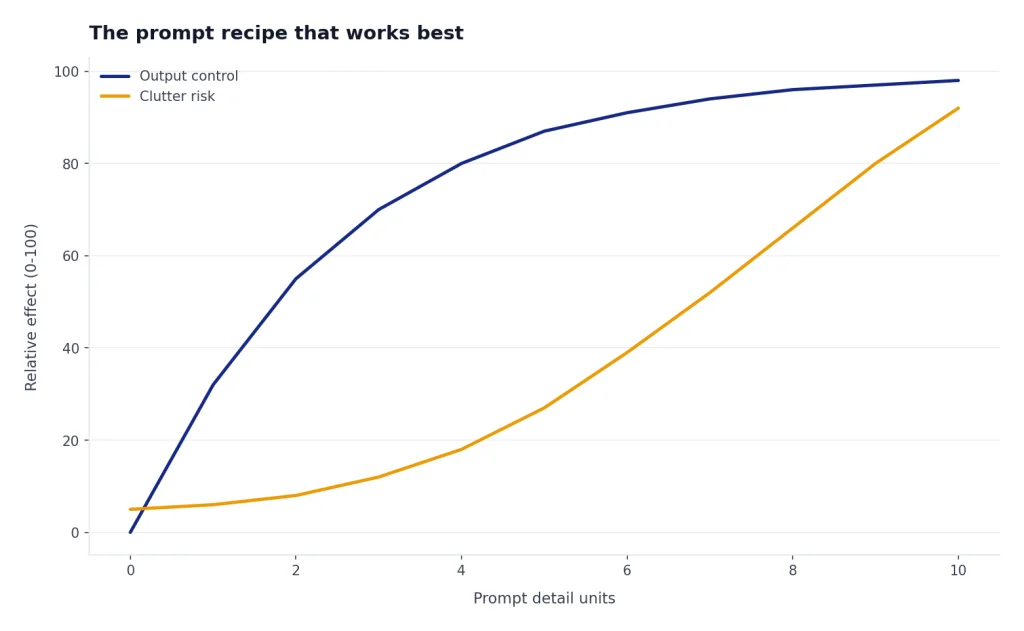
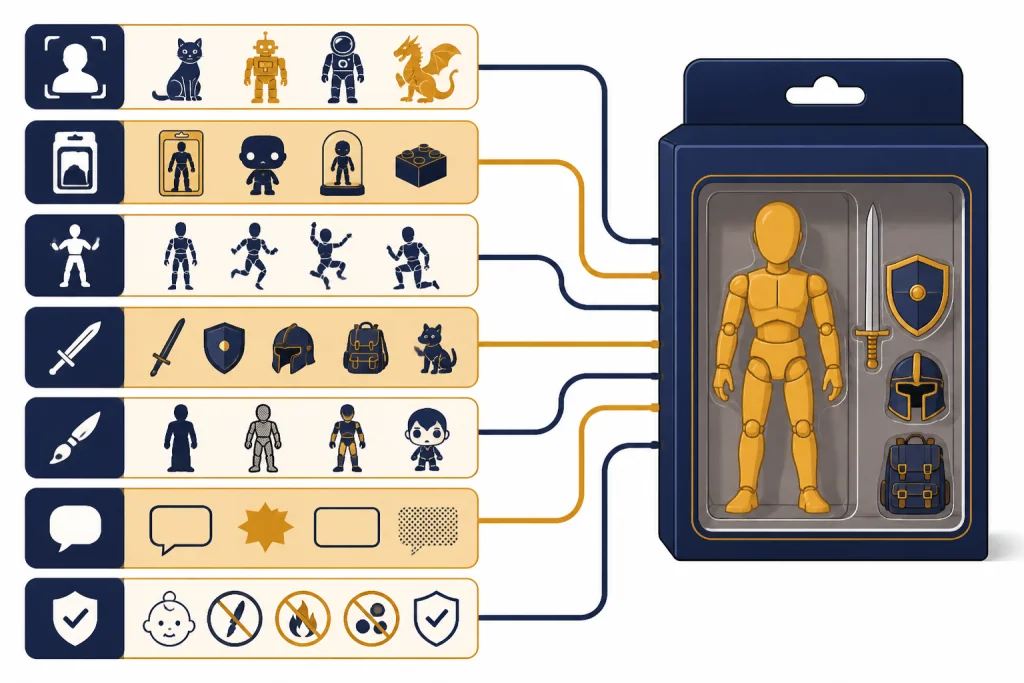
The best action figure prompts are structured. They do not say only “make me an action figure.” They tell ChatGPT which parts of the uploaded photo matter, how the packaging should be built, what accessories should appear, and what details should be excluded.
Use this prompt anatomy as your base.
| Prompt part | What to write | Why it helps |
|---|---|---|
| Subject | “Use the uploaded photo as the reference for my face, hairstyle, outfit, and general build.” | Keeps the figure connected to the source image. |
| Toy format | “Create a fictional collectible action figure in a clear plastic blister pack on a cardboard backing card.” | Defines the visual structure of the trend. |
| Pose | “Make the figure standing upright with a confident neutral pose.” | Prevents awkward limbs and chaotic composition. |
| Accessories | “Add three separate accessory compartments: a laptop, a notebook, and a coffee cup.” | Gives the image clear objects to place beside the figure. |
| Style | “Use a polished 3D toy render style with soft studio lighting.” | Creates the plastic-toy look without copying a real brand. |
| Text handling | “Use a simple fictional nameplate. If text is unclear, leave the package blank.” | Reduces garbled lettering. |
| Safety limits | “Do not include real brand logos, copyrighted characters, or private background details.” | Keeps the output safer to share. |
OpenAI says its 4o image generation is designed to follow prompts accurately, render text more precisely, and use uploaded images as visual inspiration.[1] That is why this trend works better when you give ChatGPT concrete layout instructions instead of a vague style request.
You should still expect some errors. The figure may not match your face perfectly. Accessories may merge. Package text may be misspelled. Hands may look too smooth or over-modeled. Ask for targeted edits and preserve the parts that already work.
Copy-and-edit prompt examples
Use these as starting points. Replace the bracketed details with your own. Do not include private information, legal names, addresses, employer secrets, or third-party likenesses.
General action figure prompt
Use my uploaded photo as the reference. Create a fictional collectible action figure of me inside a clear plastic blister pack on a clean cardboard backing card. Keep my hairstyle, face shape, outfit colors, and overall look recognizable, but make the figure a polished 3D toy. Add three separate accessories in molded compartments: [accessory 1], [accessory 2], and [accessory 3]. Use soft studio lighting and a front-facing product mockup composition. Do not include real brand logos, copyrighted characters, or private background details. If package text is unclear, leave it blank.Professional LinkedIn-style prompt
Turn my uploaded portrait into a tasteful fictional desk-display action figure concept. Show the figure standing inside a premium clear blister package with a simple matte backing card. Keep the outfit professional and close to the photo. Add accessories that represent my work: [tool], [notebook or device], and [small symbolic object]. Make the image clean, minimal, and suitable for a professional social post. Do not include employer logos, client names, confidential documents, or real product branding.Creator or hobby prompt
Create a playful fictional action figure based on my uploaded photo. The figure should look like a stylized vinyl toy inside a transparent blister pack. Include accessories that represent my hobbies: [camera], [headphones], and [sketchbook]. Use bright but not neon colors, a clean product-photography angle, and realistic plastic reflections. Keep the face friendly and recognizable without making it photorealistic. Avoid logos, franchise references, or text that could be mistaken for a real retail product.Pet action figure prompt
Use the uploaded pet photo as reference. Create a fictional collectible pet action figure inside a clear blister pack with a simple cardboard backing card. Keep the pet's markings, ears, face shape, and expression recognizable. Add three accessories in small compartments: [toy], [food bowl], and [bandana]. Make it look like a charming toy concept, not a real branded product. No logos, no copyrighted characters, and no realistic store labels.If you want more practical prompt patterns, follow our ChatGPT updates 2026 changelog for image and interface changes. If your work involves video rather than still images, the Sora 2 launch article tracks OpenAI’s broader media-generation direction.
Fixes for common problems
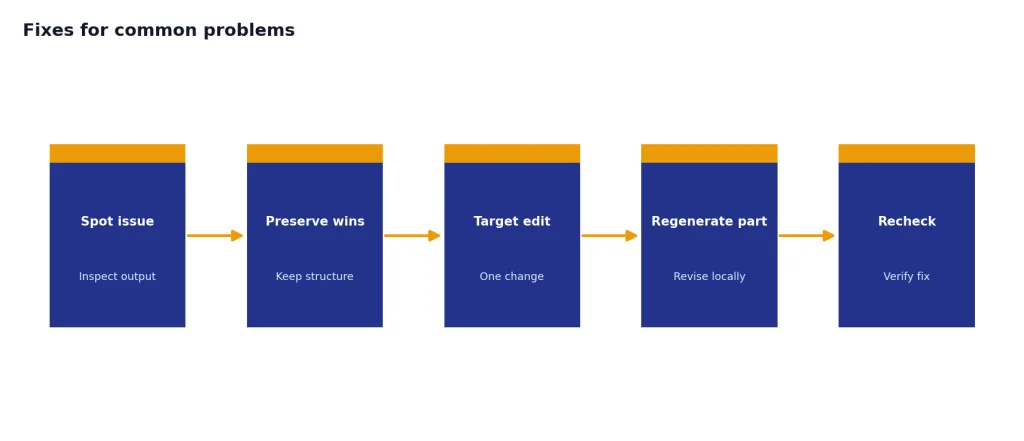
Most bad outputs come from one of three causes: the uploaded photo is unclear, the prompt asks for too many things at once, or the model struggles with text and small objects. Fix the problem in the prompt before you assume the trend no longer works.
| Problem | Likely cause | Best fix |
|---|---|---|
| The face does not look like you | The photo is low-resolution, heavily filtered, or taken from an extreme angle. | Upload a clearer portrait and say which features to preserve. |
| The package text is unreadable | Small generated text remains difficult for image models. | Ask for blank packaging or large simple text only. |
| Accessories appear fused together | The prompt lists too many tiny objects. | Limit accessories to three clear items in separate compartments. |
| The style looks too realistic | The prompt overemphasizes photorealism. | Ask for a stylized 3D toy render, not a lifelike person. |
| ChatGPT refuses the request | The request may involve a protected likeness, unsafe content, or confusing authenticity. | Use your own image, remove brand references, and keep the result fictional. |
OpenAI says ChatGPT Images can edit generated images, and users can select a part of the image or describe the edit directly in the conversation panel.[2] Use that editor-style workflow. Instead of writing a new full prompt, say: “Keep the figure and packaging exactly the same. Only change the accessories to a notebook, headphones, and a camera.”
If you are comparing performance across tools, remember that model speed, image fidelity, and text rendering change often. Our fastest GPT model and context window comparison guides cover broader model behavior, but image generation quality is best judged with your own test prompt.
How to share it safely
Before you post the image, zoom in. Look for accidental private details, malformed text, fake endorsements, workplace information, school names, and hidden logos. AI images can add convincing details you did not request. Treat the generated image as a draft until you inspect it.
Label the post as AI-generated when the context is not obvious. The trend is playful, but a boxed product mockup can still look like a real merchandise concept. A short caption such as “Made with AI as a fictional action figure mockup” keeps the joke clear.
Be more careful with workplace posts. The action figure format became especially common on LinkedIn, where people used accessories and package labels to summarize job roles. That can be fun, but it can also expose job details, internal tools, or client relationships. Keep the accessories generic.
Do not use the image to imply a partnership with OpenAI, a toy company, an employer, or a brand. If you follow AI business news closely, use OpenAI News Today and OpenAI News This Week for actual company updates rather than viral social interpretations. For the business backdrop behind OpenAI’s product push, see our OpenAI funding history.
The safest version of the trend uses a cropped self-photo, fictional packaging, no real logos, no third-party faces, and a caption that makes the AI origin clear. That keeps the post fun without turning a quick meme into a privacy or permission problem.
Frequently asked questions
What is the ChatGPT action figure trend?
It is a viral prompt format where people use ChatGPT image generation to turn a photo into a fictional boxed action figure. The image usually shows the person as a toy inside a clear blister pack with accessories. It spread widely after ChatGPT gained stronger native image-generation features in 2025.[1]
Do I need ChatGPT Plus to make one?
OpenAI’s Help Center says ChatGPT Images 2.0 is available on all tiers, and ChatGPT Images is available on web, iOS, and Android.[2] Availability can still vary by account, region, policy setting, or rollout timing. If you are comparing paid access, read our ChatGPT Plus price in 2026 guide.
Can I make an action figure of someone else?
Only do that if you have permission or a clear legal right to use their likeness. OpenAI’s usage policies prohibit using someone’s likeness without consent in ways that could confuse authenticity.[8] For a social trend, the safest choice is to use your own photo or a fictional character you created.
Why does the package text look wrong?
Generated text inside images can still fail, especially when it is small, curved, or repeated. Ask for a blank package, a large simple nameplate, or no readable text at all. You can also add text later in a design app if you need a clean social post.
Is it safe to upload my face to ChatGPT?
It depends on your comfort level and data settings. OpenAI says content from individual services may be used to improve and train models, with an opt-out available through its privacy portal.[7] Crop private background details, avoid sensitive photos, and check the opt-out setting before uploading.
Can I sell a ChatGPT action figure image?
Do not assume a viral image is commercially safe. Avoid brand names, copyrighted characters, celebrity likenesses, and packaging that copies a real product line. If you want to sell merchandise or use the image in advertising, get legal review first.