
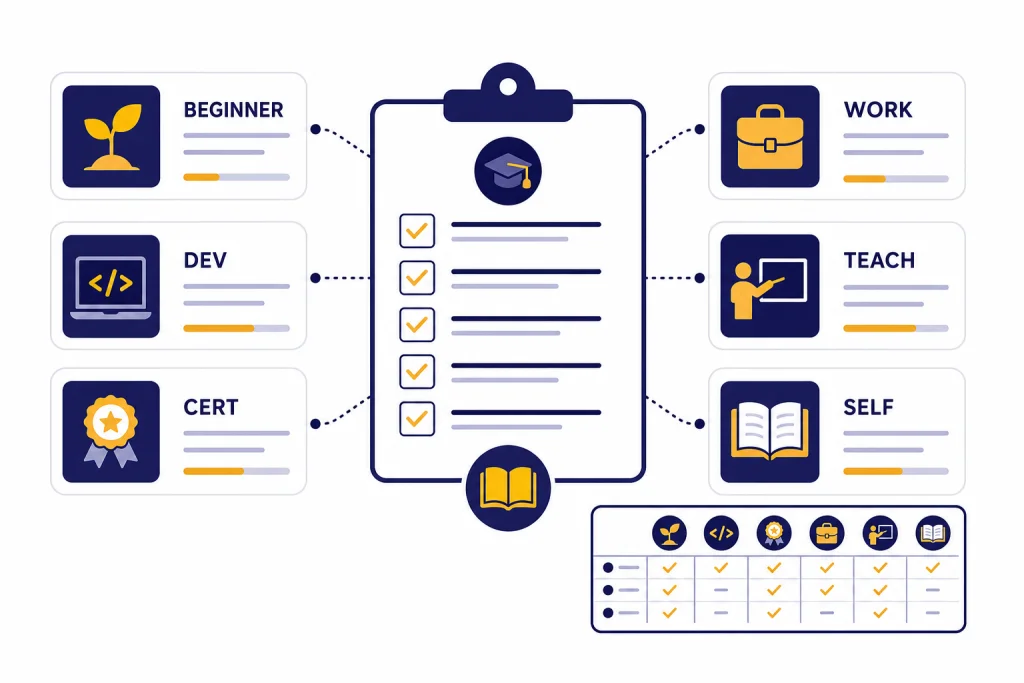
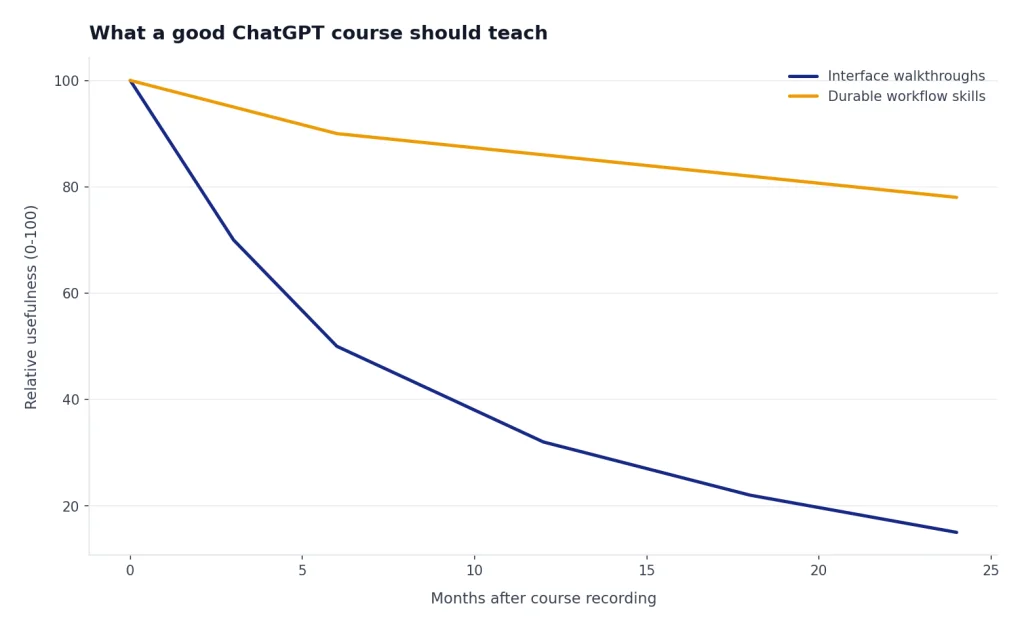
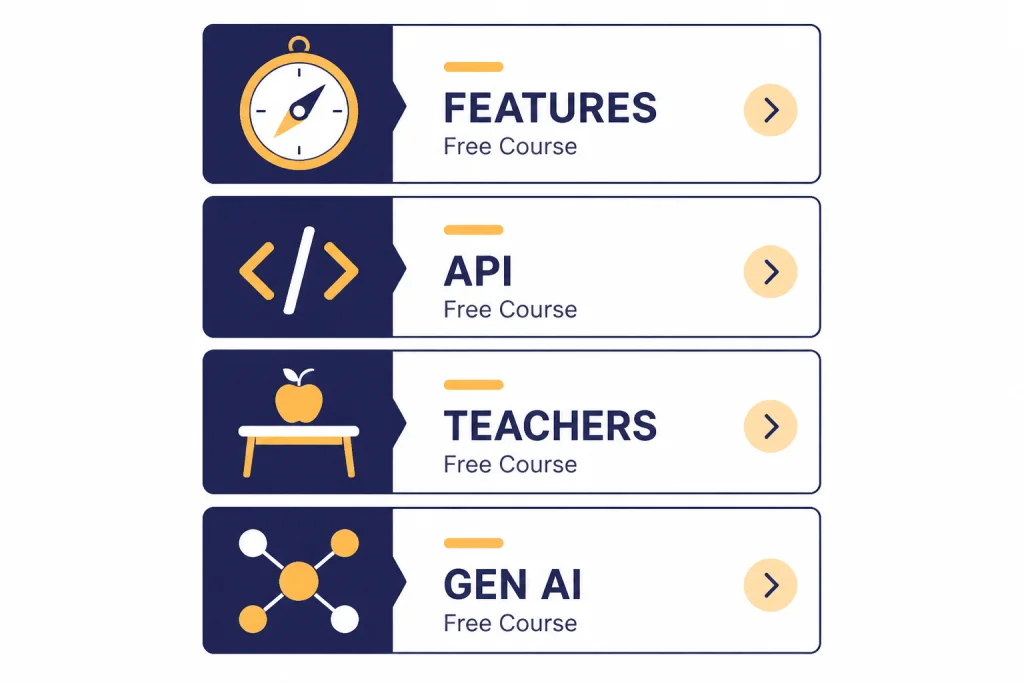
The best ChatGPT course depends on what you need to do next. Beginners should start with OpenAI Academy’s free ChatGPT learning resources because they cover prompting, files, search, deep research, image creation, Projects, Custom GPTs, and repeatable workflows from the source.[1] Developers should take DeepLearning.AI’s free ChatGPT Prompt Engineering for Developers course before paying for anything because it is short, hands-on, and built around API examples.[5] If you need a certificate for a resume or manager approval, Coursera and Google are better fits. If you need accountability, graded projects, or feedback, a paid course can be worth it. Do not buy a course that only sells prompt lists.
Quick picks by learner type
If you are completely new, start with OpenAI Academy’s Using ChatGPT track. It teaches core skills, prompting, personalization, files, search, deep research, image creation, Projects, Custom GPTs, and reusable workflows in the current product context.[1] Pair it with what is ChatGPT? the complete beginner explanation if you still need the plain-English foundation before taking a course.
If you write code or want to build with the OpenAI API, take DeepLearning.AI’s ChatGPT Prompt Engineering for Developers first. The course lists a beginner level, a duration of 1 hour 30 minutes, 9 video lessons, and 7 code examples.[5] It is the most efficient first stop for developers because it teaches prompting as a system, not as a collection of magic phrases.
If you need a structured certificate, Vanderbilt University’s Prompt Engineering for ChatGPT on Coursera is the strongest broad prompt-engineering option. Coursera lists it as a beginner course with 6 modules and an estimated pace of 2 weeks at 10 hours per week.[6] If you want a broader credential that is less ChatGPT-specific, Google AI Essentials is a practical workplace option with a certificate path.
If you use ChatGPT at work, do not start with theory. Start with a task. Pick writing, analysis, research, coding, marketing, or operations. Then choose a course that makes you submit real examples from your role. Our supporting tutorials on writing better content, data analysis step by step, and coding with ChatGPT can fill the gaps after a general course.
What a good ChatGPT course should teach
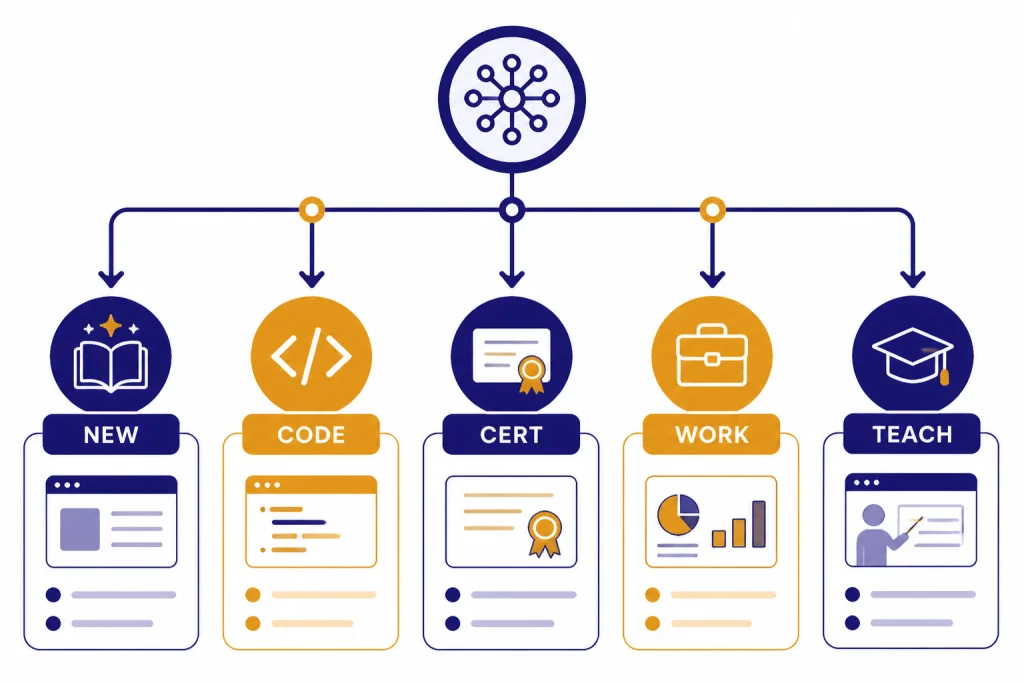
A good ChatGPT course teaches workflows, not prompt trivia. It should show you how to define the task, provide context, add constraints, test the answer, revise the prompt, and verify the final output. OpenAI’s own prompting guidance frames prompt engineering as designing and refining your input so ChatGPT can give a better answer.[4] That definition matters because it shifts the goal from clever wording to repeatable work.
The course should also teach when not to trust the first answer. A useful curriculum includes source checking, file handling, privacy decisions, output review, and domain limits. For research work, use a dedicated workflow such as running a deep research project. For prompt structure, start with prompt engineering techniques that actually work before moving into advanced patterns.
Look for lessons that make you practice with your own material. A marketing manager should leave with a campaign brief, customer research summary, and editorial calendar. A student should leave with a study plan and self-quiz routine. A data analyst should leave with a clean analysis workflow. A developer should leave with working examples, tests, and a habit of evaluating outputs.
The best courses also keep tool features separate from durable skills. ChatGPT’s interface changes. Prompting principles, verification habits, and workflow design last longer. Treat feature tutorials as quick updates. Treat task design, context management, and review as the core curriculum.
Best free ChatGPT courses
OpenAI Academy for current ChatGPT features
OpenAI Academy is the best free starting point because it reflects the product’s current workflows. The Using ChatGPT page organizes learning around core skills, tools, and workflows, including prompting, personalization, files, search, deep research, image creation, Projects, Custom GPTs, and Skills.[1] That makes it especially useful if you want to understand what the product can do before choosing a paid course.
OpenAI Academy also has workplace material. Its ChatGPT for work page highlights use cases such as data analysis, writing, research, customer support, marketing, sales, engineering, operations, and finance.[2] Use that page as a map. Pick one role-specific track, then practice with real documents from your job.
DeepLearning.AI for developers
DeepLearning.AI’s ChatGPT Prompt Engineering for Developers is the best free technical course to take first. It is beginner-friendly but assumes basic Python, and it teaches summarizing, inferring, transforming text, expanding, and building a chatbot with API-based examples.[5] DeepLearning.AI says access is free for a limited time during its learning platform beta, so check the enrollment page before you rely on the price.[5]
OpenAI Academy for teachers
Teachers should look at ChatGPT Foundations for Teachers. OpenAI Academy published the course on December 9, 2025, and describes it as an introductory course for K–12 educators focused on classroom and administrative workflows.[3] It covers essentials such as how ChatGPT works, navigation, personalization, lesson planning, communication, rubrics, and student support.[3]
Microsoft Generative AI for Beginners for technical foundations
Microsoft’s Generative AI for Beginners is not a ChatGPT-only course, but it is useful if you want broader foundations. The GitHub course page describes it as a 21-lesson course for getting started building with generative AI.[9] Choose it if you want to understand concepts such as large language models, prompt engineering, retrieval, and agents before applying those ideas inside ChatGPT.
Best paid ChatGPT course options
Pay for a ChatGPT course when the paid part buys structure, review, a credible certificate, or a complete project. Do not pay just to watch someone read prompts on slides. Most beginners can learn enough from free resources to decide whether a paid course is necessary.
Coursera is the best paid route when you want a university-branded course or a certificate workflow. Vanderbilt’s Prompt Engineering for ChatGPT is a practical option because it is beginner-level, organized into 6 modules, and built around prompt engineering for large language models such as ChatGPT.[6] If your employer reimburses formal training, this is often easier to justify than a marketplace video course.
Google AI Essentials is a good paid option for general workplace AI literacy. Coursera lists Google AI Essentials as a 5-course series, beginner level, and available with a certificate path; its U.S. and Canada FAQ says Coursera charges $49 per month after the initial 7-day free trial period.[7] Grow with Google separately states that Google AI Essentials costs $49 USD on Coursera and includes course materials, graded assessments, and a Google certificate after completion.[8] It is not a pure ChatGPT course, but the prompt and productivity lessons transfer well.
Udemy can be useful when you want quick, practical screen recordings on the current interface. The risk is uneven quality. A marketplace course can age fast if it focuses on buttons and model names instead of durable workflows. For example, one Udemy workplace course page says it was last updated in 4/2026 and covers work tasks such as writing, reports, blogs, presentation scripts, debugging, translation, and summarizing documents.[10] That kind of update cadence matters, but you still need to inspect the curriculum and sample lessons before buying.
Cohort courses, live workshops, and private training can be worth more than video libraries if you need feedback. This is especially true for teams adopting ChatGPT across a department. A live instructor can review your prompts, flag risky use cases, and help convert repeated tasks into templates or Custom GPTs. If that is your goal, combine formal training with our guide to building your own Custom GPT.
ChatGPT course comparison table
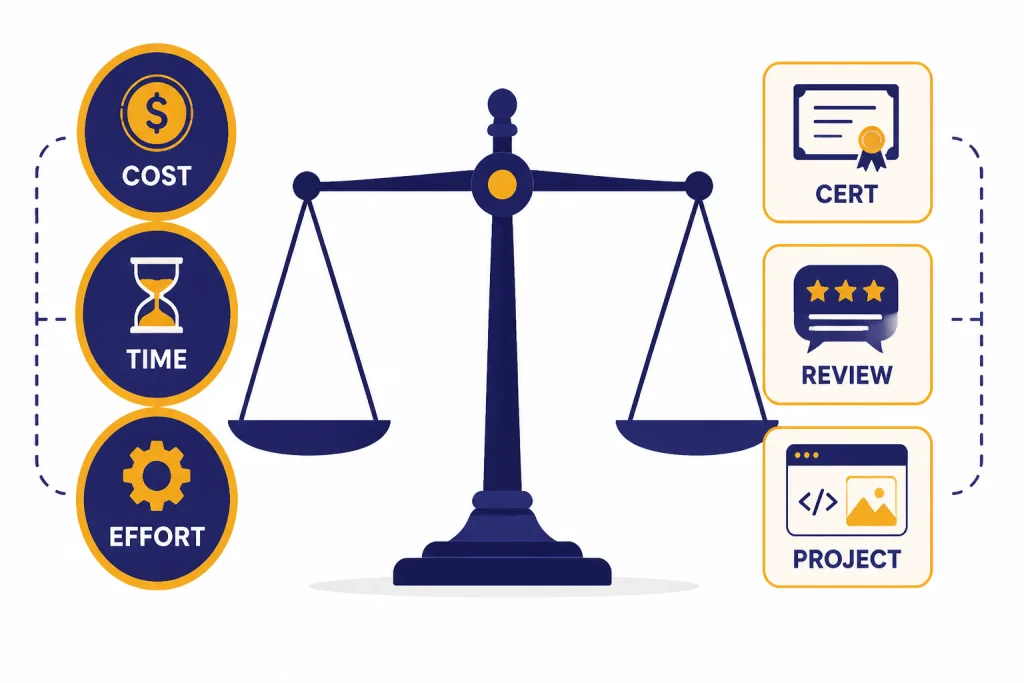
Use this table to narrow your choice. The best option is the one that matches your outcome, not the one with the longest curriculum.
| Course or path | Best for | Cost signal | Time signal | Why choose it |
|---|---|---|---|---|
| OpenAI Academy: Using ChatGPT | Beginners and current feature learning | Free learning resource | Self-paced | Covers core skills, prompting, files, search, deep research, image creation, Projects, Custom GPTs, and workflows from OpenAI.[1] |
| DeepLearning.AI: ChatGPT Prompt Engineering for Developers | Developers and API learners | Free for a limited time during platform beta | 1 hour 30 minutes | Short technical course with 9 video lessons and 7 code examples.[5] |
| Vanderbilt: Prompt Engineering for ChatGPT | Certificate-seeking prompt learners | Coursera enrollment model | 2 weeks at 10 hours per week | Beginner course with 6 modules and a university provider.[6] |
| Google AI Essentials | Workplace productivity and resume credential | $49 per month after a 7-day free trial in the U.S. and Canada | Under 10 hours | Broad AI productivity certificate with prompt practice and responsible-use material.[7] |
| Microsoft Generative AI for Beginners | Technical foundations beyond ChatGPT | Free GitHub course | 21 lessons | Good path for learning generative AI concepts before building apps.[9] |
| Updated Udemy marketplace course | Fast interface walkthroughs and work examples | Variable marketplace pricing | Varies by course | Useful only when recently updated and project-based; one workplace course lists a 4/2026 update.[10] |
Build your own ChatGPT course plan
You can build a strong self-guided ChatGPT course without paying. The key is to work in projects, not random lessons. Start with one core skill, then add one applied track.
Begin with prompting fundamentals. Learn how to state the task, give context, define format, add constraints, and ask for a revision. Then build a small prompt library for repeated work. If you want a structured companion, use the prompt engineering course breakdown to decide whether a deeper prompt course is worth your time.
Next, choose an applied track. Writers should practice briefs, outlines, drafts, edits, and fact checks. Analysts should practice spreadsheet uploads, cleaning requests, chart interpretation, and executive summaries. Researchers should practice question framing, source comparison, and citation checking. Creators should practice image prompts, storyboard prompts, and revision notes using image generation mastery.
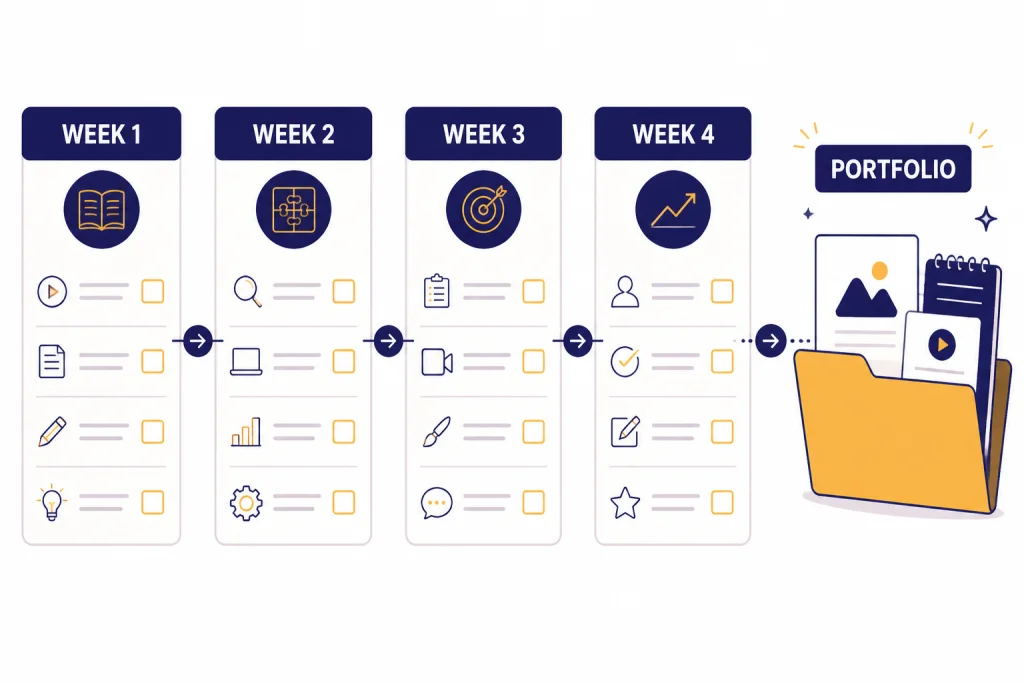
End every module with a deliverable. Save the prompt, the input, the output, your edits, and the final result. This habit turns a loose ChatGPT course into a portfolio. It also helps you see which prompts are reliable enough to reuse.
- Foundation: learn what ChatGPT can and cannot do.
- Prompting: practice task, context, constraints, examples, and output format.
- Tool use: work with files, search, data, images, Canvas, or Custom GPTs.
- Verification: check facts, formulas, code, sources, and assumptions.
- Portfolio: save reusable workflows for your real job or study routine.
Red flags before you enroll
Avoid courses that promise guaranteed income, secret prompts, or instant expertise. Prompting is useful, but it is not magic. The real skill is combining clear instructions, domain knowledge, tool fluency, and review.
Be cautious with outdated lessons. ChatGPT changes quickly, and interface-only courses can become stale. Check the last update date, sample videos, instructor notes, and student questions. If the course never mentions files, search, deep research, images, Projects, or Custom GPTs, it may be too old for current ChatGPT work.
Also avoid courses that skip safety and privacy. A good instructor should tell you not to upload confidential data unless your account, organization settings, and policies allow it. They should teach review habits for medical, legal, financial, academic, and workplace decisions. If the course treats ChatGPT output as final, choose another one.
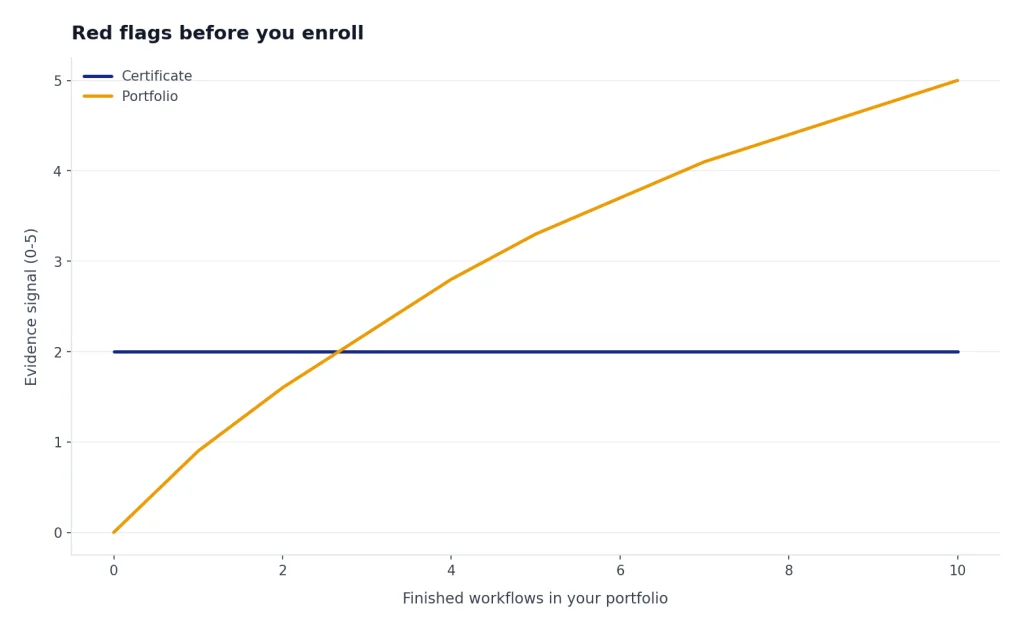
Finally, do not confuse a certificate with competence. A certificate can help show effort, but your best evidence is a set of finished workflows. Build a prompt library, create before-and-after examples, and document the checks you used. That portfolio will teach you more than passive watching.
Frequently asked questions
What is the best ChatGPT course for beginners?
Start with OpenAI Academy’s Using ChatGPT resources. They are current, free, and organized around the actual product workflows. After that, choose a focused tutorial for your job, such as writing, data analysis, research, or coding.
Is a paid ChatGPT course worth it?
A paid course is worth it if you need a certificate, graded assignments, live feedback, or a structured project path. It is not worth it if it only provides prompt lists. Try free official resources first, then pay only when you know the gap you need to close.
Which ChatGPT course is best for developers?
DeepLearning.AI’s ChatGPT Prompt Engineering for Developers is the best first course for developers. It is short, uses code examples, and teaches API-oriented prompt patterns. After that, move into evaluation, retrieval, agents, and production workflows.
Do I need a ChatGPT Plus or Pro plan to take a course?
Usually, no. Many beginner lessons can be completed with a free ChatGPT account or with the course platform’s own examples. You may need a paid plan for heavier file work, advanced model access, or sustained professional use, but do not subscribe before you know the course requirements.
Should I learn prompt engineering or ChatGPT first?
Learn basic ChatGPT navigation first, then learn prompt engineering. Prompting makes more sense once you understand chats, files, search, memory, projects, and output formats. If you already use ChatGPT daily, move straight into prompt patterns and workflow design.
Can I create my own ChatGPT course plan?
Yes. Build a plan around real deliverables: prompts, summaries, spreadsheets, reports, code, images, or study guides. Save each prompt and revision. That record becomes your personal course notebook and a practical portfolio.