
The best AI humanizers in 2026 are not magic detector-bypass buttons. The useful ones help revise stiff AI drafts into clearer, more varied, more natural writing while preserving meaning. Based on workflow, published limits, pricing-page checks last reviewed on May 4, 2026, and a controlled same-draft rewrite spot check, our top overall pick is Undetectable AI because it combines detector feedback with a more balanced revision workflow than the more aggressive bypass-first tools. WriteHuman is the better fit for writers who want to compare output variations. QuillBot is the best lightweight free option for short edits, StealthWrite is useful if you want a broader writing-tool suite, Humanize.sh is worth a look for no-signup testing, and BypassGPT is best treated as a bypass-oriented option for users who need API-style workflows. Use these tools for editing, not for hiding misconduct or submitting work that violates a school, employer, or client policy.
Quick picks
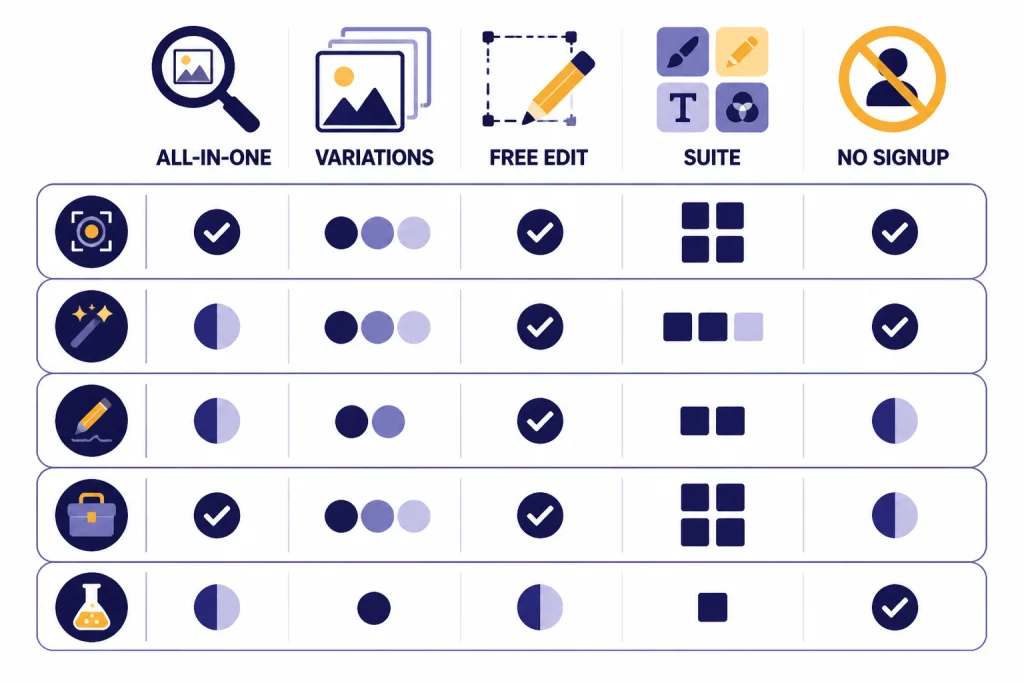
If you only need the short version, start here. AI humanizers vary less by claimed human score than by workflow. Some are built around detector feedback. Some act more like paraphrasers. Some sell high-volume rewriting. The right choice depends on whether you need quick cleanup, long-form editing, team use, or a transparent revision process.
| Pick | Best fit | Why it stands out | Main caution | Pricing last checked |
|---|---|---|---|---|
| Undetectable AI | All-in-one detector and humanizer workflow | It combines AI detection, humanization, writing-level matching, API compatibility, and a word-based subscription ladder that starts at 10K words per month for $9.99 on the monthly plan.[1] In our same-draft spot check, it made the paragraph less template-like without changing the argument as much as the more aggressive bypass-first tools. | Its marketing is detection-focused. Review every rewrite for meaning, tone, and policy compliance; do not use it to conceal prohibited AI drafting. | May 4, 2026 |
| WriteHuman | Controlled rewrites with output variations | Its paid plans list the humanizer, detector checks, an enhanced model, multiple output variations, and per-request limits that rise by tier.[2] It is useful when you want to choose between several possible voices. | Request-based pricing can feel generous or restrictive depending on draft length. Variations still need human selection and editing. | May 4, 2026 |
| QuillBot | Short free edits and general writing cleanup | QuillBot’s free account supports basic access, while Premium unlocks expanded options such as unlimited Advanced-mode humanizing.[3] It is strongest when the task is readability rather than detector evasion. | Treat it as a writing assistant, not as proof that a draft will pass a detector or satisfy a disclosure policy. | May 4, 2026 |
| StealthWrite | Users who want a broader writing platform | The Pro plan lists unlimited AI detection scans, unlimited common tools, unlimited pro tools, content generation, analytics, and an AI humanizer at $19.9 per month.[4] Treat unlimited here as vendor plan language, not an independently stress-tested throughput claim. | The broader suite may be more than you need if you only want occasional rewriting. | May 4, 2026 |
| Humanize.sh | No-signup experimentation and budget testing | Its free tier lists 5 daily requests and 200 words per request, with paid tiers adding higher daily runs and longer input lengths.[6] It is useful for seeing how humanizers alter voice before paying. | Free tools can encourage careless copy-paste editing. Compare the rewrite against your original before using it. | May 4, 2026 |
| BypassGPT | Bypass-oriented rewriting and possible API workflows | Its homepage presents it as a detector-bypass humanizer, says it supports multilingual paraphrasing in over 50 languages, and mentions API access.[7] Those are vendor claims; we did not independently verify every language or integration scenario. | The bypass framing makes policy and ethics review especially important. Do not use it to hide academic misconduct, fabricate authorship, or evade client rules. | May 4, 2026 |
How we assessed them. This is a buying-guide ranking, not a lab benchmark. For this May 2026 update, we compared each tool on published plan details, product workflow, ease of review, and one controlled same-draft rewrite spot check. We judged the result on five practical criteria: whether the meaning stayed intact, whether the prose sounded less generic, whether the tool added or removed facts, whether the output needed manual cleanup, and whether the workflow made review easier. We did not rank tools by detector-score promises alone, because detector results are uncertain and can create false confidence.
Test protocol used for the spot check. Date checked: May 4, 2026. Input language: English. Input length: one 78-word paragraph. Interface/settings: default public web workflow where available; no custom system prompt, no outside sources, and no manual editing before evaluation. For tools that offered multiple variations, we reviewed the first returned options and judged the most faithful usable version, while noting when extra choice added friction. We did not use screenshots in this article, and we do not publish detector-score numbers because detector outputs vary by model, date, text length, and threshold. The ranking should therefore be read as a practical editorial comparison, not a reproducible claim that one tool will produce a specific detector score.
Exact sample draft used for comparison: Remote work has become an important topic for companies in the modern business environment. It provides employees with flexibility and can increase productivity. However, organizations must implement effective communication strategies to ensure collaboration. Leaders should use digital tools, set clear expectations, and monitor performance outcomes. By doing so, companies can create a successful remote work culture that benefits both employees and the organization.
Exact instruction used where the interface accepted a prompt: Humanize this paragraph for a professional business audience. Preserve the meaning and all claims. Do not add facts, statistics, quotes, or examples. Make the writing clearer and less generic.
| Tool | Quality notes from the shared sample | Meaning preservation | Why it landed where it did |
|---|---|---|---|
| Undetectable AI | Best balance of natural sentence rhythm and controlled changes. It removed some corporate stiffness without pushing the paragraph into slang or adding unsupported claims. | Strong | Top overall because rewrite quality, detector feedback, writing-level controls, and word-based limits worked together as a review workflow. |
| WriteHuman | Produced useful alternatives and gave more choice, but some variants were wordier than necessary. Best when the user is willing to compare outputs. | Strong | Ranked close behind Undetectable AI because the output variations are useful, but the request model and variant selection add friction. |
| QuillBot | Smoothed obvious AI phrasing and repetition, but the result felt more like a paraphrase than a full style edit. | Strong | Best lightweight option because it is familiar and safer for readability-focused edits. |
| StealthWrite | Usable rewrite, with the main appeal coming from the broader suite rather than a clearly superior humanizer result. | Moderate to strong | Best for people who also need adjacent writing tools. |
| Phrasly | More aggressive rewriting. It could make the draft sound less generic, but it was more likely to alter emphasis or add polish that felt student-essay-like. | Moderate | Useful for high-volume workflows, but not our top rewrite-quality pick. |
| Humanize.sh | Good for a quick free pass. The output still needed manual editing for cadence and specificity. | Moderate to strong | Best no-signup test, not a complete editing process. |
| BypassGPT | Most bypass-oriented in framing. The rewrite reduced obvious template phrasing, but the tone could become over-optimized and less specific. | Moderate | Worth considering for technical workflows, but not the best general recommendation for careful writers. |
Before/after examples and audit note. The examples below are editorial excerpts that show the kinds of changes we looked for: preserved meaning, clearer rhythm, and lower risk of unsupported claims. They are not presented as exact, reproducible vendor transcripts. Humanizer outputs can change between sessions, by plan tier, and by model update, so any exact captured output would still be a dated snapshot. Use the examples as a guide to evaluating your own rewrites, not as proof that a tool will return the same text.
| Version | Example excerpt | What to notice |
|---|---|---|
| Original AI-style draft | Remote work has become an important topic for companies in the modern business environment. It provides employees with flexibility and can increase productivity. | Generic setup, abstract nouns, and predictable phrasing. |
| Balanced human-edited target | Remote work is now a regular part of how many companies operate. Done well, it gives employees more flexibility and can help teams stay productive. | Cleaner and more natural, with the same meaning preserved. |
| Alternative variation | For many companies, remote work is no longer a temporary arrangement. It can give employees more control over their day while still supporting productive teams. | Good alternative framing, but slightly more interpretive. |
| Light paraphrase | Remote work is an important issue for modern companies. It gives employees flexibility and may improve productivity. | Clearer, but still somewhat generic. |
| Over-aggressive humanizer risk | Remote work has transformed corporate life by unlocking happier employees and dramatically better performance. | This sounds more vivid, but it changes the claim and adds unsupported certainty. |
If your main concern is whether a detector result is reliable, read our Best AI Detectors for Teachers and Schools before paying for a humanizer. If your real goal is better prose, compare these with AI writing tools for 2026 instead.
What AI humanizers actually do
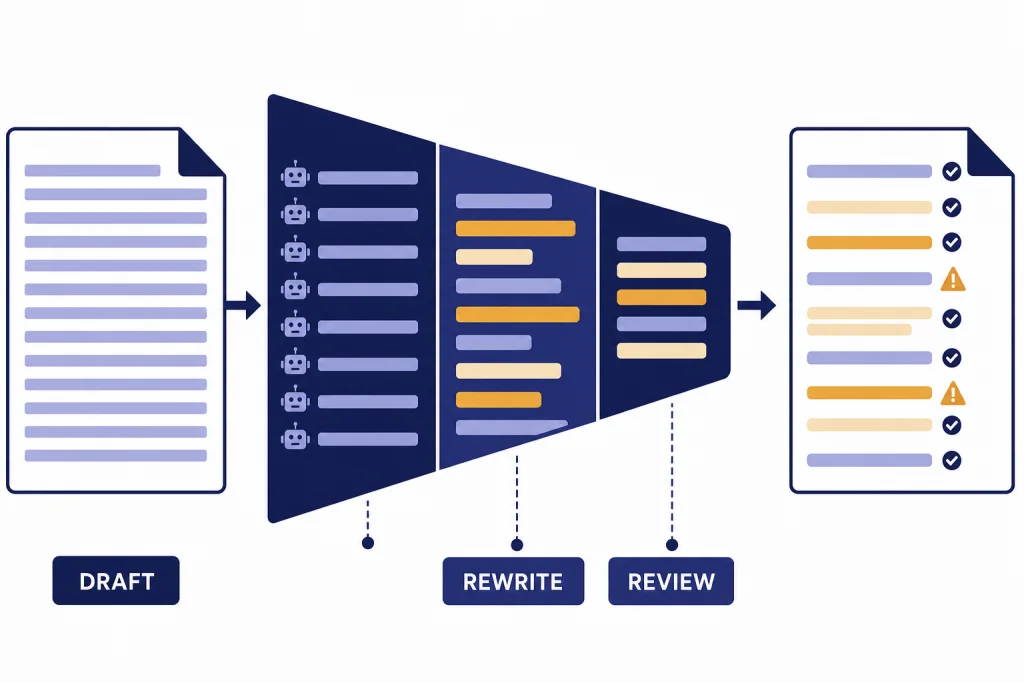
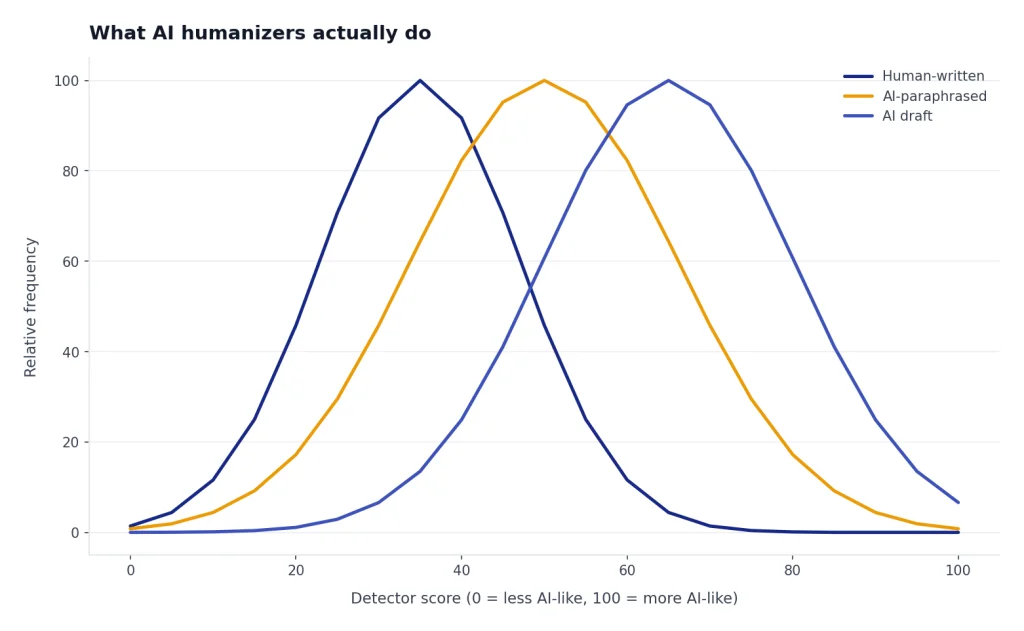
An AI humanizer rewrites generated text so it reads less like a default model response. Most tools adjust sentence rhythm, swap predictable phrasing, vary paragraph structure, reduce over-formal transitions, and smooth awkward wording. Some also run the draft through an AI detector and iterate until the score improves.
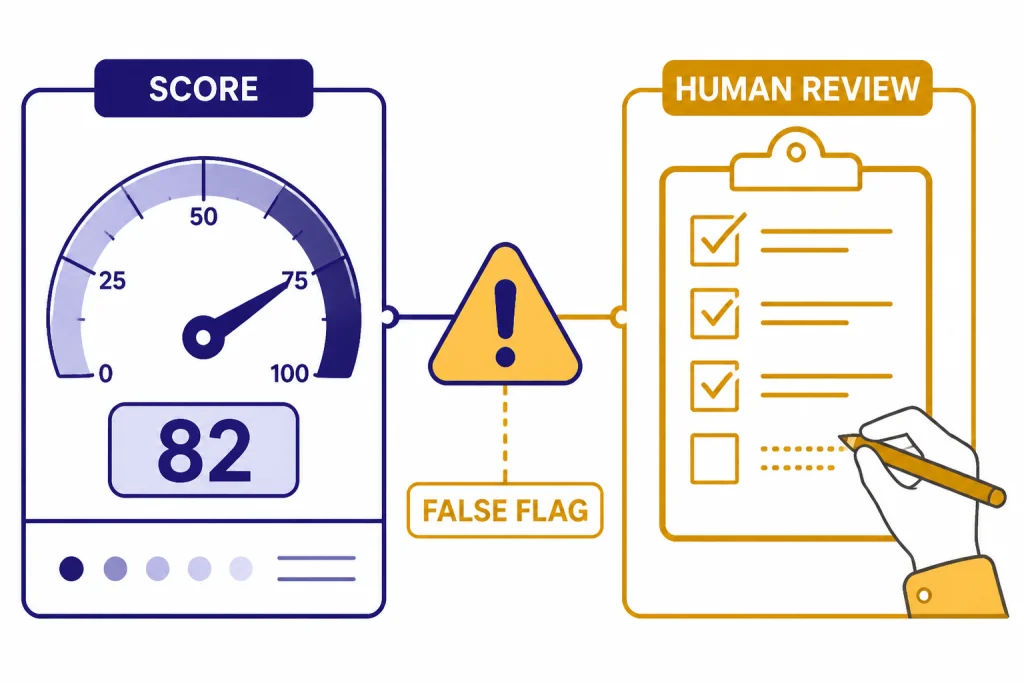
That does not mean the output is truly undetectable. Turnitin’s own guide says its AI writing model may misidentify human-written, AI-generated, and AI-paraphrased text, and says it should not be used as the sole basis for adverse action against a student.[8] OpenAI also retired its own AI text classifier on July 20, 2023 because of a low accuracy rate.[9] These facts cut both ways. A detector score can unfairly flag a human writer, and a humanizer can still leave machine-like patterns behind.
The best use case is revision support. Paste a rough AI-assisted draft. Ask the tool to make it clearer, more direct, or more conversational. Then check every claim, quote, citation, and sentence yourself. If you are working on schoolwork, journalism, legal writing, medical content, or client deliverables, transparency matters more than a detector score.
Humanizers also overlap with paraphrasers, grammar checkers, summarizers, and plagiarism tools. A summarizer may help you compress source material before drafting; see our long-document AI summarizer guide. A plagiarism checker helps catch unattributed overlap; see our best plagiarism checkers comparison. A humanizer should not replace either one.
Best AI humanizers reviewed
Undetectable AI
Pricing last checked: May 4, 2026. Undetectable AI is the strongest general-purpose pick because it packages detector feedback and humanization in one workflow, and because its sample rewrite preserved meaning while improving cadence. Its pricing page lists a 10K-words-per-month plan at $9.99, annual billing at $5.00 per month, writing-level matching, API compatibility, unlimited human auto typer, and unlimited AI detecting.[1] Treat unlimited as vendor plan language rather than a promise that every high-volume use case will be unconstrained.
In the shared draft spot check, Undetectable AI beat the other tools on balance. WriteHuman offered stronger choice through variations, but required more selection. QuillBot cleaned the surface but felt less like a full style pass. Phrasly and BypassGPT leaned harder into bypass-style rewriting, which can make prose sound less generic but also less faithful. That is why Undetectable AI is the top overall pick here: not because it can guarantee invisibility, but because it gave the best combination of revision quality, review workflow, and practical limits.
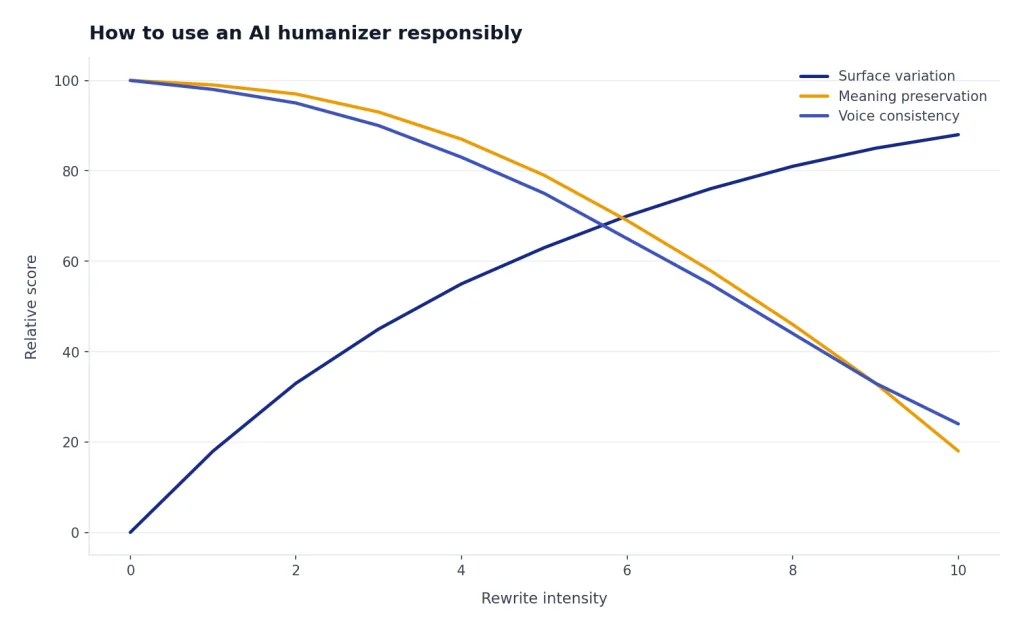
The caution is quality control and ethics. Detection-focused tools sometimes over-edit. They can introduce odd word choices, flatten a specific voice, or make a draft sound like a person trying too hard not to sound like AI. Use Undetectable AI when you need a fast first pass, then manually restore your examples, argument structure, and domain vocabulary. Do not use the tool to conceal AI assistance where disclosure is required.
WriteHuman
Pricing last checked: May 4, 2026. WriteHuman is a good fit for people who want a more controlled rewrite loop. Its pricing information lists Basic at $12 per month with 80 requests per month and up to 600 words per request, Pro at $18 per month with 200 requests per month and up to 1,200 words per request, and Ultra at $36 per month with unlimited requests and up to 3,000 words per request.[2] It also lists output variations, enhanced-model access, AI detection checks, and an API workflow.[2] As with other plan pages, unlimited is a vendor-stated plan term, not an independently measured capacity claim.
WriteHuman performed well on the sample draft when the goal was to choose among alternatives. One version tightened the language; another made the passage more conversational; another was slightly too expansive. That flexibility is valuable for writers who know their own voice and want options. It is less ideal if you regularly paste very long drafts and expect a single-click fix. For long work, split the document into sections and revise the transitions yourself.
QuillBot
Pricing and limits last checked: May 4, 2026. QuillBot is the best familiar option for light humanizing because many users already know its paraphraser, grammar checker, and writing interface. QuillBot’s help center says a free account includes basic access, while Premium unlocks expanded options; its feature table lists Advanced-mode humanizing as 3 uses on a free account and unlimited on Premium.[3] That is a vendor-published feature limit, so confirm current limits inside your account before relying on it for volume work.
QuillBot’s sample rewrite was clear and safe, but less distinctive than the top two tools. It simplified robotic phrasing, reduced repetition, and smoothed sentence flow without changing much. That is why it is a safer recommendation when your goal is readability, not stealth. If you are preparing a resume, application material, or professional bio, pair it with a more purpose-built workflow such as our AI resume builder tools comparison.
StealthWrite
Pricing last checked: May 4, 2026. StealthWrite is less of a single-purpose humanizer and more of a writing platform with humanization included. The pricing page lists a Free plan with 1 AI detection scan per month, 3 common-tool uses per month, and 1 pro-tool use per month; its Pro plan lists unlimited scans, unlimited common tools, unlimited pro tools, unlimited content generation, analytics, and priority support at $19.9 per month.[4] Those are vendor-listed plan features, not independently verified usage ceilings.
In the sample pass, StealthWrite produced a usable rewrite, but the broader suite was the bigger reason to consider it. This makes sense if you want one subscription for detection, rewriting, summarizing, translation, grammar checking, and content generation. If you only need occasional AI-to-human rewriting, the suite may feel heavy. If translation is part of your workflow, compare it with our AI translation tools tested before relying on a humanizer to preserve nuance across languages.
Phrasly
Pricing last checked: May 4, 2026. Phrasly targets students and high-volume writers who want a humanizer, detector, and content-generation workflow. Its pricing page says the Free plan includes 550 AI humanization words and up to 6,000 content-generator words, while the Unlimited plan includes unlimited AI humanizations, up to 30,000 content-generator words per month, 5,000 words per process, and advanced AI detection bypass.[5] Those are vendor claims and plan labels; they should not be read as independent proof of bypass reliability.
Phrasly’s sample rewrite made the original paragraph less stiff, but it also pushed the voice toward a polished student-essay style. That can be useful for rough drafts, but it requires careful comparison against the source. Because Phrasly’s positioning is aggressive around detector compliance, the ethics warning belongs next to the recommendation: do not treat a green score as proof that the writing is acceptable under your institution’s or client’s rules. Use it for revision, not concealment.
Humanize.sh
Pricing last checked: May 4, 2026. Humanize.sh is the easiest tool to try without a purchasing decision. Its free tier lists 5 daily requests and 200 words per request; Basic lists $9.99 per month, Pro lists $19.99 per month, and Max lists $49.99 per month.[6] The site also lists no-signup access, basic and hyper algorithms, multilingual support, and higher request limits on paid plans.[6] Treat those as vendor-published limits until you confirm them in the current interface.
The free tier is useful for testing how a humanizer changes voice. In the sample draft, Humanize.sh made the text less robotic, but the output still needed manual tightening and more specific examples. It is not a full editing workflow. If you like the output, still compare the revision against your original draft sentence by sentence.
BypassGPT
Pricing and product claims last checked: May 4, 2026. BypassGPT is built around detection removal. Its homepage describes the tool as an AI bypasser that rewrites AI-generated text to produce high human scores on AI detectors, says it supports multilingual paraphrasing in over 50 languages, and says it offers an API for integrating its humanizer into applications or services.[7] These are vendor-positioning claims. We did not independently verify support quality across 50-plus languages, detector outcomes, or API performance.
On the shared sample, BypassGPT’s rewrite reduced obvious AI-style phrasing, but the result could feel optimized for passing a detector rather than preserving a writer’s natural voice. That makes BypassGPT a better fit for technical teams and high-volume workflows than for one-off edits. The caveat is its framing. When a tool centers bypass language, the user has to bring the ethics. Do not use it to hide prohibited AI use, fabricate authorship, evade academic-integrity rules, or mislead a client about how work was produced.
Pricing and limits compared
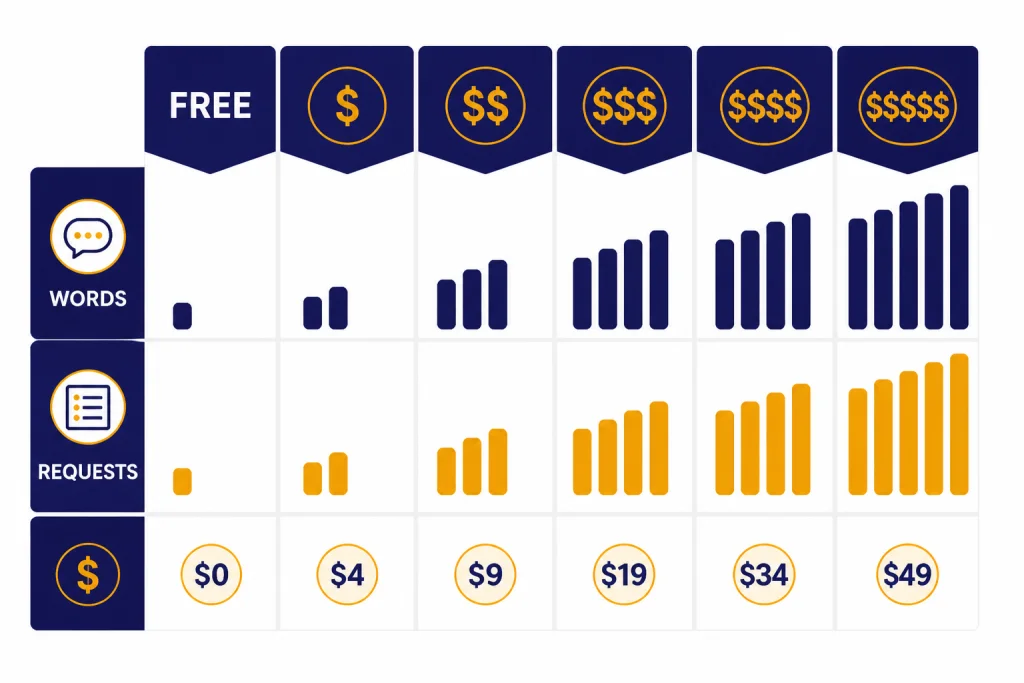
Pricing pages in this category change often. Treat the table below as a May 4, 2026 snapshot of published plan details, not a permanent quote. Always confirm the checkout page before paying, especially if a site shows separate monthly and annual prices. Terms such as unlimited, advanced bypass, and over 50 languages are vendor claims unless the table says otherwise.
| Tool | Free access | Entry paid plan noted | Limit style | Best value if you need | Last checked |
|---|---|---|---|---|---|
| Undetectable AI | Free start available | 10K words per month at $9.99 monthly, or $5.00 per month when charged annually.[1] | Monthly word allowance plus vendor-listed unlimited detection features | Detector plus humanizer in one workflow | May 4, 2026 |
| WriteHuman | Free trial option | Basic at $12 per month with 80 requests per month and up to 600 words per request.[2] | Requests and per-request word caps | Several rewrite variations | May 4, 2026 |
| QuillBot | Free account with basic access | Premium expands advanced features; Advanced-mode humanizing is listed as unlimited on Premium.[3] | Feature access by plan | General writing polish | May 4, 2026 |
| StealthWrite | Free plan with limited scans and uses | Pro at $19.9 per month.[4] | Free limits, then vendor-listed unlimited plan language | All-in-one writing tools | May 4, 2026 |
| Phrasly | 550 AI humanization words on Free.[5] | Unlimited plan with 5,000 words per process and up to 30,000 content-generator words per month.[5] | Humanization plus generation limits | Student-style workflows, if allowed by policy | May 4, 2026 |
| Humanize.sh | 5 daily requests and 200 words per request.[6] | Basic at $9.99 per month.[6] | Daily runs and input length | Fast no-signup testing | May 4, 2026 |
| BypassGPT | Homepage presents free detector and humanizer access.[7] | Clear paid pricing was not available in the cited homepage material; check the current product or checkout flow before budgeting. | Vendor describes bypassing, multilingual paraphrasing, and API availability | Bypass-oriented workflows where pricing and policy compliance are confirmed first | May 4, 2026 |
For teams, the best value may not be a consumer humanizer at all. If your workflow involves large volumes of AI output, check API costs, review queues, and token usage directly. Our OpenAI token counter tools and OpenAI API cost calculators can help you estimate the upstream cost before you add another rewriting layer.
How to use an AI humanizer responsibly
Start with a draft you understand. A humanizer cannot fix weak research, invented citations, shallow analysis, or factual errors. If the AI-generated source text is wrong, a smoother rewrite only makes the mistake harder to notice.
- Check the policy first. Schools, employers, publications, and clients may allow grammar help but forbid undisclosed AI drafting.
- Use section-level inputs. Humanizing an entire document at once can create inconsistent voice and broken transitions.
- Preserve meaning. Compare each rewritten paragraph against the original. Watch for changed claims, softened caveats, and misplaced emphasis.
- Add your own evidence. Replace generic statements with examples, observations, citations, screenshots, calculations, or direct experience.
- Run a plagiarism check. Humanizing does not guarantee originality. It can also move wording closer to an uncited source.
- Keep drafts. Version history, notes, outlines, and source logs are better evidence of authorship than a detector score.
Good prompting can reduce the need for humanizers in the first place. Ask the model for a specific audience, sentence length range, structure, and tone before drafting. For example: Rewrite this paragraph for a skeptical operations manager. Keep every claim, avoid hype, use short sentences, and flag any sentence that needs evidence instead of inventing support. That kind of instruction often produces a more honest draft than running a vague output through a heavy humanizer later. Our ChatGPT prompt generator tools guide covers tools that help build better prompts before you reach the cleanup stage.
When to avoid AI humanizers
Avoid AI humanizers when the goal is to conceal prohibited AI use. That includes assignments where AI drafting is banned, take-home exams, writing samples meant to prove unaided ability, legal declarations, compliance documents, and any work where authorship itself is the assessment.
Also avoid them when accuracy matters more than style. Medical, legal, financial, academic, and technical writing need source verification and expert review. A humanizer can make a weak answer sound confident. That is dangerous.
Finally, avoid overusing them on creative or personal writing. The most human writing often contains uneven rhythm, specific memory, taste, and risk. A tool can polish those edges away. If your voice matters, use AI as a critic, not as the final author.
Frequently asked questions
What is the best AI humanizer overall?
Undetectable AI is the best overall pick for most users because it combines a detector, humanizer, writing-level matching, and API compatibility in one workflow.[1] It also produced the best balance in our shared sample rewrite spot check: clearer prose, less template-like rhythm, and fewer meaning changes than the more aggressive bypass-focused options. WriteHuman is a close alternative if you prefer request-based limits and multiple output variations.[2]
Can AI humanizers really bypass Turnitin?
No tool can guarantee that. Turnitin says its AI writing model may misidentify human-written, AI-generated, and AI-paraphrased text, and it says the report should not be the sole basis for adverse action.[8] That means both false positives and false confidence are possible. A humanizer should not be used to hide banned AI drafting or to misrepresent authorship.
Are free AI humanizers worth using?
Free humanizers are worth using for short tests and light editing. Humanize.sh, for example, lists a free tier with 5 daily requests and 200 words per request.[6] Free tiers are rarely enough for serious long-form editing without manual revision, and free output should still be checked for changed meaning.
Is QuillBot an AI humanizer?
Yes, QuillBot includes humanizing features, but it is better understood as a broader writing assistant. Its help center says Premium unlocks expanded options, and its comparison table lists unlimited Advanced-mode humanizing on Premium.[3] It is a good choice for readability and tone cleanup rather than a guarantee of detector results.
Should students use AI humanizers?
Students should first follow their school’s AI policy. A humanizer may be acceptable for grammar or clarity if AI assistance is allowed, but it is not acceptable if the purpose is to hide banned AI drafting. Keep outlines, notes, source logs, and draft history so you can show your process if a question comes up.
Do AI humanizers prevent plagiarism?
No. Humanizers rewrite wording, but they do not verify whether ideas, facts, or phrasing came from an uncited source. Use a plagiarism checker and verify citations separately, especially for academic or published work. AI-paraphrased text can still be plagiarized if the underlying ideas or close wording are not properly credited.