
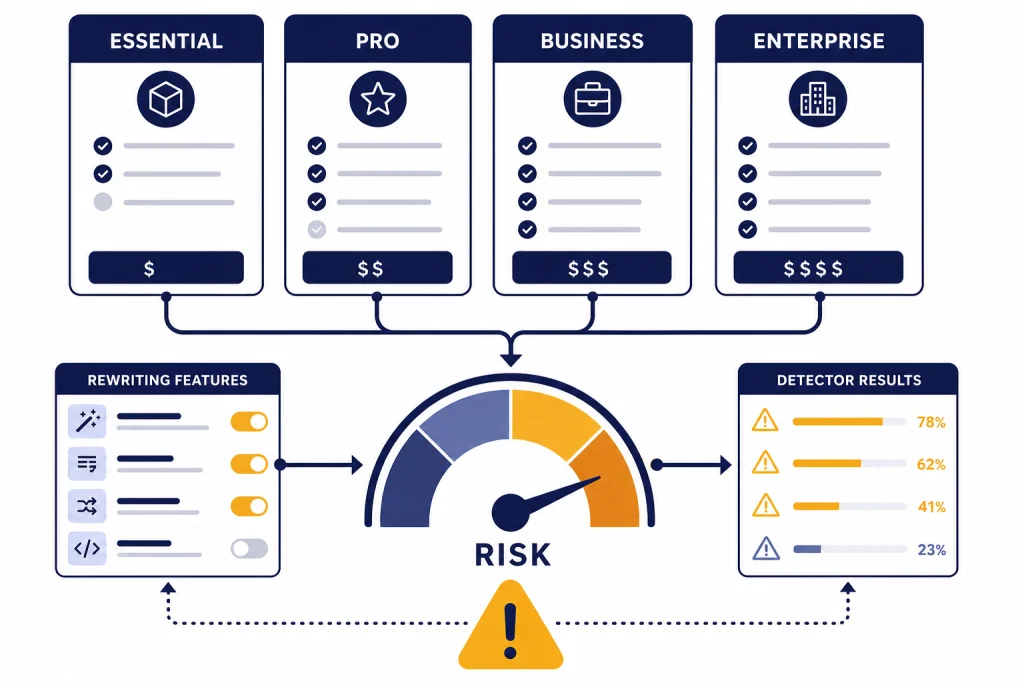
StealthGPT is an AI humanizer and writing platform built around one promise: rewriting AI-generated text so detectors are less likely to flag it. Our verdict is cautious. StealthGPT has a broad feature set, including a humanizer, detector, Chrome extension, iOS access, team seats, file uploads, and an API, but its core “bypass AI detection” claim is not something any writer should treat as guaranteed. Independent tests show mixed results, and detector performance changes constantly. Use StealthGPT only for legitimate rewriting, clarity, tone, and drafting support. Do not use it to hide prohibited AI use in school, work, publishing, or client deliverables.
Verdict
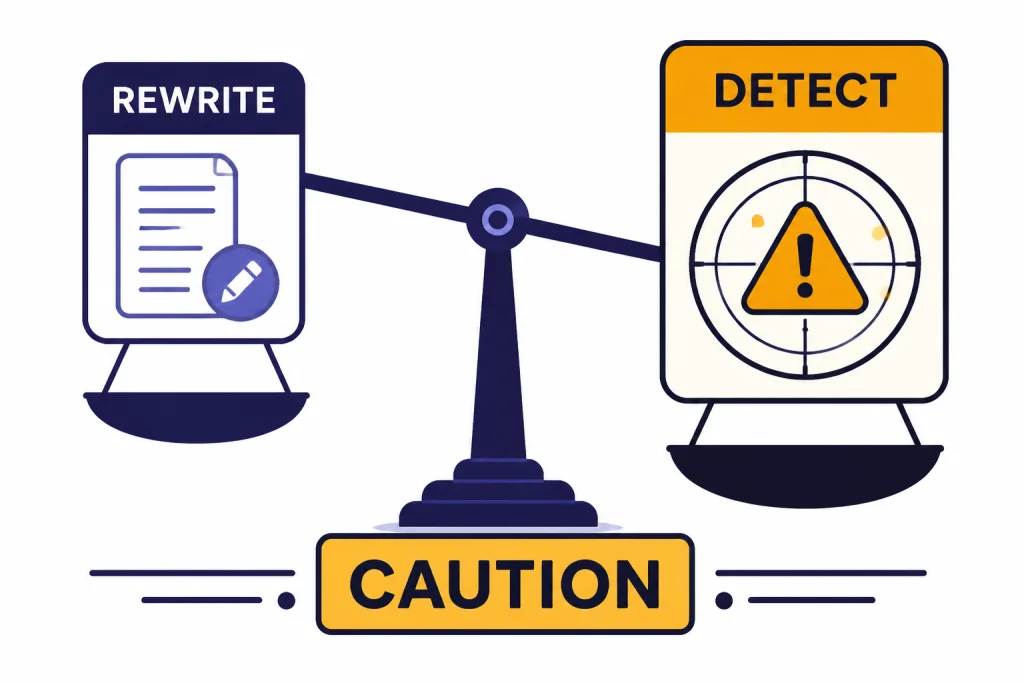
This StealthGPT review comes down to a simple distinction. StealthGPT may be useful as a rewriting workspace, but it is not a dependable shield against AI detection. The product is marketed for “humanizing” AI text, checking detector risk, and producing writing that appears less machine-like. That can help with rough drafts that sound stiff. It can also create a false sense of safety if the real goal is to conceal prohibited AI use.
StealthGPT’s own site says its tool can outsmart major detectors such as GPTZero, Originality, ZeroGPT, and Winston AI, and it also promotes a money-back guarantee if a paid subscriber gets detected.[2] That is a strong claim. The problem is that third-party evidence does not support a blanket promise. Originality.ai’s January 9, 2026 review found that its detector still classified StealthGPT-rewritten text as “Likely AI” with 100% confidence in that test.[7]
The right buyer is a writer who wants a bundled AI rewriting tool and understands that every output still needs human editing, fact-checking, and policy review. The wrong buyer is a student, employee, freelancer, or publisher trying to outsource work and hide it. If your real need is evaluation, compare dedicated tools in Best AI Detectors for Teachers and Schools or Best Plagiarism Checkers before relying on a humanizer.
What StealthGPT is
StealthGPT is a web-based AI writing suite. Its main products are an AI Humanizer, an AI Detector, Stealth Writer, Stealth Insights, file upload support, multilingual rewriting, a Chrome extension, iOS access, and an API. The pricing page lists AI Humanizer and AI Detector access across all four public plans.[1] The homepage also describes related tools such as Chat with PDF, SEO Writer, Photo to Answer, citation insertion, bibliography generation, and a developer API.[2]
The product is not just a paraphraser. It is positioned as an “undetectable AI” platform. StealthGPT’s help documentation says its bypass tool is designed to transform AI writing from a generator such as ChatGPT into text that AI tracking tools like Turnitin cannot detect.[4] That framing matters because it puts the tool in a more sensitive category than ordinary grammar checkers or writing assistants.
The Chrome extension extends that workflow into the browser. Its Chrome Web Store listing says users can send the latest message from ChatGPT, Gemini, Claude, and similar tools to StealthGPT, or highlight text on a webpage and send it for humanizing through the right-click menu.[5] The same listing also describes quiz-helper features that scan quiz pages or screenshots, which raises additional academic integrity concerns.[5]
For normal writing workflows, StealthGPT overlaps with several categories. It competes with humanizers, paraphrasers, AI writing tools, prompt tools, summarizers, and plagiarism-adjacent checkers. If your use case is improving drafts rather than hiding authorship, start with best AI writing tools compared in 2026, Best ChatGPT Prompt Generator Tools, or Best AI Summarizer Tools for Long Documents. Those categories are less risky because they focus on writing quality and workflow rather than detector evasion.
Pricing and plan limits
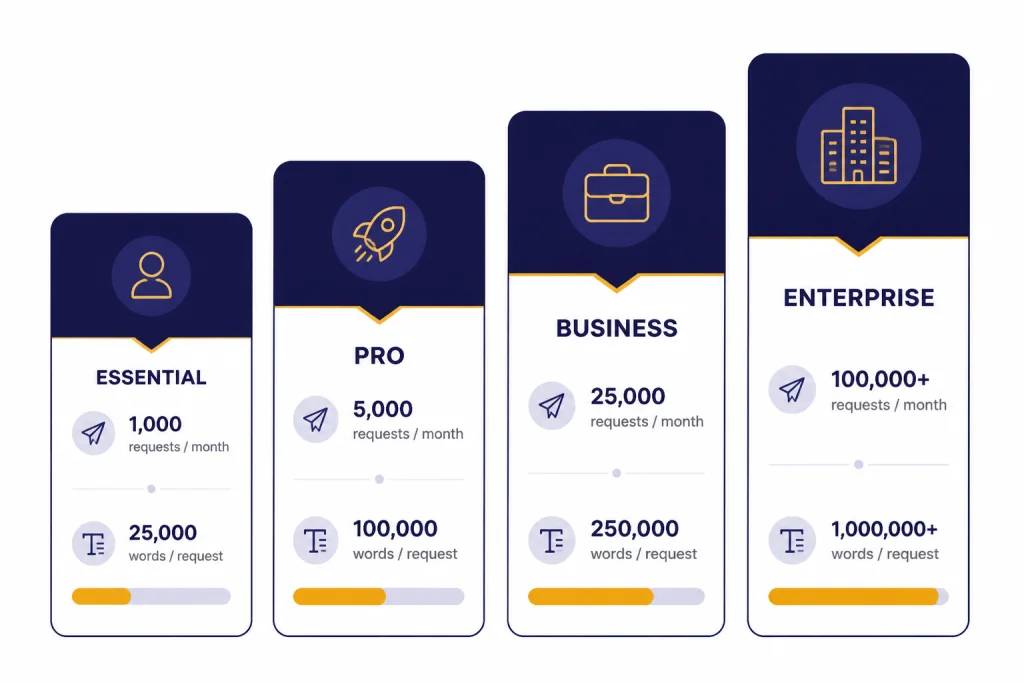
StealthGPT’s public pricing page listed four main plans at publication: Essential, Pro, Business, and Enterprise. The page displays pricing as a per-day figure and lets visitors toggle weekly, monthly, and yearly billing. Because the company has shown different prices on different official pages and blog posts, check the live checkout screen before subscribing.
| Plan | Displayed price | Daily requests | Max input words per use | Seats | Best fit |
|---|---|---|---|---|---|
| Essential | $1.15 per day[1] | 50[1] | 1,000[1] | 1 | Testing the product on short drafts |
| Pro | $1.45 per day[1] | 100[1] | 1,500[1] | 3 teammates[1] | Frequent rewriting with small team access |
| Business | $2.85 per day[1] | 500[1] | 2,000[1] | 5 teammates[1] | Higher-volume team workflows |
| Enterprise | $18.55 per day[1] | Unlimited[1] | 3,000[1] | 10 teammates[1] | Large teams that need the highest public limit |
A second pricing wrinkle is consistency. StealthGPT’s own February 24, 2026 blog post listed older monthly and annual plan names, including Essential at $17.99 per month or $99.99 per year, Pro at $24.99 per month or $199.99 per year, and Exclusive at $34.99 per month or $299.99 per year.[3] That does not match the current public pricing table. A third-party comparison page also read the current Essential and Pro pricing as $1.15 per day and $1.45 per day, billed weekly, which supports the newer per-day presentation for those two plans.[12]
The main value question is not just price. It is throughput and risk. Essential has enough daily capacity for casual rewriting, while Pro and Business make more sense for teams or repeat use. Enterprise raises both request volume and max input size, but a larger plan does not solve the underlying problem: a rewritten passage can still be detected, misread, or judged against an AI-use policy.
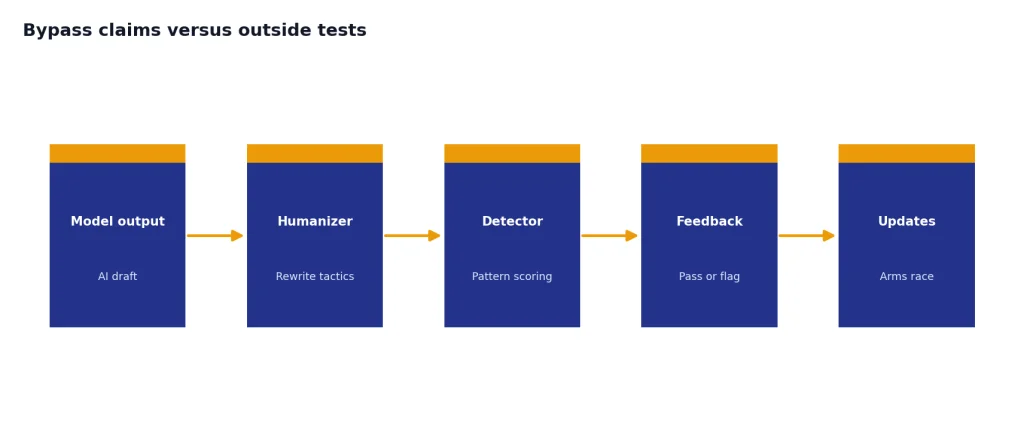
Bypass claims versus outside tests
StealthGPT makes aggressive bypass claims. Its homepage says its models are tested against major AI detectors before release and says StealthGPT outsmarts GPTZero, Originality, ZeroGPT, Winston AI, and more.[2] Its blog claims a 0% AI detection result against Turnitin in one StealthGPT test and says Originality AI perceived a StealthGPT-processed ChatGPT text as 99% human writing.[3] These are vendor claims, not independent guarantees.
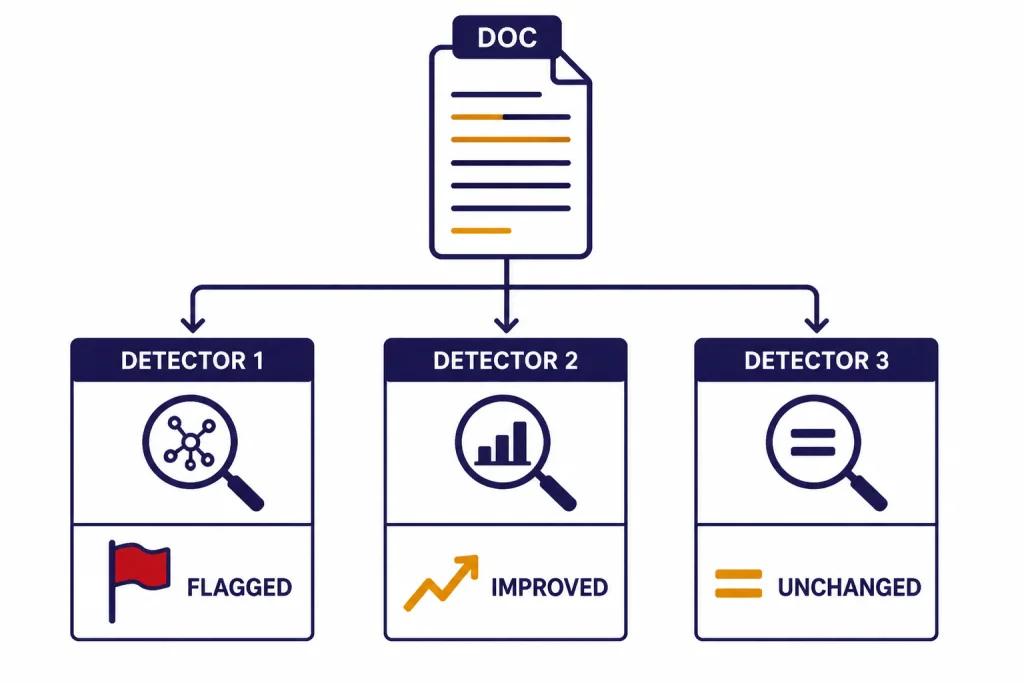
Outside testing is more mixed. Originality.ai tested a ChatGPT-generated article, processed it through StealthGPT, and then scanned it with Originality.ai, Writer, and ZeroGPT. In that test, Originality.ai flagged both the original AI draft and the StealthGPT version with 100% confidence as likely AI.[7] Writer moved from 83% human-generated on the original draft to 92% human-generated on the StealthGPT version, while ZeroGPT moved from 91% AI-GPT to 87.73% AI-GPT.[7] In plain English, the rewrite helped a little in one detector and not enough in another.
Research also suggests that humanizers do not affect all detectors equally. The Becker Friedman Institute working paper “Artificial Writing and Automated Detection” evaluated Pangram, OriginalityAI, GPTZero, and RoBERTa, and found that Pangram’s performance was largely robust to humanizer tools such as StealthGPT, while other detectors became more case-dependent.[9] That means a humanizer may appear to work on one checker and fail on another.
This is the core reason we do not recommend buying StealthGPT solely to “pass” a detector. AI detection is an arms race. Humanizers update. Detectors update. Writing models update. A result that looks clean on one site today can look risky on another site tomorrow. If a grade, job, client contract, or publication is at stake, a detector score is not enough evidence of originality or compliance.
Where StealthGPT fits
StealthGPT fits best as a rough-draft rewriting tool for users who are already allowed to use AI. For example, a marketer may use it to make a first draft less repetitive before doing a real editorial pass. A non-native English speaker may use it to explore smoother sentence options. A researcher may use it to simplify a private note, as long as the final work is checked against the relevant policy.
It is weaker as a final-authoring tool. The product’s own support article tells users to split text into 200–300 word chunks for better results and warns that too much manual editing can reintroduce patterns detectors look for.[6] That advice reveals the fragility of the workflow. If a tool requires narrow chunking, repeated regeneration, and detector-specific behavior, it should not be treated as a dependable writing process.
StealthGPT also has a developer story. Its API documentation says all requests now use a single stealth model optimized for general AI detection avoidance, and that a detector parameter such as “turnitin” or “gptzero” is deprecated and no longer changes model behavior.[8] That makes integration simpler, but it also means the API is not a detector-by-detector bypass switch.
For teams, the useful parts are the workflow features: history, file uploads, in-text citations, multilingual support, teammate seats, and document tools. The less useful part is the idea that a tool can remove accountability. If you need structured research help, compare Best AI Research Tools for Academics. If you work across languages, see best AI translation tools tested. If you mainly want browser enhancements, compare StealthGPT’s extension with tools in Superpower ChatGPT Extension Review.
Ethical and practical risks
The biggest risk is policy violation. Many schools, employers, publishers, and clients distinguish between allowed AI assistance and undisclosed AI authorship. Rewriting AI-generated text to hide that authorship can still break the rule, even if a detector gives a low score. A humanizer changes wording. It does not change who did the thinking, research, reporting, or analysis.
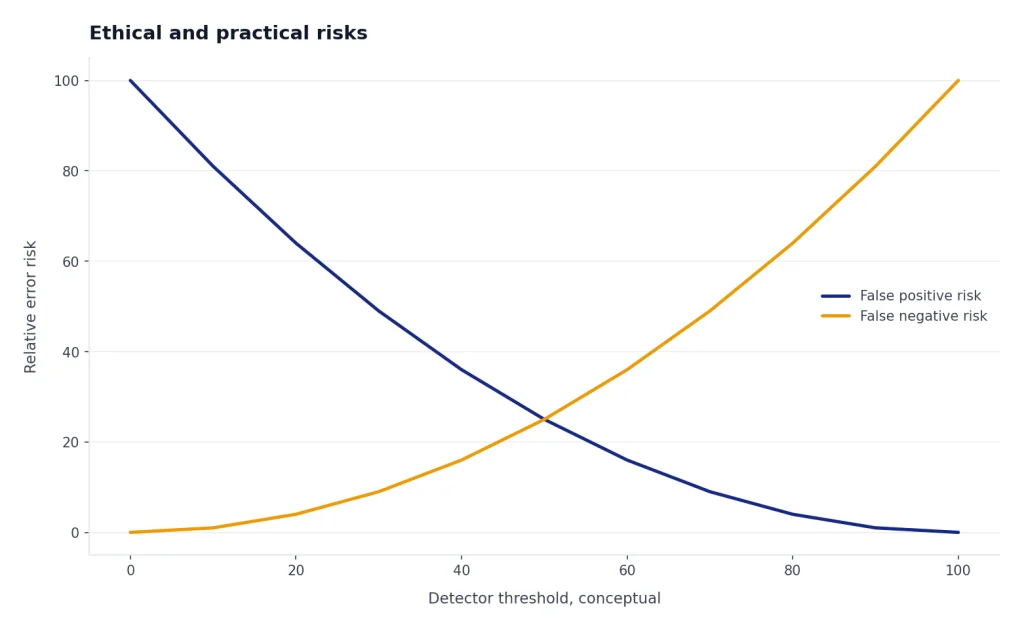
The second risk is false confidence. AI detectors can be wrong in both directions. Stanford HAI reported that seven detectors classified 61.22% of TOEFL essays by non-native English students as AI-generated, and at least one detector flagged 89 of 91 TOEFL essays.[10] That finding shows why detector scores should not be used as the only evidence against a writer. It also shows why chasing detector scores can distort writing away from clarity and toward whatever a tool thinks looks “human.”
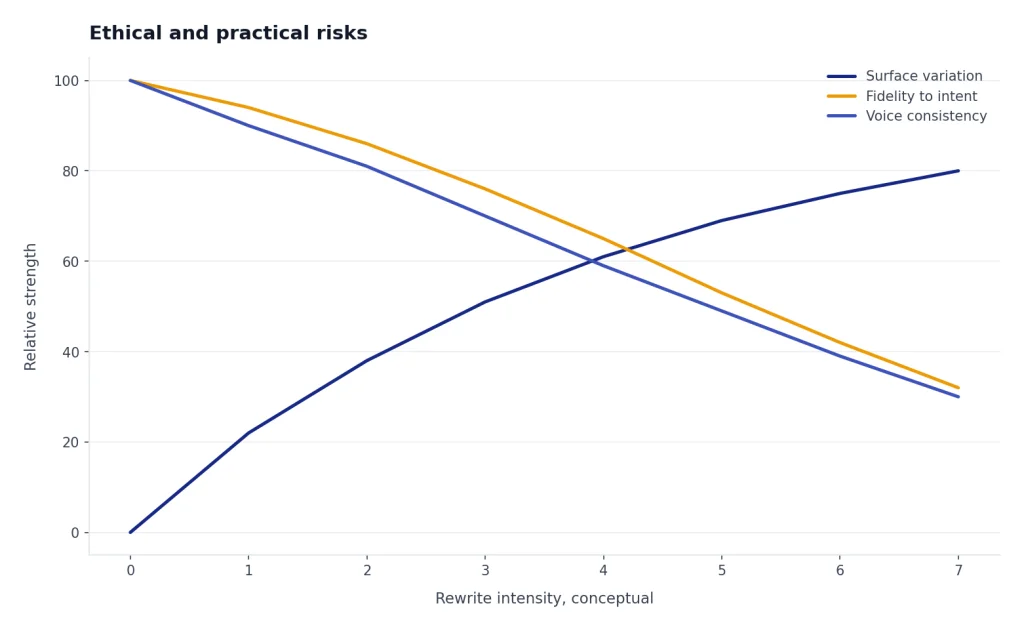
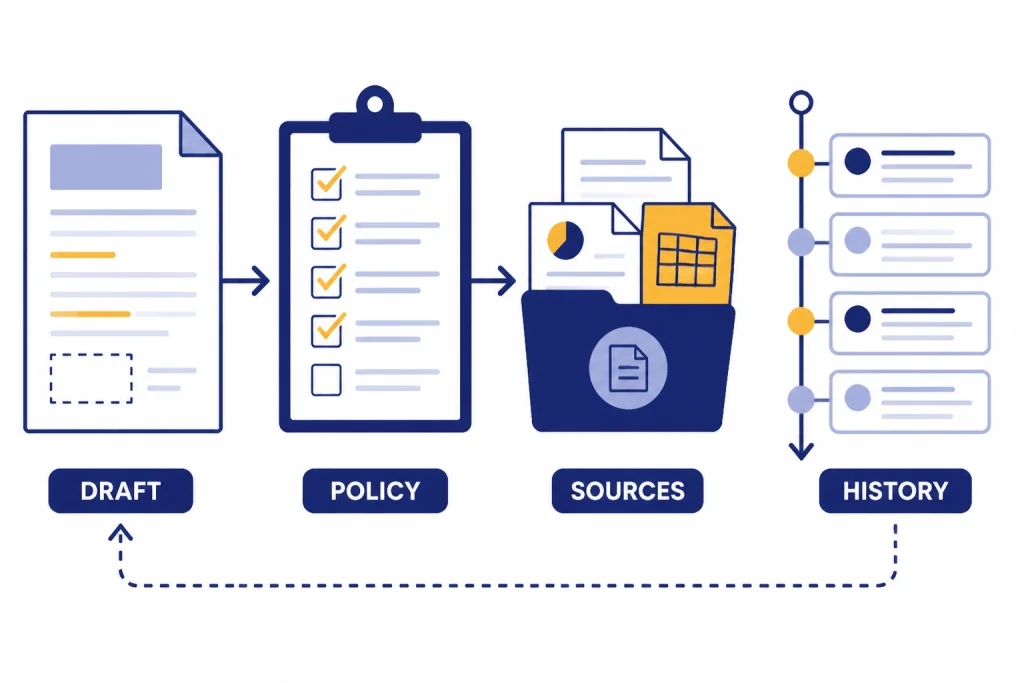
The third risk is quality decay. Humanizers often add odd transitions, unnecessary synonyms, vague claims, or inconsistent tone. A clean detector score is not the same as a good paragraph. The safer workflow is to use AI for brainstorming, outlines, examples, or private draft support, then write and revise in your own voice. Keep notes, drafts, sources, and version history when authorship matters.
The fourth risk is billing friction. StealthGPT’s support page says cancellation can be handled through account settings, billing settings, Stripe, mobile web, or Apple subscriptions depending on how the user subscribed.[11] The same page says cancellation stops future charges and that refund inquiries for current cycles should go through support.[11] Before subscribing, assume you may need to manage billing through the same channel you used to sign up.
Alternatives to consider
The best alternative depends on the job you are actually trying to do. If your goal is to improve writing, choose a writing assistant. If your goal is to check originality, choose a plagiarism checker. If your goal is to evaluate AI risk in a school setting, choose a detector policy and process rather than a single detector score. StealthGPT tries to bundle several of these needs, but its marketing centers on bypassing AI detection, which is the riskiest use case.
| Need | Better first stop | Why |
|---|---|---|
| Writing quality | Best AI Writing Tools Compared in 2026 | Focuses on drafting, editing, tone, and productivity. |
| Academic detection policy | our take on AI detector for teachers | Helps schools compare detectors without treating scores as proof. |
| Plagiarism checking | the best plagiarism checkers breakdown | Looks for copied text and citation problems, not just AI patterns. |
| Prompting help | this guide to best ChatGPT prompt generator tools | Improves inputs so fewer rewrites are needed later. |
| Research workflow | Best AI Research Tools for Academics | Prioritizes sources, notes, and evidence over detector evasion. |
For most readers, the better long-term investment is not a bypass tool. It is a transparent workflow. Use AI where it is allowed. Cite sources. Keep drafts. Add your own analysis. If you need a tool, pick one that makes your process clearer rather than one that promises to make it invisible.
Frequently asked questions
Does StealthGPT bypass AI detection?
Sometimes it may reduce detector scores, but it does not reliably bypass every detector. StealthGPT claims strong performance against major tools, while independent testing from Originality.ai found StealthGPT text was still flagged as likely AI with 100% confidence in one test.[7] Treat any bypass claim as uncertain.
Is StealthGPT free?
StealthGPT promotes free access to some tools, including a detector and humanizer, but regular use pushes users toward paid plans. The public pricing page listed Essential, Pro, Business, and Enterprise plans at publication, starting at $1.15 per day for Essential.[1] Always confirm the checkout price before paying.
Is using StealthGPT cheating?
It depends on the rule you are working under. If your school, employer, publisher, or client bans undisclosed AI writing, using StealthGPT to hide AI authorship can still violate that rule. If AI rewriting is allowed and disclosed when required, it can be part of an editing workflow.
Does StealthGPT include a Chrome extension?
Yes. The Chrome Web Store listing says the extension can send recent chatbot messages or highlighted webpage text to StealthGPT for humanizing.[5] The same listing also describes quiz-helper features, so students should be especially careful with academic rules.[5]
Does StealthGPT have an API?
Yes. StealthGPT publishes API documentation, and its advanced usage page says requests now use a unified stealth model for general AI detection avoidance.[8] The same page says detector-specific parameters such as “turnitin” or “gptzero” are deprecated and can be omitted.[8]
Who should avoid StealthGPT?
Avoid it if your main goal is to conceal prohibited AI use. Also avoid it if you need a tool that can prove authorship, guarantee originality, or protect you from disciplinary action. A humanizer can rewrite text, but it cannot make a questionable workflow safe.