
ChatGPT creative prompts work best when you treat ChatGPT as a writing partner, not a replacement author. Use it to generate options, pressure-test choices, ask sharper questions, and revise weak passages while you keep control of the story. This guide gives storytellers a practical prompt framework, copy-paste prompts for premise, character, plot, dialogue, worldbuilding, scene drafting, and revision, plus a table that shows which prompt type to use at each stage. OpenAI describes ChatGPT as an AI assistant for everyday tasks that include brainstorming and writing, but the strongest creative results still come from clear context, constraints, and human judgment.[1]
How to use ChatGPT for storytelling
Use ChatGPT where it gives you leverage: idea generation, structural comparison, alternative phrasing, and revision feedback. Do not hand it the entire creative burden and expect a finished story that sounds like you. The more authorial direction you provide, the less generic the answer becomes.
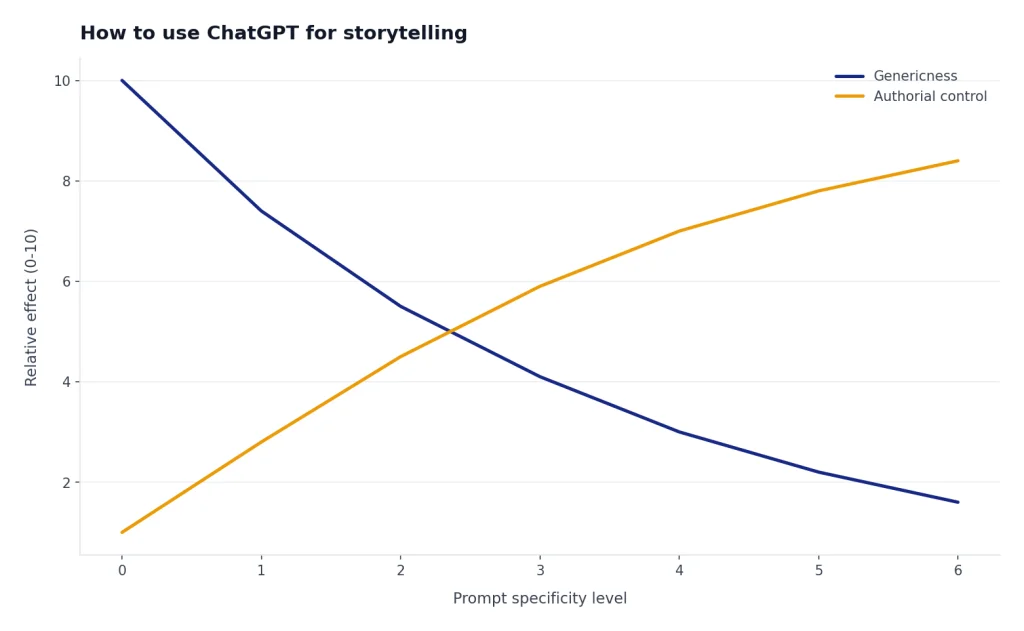
A good creative prompt should tell ChatGPT the project type, the story stage, the audience, the tone, the constraints, and the output format. OpenAI’s own prompt guidance says users should identify the task clearly, provide necessary context, and set the preferred tone and style.[2] That advice matters even more for fiction because vague requests leave too many creative decisions to the model.
Think of the conversation as a writing room. You are the showrunner. ChatGPT can pitch, challenge, list, compare, and draft. You decide what belongs in the canon. If you want a more general prompt-building system, pair this article with our chatgpt prompt generator guide and save the prompts that fit your genre.
- Use ChatGPT early to find premises, conflicts, settings, and character contradictions.
- Use ChatGPT in the middle to diagnose weak scenes, pacing gaps, and missing stakes.
- Use ChatGPT late to tighten language, remove repetition, and test whether the ending pays off the setup.
- Do not use ChatGPT blindly for voice, theme, cultural detail, legal questions, or sensitive lived experience.
A simple prompt framework for creative writing
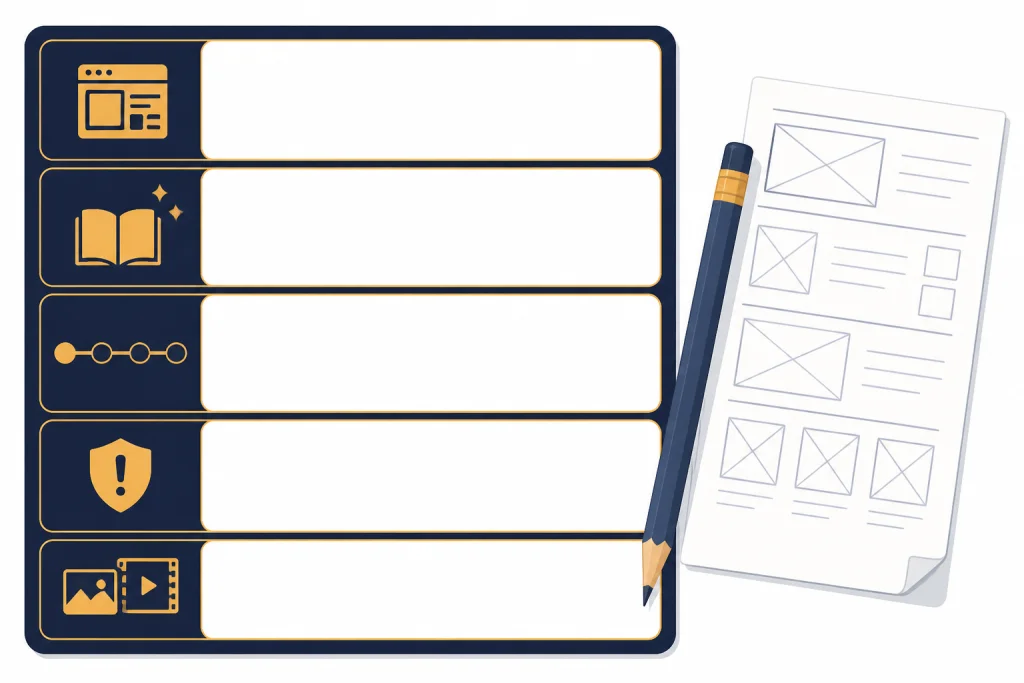
The easiest way to get better answers is to stop asking one-line questions. Build each prompt from a compact brief. OpenAI’s prompt engineering best practices emphasize clarity, specificity, context, iterative refinement, and tone guidance.[3] For storytellers, that turns into a repeatable pattern.
Use this structure when you want a controlled creative answer:
You are helping me develop a [story type].
Genre: [genre]
Audience: [reader or viewer]
Current stage: [idea, outline, scene draft, revision]
What I already know: [canon facts]
What I need: [specific task]
Constraints: [tone, length, point of view, rating, themes to avoid]
Output format: [list, table, questions, scene beats, critique]
This framework works because it separates the permanent parts of the story from the question you are asking now. It also prevents ChatGPT from inventing around details you already chose.
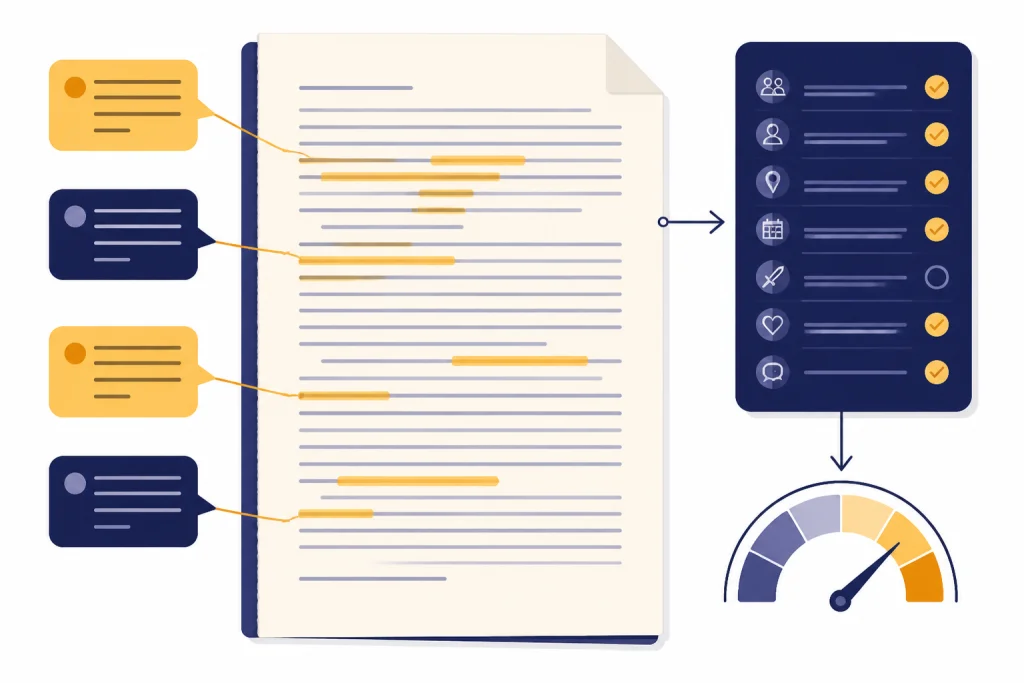
For long projects, keep a short story bible in the chat. Include character names, motivations, relationships, setting rules, timeline facts, and forbidden changes. If the draft gets long, move targeted passages into a focused prompt instead of asking ChatGPT to reason about the whole manuscript at once. If you draft in ChatGPT canvas, you can highlight a section and ask for edits or questions about that section; OpenAI says canvas is built for writing and coding projects that require editing and revisions.[5] Our ChatGPT Tutorial: Build Documents in Canvas explains that workflow in more depth.
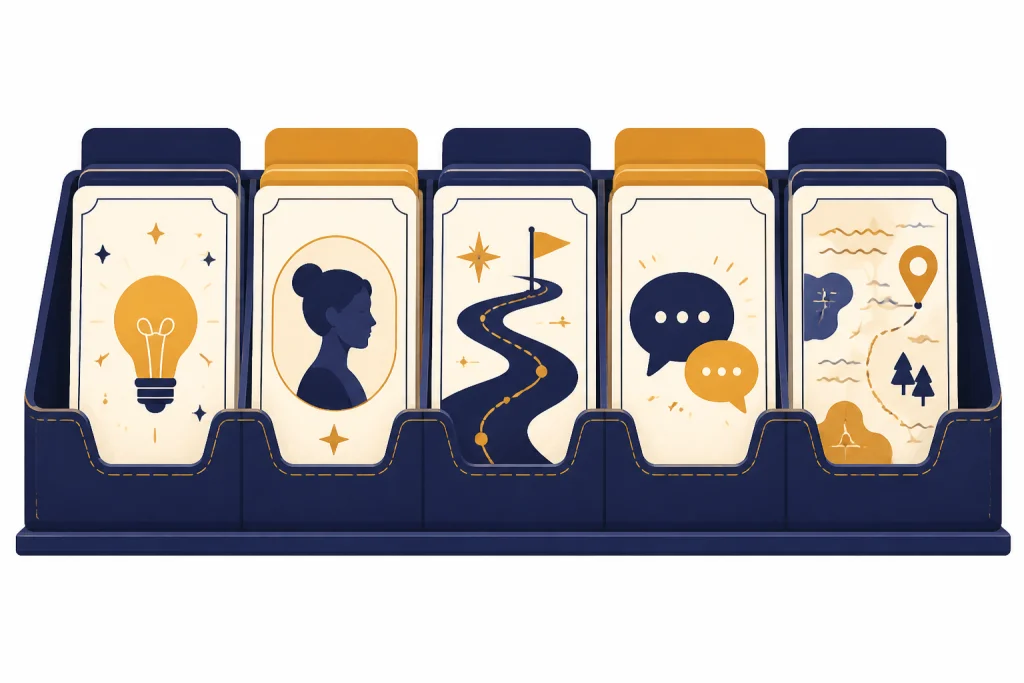
Copy-paste ChatGPT creative prompts
These prompts are original templates. Replace the bracketed text with your project details. Start with prompts that produce options, then ask follow-up questions that narrow the direction.
Premise and concept prompts
Help me generate story premises for a [genre] story about [subject]. I want ideas that combine emotional stakes with an unusual external problem. Give me varied premises. For each one, include the protagonist, the central conflict, the hidden emotional wound, and the reason the story must happen now.I have this rough idea: [paste idea]. Do not write the story. Ask me focused questions that would make the premise sharper. Group the questions under character, conflict, setting, stakes, and ending.Generate alternate versions of this premise for different tones: intimate, suspenseful, comic, tragic, strange, and hopeful. Keep the same core conflict but change the story engine and reader expectation.Character prompts
Help me design a protagonist for [story premise]. Avoid stock archetypes. Give me a character with a public goal, private fear, contradiction, bad habit, relationship pressure, and one choice they would rather avoid.Here is my character profile: [paste profile]. Find the parts that feel generic. Suggest more specific wants, fears, memories, social pressures, and moral tradeoffs. Keep the character recognizable.Create a foil for this protagonist: [paste protagonist]. The foil should expose the protagonist’s blind spot without becoming a simple villain. Give me their worldview, behavior under stress, and the scene where they create maximum pressure.Plot and structure prompts
Turn this premise into a cause-and-effect plot outline. Each major event should force the next event. Avoid coincidences. For every beat, include what the protagonist wants, what blocks them, what changes, and what new problem appears.Analyze this outline for weak causality: [paste outline]. Flag any beat that feels like it happens only because the author needs it to happen. Suggest stronger motivations or consequences.Give me three possible endings for this story: [paste summary]. Each ending should resolve the external conflict and reveal a different answer to the story’s central moral question. Explain the cost of each ending.Scene prompts
Help me plan a scene where [character] wants [goal] but [obstacle] blocks them. Give me scene beats only. Include the opening tension, escalation, reversal, emotional turn, and exit hook. Do not write polished prose.Here is my scene draft: [paste scene]. Identify the moment where the scene truly starts. Identify any paragraphs before that point that may be setup rather than drama. Suggest a cleaner entry point.Rewrite the function of this scene without rewriting the prose. Tell me what the scene currently accomplishes, what it should accomplish, and what conflict could make it more necessary.Dialogue prompts
Improve this dialogue without making it sound polished or theatrical: [paste dialogue]. Keep the characters’ intentions hidden under ordinary speech. Add subtext, interruption, avoidance, and one line that means more than it says.Create a dialogue contrast sheet for these characters: [paste names and descriptions]. For each character, define sentence length, vocabulary, rhythm, humor style, defensiveness, and what they refuse to say directly.Worldbuilding prompts
Help me build a setting for [genre] that creates story pressure. Do not list decorative details. Give me institutions, rules, scarcity, taboos, status markers, everyday rituals, and contradictions that can generate conflict.Here are the rules of my world: [paste rules]. Find loopholes, contradictions, and dramatic consequences. Suggest ways characters would exploit the system.If your story includes visual development, character boards, or cover concepts, use this prompt library alongside our Best ChatGPT Image Prompts article. If you are writing scripts, titles, or video story formats, the ChatGPT for YouTubers guide may also help.
Revision prompts for stronger drafts
Revision prompts should not ask ChatGPT to make everything better. That usually produces bland smoothing. Ask for one kind of editorial attention at a time: structure, stakes, clarity, continuity, rhythm, or line-level compression.
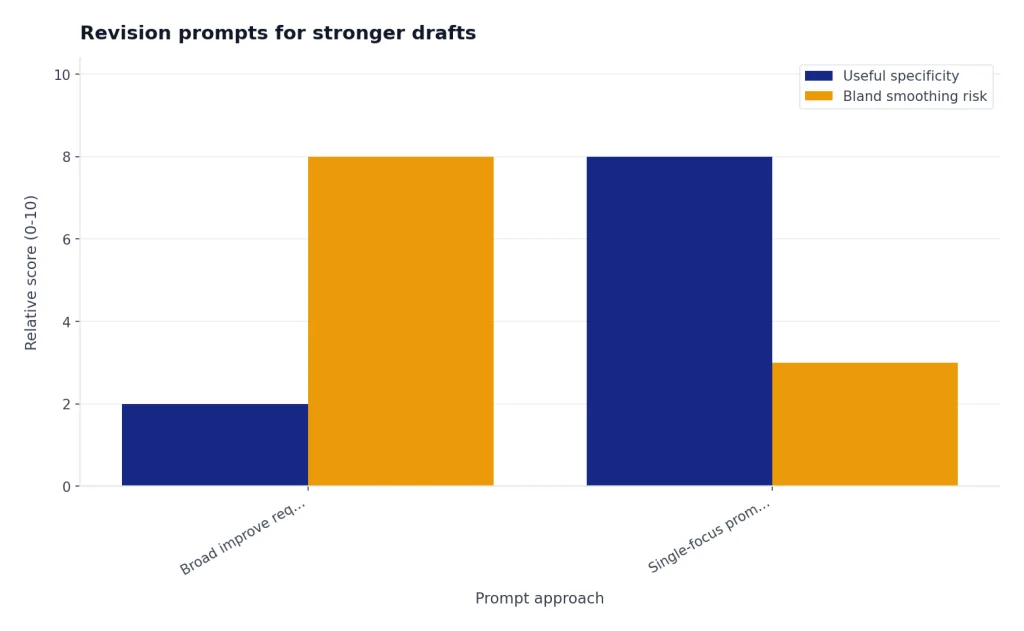
Research on LLM feedback for creative writing shows why specificity matters. The ACL paper Help Me Write a Story studies whether large language models can give meaningful writing feedback and frames the problem as support for human-in-the-loop creative writing.[6] Use ChatGPT as an extra reader, not as the final judge of quality.
Developmental edit prompt
Act as a developmental editor for this story excerpt. Do not rewrite it yet. Evaluate only these areas: protagonist desire, conflict, stakes, causality, pacing, and emotional turn. Give me specific notes tied to passages, then rank the most important revision priorities.Continuity prompt
Check this excerpt for continuity problems. Track names, timeline, location, objects, injuries, knowledge, promises, and emotional state. Return a table with the issue, where it appears, why it matters, and a possible fix.Pacing prompt
Evaluate pacing in this scene. Mark where tension rises, stalls, repeats, or resolves too early. Suggest cuts or expansions, but do not rewrite the scene unless I ask.Line edit prompt
Line edit this passage for clarity, rhythm, and specificity. Preserve point of view and voice. Avoid making the prose more formal. Show the edited version first, then list the kinds of changes you made.When a story depends on another language or cultural context, do not rely on a generic rewrite. Use a more careful workflow like the one in our ChatGPT translation prompts guide, then ask a qualified human reader to review sensitive details.
How to keep your own voice
The biggest risk of ChatGPT creative prompts is not that the model will be too strange. It is that the model will be too safe. It may smooth edges, over-explain feelings, make dialogue too direct, or resolve tension before the scene earns it.
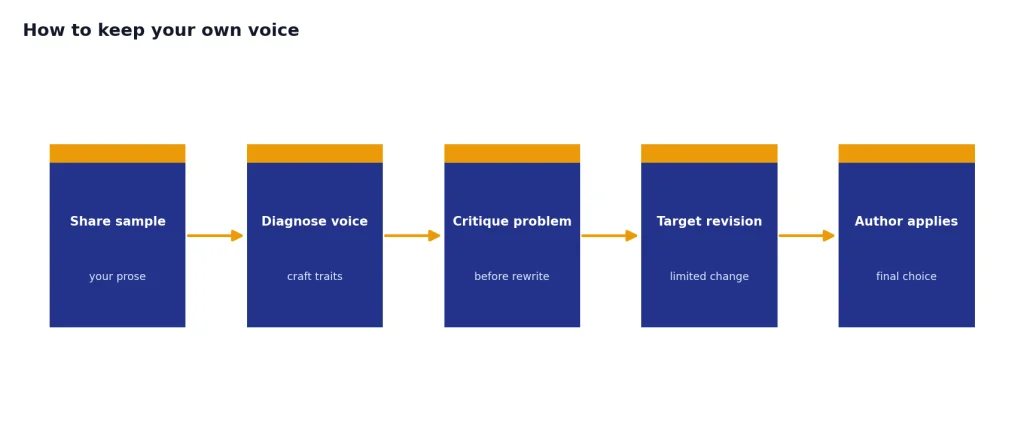
Protect your voice by giving ChatGPT samples and asking for diagnosis before generation. OpenAI’s prompt guidance recommends being specific about desired context, outcome, length, format, and style; for fiction, that means describing what your prose should not become as well as what it should do.[4]
Study this sample of my writing: [paste sample]. Do not imitate it yet. Describe the voice in terms of sentence rhythm, image pattern, humor, emotional distance, level of interiority, and dialogue style. Then create a voice guide I can use for revision prompts.Revise this passage using the voice guide below. Preserve my level of restraint and avoid adding dramatic language that is not already implied.
Voice guide: [paste guide]
Passage: [paste passage]One useful rule is to ask ChatGPT to explain before it rewrites. If it cannot describe the voice, conflict, or problem clearly, its rewrite will probably miss the point. Ask for a short critique first, then choose which parts to apply yourself.
For playful experiments, you can borrow ideas from Fun ChatGPT Prompts to Try Today, but keep experimental outputs outside your main manuscript until you decide they belong.
Which prompt to use at each story stage
Use the prompt type that matches the stage of the work. A premise prompt will not fix a weak third act. A line edit prompt will not solve a missing character desire. This table gives you a practical routing system.
| Story stage | Best prompt type | Ask ChatGPT for | Avoid asking for |
|---|---|---|---|
| Blank page | Premise exploration | Contrasts, stakes, unusual pressures, possible endings | A finished story from a vague idea |
| Character design | Contradiction prompt | Wants, fears, blind spots, moral choices | A generic biography with decorative traits |
| Outline | Causality check | What forces each event to happen next | A beat sheet with no consequences |
| Scene planning | Scene function prompt | Goal, obstacle, turn, exit hook | Polished prose before the conflict is clear |
| Dialogue | Subtext prompt | Hidden motives, avoidance, rhythm, contrast | Characters explaining exactly what they feel |
| Revision | Editorial diagnosis | Specific weaknesses and ranked fixes | A broad request to improve everything |
| Final pass | Line edit prompt | Clarity, repetition, rhythm, consistency | A rewrite that changes voice or meaning |
If you use ChatGPT for study, craft analysis, or reading notes between drafts, see ChatGPT Learning Prompts for Self-Study. Storytellers can use the same method to study scene openings, reversals, and genre conventions.
Common mistakes to avoid
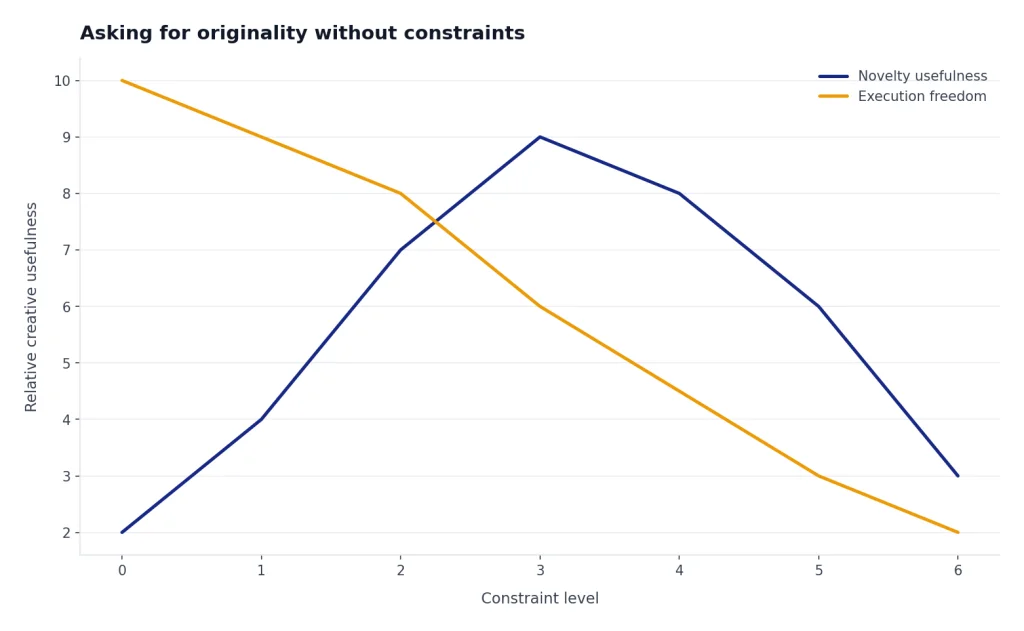
Asking for originality without constraints
Originality is easier to reach through tension than through a command. Instead of asking for an original fantasy story, define the ordinary convention you want to bend. Give ChatGPT a rule, then ask it to produce variations that violate reader expectation in controlled ways.
Letting ChatGPT invent canon
When you do not provide canon, ChatGPT may fill the gaps. That can be useful during brainstorming and harmful during revision. Keep a short canon list and tell ChatGPT which details it must preserve.
Requesting prose too early
If the scene goal is weak, polished prose only hides the problem. Ask for scene beats, conflict options, and character pressure before asking for paragraphs. Draft after the dramatic function is clear.
Confusing critique with permission
ChatGPT can tell you a scene is clear, but that does not make it good. It can tell you a twist works, but that does not mean readers will feel it. Treat the answer as one response from one artificial reader, then test the draft with your own taste and, when possible, real readers.
Using style prompts that mimic living authors
A safer and more useful approach is to describe craft features instead of asking for imitation. Say you want sparse sentences, dry humor, close interiority, or lush sensory detail. Better yet, build a voice guide from your own sample.
If you are new to the product itself, start with our plain-English explainer on what is ChatGPT. It will help you understand why prompt wording changes the output.
Frequently asked questions
What are the best ChatGPT creative prompts for fiction writers?
The best prompts ask for a specific creative task, not a whole story. Use prompts for premise options, character contradictions, scene beats, dialogue subtext, continuity checks, and revision priorities. Give ChatGPT the genre, audience, canon facts, constraints, and output format before asking for ideas.
Can ChatGPT write a complete short story for me?
ChatGPT can draft story text, but you should treat that draft as raw material. It may produce a coherent surface while missing voice, surprise, or emotional intent. Most storytellers get better results by using ChatGPT for brainstorming, outlining, critique, and targeted revision.
How do I make ChatGPT write less generic fiction?
Give it sharper constraints. Include the protagonist’s desire, the scene obstacle, the emotional subtext, the genre expectation you want to avoid, and examples of what not to do. Ask for several options, then combine and rewrite the parts that feel alive.
Should I use ChatGPT for dialogue?
Yes, but ask for subtext and contrast rather than smooth lines. Tell ChatGPT what each character wants, what each refuses to admit, and how each character speaks under pressure. Then edit the result so it sounds less like a balanced exchange and more like people protecting themselves.
Can ChatGPT help with writer’s block?
Yes. Use it to ask questions, generate alternate paths, or identify the smallest next decision. Avoid asking it to solve the entire book. A focused prompt such as asking for possible scene openings or new obstacles usually works better than asking for inspiration.
Is it okay to use ChatGPT for worldbuilding?
Yes, especially for systems, consequences, and contradictions. Ask how a rule affects ordinary life, power, work, status, language, and conflict. Keep your own world bible so ChatGPT does not overwrite established rules in later prompts.