

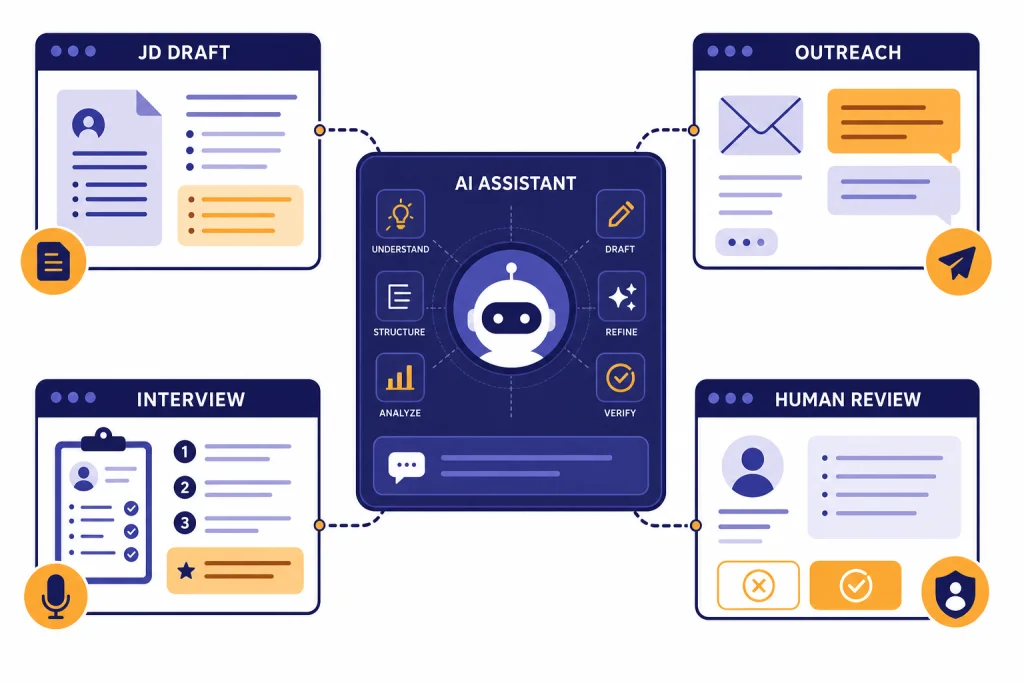
ChatGPT for recruiters works best as a drafting, structuring, and quality-control assistant, not as an automated hiring decision-maker. Use it to turn messy intake notes into clear job descriptions, create structured interview questions, personalize outreach, rewrite candidate emails, summarize recruiter notes, and standardize hiring-manager communication. Keep humans in charge of screening, selection, accommodations, and final decisions. Recruiting teams also need privacy rules, bias checks, and clear documentation before they use AI in live hiring workflows. This guide gives recruiters and HR teams practical prompts, safe use cases, compliance guardrails, and an implementation plan that fits agency, in-house, and high-volume hiring teams.
Where ChatGPT fits in recruiting
Recruiting has many repeatable writing and planning tasks. ChatGPT can help when the recruiter provides clear context and reviews the output. It can turn intake notes into a job post, create a shortlist of competencies to discuss with the hiring manager, draft interview questions tied to job requirements, and rewrite candidate messages in a more concise tone.
The best role for ChatGPT is assistant, not gatekeeper. It should help recruiters prepare, communicate, and document. It should not decide who is qualified, rank candidates, reject applicants, or make legal conclusions. That distinction matters because employment selection tools can create discrimination risk even when the tool looks neutral. The EEOC says federal EEO laws apply to employment tests and selection procedures, including procedures that have a disparate impact unless they are job-related and consistent with business necessity.[5]
For teams that already use applicant tracking systems, sourcing tools, assessments, or HRIS platforms, ChatGPT fills a different gap. It helps with language, structure, summaries, checklists, and role calibration. If your team needs broader HR policy workflows, compare this guide with ChatGPT for HR Departments. If your team mostly needs better candidate follow-up, our guide to ChatGPT for Email Writing That Converts is a useful companion.
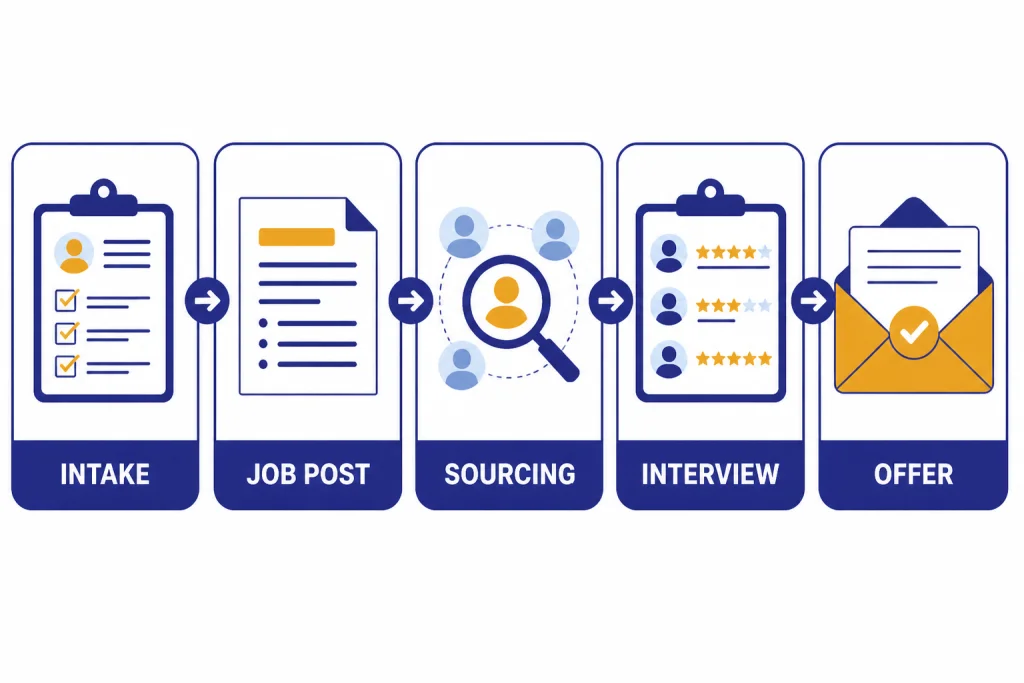
Best recruiting use cases
Start with tasks that are low-risk, human-reviewed, and easy to audit. These are usually drafting and organization tasks. They save time without handing decision authority to the model.
Job intake and role calibration
Recruiters can paste sanitized intake notes and ask ChatGPT to identify missing details. The model can flag unclear seniority, vague must-have requirements, unrealistic compensation language, or conflicting success criteria. This helps the recruiter return to the hiring manager with better questions before sourcing begins.
Illustrative before/after: A messy intake note might say, “Need a senior backend person, fast. Python preferred, maybe Java. Must own APIs, mentor juniors, deal with data team, fintech nice, salary TBD.” A useful ChatGPT output would not invent the role; it would turn that note into questions such as: “Is Python required or preferred?” “Which APIs will this person own in the first six months?” “Is people mentoring part of performance evaluation?” “What level maps to your internal architecture?” and “What compensation range has been approved?”
Job descriptions and postings
ChatGPT can draft a role description in plain language, separate required from preferred qualifications, and remove jargon. It can also create versions for a careers page, referral campaign, or LinkedIn-style post. A recruiter should still check accuracy, pay transparency obligations, equal opportunity language, and internal job architecture before publishing.
Sourcing messages
Cold outreach works better when it is specific. ChatGPT can convert role notes and candidate-public information into a short message. Do not ask it to infer protected characteristics or personal traits. Ask it to reference role-relevant public experience, such as a technology stack, industry background, portfolio project, or leadership scope.
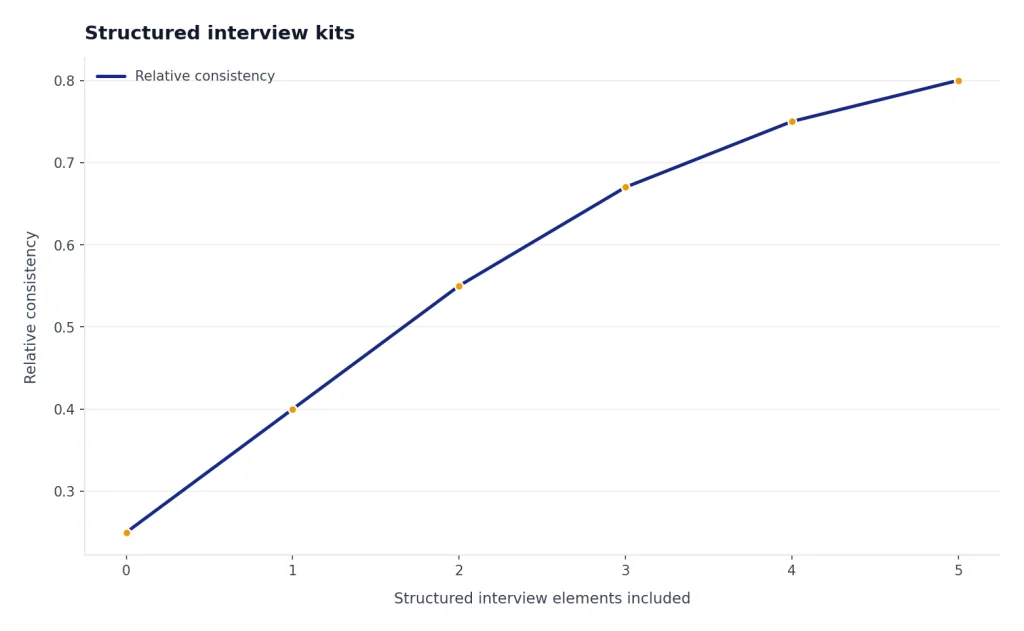
Structured interview kits
ChatGPT can build interview guides that map each question to a job competency. This is one of the strongest uses for recruiters because structure improves consistency. Ask for behavioral questions, work-sample prompts, scorecard anchors, and follow-up probes. Then have the hiring manager and HR review the final kit.
Candidate communication
Recruiters can use ChatGPT to draft scheduling messages, interview preparation notes, rejection templates, offer-process updates, and check-in emails. The safest versions are transparent, courteous, and free of unsupported promises. For sales-style outreach patterns, ChatGPT for Sales Professionals has useful framing ideas that recruiters can adapt without becoming pushy.
| Recruiting task | Good ChatGPT use | Human review needed | Avoid |
|---|---|---|---|
| Job description | Draft clearer language from approved intake notes | Hiring manager, HR, compensation, legal where needed | Inventing requirements or pay ranges |
| Sourcing | Create personalized outreach from role-relevant public facts | Recruiter checks accuracy and tone | Inferring age, family status, disability, or ethnicity |
| Screen preparation | Generate consistent phone-screen questions | Recruiter confirms job relevance | Letting AI reject applicants |
| Interviewing | Build structured interview guides and scorecard anchors | Hiring team calibration | Using vague culture-fit judgments |
| Candidate updates | Draft timely, respectful messages | Recruiter confirms status and facts | Making promises the company has not approved |
Prompts for recruiters
Good recruiting prompts give ChatGPT the role, audience, constraints, and review standard. Do not paste resumes, interview notes, or employee data unless your organization has approved that use and the workspace has the right privacy controls. OpenAI says it does not use data from ChatGPT Business, ChatGPT Enterprise, ChatGPT Edu, ChatGPT for Teachers, or the API platform to train or improve models by default.[1]
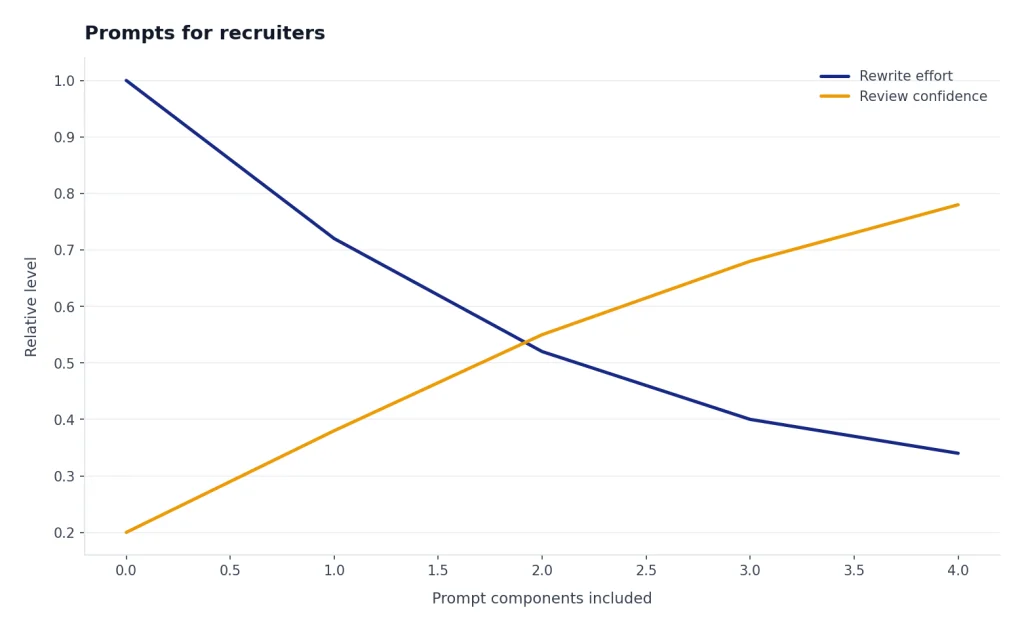
Use these prompts as templates. Replace placeholders with approved, sanitized details.
Role intake prompt
You are helping a recruiter prepare for a hiring-manager intake meeting. Review these sanitized notes and return: unclear requirements, missing information, possible contradictions, and questions I should ask. Do not invent requirements.

Role notes:
[PASTE SANITIZED NOTES]
Example output, shortened: “Unclear requirement: ‘senior’ is not mapped to years, scope, or internal level. Missing information: reporting line, interview process, approved salary range, location expectations, and must-have technologies. Possible contradiction: ‘Python preferred’ conflicts with ‘must own Python services.’ Questions to ask: What are the top three outcomes in the first 90 days? Which requirements are truly required on day one? What trade-offs are acceptable between fintech domain experience and backend depth?”
Job description prompt
Draft a clear job description for this role. Separate required qualifications from preferred qualifications. Use inclusive, plain language. Keep the description realistic and avoid inflated requirements. Do not add compensation, location, visa, or policy details unless they are included below.

Approved role details:
[PASTE APPROVED DETAILS]
Sourcing outreach prompt
Write a concise first-touch recruiting message for a candidate. Use only the role-relevant public information provided. Do not mention or infer protected characteristics. Tone: direct, respectful, and specific.

Role:
[ROLE SUMMARY]

Candidate-public facts:
[ROLE-RELEVANT FACTS]
Illustrative before/after: Weak outreach: “Hi, we have an amazing opportunity and think you would be a great fit. Can you chat?” Stronger AI-assisted draft: “Hi Maya — I saw your public write-up on scaling Python APIs for payments workflows. We’re hiring a backend engineer to improve reliability across API services used by finance teams. If you’re open to hearing more, I can send a brief role summary and compensation/location details approved for the search.” The stronger version uses role-relevant public facts and avoids unsupported assumptions.
Structured interview prompt
Create a structured interview guide for this role. Include competencies, behavioral questions, follow-up probes, and scorecard anchors. Every question must map to a job requirement. Avoid questions about protected characteristics or non-job-related personal life.

Role requirements:
[REQUIREMENTS]
Recruiting teams should store approved prompts in a shared library. A ChatGPT prompt generator can help teams create reusable templates, but the final templates should be reviewed by HR, legal, and recruiting leadership. If your team writes hiring content across multiple markets, use ChatGPT for Translators as a companion for localization quality checks.
What not to automate
Recruiters should draw a bright line between assistance and selection. ChatGPT can help write a scorecard. It should not be the scorekeeper. It can help summarize a phone screen after the recruiter removes sensitive details. It should not decide whether the candidate advances.
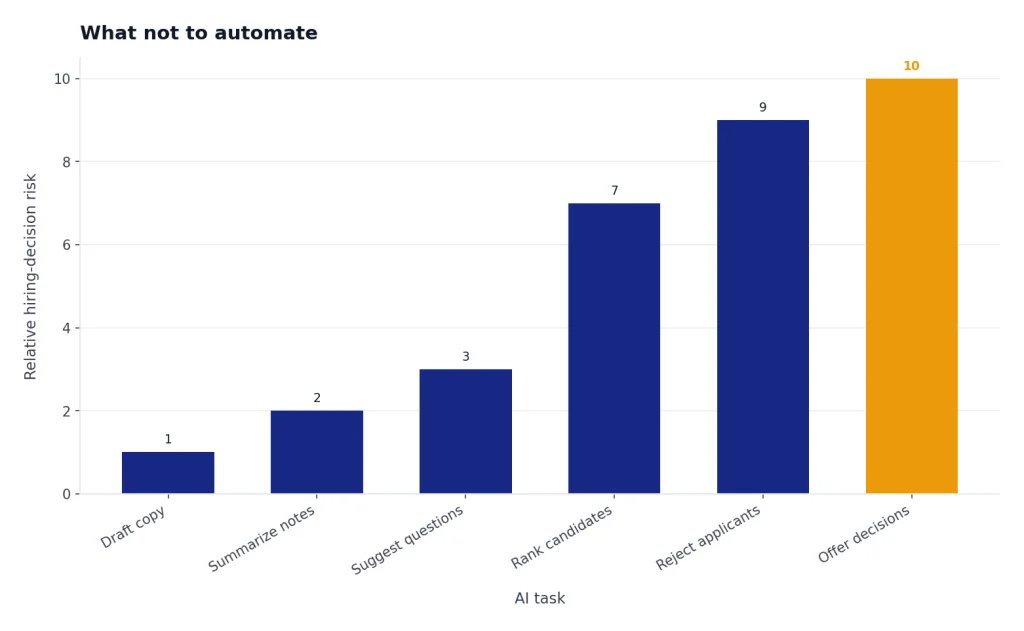
Avoid asking ChatGPT to rank candidates, infer personality from writing style, predict culture fit, judge professionalism from names or schools, or evaluate a candidate’s likelihood to accept an offer. These outputs can look objective while encoding weak assumptions. They also create documentation problems because the recruiter may not be able to explain why the model produced a ranking.
Do not use ChatGPT to generate interview questions that touch protected or irrelevant areas. Avoid prompts that ask for “red flags” without defining job-related criteria. A better prompt asks for “job-related risk areas to clarify in a structured interview, based only on these role requirements.”
Also avoid uploading sensitive candidate information into a personal account. If your organization wants recruiters to use ChatGPT for real work data, use an approved business workspace, define retention rules, and document what can and cannot be shared. OpenAI renamed ChatGPT Team to ChatGPT Business as of August 29, 2025, and says the rename did not change features, pricing, limits, or security.[2] ChatGPT Business is described by OpenAI as a self-serve business plan with a secure workspace and admin features, and standard ChatGPT seat access starts at 2 users.[3]
Privacy, bias, and compliance
Recruiting is a high-trust function. Candidates share work history, contact details, compensation expectations, immigration-related information, accommodation needs, and sometimes sensitive personal context. Your AI policy should treat recruiting data as confidential by default.
Important: This section is general information, not legal advice. Employment, privacy, pay-transparency, notice, audit, and AI-hiring rules vary by jurisdiction and change over time. Ask qualified counsel to review your actual workflows, notices, vendor contracts, and hiring locations.
Start with privacy. Decide which data fields recruiters may put into ChatGPT. A conservative policy allows sanitized role notes, approved job descriptions, anonymized interview-kit drafts, and generic candidate-message templates. It blocks full resumes, background-check details, medical or disability information, immigration documents, compensation history, and internal employee relations information unless a specific approved workflow exists.
Next, address bias. The EEOC’s AI and ADA resources point employers to guidance on software, algorithms, and artificial intelligence used to assess job applicants and employees.[6] The Department of Labor announced an AI and Inclusive Hiring Framework on September 24, 2024, aimed at helping employers reduce risks of unintentional discrimination and accessibility barriers when using AI hiring technology.[7]
Some jurisdictions have specific AI hiring rules. New York City’s Local Law 144 page says employers and employment agencies may not use an automated employment decision tool unless it has had a bias audit within one year of use, the audit information is publicly available, and required notices have been provided; the city states enforcement began on July 5, 2023.[8] If your recruiting team hires across states or countries, ask counsel to review where automated employment decision tool rules apply.
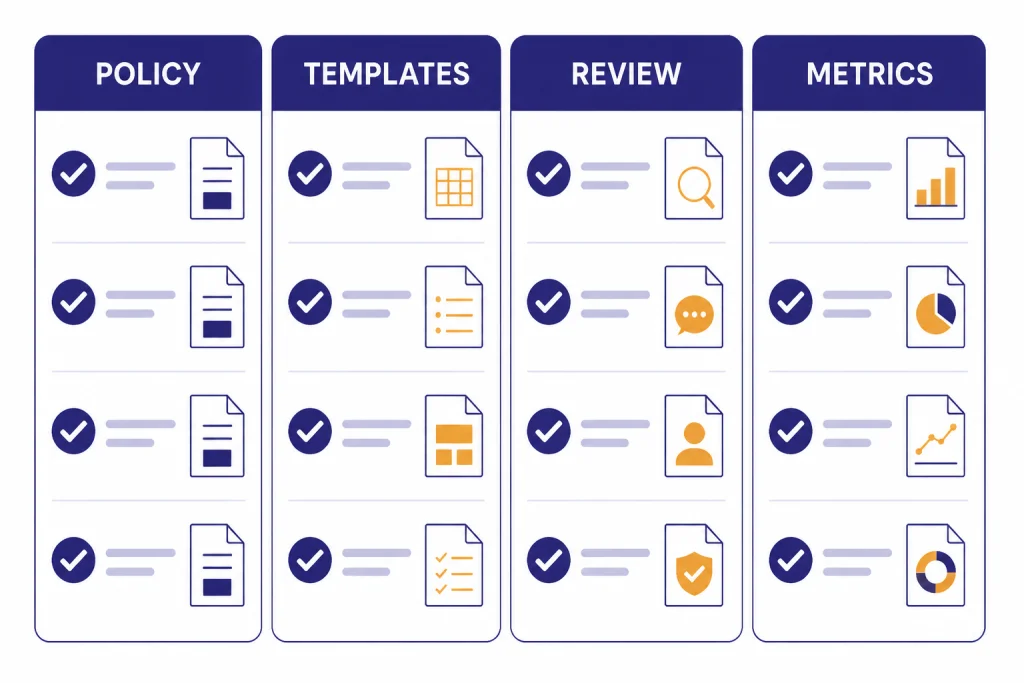
A practical recruiting policy should cover these areas:
- Approved use cases. Define whether ChatGPT may be used for drafts, summaries, interview kits, outreach, and reporting.
- Blocked use cases. Ban automated candidate ranking, rejection, protected-class inference, and unsupported personality judgments.
- Data handling. Specify what candidate, employee, and compensation data may be entered.
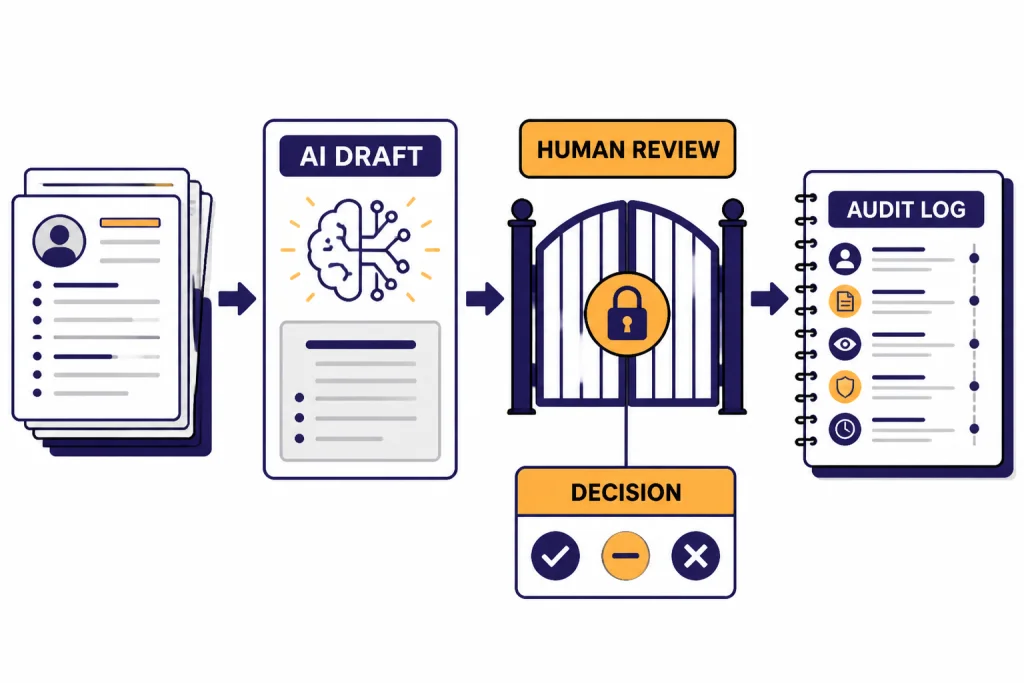
- Human review. Require a recruiter or HR reviewer before any AI-assisted output reaches a candidate or hiring manager.
- Documentation. Keep approved prompts, final outputs, and decision rationale separate from model drafts when appropriate.
- Vendor governance. Review ATS, sourcing, assessment, and interview-intelligence tools, not just ChatGPT.
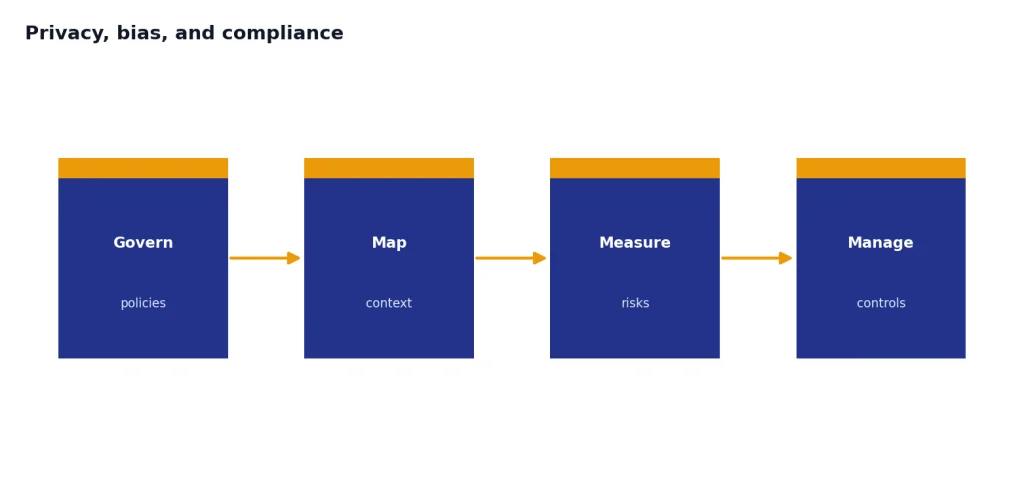
NIST’s AI Risk Management Framework is a useful governance reference because it is designed to help organizations manage AI risks to individuals, organizations, and society.[9] For regulated or larger organizations, ChatGPT Enterprise offers enterprise-grade security and privacy controls, and OpenAI says Enterprise customers own and control their business data.[4] OpenAI also documents admin controls for Business, Enterprise, and Edu workspaces, including controls for apps and connected company data.[10]
A practical team workflow
A recruiting team should not roll out ChatGPT by telling every recruiter to “use AI.” That creates inconsistent prompts, inconsistent quality, and unnecessary risk. Roll it out as a controlled workflow.
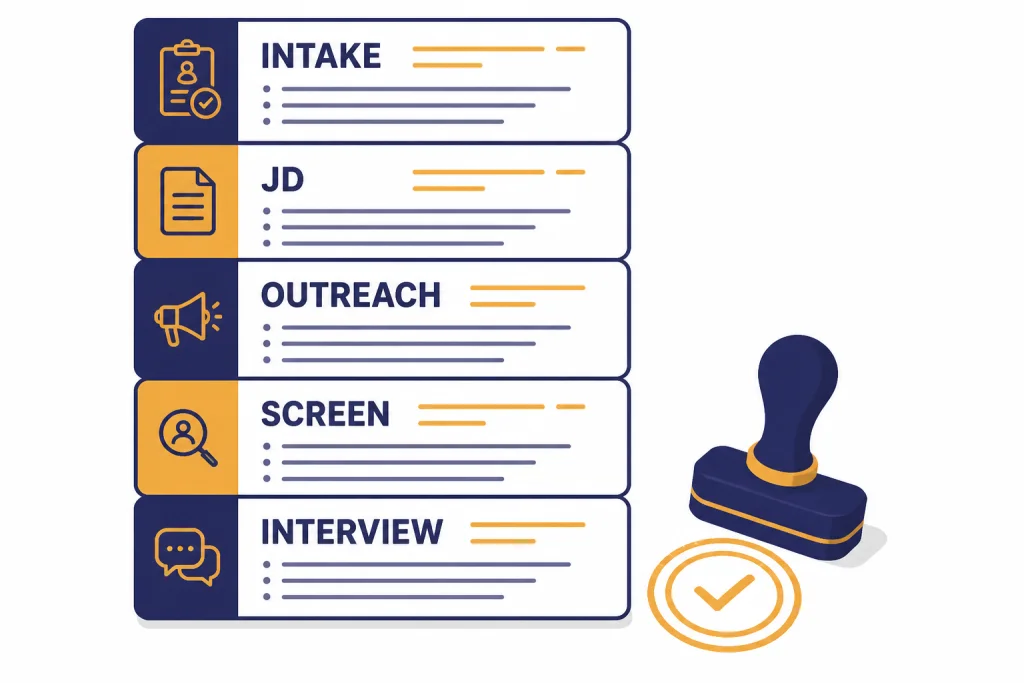
Begin with role intake. Create a standard prompt that helps recruiters identify missing information before a search opens. Pair that with a job-description prompt that uses only approved intake details. Add a rule that the hiring manager approves the final description before publishing.
Next, build an outreach workflow. Recruiters should provide the model with the role summary, the approved value proposition, and role-relevant candidate-public facts. The model drafts. The recruiter verifies every detail, removes anything too personal, and sends from the normal recruiting system.
Then build interview support. ChatGPT can produce a structured guide, but the hiring team should calibrate what good answers look like. This is where recruiters add the most value: they can turn scattered hiring-manager preferences into job-related competencies and consistent evaluation criteria.
Finally, add measurement. Track whether AI-assisted templates reduce rewrite time, improve hiring-manager clarity, or speed candidate communication. Do not measure success by how many candidates the AI helps reject. Measure process quality, responsiveness, consistency, and candidate experience.
Recruiting teams that handle reporting can combine ChatGPT with spreadsheet workflows. For example, a recruiter can ask ChatGPT to help draft formulas, clean column names, or explain funnel metrics before working in Excel; the guide to ChatGPT for Excel shows related examples. If you want ChatGPT to remember style preferences or reusable instructions, read our ChatGPT memory power-user tips before turning memory on for sensitive workflows.
ChatGPT vs. recruiting software
ChatGPT is not a replacement for an applicant tracking system. It does not manage requisitions, consent records, interview schedules, candidate dispositioning, offer approvals, or compliance reporting by itself. It is a flexible language and reasoning assistant that can sit beside those systems.
Dedicated recruiting software is better for structured records. ChatGPT is better for drafting, transforming, and explaining text. The safest setup keeps official candidate data in the ATS and uses ChatGPT only for approved supporting tasks.
| Need | Use ChatGPT | Use ATS or HR software | Use both |
|---|---|---|---|
| Write a job post | Draft and improve language | Store approved requisition | Draft in ChatGPT, publish through ATS |
| Track applicants | Not the system of record | Maintain candidate status | Use ChatGPT only for approved message drafts |
| Schedule interviews | Draft scheduling copy | Send invites and manage calendars | Use template text in scheduling tools |
| Evaluate candidates | Suggest job-related interview questions | Record interviewer feedback | Use structured guides, not AI rankings |
| Report funnel metrics | Explain metrics and draft summaries | Provide source data | Analyze exported, anonymized data when approved |
Recruiters who support employer brand may also use ChatGPT for content planning. For broader campaign work, see ChatGPT for Marketing, ChatGPT for Social Media Content Creation, and ChatGPT for Blog Writing. If your recruiting work touches legal review, ChatGPT for Lawyers explains why human legal judgment remains essential.
Frequently asked questions
Can recruiters use ChatGPT to screen resumes?
Recruiters should be cautious. ChatGPT can help create a job-related screening checklist, but it should not make pass-fail decisions or rank candidates. If a team uses any automated tool to make or substantially assist selection decisions, HR and legal should review the workflow first.
Can I paste candidate resumes into ChatGPT?
Only if your organization has approved that data use and the workspace has the required privacy, security, and retention controls. A safer default is to use anonymized excerpts or synthetic examples when building prompts. Never paste sensitive candidate data into a personal account without approval.
What is the best first use case for a recruiting team?
Start with job intake and job-description drafting. These tasks are easy to review, easy to standardize, and unlikely to require sensitive candidate data. They also improve alignment before recruiters spend time sourcing.
Can ChatGPT write rejection emails?
Yes, ChatGPT can draft respectful rejection templates. The recruiter should confirm the candidate status, remove unsupported explanations, and align the message with company policy. Avoid detailed feedback unless your organization has a reviewed process for giving it.
How should recruiting agencies use ChatGPT?
Agencies can use ChatGPT for intake summaries, client-facing role briefs, outreach drafts, interview-prep notes, and status-update emails. They should avoid sharing client confidential information or candidate personal data unless contracts and policies allow it. Agencies also need clear human review before any AI-assisted message goes to a client or candidate.
Does ChatGPT replace recruiters?
No. It can speed up drafting and organization, but recruiters still own judgment, relationship management, candidate experience, hiring-manager alignment, compliance, and offer strategy. The highest-value recruiters will use AI to reduce administrative drag while spending more time on human decisions.