
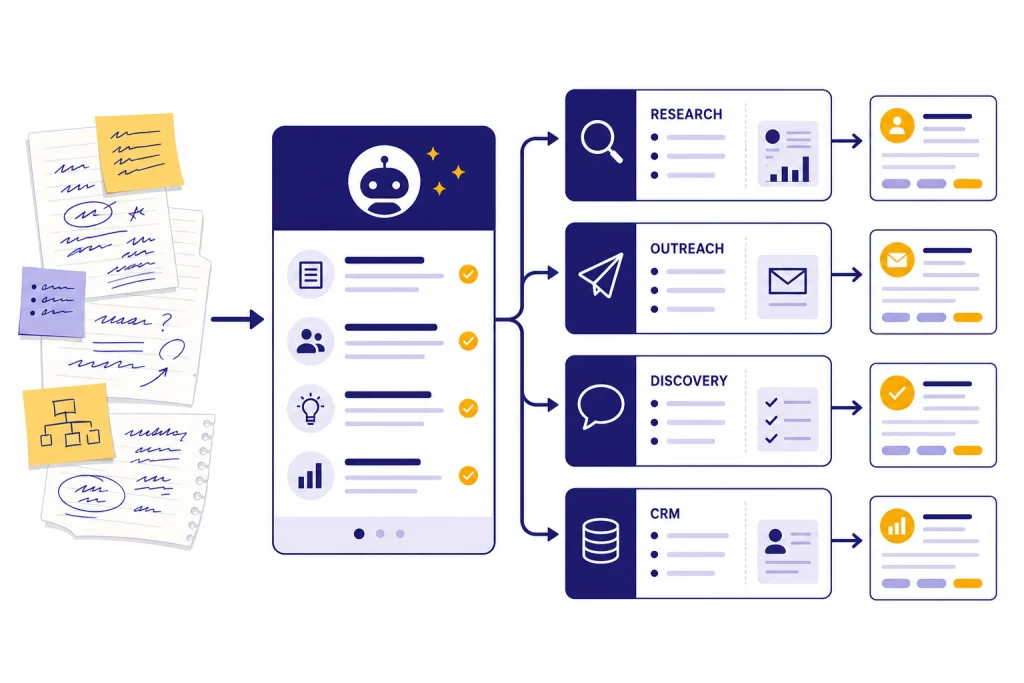
ChatGPT for sales works best as a preparation, drafting, and analysis assistant, not as a replacement for judgment, relationship building, or CRM discipline. Sales professionals can use it to research accounts, turn messy notes into call briefs, draft more relevant outreach, prepare discovery questions, summarize objections, and create follow-up plans. The strongest results come when you give ChatGPT clear context: target persona, deal stage, product positioning, proof points, constraints, and what you already know about the buyer. Treat every output as a draft. Verify facts, protect customer data, and rewrite anything that sounds generic before it reaches a prospect.
Where ChatGPT fits in a sales workflow
Sales teams lose momentum when reps spend too much time switching between research, notes, email, slide decks, CRM fields, and internal approvals. ChatGPT helps most when it compresses that “thinking around the work” into usable drafts. It can turn a pile of inputs into a clean brief, rewrite a weak email, compare buyer personas, and prepare questions for a live conversation.
OpenAI describes ChatGPT Enterprise as a business plan with security, privacy, advanced data analysis, customization options, and administrative controls for organizations.[2] OpenAI also says business data in ChatGPT Enterprise, ChatGPT Business, ChatGPT Edu, ChatGPT for Healthcare, ChatGPT for Teachers, and the API platform is not used for model training by default.[1] Those details matter for sales because account notes, pricing context, objections, and procurement comments can be sensitive.
The best mental model is simple: ChatGPT should make the rep more prepared, not more automated. Use it to sharpen your point of view before the conversation. Do not use it to fake knowledge, fabricate personalization, or push out bulk messages that no one reviewed.
| Sales task | Useful input | Strong ChatGPT output | Human check |
|---|---|---|---|
| Account prep | Website notes, CRM history, prior emails, public filings, call notes | One-page account brief with likely priorities, risks, and questions | Confirm facts and remove speculation |
| Outbound prospecting | Persona, trigger event, product angle, proof point, desired call to action | Short first-touch email and alternate versions by tone | Rewrite for authenticity and accuracy |
| Discovery planning | Deal stage, known pain, stakeholder role, current solution | Question path and objection map | Adapt to live conversation |
| Follow-up | Transcript, notes, next steps, open concerns | Recap email, mutual action plan, CRM summary | Verify commitments and dates before sending |
| Coaching | Call summary, deal notes, manager observations | Skill feedback and practice scenarios | Keep final coaching with the manager |
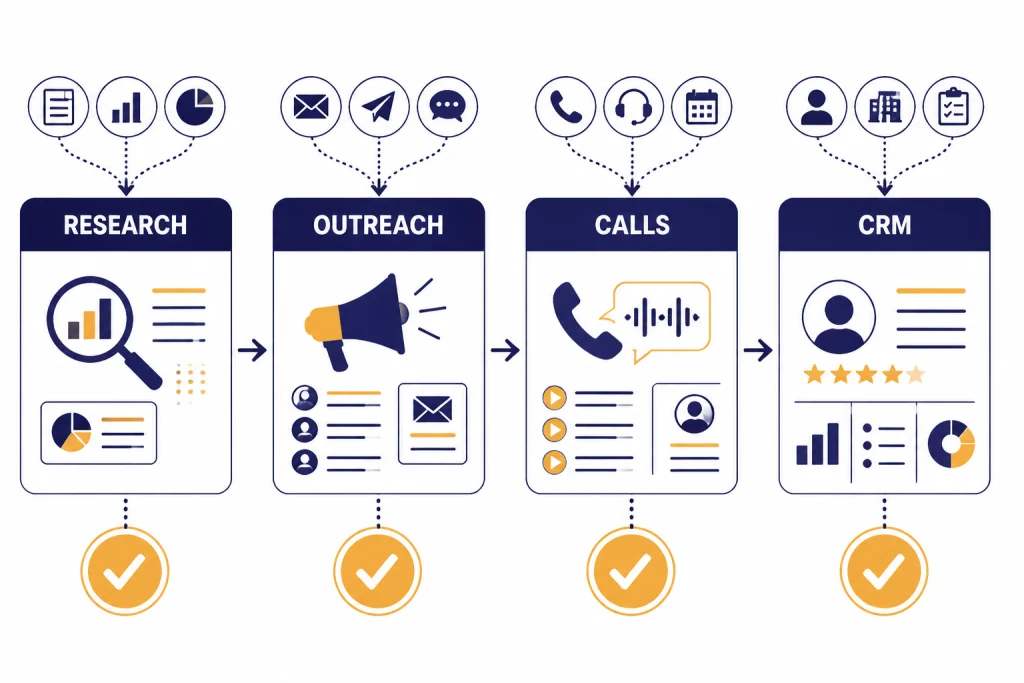
If you use ChatGPT across a broader go-to-market team, pair this guide with chatgpt for marketing, chatgpt for email writing that converts, and ChatGPT for Market Research and Surveys. Sales output improves when the prompts reflect real positioning, real buyer language, and real market evidence.
Account research and call prep
Account research is one of the cleanest use cases for ChatGPT because the goal is not to “sound clever.” The goal is to arrive at the meeting with a clear hypothesis. You want to know what the company likely cares about, what risks might block a purchase, who else may influence the decision, and which questions will reveal the truth quickly.
Start with a narrow research packet. Paste only what you are allowed to use: company description, public web copy, recent announcements, CRM notes, and the prospect’s role. If your workspace has approved connected data sources, ChatGPT connectors can bring work content from tools such as Google Drive, SharePoint, or GitHub into the conversation, according to OpenAI Academy.[3] Admin policy should decide which systems a sales team may connect.
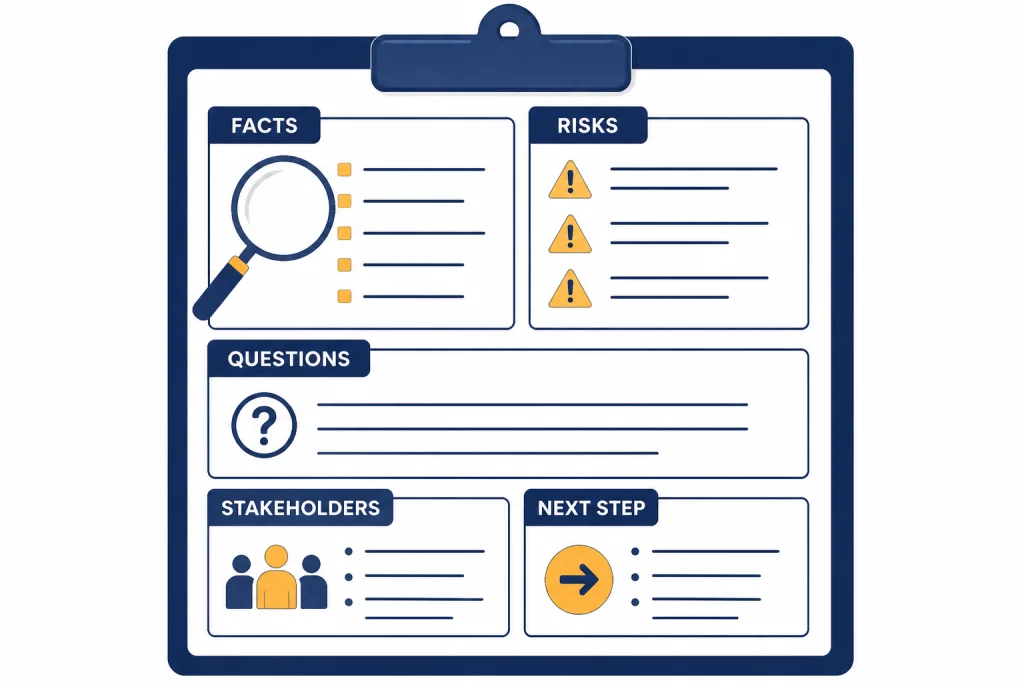
Ask for a brief that separates facts from assumptions. That format prevents a common sales mistake: treating a plausible AI-generated insight as confirmed buyer context. A useful account brief should include confirmed facts, likely business pressures, open questions, stakeholder assumptions, and recommended discovery angles.
Account brief prompt
You are helping me prepare for a sales call. Use only the information I provide. Separate confirmed facts from assumptions.

Company: [paste]
Prospect role: [paste]
CRM notes: [paste]
Prior email thread: [paste]
Our product: [paste]
Deal stage: [paste]

Create a call brief with:
- confirmed account facts
- likely priorities
- possible risks or blockers
- questions I should ask
- one concise opening point of view
- information I should verify before the call
For strategic accounts, add a second prompt: “What would make this deal fail?” ChatGPT is useful at listing gaps you may not want to face, such as no economic buyer, weak urgency, unclear success metric, or a competitor already embedded. The output will not be perfect. It will force better preparation.
Real estate agents, recruiters, and consultants can use the same pattern. The details change, but the structure remains the same: gather context, state assumptions, prepare questions, and verify. See ChatGPT for Real Estate Agents and ChatGPT for Recruiters and HR Teams for similar client-facing workflows.
Prospecting emails and follow-ups
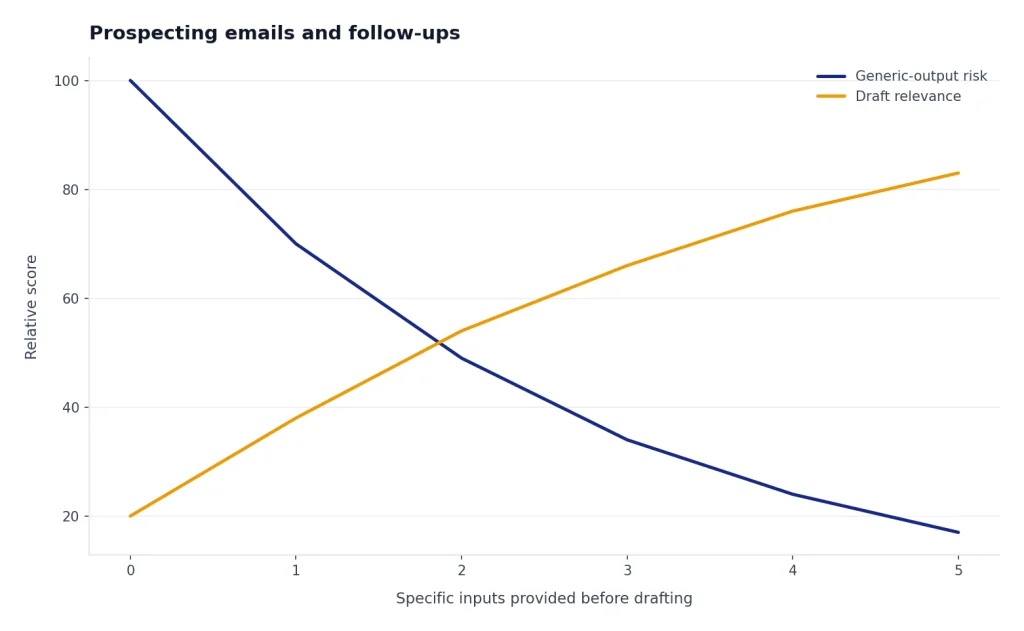
ChatGPT can draft sales emails quickly, but speed is not the same as quality. Weak AI prospecting usually fails for familiar reasons. It overpraises the company, uses vague pain points, invents relevance, and ends with a generic meeting request. A better process gives ChatGPT constraints before it writes.
Give it a persona, a reason for outreach, a specific problem, a proof point you can defend, and a low-friction call to action. Ask for short versions. Then ask it to remove anything that could apply to almost any company. That final cleanup step is where many teams get the biggest lift.
First-touch email prompt
Draft a concise B2B prospecting email.

Buyer persona: [role]
Company context: [facts only]
Trigger for outreach: [specific reason]
Problem we solve: [plain language]
Relevant proof point: [approved proof point]
Offer: [meeting, audit, benchmark, teardown, intro]
Tone: direct, useful, not overfamiliar
Constraints: under 120 words, no exaggerated praise, no fake personalization, no buzzwords

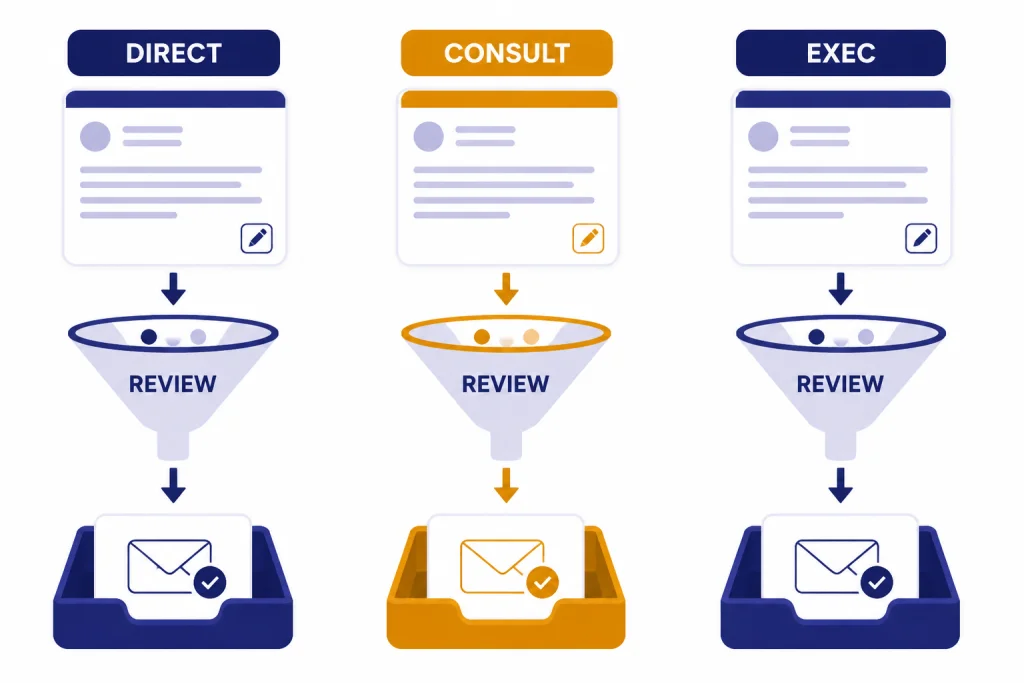
Give me three versions:
1. direct
2. consultative
3. executive-level
Follow-up emails need a different approach. A useful follow-up should show that you listened. Give ChatGPT your notes and ask it to produce a recap, open questions, and next steps. Then cut anything that does not reflect the actual conversation. If the prospect mentioned a sensitive issue, rewrite the sentence yourself.
For long sequences, do not ask ChatGPT to write a canned campaign from scratch. Ask it to map buyer concerns by stage, then draft one message for each concern. That creates more useful variation than changing subject lines around the same pitch. If email is your main channel, pair this workflow with our take on chatgpt for email and chatgpt for social media content creation for channel-specific examples.
Discovery, objections, and call notes
Discovery calls reward preparation and listening. ChatGPT can help before and after the call, but it should not script the conversation so tightly that you stop responding to the buyer. Use it to prepare a flexible question path.
Before the call, ask ChatGPT to create questions in layers: business problem, current process, impact, stakeholders, decision process, risk, timeline, and success criteria. Ask it to label questions that may feel too direct for an early conversation. That helps newer reps avoid interrogation mode.
Discovery question prompt
I have a discovery call with [persona] at [company type].

Known context: [paste]
Our solution: [paste]
Possible pain: [paste]
Deal stage: [paste]

Create a discovery plan with:
- opening point of view
- warm-up questions
- core business questions
- impact questions
- buying process questions
- possible objections
- how to respond without sounding defensive
After the call, ChatGPT can turn raw notes into a clean recap. Keep the output separated into internal and external versions. The internal version can include risks, MEDDICC-style gaps, next-step uncertainty, and manager questions. The external version should include only agreed points, action items, and useful resources.
OpenAI has published a customer story about Zenken using ChatGPT Enterprise across sales and other knowledge-work tasks, including first drafts of sales emails, proposals, marketing content, and internal documents.[4] Treat that as the practical lane: first drafts, synthesis, and planning. The rep still owns the commercial judgment.
If your work involves regulated, legal, medical, or financial claims, tighten review standards. Sales reps in those fields should coordinate with specialists before using AI-assisted language externally. Related role guides include ChatGPT for Lawyers, ChatGPT for Doctors and Healthcare Professionals, and ChatGPT for Accountants and Bookkeepers.
Sales manager and team uses
Managers can use ChatGPT to standardize the parts of selling that should be repeatable while preserving rep judgment where it matters. Good manager use cases include onboarding practice, objection libraries, call review templates, territory planning questions, and pipeline inspection checklists.
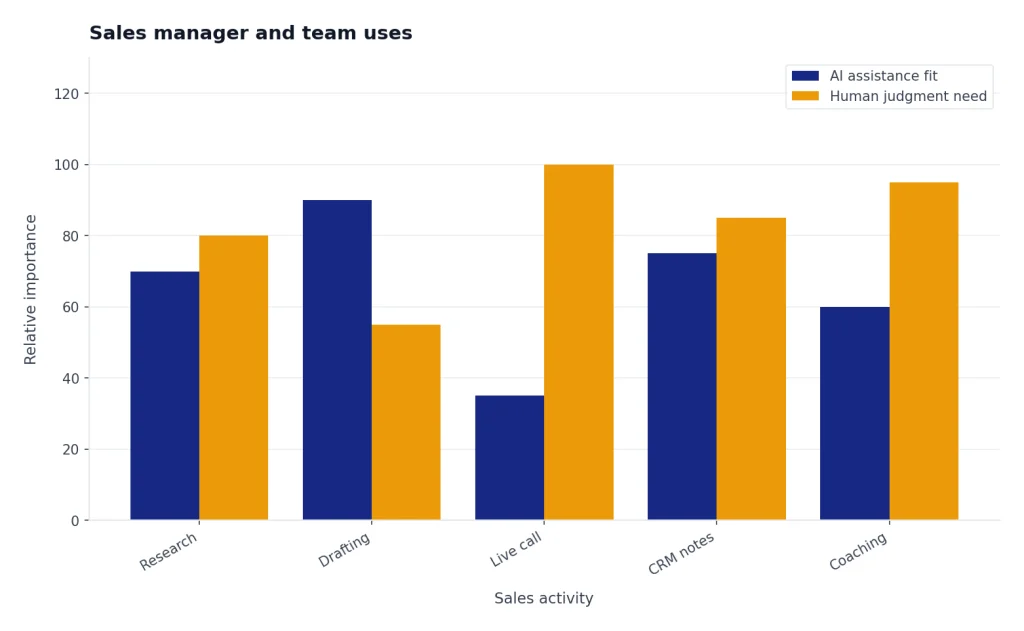
One useful manager workflow is a deal review assistant. Paste a sanitized opportunity summary and ask ChatGPT to identify missing information, deal risks, and coaching questions. Do not ask it to forecast the deal as if it knows your business. Ask it to expose assumptions.
Review this opportunity summary as a sales manager.

Opportunity: [sanitized summary]
Stage: [stage]
Known stakeholders: [list]
Pain: [paste]
Next step: [paste]
Competition: [paste]
Timeline: [paste]

Return:
- strongest evidence the deal is real
- biggest gaps
- questions for the rep
- next best action
- what should be updated in CRM
Managers can also use ChatGPT to turn strong rep behavior into reusable playbooks. Feed in anonymized examples of successful emails, discovery notes, and proposal summaries. Ask it to identify patterns: opening angle, proof style, objection handling, and follow-up structure. Then edit the output into a team standard.
HubSpot’s sales research describes AI as a common part of the sales toolset and points to time savings, process optimization, personalization, and data insights as reported benefits among surveyed sales professionals.[5] Salesforce has also reported that non-selling tasks such as administration and meeting preparation consume a large share of rep time.[6] Those findings match the practical use case: let AI reduce prep and admin load so reps spend more energy on buyer conversations.
Guardrails for sales teams
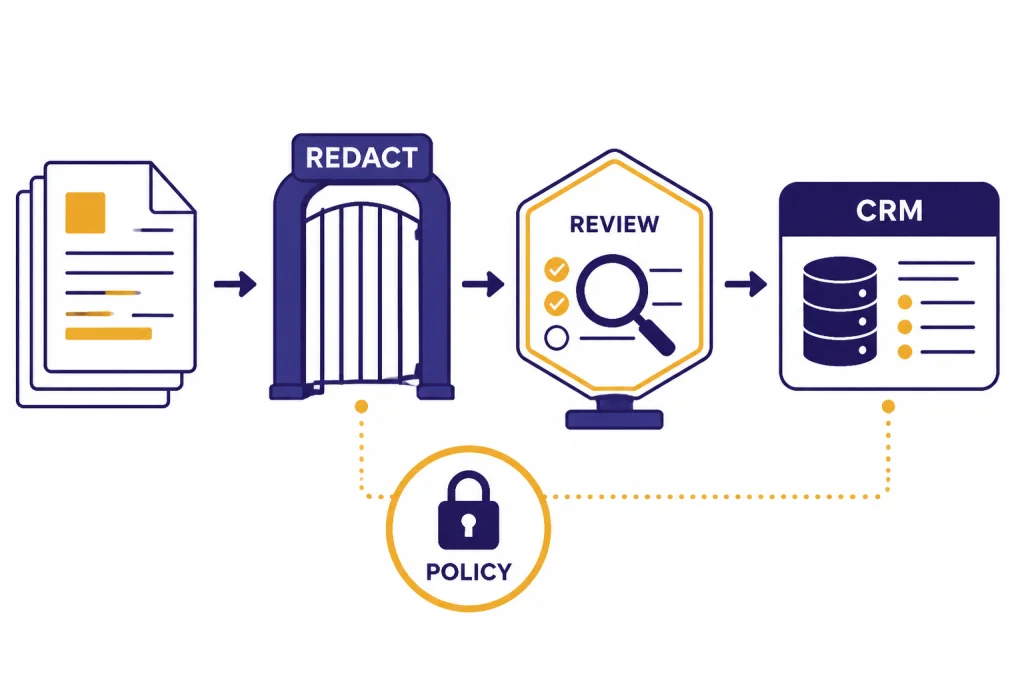
Sales teams should decide what information can go into ChatGPT before reps start experimenting. Customer names, contract terms, discount strategy, implementation issues, procurement comments, and private stakeholder notes can all be sensitive. If your company has a business workspace, use the approved environment rather than personal accounts.
OpenAI says business data is encrypted at rest with AES-256 and in transit with TLS 1.2 or higher.[1] OpenAI’s ChatGPT Enterprise page also describes administrative controls such as SAML SSO, SCIM provisioning, and role-based access controls.[2] Those controls do not remove the need for internal policy. They make policy easier to enforce.
A simple sales AI policy should cover four areas: what data reps may paste, which outputs need approval, how AI-drafted content is labeled internally, and where final customer-facing records live. The CRM should remain the source of truth. ChatGPT can draft CRM notes, but it should not become a shadow CRM.
Use a redaction habit. Replace customer names with account type. Replace exact pricing with ranges or approved public pricing. Remove personal notes about stakeholders unless they are already appropriate for your CRM. If a prompt would embarrass the company in discovery, do not paste it.
Teams that already use AI for analytics may want to connect this workflow with chatgpt for excel, chatgpt for sql queries and database work, and chatgpt tutorial code interpreter. Those guides are more relevant for revenue operations, pipeline analysis, and reporting than for live selling.
Prompt library for sales professionals
A reusable prompt library keeps sales teams from starting over every time. Store prompts by sales motion, not by tool feature. A useful library has prompts for prospect research, first-touch outreach, account briefs, discovery planning, objection practice, follow-up recaps, proposal outlines, deal reviews, and renewal preparation.
Build each prompt with the same structure: role, context, task, constraints, output format, and review criteria. The review criteria are the part most teams skip. Tell ChatGPT what a bad output looks like. For example: “Reject generic claims, unsupported personalization, exaggerated urgency, and any sentence that could apply to every company in this market.”
| Prompt type | Use it when | Best output format | What to inspect |
|---|---|---|---|
| ICP fit check | You are deciding whether an account deserves time | Fit summary with reasons for and against | Unsupported assumptions |
| Persona translation | You need to adapt one value prop for several stakeholders | Persona-by-persona message map | Overgeneralized pain points |
| Objection practice | You expect pricing, timing, or competitor pushback | Role-play script and better responses | Defensive language |
| Mutual action plan | The buyer has agreed to evaluate | Milestones, owners, dependencies, risks | Dates and commitments |
| Renewal prep | You are preparing for an expansion or renewal call | Value summary and risk review | Claims not backed by usage or outcomes |
Keep prompts close to the work. A prompt hidden in a document will not change behavior. Put the best prompts in your sales enablement system, CRM notes template, or team wiki. Revisit them after live calls and lost deals. The best prompt library becomes a record of how your team sells.
If you want to create a broader internal library, use this guide to chatgpt prompt generator. If your sales role overlaps with content creation, chatgpt for blog writing and chatgpt for seo can help with thought leadership, landing pages, and account-based content.
Frequently asked questions
Can ChatGPT replace a sales development rep?
No. ChatGPT can draft, summarize, research, and role-play, but it does not own judgment, trust, timing, or accountability. A good sales development rep still decides which accounts matter, how to interpret buyer signals, and when to change approach.
Is it safe to paste customer notes into ChatGPT?
It depends on your company policy, plan, and the type of customer information. Use an approved business workspace when your organization provides one, and redact sensitive information when in doubt. Never paste confidential pricing, contract terms, personal data, or private stakeholder comments unless your policy allows it.
What is the best sales prompt format?
The best format is role, context, task, constraints, and output. For example, tell ChatGPT it is helping a seller prepare for a discovery call, provide the account context, define the output you need, and state what to avoid. Clear constraints produce better sales drafts than long, vague instructions.
Can ChatGPT write cold emails that do not sound generic?
Yes, but only if you provide specific context. Give it a real trigger, a clear buyer role, a narrow pain point, and an approved proof point. Then ask it to remove any sentence that could apply to almost any prospect.
How should sales managers use ChatGPT?
Sales managers should use ChatGPT for coaching prompts, deal review checklists, objection practice, onboarding materials, and anonymized pattern analysis. They should avoid using it as an automatic performance judge. The manager should make the final coaching call.
Should ChatGPT update the CRM?
ChatGPT can help draft clean CRM notes from messy call notes, but the CRM should remain the system of record. Reps should verify names, dates, commitments, next steps, and deal fields before saving anything. Bad AI-generated CRM notes are worse than no automation because they create false confidence.