

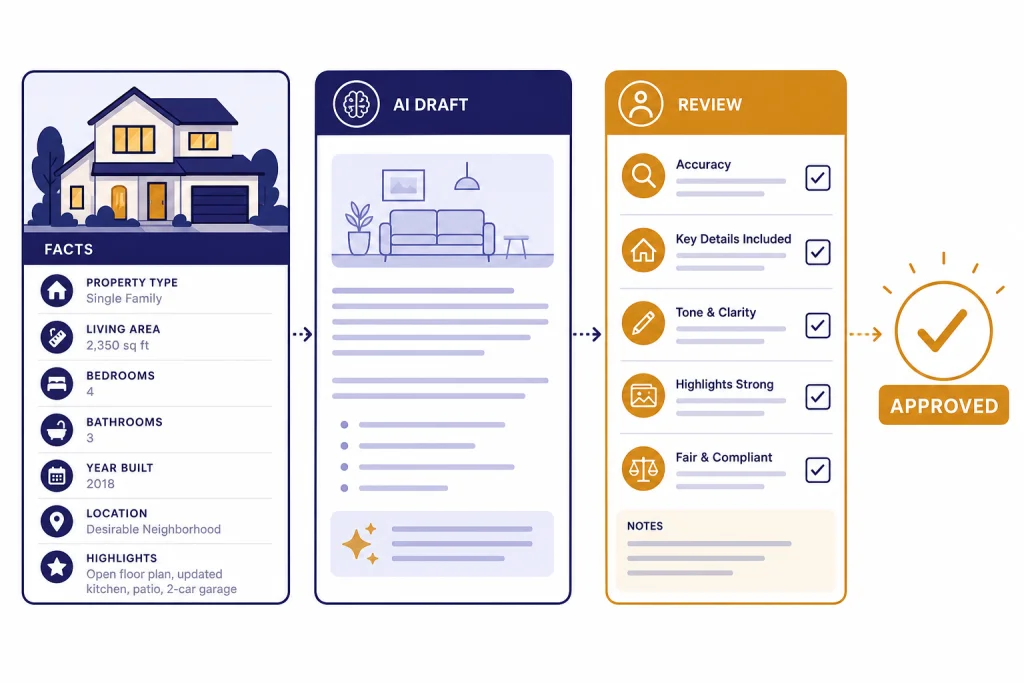
ChatGPT for real estate works best as a drafting, research, analysis, and follow-up assistant, not as a replacement for licensed judgment. Agents can use it to write listing descriptions, summarize buyer needs, prepare seller updates, turn showing notes into emails, create social content, analyze spreadsheet exports, and standardize client communication. The strongest results come from specific prompts, verified property data, and a clear human review step. ChatGPT can help with writing, file analysis, image understanding, web search, voice, and collaborative editing, depending on plan and settings.[1] The main rule is simple: let AI reduce blank-page work, but keep compliance, pricing, negotiation, and client advice under agent control.
Where ChatGPT fits in a real estate workflow
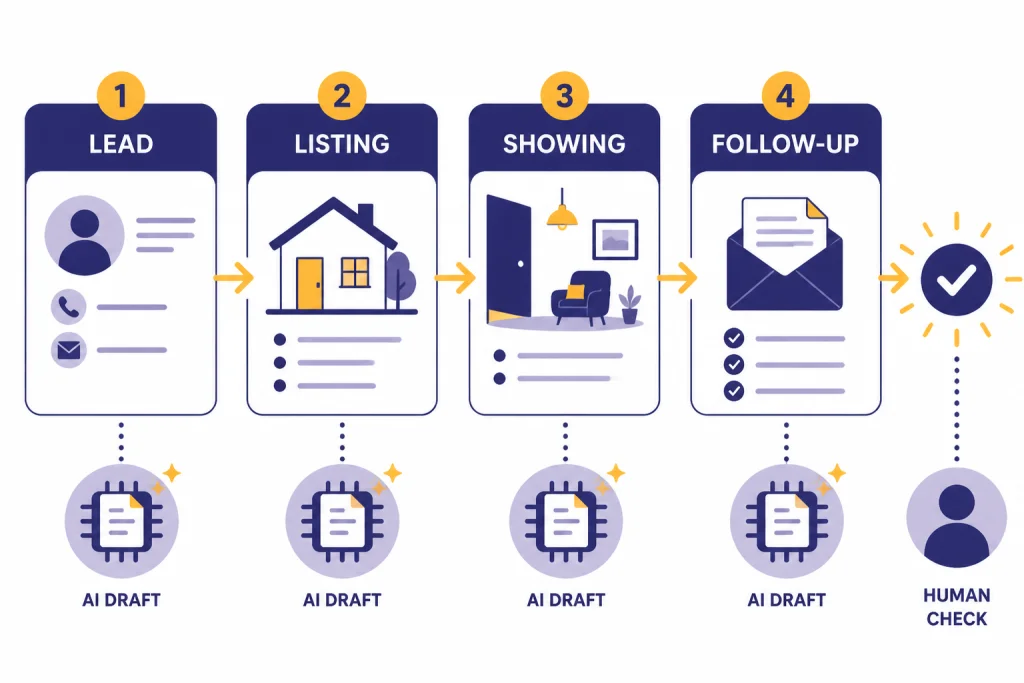
Real estate work has many repeatable writing and organization tasks. A good AI workflow starts there. ChatGPT can help turn raw notes into polished drafts, compare versions of client messages, summarize uploaded files, and create checklists for common transaction steps. It can also support more advanced work such as spreadsheet cleanup and basic market trend summaries when you provide structured data.[1]
The practical boundary is important. ChatGPT does not know whether your MLS data is complete unless you provide it. It does not replace your broker’s policy, state law, local board rules, or professional judgment. It should not invent school quality claims, crime claims, demographic statements, property condition facts, or financing advice.
Think of ChatGPT as a production assistant. You remain the licensed professional. It can draft the listing copy, but you verify square footage, HOA details, disclosures, excluded fixtures, showing instructions, and fair housing language. It can summarize a buyer consultation, but you confirm budget, agency relationship, financing status, and decision criteria. If you already use AI for sales outreach, compare this article with ChatGPT for Sales Professionals and ChatGPT for Email Writing That Converts to build a broader communication workflow.
Best ChatGPT use cases for real estate agents
NAR’s 2025 REALTORS® Technology Survey found that one in five REALTORS® used AI daily, 22 percent used it weekly, and 32 percent had not actively tried AI for business. The same survey reported that 58 percent of respondents had used ChatGPT by OpenAI, more than any other listed AI tool.[2] That matches the most useful pattern for agents: AI is already common, but the advantage comes from disciplined use, not novelty.
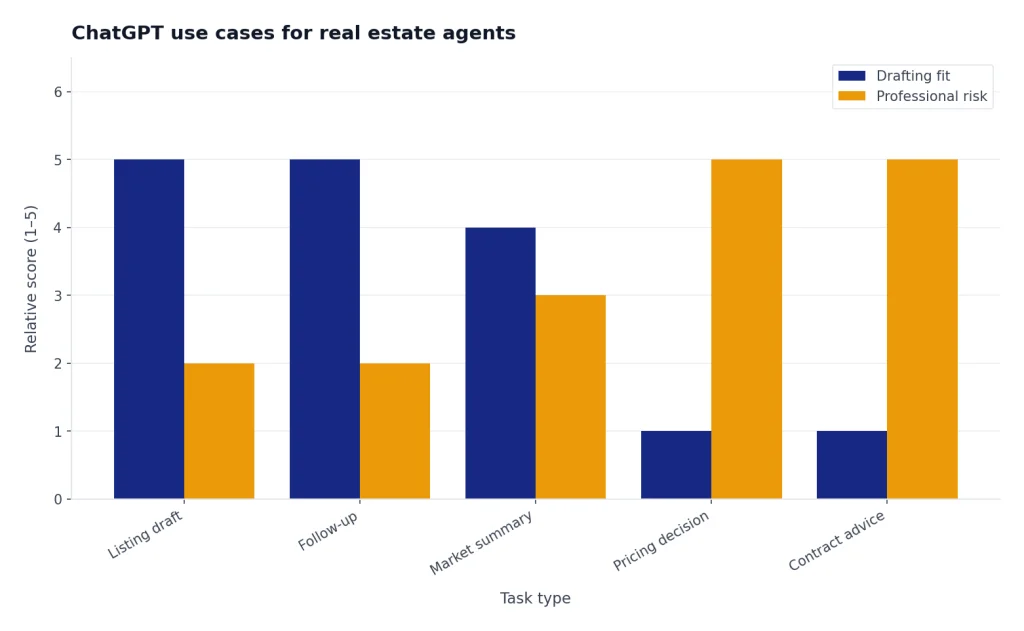
The best real estate uses are repeatable, reviewable, and easy to correct. They save time without asking the model to make final legal, valuation, or ethical calls.
| Task | Useful ChatGPT role | Agent review required |
|---|---|---|
| Listing description | Turn verified features into multiple tone options. | Confirm facts, fair housing language, MLS rules, and prohibited claims. |
| Seller update | Summarize showings, feedback themes, and next steps. | Check accuracy and avoid overpromising price or timing. |
| Buyer follow-up | Convert showing notes into a concise email with property pros and cons. | Remove subjective steering language and confirm property details. |
| Open house prep | Create talking points, FAQ cards, sign-in follow-up drafts, and recap notes. | Verify disclosures, HOA details, taxes, and availability. |
| Social content | Repurpose listing copy into short posts, captions, and video outlines. | Review advertising rules and platform targeting choices. |
| Spreadsheet exports | Clean CSVs, group feedback, make charts, and summarize patterns. | Confirm source data, outliers, and local market interpretation. |
For listing copy, feed ChatGPT facts, not vibes. Include property type, verified beds and baths, square footage if allowed by your MLS, lot size if verified, upgrades, layout notes, neighborhood amenities that are property-based, and required disclosures. Ask for three versions: MLS-neutral, luxury, and concise. Then edit the winner.
For client follow-up, use ChatGPT to shorten the distance between a conversation and a clean message. Paste sanitized notes and ask for a warm email, a bullet-point text message, and a CRM note. If your business depends heavily on content distribution, pair this workflow with chatgpt for social media content creation and chatgpt for marketing.
Prompt templates agents can reuse
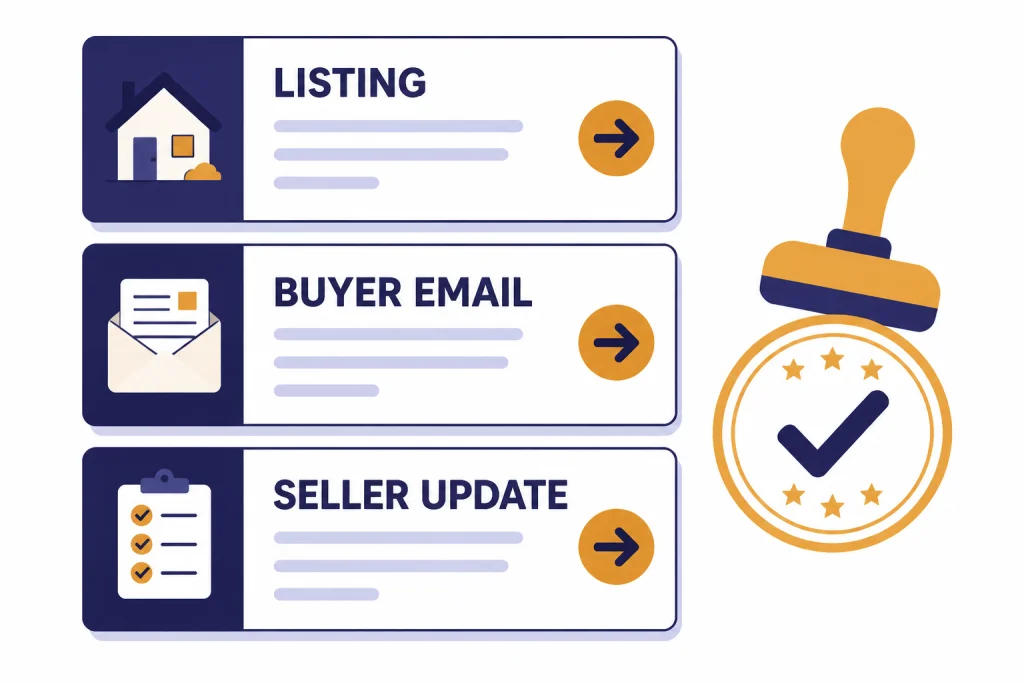
Good prompts tell ChatGPT the role, the facts, the output format, and the review standard. Do not ask it to “write a great listing.” Ask it to produce a compliant draft from verified facts and to flag missing information.
Listing description prompt
You are helping a licensed real estate agent draft listing copy. Use only the facts I provide. Do not infer school quality, crime, demographics, protected-class preferences, investment returns, or property condition beyond the facts. Create three versions: MLS neutral, warm lifestyle, and short social caption. After the drafts, list any claims I should verify before publishing.

Verified facts:
[Paste property facts here]
Buyer follow-up prompt
Turn these showing notes into a client follow-up email. Keep it clear, balanced, and professional. Separate confirmed facts from my observations. Do not pressure the buyer. End with three practical next steps.

Buyer priorities:
[Paste priorities]

Showing notes:
[Paste notes]
Seller weekly update prompt
Create a weekly seller update from the data below. Include: activity summary, showing feedback themes, marketing completed, recommended next steps, and questions for the seller. Avoid guaranteeing outcomes.

Listing activity:
[Paste activity]

Feedback:
[Paste feedback]

Marketing actions:
[Paste actions]
Neighborhood guide prompt
Create a property-area guide for buyers using only neutral, factual categories: commute options, parks, public resources, nearby services, shopping, dining, and questions to research. Do not describe the area as ideal for any protected class. Do not make claims about crime, schools, safety, or demographics unless I provide a verified source.These prompts are starting points. Save the versions that match your voice. If you want to build a reusable library for listings, emails, ads, and client scripts, use this guide to chatgpt prompt generator to keep templates consistent across your brokerage.
Compliance guardrails for real estate AI
Compliance is the reason real estate agents should use a review-first AI process. The Fair Housing Act makes it illegal to discriminate because of race, color, religion, sex, familial status, national origin, or disability in mortgage-related stages that include advertising, mortgage broker services, property appraisals, and other listed activities.[3] HUD has also addressed the use of artificial intelligence in housing, including tenant screening and targeted advertising for housing opportunities.[4]
That means AI-generated copy must be checked for both obvious and subtle problems. Remove language that suggests a preferred buyer or renter. Be careful with phrases that imply age, family status, religion, disability, national origin, or lifestyle fit. Safer listing copy describes the property: floor plan, light, finishes, storage, outdoor space, commute access, nearby services, and verified amenities.
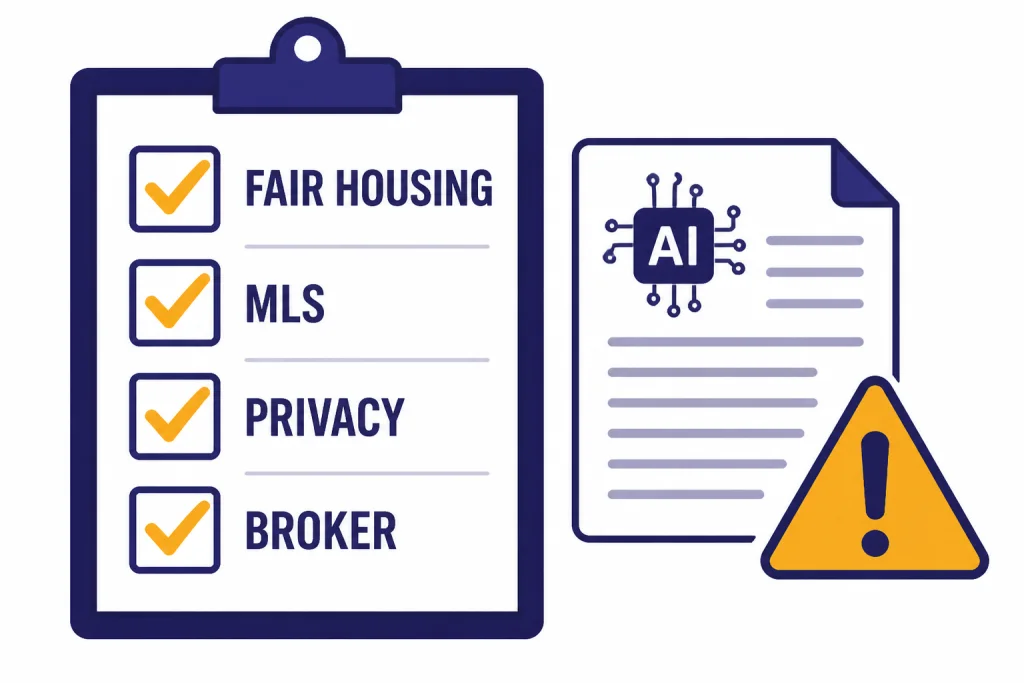
- Fair housing review: Remove protected-class references, coded preferences, and unsupported neighborhood claims.
- MLS review: Check local rules for remarks, photo edits, branding, AI-enhanced media, square footage, and allowed links.
- Disclosure review: Do not let ChatGPT soften known defects, inspection issues, HOA restrictions, flood history, or material facts.
- Broker review: Follow your brokerage policy for AI use, advertising approval, lead scripts, and document handling.
- Privacy review: Redact client names, contact details, financial documents, IDs, and sensitive transaction facts unless your tools and agreements allow that use.
Consumer ChatGPT users can turn off “Improve the model for everyone” in Data Controls, and OpenAI says those conversations still appear in chat history but are not used to train ChatGPT.[5] For business environments, OpenAI says it does not use ChatGPT Business, ChatGPT Enterprise, ChatGPT Edu, ChatGPT for Healthcare, ChatGPT for Teachers, or API inputs and outputs for training by default.[6] If your brokerage handles sensitive client files, review plan terms, admin controls, retention settings, and broker policy before uploading anything.
Legal and professional boundaries matter here. Agents often work near legal questions, contract interpretation, financing, tax issues, and fair housing risk. For a deeper look at professional review workflows, see ChatGPT for Lawyers, then adapt the review discipline to your brokerage rules.
Using ChatGPT for market prep and spreadsheet analysis
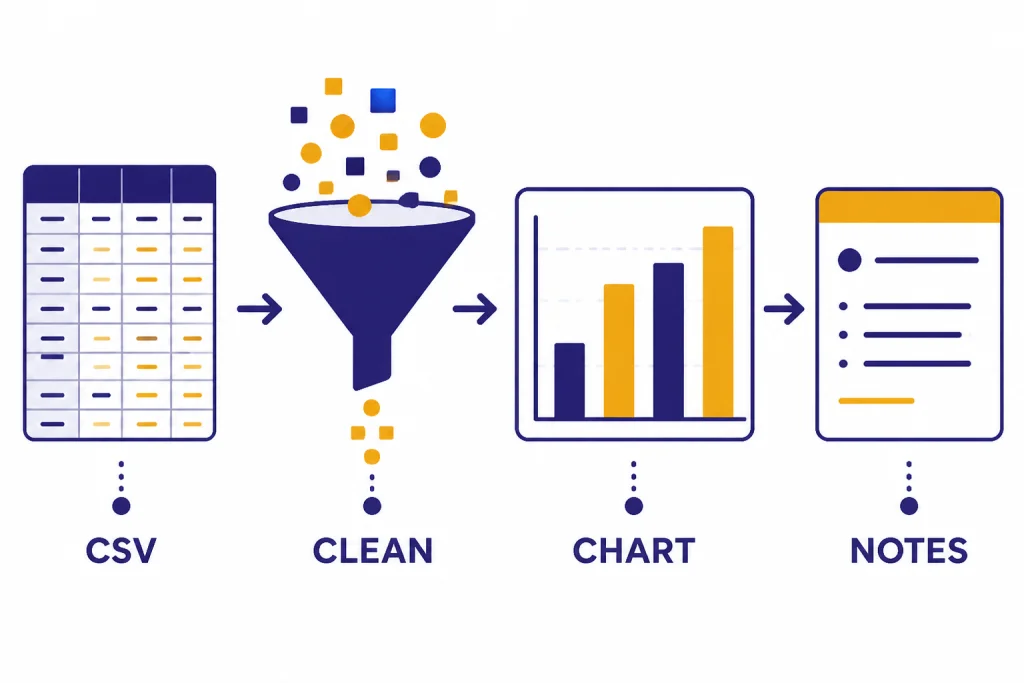
ChatGPT can help agents make better use of data exports. OpenAI says ChatGPT data analysis can work with spreadsheets, CSVs, and other structured files, create tables and charts, summarize trends, clean data, and support projections.[1] That makes it useful for pre-listing prep, seller reports, ad performance summaries, open house feedback, and pipeline reviews.
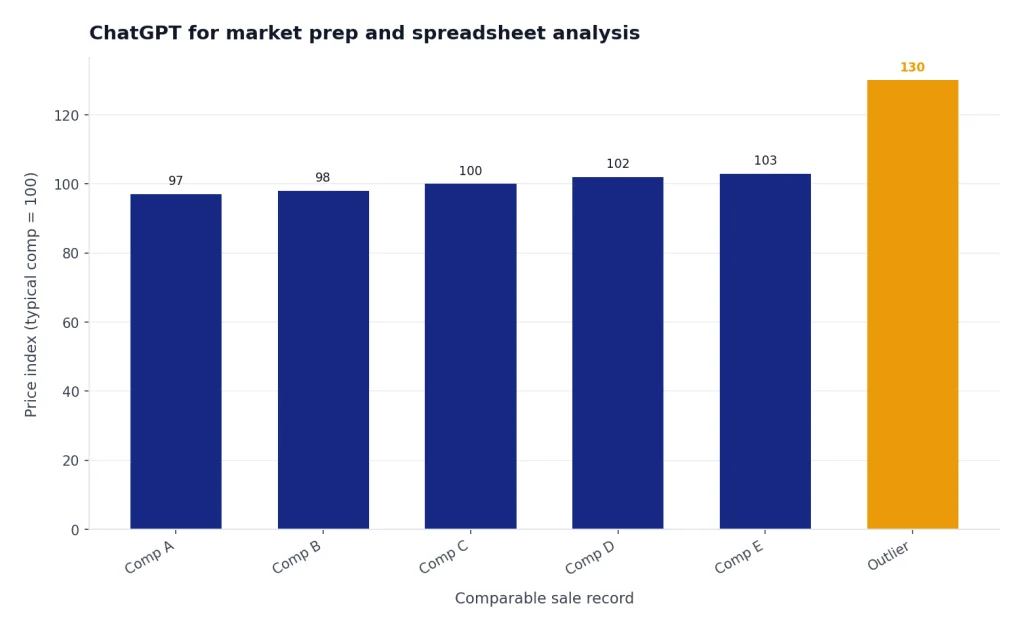
Use it for analysis support, not final valuation. For example, you can upload a sanitized CSV of recent comparable sales and ask ChatGPT to group records by property type, date range, price band, days on market, concessions, and square-foot range. Then ask for a chart and a list of outliers. You still decide which comps are relevant and how to explain the market to the client.
A strong spreadsheet prompt looks like this:
Analyze this CSV for a pre-listing meeting. Clean obvious formatting issues. Do not remove records unless you list them first. Create: 1) a summary of price range and days on market, 2) a table of likely outliers, 3) three chart ideas for a seller presentation, and 4) questions I should answer before drawing conclusions. Treat this as preparation, not an appraisal or CMA.If you use Excel heavily, connect this workflow with chatgpt for excel. If you want more advanced charting and file workflows, our take on chatgpt tutorial code interpreter explains how data analysis works in practice.
A simple team workflow for brokerages
A solo agent can start with a few saved prompts. A team or brokerage needs a shared process. ChatGPT Business is a self-serve workspace for organizations, with centralized billing, admin controls, usage visibility, spend controls, and access depending on seat type.[7] Whether you use that plan or another approved tool, the process should make review visible.
- Create approved prompt templates. Keep separate templates for listings, seller updates, buyer follow-up, social captions, and market summaries.
- Define what cannot be uploaded. List prohibited data such as IDs, loan documents, unredacted contracts, confidential negotiations, and private client notes.
- Use a review checklist. Require fair housing, MLS, disclosure, and broker-policy checks before publication.
- Assign ownership. Decide whether the agent, team lead, transaction coordinator, or marketing manager gives final approval.
- Track changes. Save the final human-approved version, not just the AI draft.
Small teams should start with the highest-volume tasks. For many agents, that means listing copy, open house follow-up, email replies, social captions, and seller updates. Larger brokerages can add training materials, brand voice guides, and prompt libraries. Marketing-heavy teams may also want chatgpt for blog writing and chatgpt for market research to support local content and neighborhood reports.
The best workflow is boring by design. Draft, check, revise, approve, publish. If a prompt produces risky language, fix the template. If a task requires professional judgment, keep it with a human.
What real estate agents should not delegate to ChatGPT
ChatGPT is useful, but some work should stay outside the model or require strict professional review. Do not ask it to set a listing price without your market analysis. Do not ask it to interpret a contract clause for a client. Do not ask it to decide whether a defect must be disclosed. Do not ask it to rank neighborhoods by “best,” “safe,” “family-friendly,” or similar subjective criteria.
Also avoid using ChatGPT as a source of current property facts unless it is checking sources you provide. Real estate data changes quickly. Listing status, taxes, HOA fees, school boundaries, zoning, flood maps, and local rules must come from authoritative sources. If you use web search, ask ChatGPT to cite its sources and then verify them yourself.
Finally, do not use AI to create false scarcity or pressure. A client message should not imply offers, interest, deadlines, or market movement that you cannot support. A better use is to ask ChatGPT for a clear, calm explanation of the facts you have already verified.
Frequently asked questions
Can real estate agents use ChatGPT for listing descriptions?
Yes. ChatGPT is useful for turning verified property facts into polished listing drafts. The agent should still check every fact, remove unsupported claims, and review the copy for fair housing and MLS compliance before publishing.
Can ChatGPT write buyer and seller emails?
Yes. It can draft follow-up emails, showing recaps, open house notes, seller updates, and appointment reminders. The best practice is to paste only the facts needed for the message and review tone, accuracy, and confidentiality before sending.
Is ChatGPT safe for client information?
It depends on the plan, settings, brokerage policy, and data involved. Redact sensitive information by default. Review OpenAI data controls, business privacy terms, and your broker’s rules before uploading contracts, financial details, IDs, or private negotiation notes.
Can ChatGPT create a CMA?
ChatGPT can help organize comparable-sale data, summarize spreadsheet exports, identify outliers, and draft presentation notes. It should not replace the agent’s valuation judgment, local expertise, or broker-approved CMA process.
Can ChatGPT help with real estate social media?
Yes. It can repurpose listing facts into captions, short video scripts, carousel outlines, and email newsletter sections. Review every post for fair housing language, advertising rules, required brokerage disclosures, and platform-specific housing ad policies.
What is the best first ChatGPT workflow for a real estate agent?
Start with a listing-description prompt and a follow-up email prompt. These tasks are common, easy to review, and likely to save time quickly. Once those are reliable, add seller updates, open house recaps, and spreadsheet summaries.