
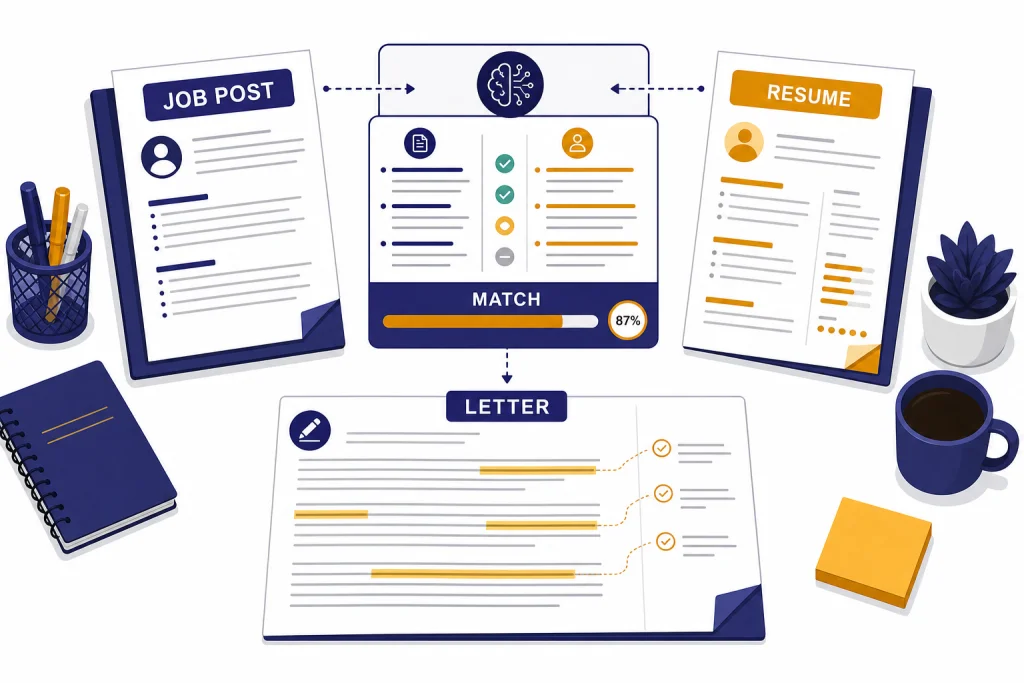
ChatGPT can help you write a better cover letter when you use it as an editor, interviewer, and tailoring assistant, not as a one-click ghostwriter. The strongest workflow starts with the job post, your real resume, and a few concrete stories from your work history. Then you ask ChatGPT to identify the employer’s needs, map your evidence to those needs, draft a concise letter, and revise it until it sounds like you. This guide shows how to use ChatGPT for cover letter drafts that are specific, honest, and interview-oriented, with prompts you can copy and a review checklist that keeps weak AI language out of your final application.
Why cover letters still matter
A cover letter is not a longer version of your resume. It is a short argument for why your background matches this employer’s problem. The New York State Department of Labor describes a cover letter as an introduction that should answer why an employer should hire you, while also noting that it should not duplicate resume information.[1] That is the standard to use with ChatGPT. If the draft repeats your bullet points in paragraph form, it is not finished.
The best cover letters do three jobs. They show that you understand the role. They connect your strongest evidence to the job posting. They give the hiring manager a reason to open the resume with a favorable frame. ChatGPT can speed up all three, especially when you ask it to reason from the employer’s requirements before it writes.
That matters because employers still value the skills that a cover letter can display. NACE’s 2025 Job Outlook report lists problem-solving, teamwork, and written communication among the top attributes employers seek on candidate resumes.[2] A focused cover letter can show those attributes through a brief story instead of a claim.
Use ChatGPT when the letter needs structure, sharper wording, or a clearer match to the job. Do not use it to invent motivation, fabricate achievements, or inflate your title. A cover letter that gets interviews usually sounds like a real person who read the posting carefully.
What ChatGPT should and should not do
ChatGPT is most useful before and after the first draft. Before drafting, it can compare the job description with your resume and identify the strongest angles. After drafting, it can cut vague language, improve flow, and test whether the letter answers the employer’s likely concerns.
OpenAI’s file guidance says ChatGPT can work with uploaded documents such as PDF, DOCX, TXT, CSV, and other common formats, depending on the feature and plan available to the user.[3] That makes it practical to give ChatGPT a resume and a job posting, then ask for a tailored analysis before asking for prose.
| Use ChatGPT for | Do not use ChatGPT for | Better instruction |
|---|---|---|
| Finding the role’s core requirements | Guessing what the employer secretly wants | “List only requirements supported by the job post.” |
| Mapping your resume evidence to those requirements | Creating achievements you cannot defend | “Use only facts from my resume and notes.” |
| Drafting a concise first version | Submitting the first output unchanged | “Write a draft, then flag generic lines.” |
| Making the tone more natural | Adding exaggerated enthusiasm | “Sound direct, warm, and specific, not salesy.” |
| Proofreading for clarity | Checking facts it cannot know | “Mark any claim that needs my verification.” |
This is the same principle behind using ChatGPT for other professional writing tasks. In chatgpt for writing, the output improves when the model gets your voice and constraints. In ChatGPT for Email Writing That Converts, the same rule applies: strong input beats vague polishing.
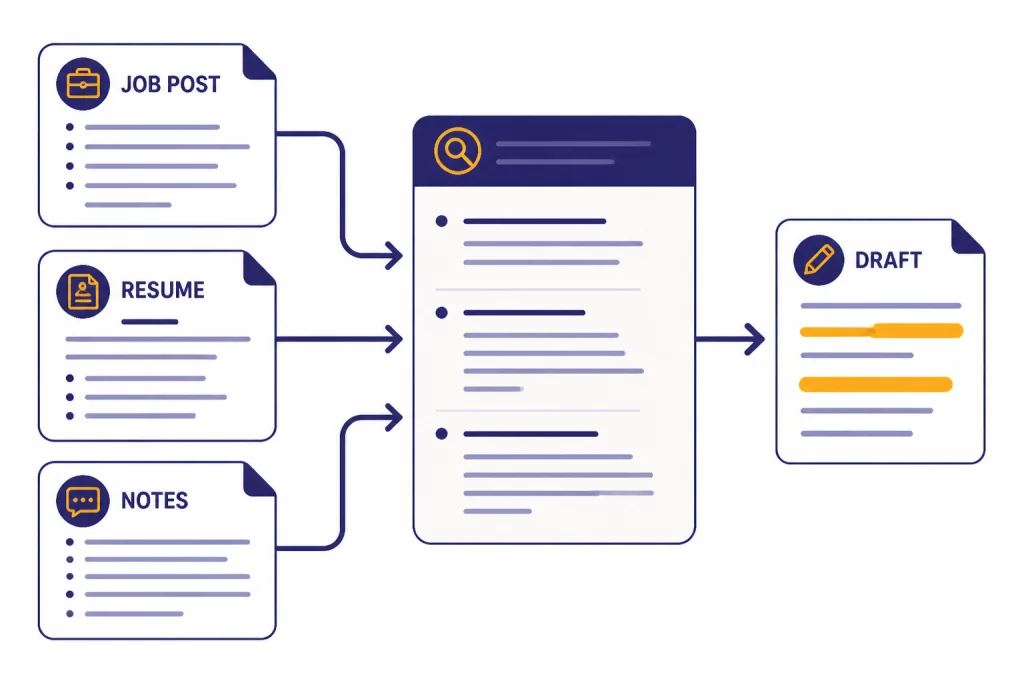
The interview-focused workflow
Do not start with “write me a cover letter.” Start with a diagnosis. The goal is to build a letter that leads naturally to an interview conversation. Use this workflow for each serious application.
Pass one: extract the employer’s needs
Paste the job posting and ask ChatGPT to identify the must-have skills, repeated keywords, business priorities, and hidden concerns. Hidden concerns are not secrets. They are reasonable inferences from the posting, such as “this team needs someone who can work across departments” or “this role has a heavy reporting burden.”
Read this job posting. Create a table with three columns: employer need, evidence from the posting, and what a strong applicant should prove. Do not write the cover letter yet.Pass two: match your evidence
Now give ChatGPT your resume and a few notes that are not on the resume. Include projects, metrics, customer stories, process improvements, awards, coursework, volunteer work, or reasons for a career change. Ask it to map your evidence to the employer’s needs. This step keeps the final letter from sounding generic.
Using only my resume and notes below, map my strongest evidence to the employer needs you identified. If a need has weak evidence, say “weak evidence” instead of inventing a match.Pass three: draft the letter
Ask for a short, direct draft with a specific opening. Avoid prompts that ask for “professional” or “compelling” prose without defining what those words mean. ChatGPT often responds to vague style words with polished filler.
Draft a cover letter for this role. Use a direct opening that names the role and the strongest reason I fit. Keep the tone human, specific, and concise. Do not use clichés such as “I am excited to apply,” “perfect fit,” or “dynamic team.”Pass four: edit for interview value
The final pass should ask whether the letter creates interview hooks. A good interview hook is a line the hiring manager can ask about, such as a difficult project, a measurable result, or a relevant judgment call.
Review this cover letter as a hiring manager. Identify the strongest interview hooks, any vague claims, any lines that sound AI-written, and any missing evidence. Then rewrite only the weak lines.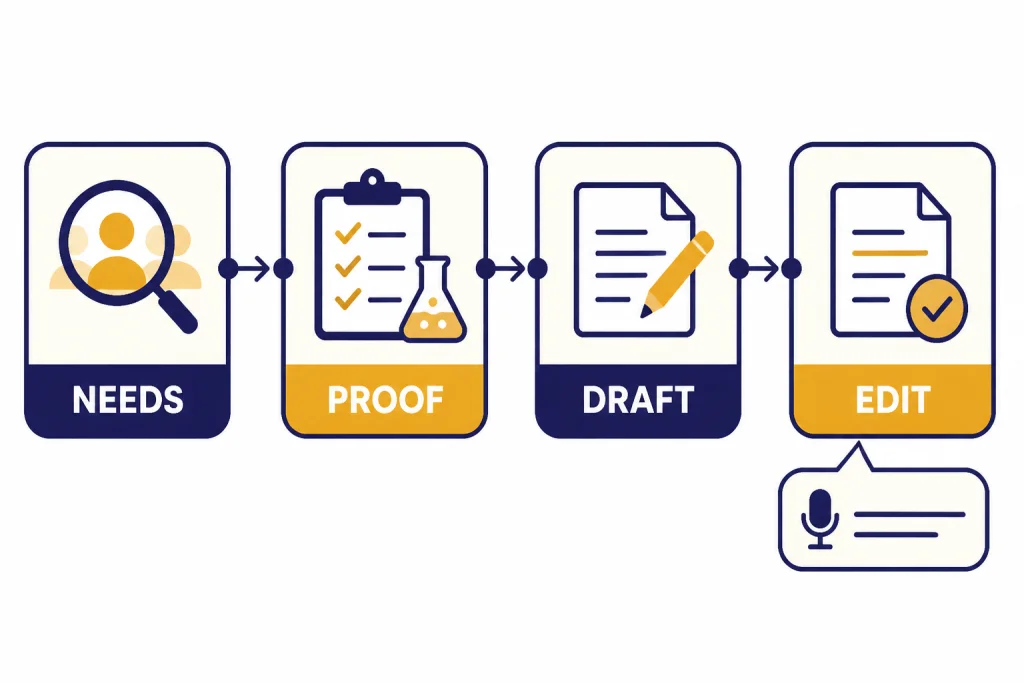
Prompt templates you can copy
These prompts work best when you paste the job post, your resume, and your notes in the same chat. If the role is confidential or sensitive, remove personal identifiers first. For broader prompt-building habits, see our chatgpt prompt generator guide.
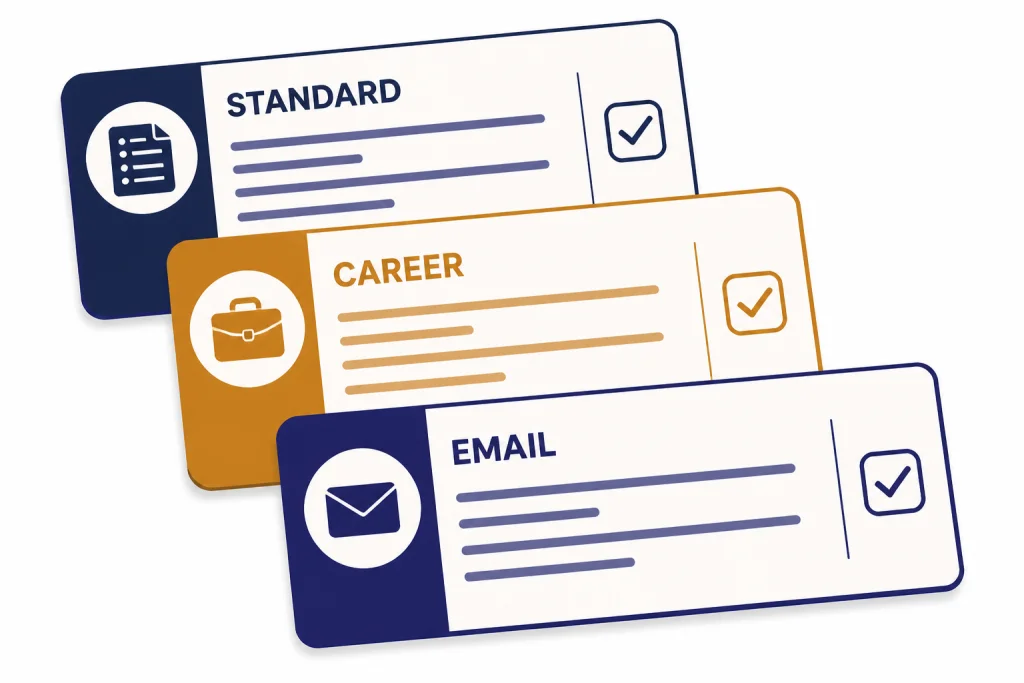
Template for a standard application
You are helping me write a tailored cover letter. First analyze the job post. Then use only my resume and notes as evidence. Write a concise cover letter with three parts: opening fit, proof paragraph, and closing. Avoid generic enthusiasm. Mark any claim that I should verify before sending.

Job post:
[paste]

Resume:
[paste]

Extra notes:
[paste]
Template for a career change
Write a cover letter for a career change. Do not apologize for the transition. Connect my transferable skills to the role’s requirements. Use one short story that proves I can do similar work. Keep the tone confident and grounded.

Target role:
[paste]

Current background:
[paste]

Transferable examples:
[paste]
Template for a highly technical role
For technical jobs, ask ChatGPT to separate evidence from buzzwords. This is useful for software, analytics, finance, operations, and technical marketing roles. If your work involves data or code, you may also want our guides to chatgpt for SQL queries and database work and ChatGPT Excel Prompts for Power Users.
Analyze this technical job post. Identify the technical requirements, business outcomes, and collaboration requirements. Then draft a cover letter that proves fit with concrete projects. Do not over-explain tools. Emphasize outcomes and judgment.Template for a short email cover letter
Turn this cover letter into a short email message. Keep it under 180 words. Use a clear subject line, a direct first sentence, two evidence-based bullets, and a polite close. Do not repeat my full resume.The short email version is often better when the job posting asks applicants to email materials directly. If you need to adapt the same message for a recruiter conversation, compare it with the outreach patterns in ChatGPT for Recruiters and HR Teams.
Before and after example
Here is a simple example of how ChatGPT can improve a weak cover letter without making it sound inflated.
Weak draft
I am excited to apply for the Marketing Coordinator role. I am a hardworking and detail-oriented professional with strong communication skills. I believe my experience makes me a great fit for your company. I would love the opportunity to contribute to your dynamic team.
This draft is not wrong, but it gives the hiring manager almost nothing to remember. It could apply to hundreds of jobs. It claims communication skills without showing them. It praises the company without naming a reason.
Better ChatGPT-assisted version
I am applying for the Marketing Coordinator role because your posting emphasizes campaign execution, reporting, and cross-functional coordination. In my current internship, I maintain the weekly campaign tracker, draft social copy for three product lines, and summarize performance trends for the sales team. That mix of execution and reporting is the part of marketing where I do my best work.
The revised version works because it names the role’s needs, gives specific evidence, and creates a possible interview question: “Tell me about the weekly campaign tracker.” It also avoids the stiff language that makes many AI cover letters blend together.
You can use the same before-and-after method for other job search materials. For example, ChatGPT for HR Departments looks at the employer side of workplace communication, while chatgpt for translators shows how wording choices change when precision matters.
Common mistakes to avoid
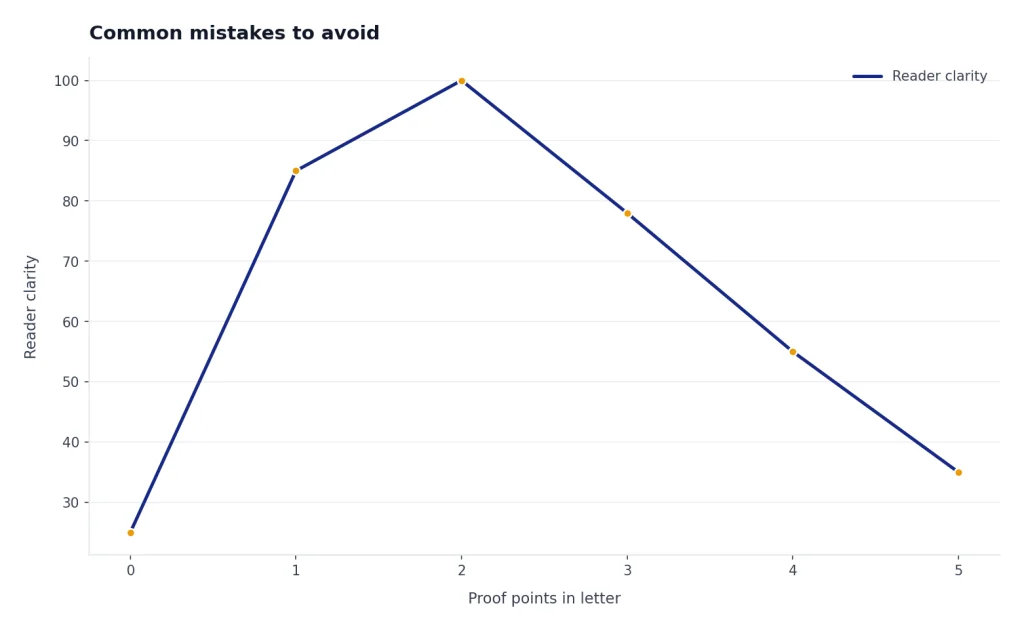
The biggest mistake is asking ChatGPT to write the letter before it understands the job. That produces a polished but interchangeable draft. Hiring managers can usually ignore that kind of letter after one sentence.
- Using generic openings. Replace “I am excited to apply” with a sentence that names the role and your strongest match.
- Letting ChatGPT invent confidence. “I would excel in this role” is weaker than a specific example that lets the reader reach that conclusion.
- Copying the job description too closely. Use the employer’s language where it is accurate, but do not paste phrases mechanically.
- Repeating every resume point. Choose one or two proof points that explain the fit.
- Ignoring the company context. If the posting mentions a product, market, customer group, or operational challenge, connect your evidence to that context.
- Skipping the final human edit. Read the letter aloud. If it does not sound like something you would say in an interview, revise it.
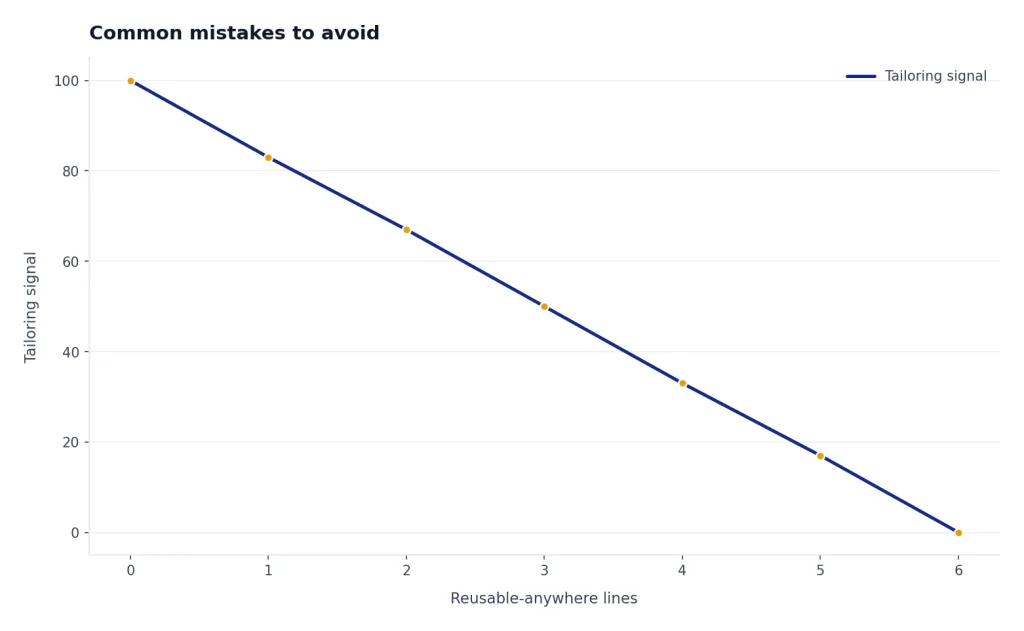
A useful test is to remove the company name and role title. If the letter could still be sent anywhere, it is not tailored enough. Ask ChatGPT to find lines that would fit any employer, then replace those lines with facts from your experience.
This editing mindset is similar to the one used in chatgpt for blog writing and chatgpt for marketing. AI can organize and sharpen ideas, but the strongest work still depends on original evidence.
Privacy and accuracy checks
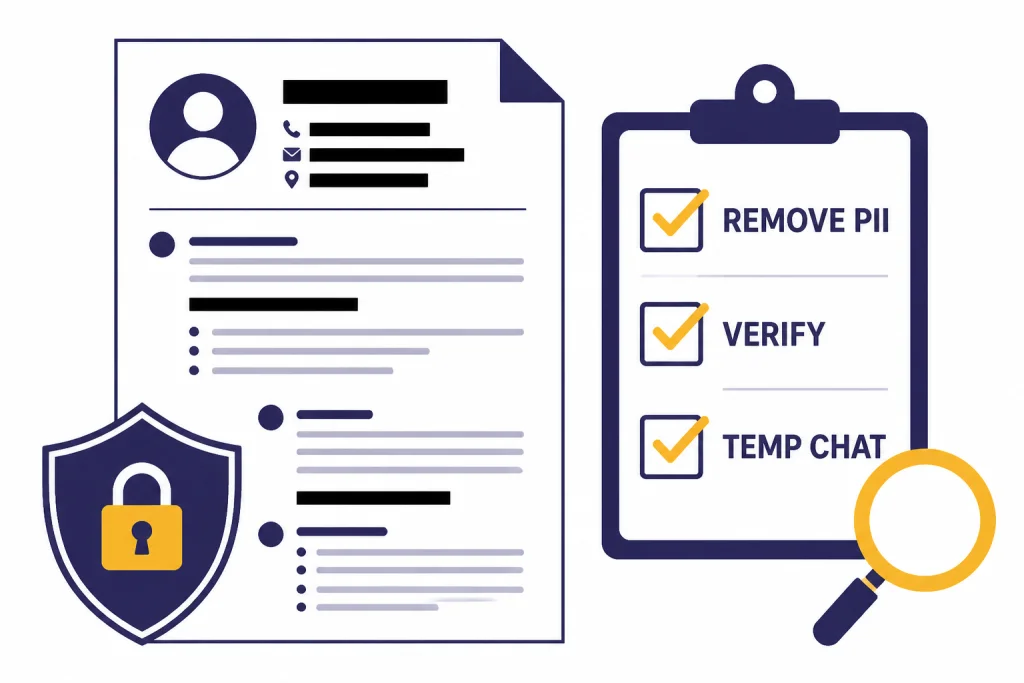
A cover letter workflow often includes personal data: your resume, phone number, email address, employer names, salary history, immigration details, disability accommodations, or references. Do not paste anything you do not need ChatGPT to process. Redact contact information and sensitive details unless they are required for the task.
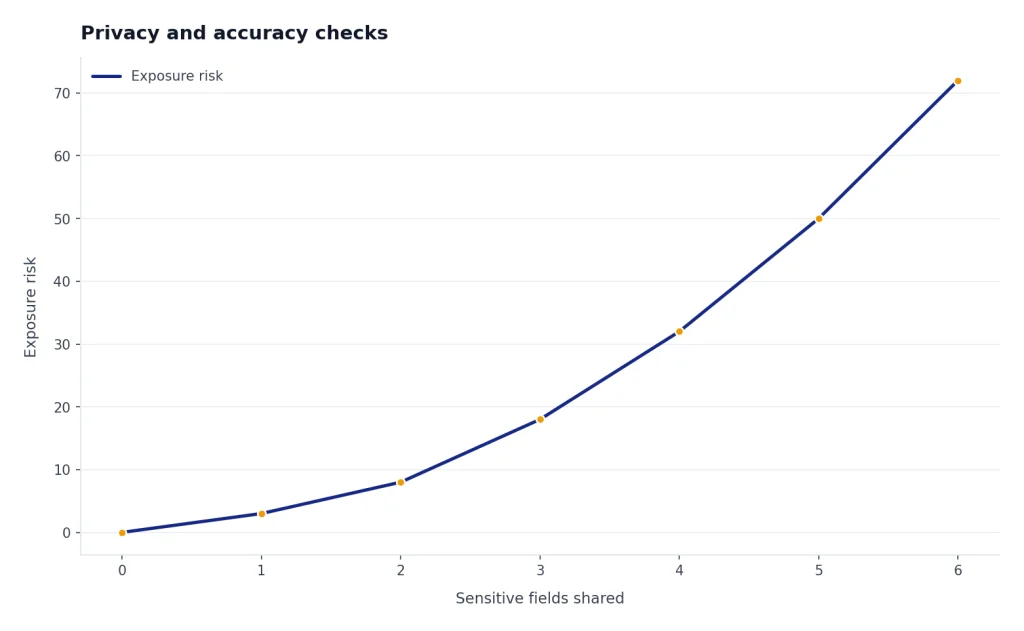
OpenAI’s Data Controls FAQ says signed-in users can turn off “Improve the model for everyone” in ChatGPT settings, and that conversations will still appear in chat history but will not be used to train ChatGPT when that control is off.[4] The same FAQ says Temporary Chats are deleted from OpenAI systems after 30 days, are not used to train models, and do not create memories.[4] Check the current settings in your own account before uploading sensitive job-search material.
Accuracy matters too. ChatGPT can make a cover letter smoother, but it cannot know whether a metric is true, whether a hiring manager’s name is current, or whether a company fact is still accurate unless you verify it. OpenAI’s file guidance also notes that uploaded files and chats have retention rules and deletion behavior tied to account actions and plan details.[3] Treat every factual claim in the draft as your responsibility.
Research on AI-assisted cover letters points in the same direction. A 2025 paper on AI cover letter tools found that access to an AI tool increased alignment between cover letters and job posts and raised callback rates, while time spent editing AI-generated drafts was positively correlated with hiring success.[5] The practical lesson is not “let AI write it.” The lesson is “use AI, then edit like the letter represents you.”
Before sending, run this final check:
- Every achievement is true and defensible in an interview.
- The opening names the role and a real fit.
- The letter contains at least one specific story, project, or result.
- No private data remains unless you intentionally included it.
- No sentence sounds like it was written for every company.
- The tone matches how you speak professionally.
Frequently asked questions
Can I use ChatGPT to write my entire cover letter?
You can use ChatGPT to create a full draft, but you should not send that draft unchanged. Give it the job post, your resume, and your notes first. Then edit the output so the examples, tone, and motivation sound like you.
Will employers reject a ChatGPT cover letter?
Employers usually react badly to generic, inflated, or obviously templated writing. The safer approach is to use ChatGPT for analysis, structure, and revision while keeping the final language specific and truthful. If an application policy bans AI assistance, follow that policy.
What should I paste into ChatGPT for the best result?
Paste the job posting, your resume, and a short list of relevant stories or accomplishments. Include context that may not fit on a resume, such as why the role interests you or which project best matches the employer’s needs. Remove sensitive personal data before uploading or pasting.
How do I make a ChatGPT cover letter sound less generic?
Ask ChatGPT to identify lines that could apply to any candidate or company. Replace those lines with evidence from your work history. Strong letters include concrete projects, constraints, decisions, results, and reasons for applying.
Should my cover letter repeat my resume?
No. The cover letter should interpret the resume, not duplicate it. Use it to explain why a few selected experiences matter for this specific job.
Can ChatGPT help with applicant tracking systems?
ChatGPT can help you identify relevant keywords from a job posting, but do not stuff the letter with keywords. A readable, specific cover letter is more useful than a dense paragraph of copied requirements. Use exact terms only when they accurately describe your experience.