

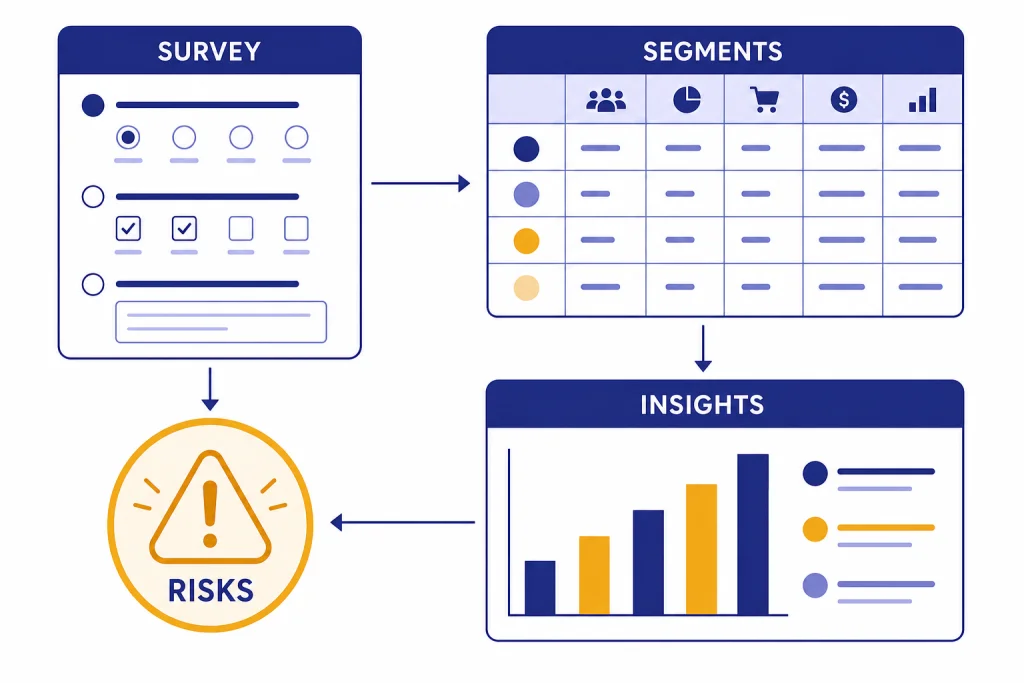
ChatGPT can speed up market research when you use it as a research assistant, not as a replacement for customers. It can help frame questions, scan public sources, draft survey instruments, summarize interviews, code open-ended responses, and turn spreadsheet results into charts and narrative findings. OpenAI’s data analysis features support common file types such as Excel, CSV, PDF, and JSON, and can create tables and charts from uploaded data.[1] For deeper desk research, ChatGPT’s deep research mode can plan, search, synthesize, and return a documented report with source links.[2] The safest workflow keeps human judgment, real respondent data, and transparent methodology at the center.
Where ChatGPT fits in market research
Use ChatGPT for market research when the work involves structure, synthesis, transformation, or explanation. Do not use it as the sole source of truth for customer demand, purchase intent, pricing sensitivity, or brand perception. Those still require real evidence from customers, prospects, sales calls, support tickets, analytics, panels, interviews, or transaction data.
The strongest use case is compression. A market researcher can give ChatGPT a messy brief and ask for a research plan. A founder can paste interview notes and ask for themes. A marketer can upload survey exports and ask for a first-pass readout. A product manager can ask it to find gaps in a questionnaire before fielding.
That makes ChatGPT useful across the same commercial workflow covered in our broader guide to chatgpt for marketing, but market research needs a stricter standard. The output should say what evidence supports each claim, what remains uncertain, and what decision the research is meant to inform.
| Research task | Good ChatGPT role | Human role | Risk to watch |
|---|---|---|---|
| Market scan | Summarize categories, competitors, language patterns, and public claims | Verify sources and interpret strategic relevance | Outdated or shallow public information |
| Survey design | Draft neutral questions, response options, screeners, and test logic | Approve wording, sample, incentives, and fielding plan | Leading questions or missing segments |
| Interview synthesis | Cluster notes into themes and pull candidate quotes for review | Check transcripts and preserve context | Over-smoothing contradictions |
| Survey analysis | Create crosstabs, charts, segment summaries, and plain-English findings | Validate calculations and decide what is meaningful | Confusing correlation with causation |
| Insight reporting | Draft executive summaries, caveats, and recommendations | Own the final conclusion and business implications | Overconfident recommendations |
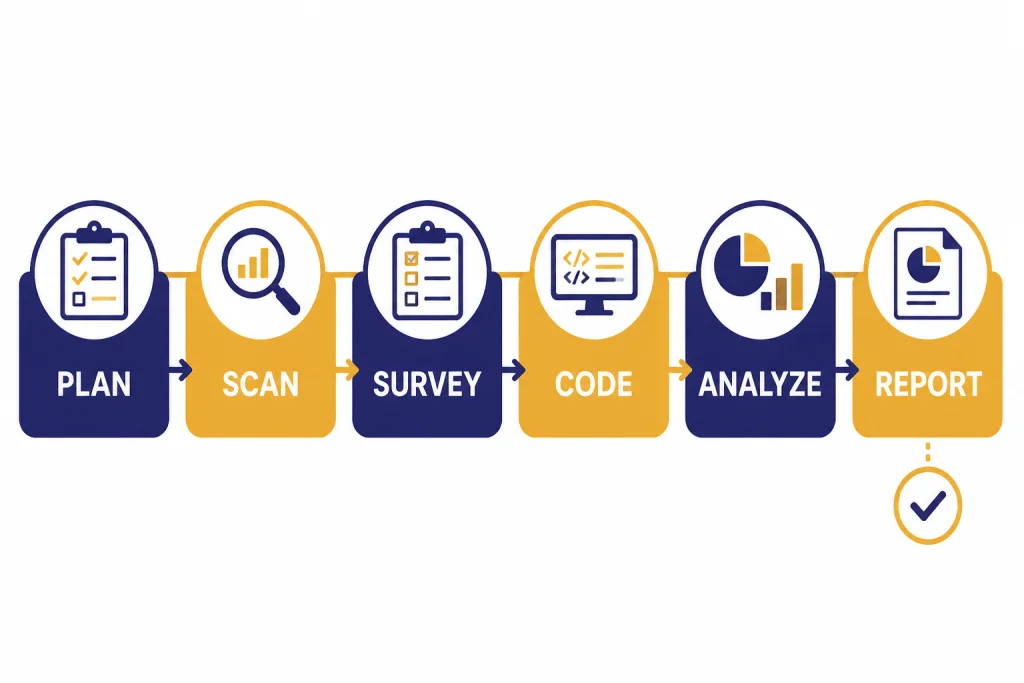
A practical workflow for desk research
Desk research is the safest place to start with ChatGPT because it can help you organize public information before you spend money on surveys or interviews. The goal is not to ask ChatGPT for “the market size” and accept the answer. The goal is to use it to define the question, identify source types, compare claims, and build a research memo that separates evidence from assumption.
Start with a decision statement. For example: “We need to decide whether to launch a paid analytics add-on for small Shopify merchants in the United States.” Then ask ChatGPT to identify the information needed to make that decision. It may return customer segments, competitor offerings, pricing signals, search demand, review themes, adoption barriers, and potential survey questions.
Deep research is useful when the topic requires source-backed synthesis rather than a quick brainstorm. OpenAI describes deep research as a ChatGPT tool that can use public web sources, uploaded files, and enabled apps, then produce a structured report with citations or source links for verification.[2] Treat that report as a starting brief. Open the sources. Check dates. Look for missing competitors, regional differences, and claims that depend on proprietary data.
A good desk research prompt should force the model to show its work:
You are helping me plan market research for [product/category].
Decision to support: [decision].
Target customer: [segment].
Geography: [market].

Create a desk research plan with:
1. The key questions we must answer.
2. The best source types for each question.
3. What evidence would change the decision.
4. Claims that require primary research.
5. A final memo outline with sections for evidence, assumptions, and open questions.
If your research will become content, combine this workflow with chatgpt for seo or chatgpt for blog writing. Keep the research memo separate from the content draft. A market scan should inform a positioning decision; it should not turn into a lightly sourced blog post by accident.
Use ChatGPT to draft better surveys
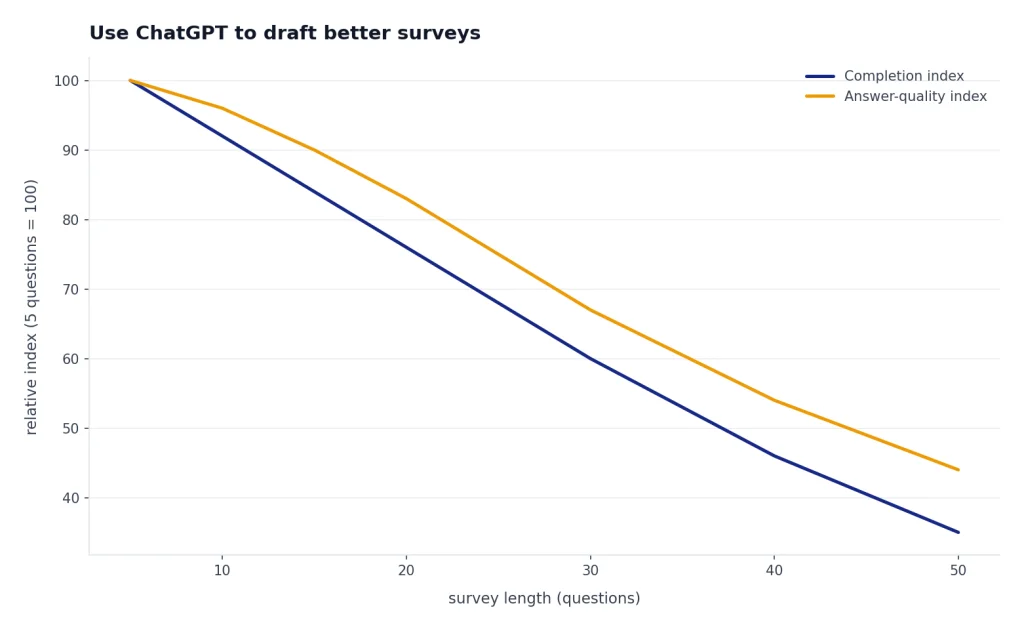
ChatGPT can draft survey questions quickly, but speed is not the same as validity. Survey wording shapes results. Pew Research Center emphasizes that the way questions are written can affect measured opinion, including problems caused by wording, order, and response categories.[5] Use ChatGPT to generate alternatives, then review every question as if a skeptical respondent, a data analyst, and a lawyer will read it.
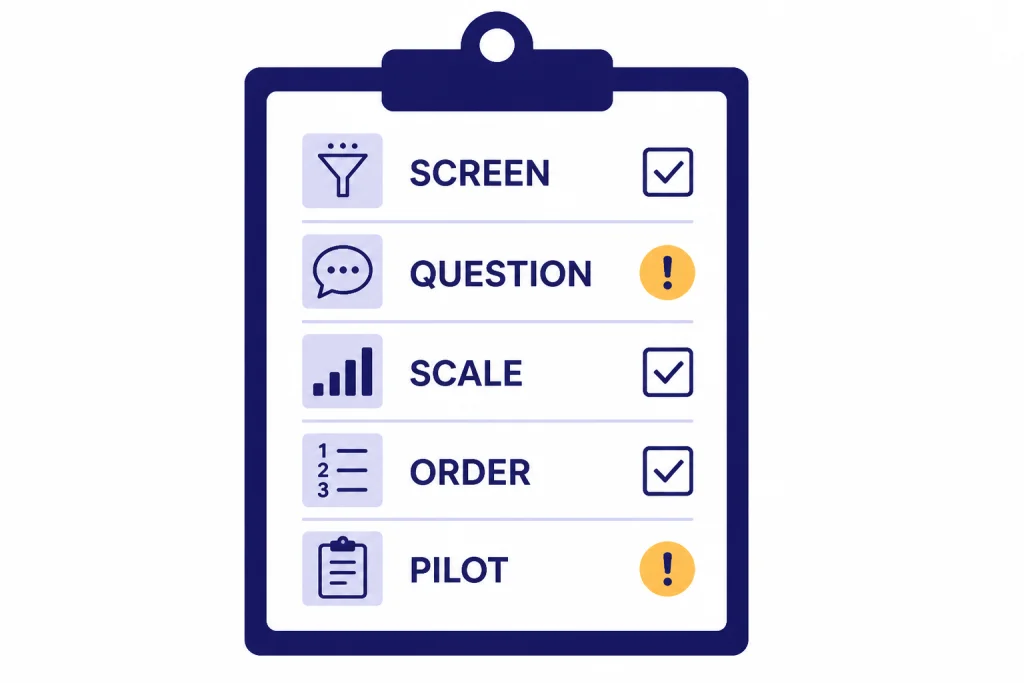
A strong survey design workflow has five parts: define the decision, define the respondent, draft the instrument, test the instrument, and document the method. ChatGPT can help at each stage. It can convert a vague business question into research objectives. It can draft screeners. It can identify double-barreled wording. It can propose balanced answer choices. It can create a pilot-test checklist.
Ask it to critique before you ask it to write. A useful prompt is:
Review this survey draft for market research quality.
Flag:
- leading wording
- double-barreled questions
- unclear time frames
- missing answer options
- scale inconsistency
- questions that collect unnecessary personal data

Return a table with the original question, the issue, the risk, and a revised version.
Then ask for variants. For a new product concept, generate one direct purchase-intent question, one forced-choice tradeoff, one open-ended objection question, and one usage-context question. Do not ask every respondent everything. A shorter survey with clean logic usually produces better data than a long survey that tries to answer every internal stakeholder’s wish list.
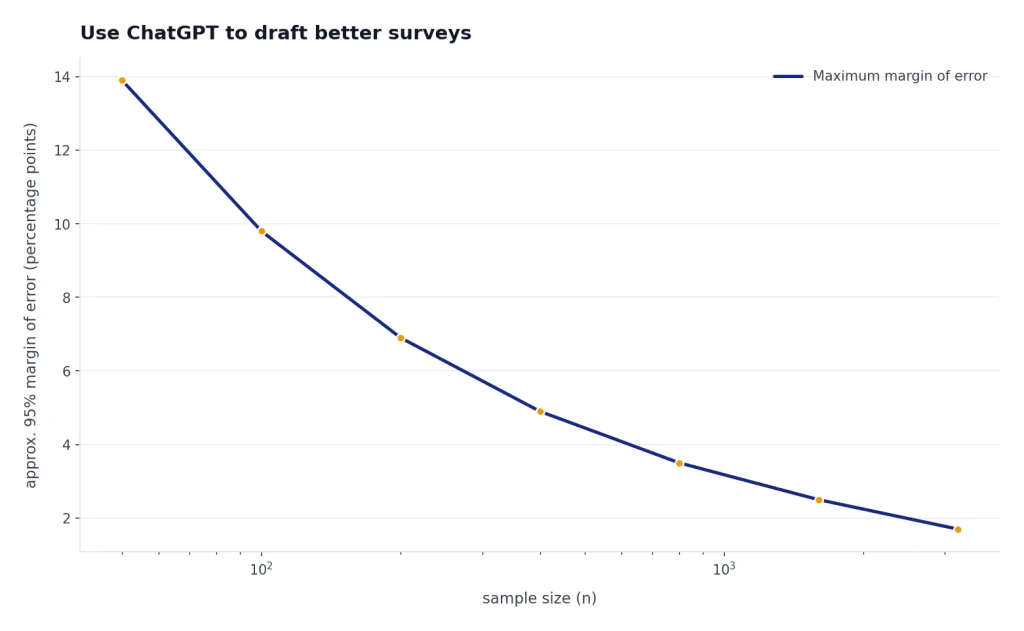
For methodology transparency, AAPOR’s Transparency Initiative highlights disclosures such as sample size, mode, population, sampling method, question text, answer options, weighting, and margin of sampling error where applicable.[6] Even if you are running a small customer survey rather than a public poll, use those categories as a reporting checklist. They protect the team from treating a convenience sample as a representative study.
Analyze survey results without losing rigor
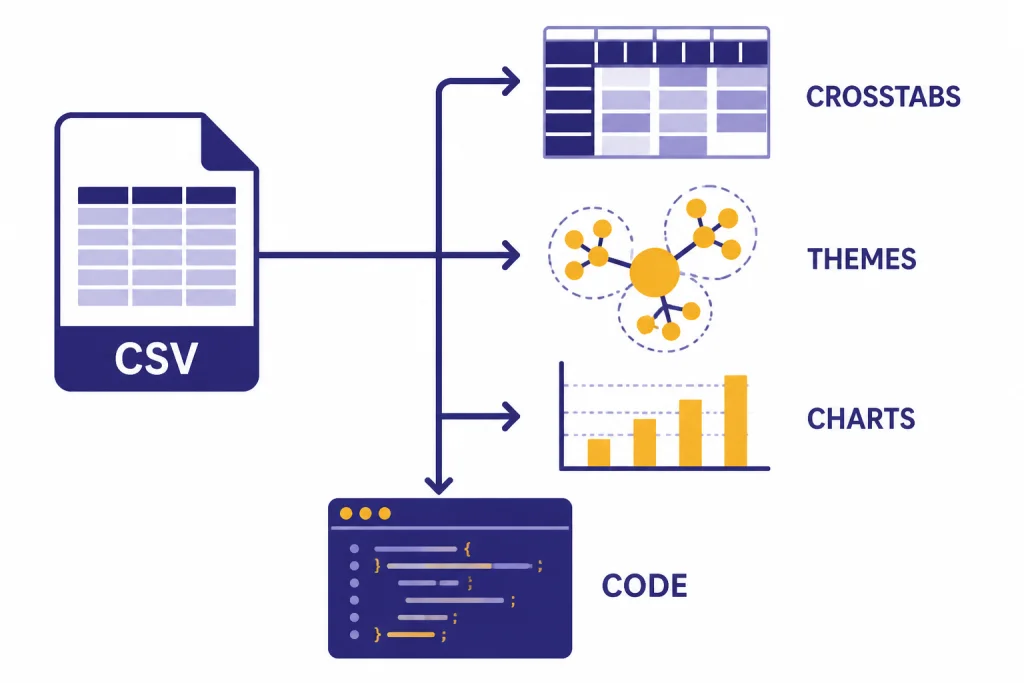
ChatGPT is especially helpful after fielding. You can upload survey exports, interview notes, or coded response files and ask for summaries, charts, and segment comparisons. OpenAI says ChatGPT data analysis can create static and interactive tables and charts from uploaded data, and it can use Python tools such as pandas and Matplotlib during analysis.[1] That makes it a practical companion for teams that do not have a full-time analyst.
Still, the first prompt after upload should be boring: “Inspect the file. Describe the columns. Identify missing values, duplicate rows, odd values, and columns that appear to be IDs or personal data. Do not draw conclusions yet.” This reduces the chance that ChatGPT jumps straight to a polished but fragile story.
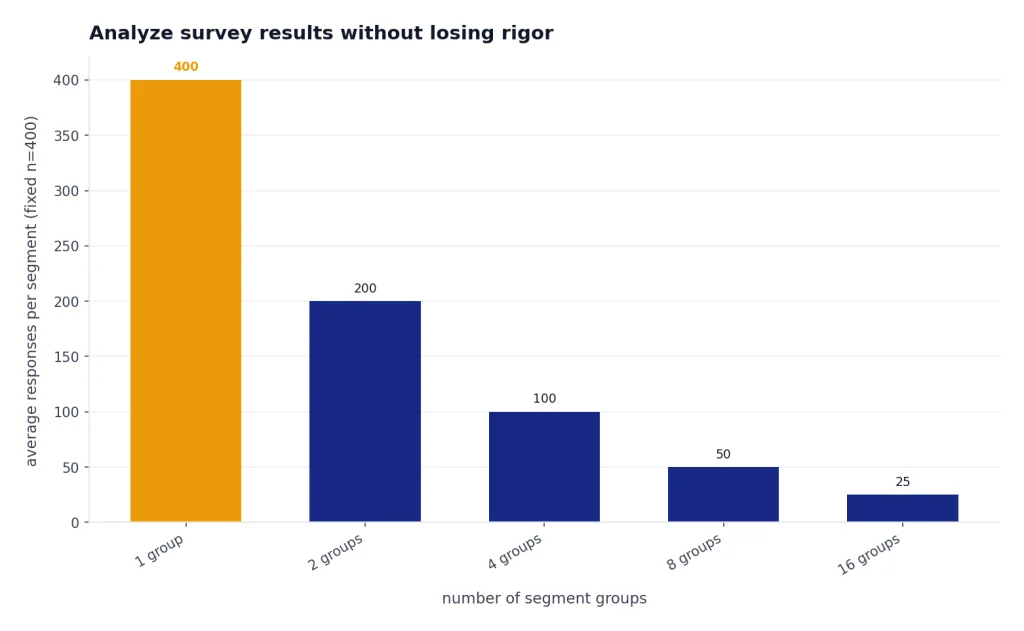
For closed-ended questions, ask for frequencies first. Then ask for crosstabs by segment only when the sample supports them. For open-ended questions, ask for a coding scheme, sample coded responses, and disagreements. If the data came from interviews, ask for themes and counter-themes. Contradictions are often the most useful part of market research.
A strong analysis prompt is:
Analyze this survey export in stages.
Stage 1: Data audit only. No recommendations.
Stage 2: Topline results for each question.
Stage 3: Segment differences by [segment variable].
Stage 4: Open-ended response themes with example response IDs.
Stage 5: A findings memo that separates evidence, interpretation, and recommended follow-up research.

Show calculations or code where possible.
If your team already works in spreadsheets, pair this with chatgpt for excel. If the data lives in a warehouse, use the same logic with chatgpt for sql queries and database work. The best pattern is to let ChatGPT draft formulas, queries, and analysis steps, then have a human verify outputs before any decision meeting.
Prompt templates for market research
Good prompts define the business decision, evidence standard, and output format. They also tell ChatGPT what not to do. For market research, add constraints such as “do not invent statistics,” “separate assumptions from evidence,” and “flag where primary research is required.”
Research plan prompt
Act as a market research planning assistant.
Business decision: [decision].
Audience: [customer segment].
Current evidence: [what we already know].
Constraints: [budget, timeline, geography, channels].

Create a research plan with:
- research objectives
- hypotheses
- secondary research tasks
- primary research tasks
- recommended sample criteria
- survey and interview topics
- risks, assumptions, and decision criteria
Competitor message scan prompt
Analyze these competitor pages or notes.
Return:
1. Main promise by competitor.
2. Target buyer implied by the language.
3. Proof points used.
4. Pricing or packaging claims, if present.
5. Gaps or overused claims.
6. Questions we should test with customers.
Interview synthesis prompt
Synthesize these customer interview notes.
Do not add information that is not present.
Create:
- recurring jobs-to-be-done
- pains and triggers
- buying objections
- exact phrases worth reviewing
- contradictions between participants
- follow-up questions for the next interview round
These templates also support related workflows. Sales teams can turn survey findings into objection handling with ChatGPT for Sales Professionals. Social teams can convert audience language into campaign ideas with chatgpt for social media content creation. Email teams can test message angles with ChatGPT for Email Writing That Converts. The research should come first; the channel execution should come after.
Limits, privacy, and synthetic respondents
The biggest mistake is using ChatGPT to simulate customers and then treating those answers as market data. Synthetic respondents can help brainstorm hypotheses, stress-test survey wording, or imagine objections. They cannot replace real respondents when the decision depends on actual demand, willingness to pay, brand trust, or behavior.
Recent marketing research literature treats generative AI as promising but limited in consumer research. One field guide in the Journal of the Academy of Marketing Science describes possible uses across idea generation, pretesting, data collection support, analysis, and reporting, while also emphasizing limitations and the need for careful human judgment.[8] That is the right posture: useful assistant, weak witness.
Privacy matters because market research often contains personal data, sensitive opinions, customer records, or unreleased strategy. OpenAI says business workspace data is excluded from training by default for ChatGPT Business, and its business data page states that data from ChatGPT Enterprise, ChatGPT Business, ChatGPT Edu, ChatGPT for Healthcare, ChatGPT for Teachers, and the API platform is not used for training by default.[3] For individual ChatGPT accounts, OpenAI’s data controls allow users to turn off “Improve the model for everyone,” which prevents conversations from being used to train ChatGPT while keeping them in chat history.[4]
Do not upload raw respondent data until your team has checked its policy, plan, and consent language. Remove names, emails, phone numbers, account IDs, and free-text details that could identify a person. The FTC’s business guidance on protecting personal information emphasizes keeping only what you need, protecting what you keep, and disposing of information securely when it is no longer needed.[7] Apply that same principle before using any AI tool.
Regulated or high-risk domains need extra review. Healthcare research should be handled more carefully than a low-risk preference survey; see our separate guide to ChatGPT for Doctors and Healthcare Professionals. Legal research and contract-sensitive work also need stronger controls; our ChatGPT for Lawyers guide covers that boundary in more detail.
Team handoff checklist
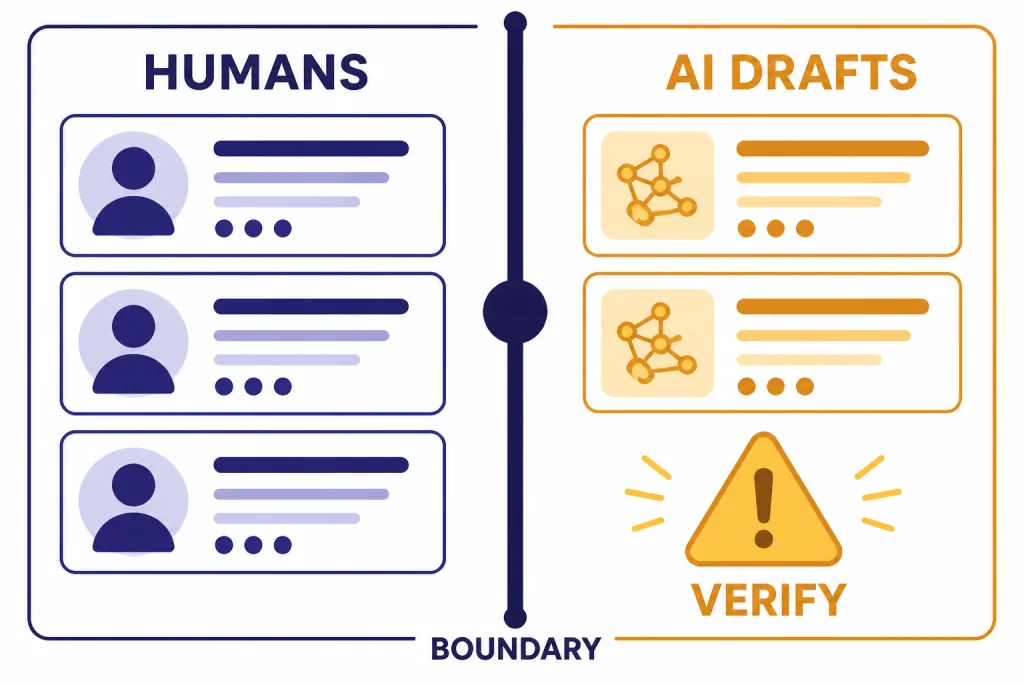
Market research becomes useful when another person can understand how the work was done. Before you share a ChatGPT-assisted research report, package the evidence and the process. The goal is to make the work auditable, not just readable.
- Decision: State the business decision the research supports.
- Research questions: List what the study tried to answer.
- Data sources: Separate public sources, internal files, survey data, interview notes, and assumptions.
- Method: Record sample criteria, fielding dates, survey mode, screener rules, and exclusions.
- AI use: Note where ChatGPT helped: planning, drafting, coding, analysis, charting, or reporting.
- Human review: Name the person who checked calculations, sources, quotes, and conclusions.
- Limitations: State what the research cannot prove.
- Next action: Tie findings to a decision, experiment, follow-up interview round, or product change.
This checklist also helps cross-functional teams use research responsibly. Designers can translate findings into user flows with ChatGPT for Designers. Researchers can adapt the same audit habit from chatgpt for research. Marketers can turn verified insights into positioning, ads, landing pages, and campaigns without pretending the AI generated the market signal by itself.
Frequently asked questions
Can ChatGPT do market research by itself?
No. ChatGPT can help plan, summarize, analyze, and report market research, but it should not be the only evidence source. Use it to work faster with real sources, real customers, and real data.
Can I use ChatGPT to write survey questions?
Yes, but review the questions carefully. Ask ChatGPT to flag leading wording, double-barreled questions, unclear time frames, and missing answer choices. Then pilot the survey with real people before fielding it broadly.
Can ChatGPT analyze survey data?
Yes. ChatGPT can help inspect files, summarize responses, create charts, code open-ended answers, and draft findings. You should still verify calculations, inspect the code or logic, and check whether segment comparisons are meaningful.
Should I use synthetic respondents?
Use them only for brainstorming, survey stress-testing, and hypothesis generation. Do not present synthetic answers as customer evidence. If a decision depends on demand, pricing, trust, or adoption, collect data from real people.
Is it safe to upload customer survey data to ChatGPT?
It depends on your plan, settings, company policy, and the sensitivity of the data. Remove direct identifiers before upload whenever possible. For business workspaces, confirm your organization’s data controls and retention rules before using customer records.
What is the best first project for ChatGPT market research?
Start with a low-risk desk research brief or survey draft review. These tasks let you test quality without exposing sensitive customer data or making a major decision from AI output alone. Move to data analysis only after you have a review process.